Bird Physiology
Integumentary System
Feathers = modified scales
keratinized stratum corneum of epidermis
claws and beak also keratinized stratum corneum
Scales on feet and base of beak
Feathers
Insulate body
Resistant, flexible flight surfaces
Specialized in form, color, and arrangement
Contour feathers—large firm vane, downy base
Pyerylae—tracts of integument with feather follicles
Apteria—bare patches
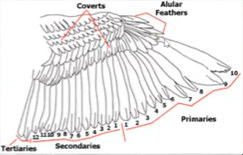
Primaries—between wrist and tip of vane
Secondaries—between wrist and elbow
Rectrices—tail feathers
Coverts—small feathers overlie the base of flight feathers
Alula—”thumb” bears 3-5 flight feathers, helps maneuver
Molting
Usually related to reproduction
Most molt annually
Postnuptial molt—after breeding/nesting, before migration
Prenuptial molt—some males, breeding plumage
Triggered by photoperiod
Skeletal System
Specialized for lightness and strength
Thin, strutted bones
Fusion of bones=strength
Beak (bill) formed by elongation of premaxillary and dentary bones
Highly flexible neck
Synsacrum—fused vertebrae just above tail, rigid for flight and bipedalism
Highly keeled sternum
Variable bills and feet due to function
Cardiovascular System
4 chambered heart
Larger birds= slower, smaller heart
turkey < 100 beats/minute
sparrow = 500 beats/minute
Countercurrent heat exchange—blood flows in opposite directions to reduce energy loss
Respiratory System
No muscular diaphragm
Lungs in pleural cavities
Membrane between pleural cavities acts as diaphragm
Muscles contract to create low pressure and draw air into lungs, second contraction pulls air into air sacs
During flight, contraction of flight muscles draws in air
Air sacs
3x the respiratory volume of similar size mammal
Digestive System
No teeth
non-muscular tongue with tactile sensors
Crop—storage in grain eating birds
Muscular gizzard + grit/stones to grind food
Ceca—paired, at junction of small and large intestine, range of digestive functions
Nervous system
Reduced olfactory portion of brain
Optic lobes greatly enlarged and well developed
Best vision of all vertebrates
Flying, foraging, mate selection, navigation
Eyes may equal or exceed weight of brain
Eye position based on predator/prey
Some perceive ultraviolet and polarized light
Good hearing
“ears” are feathers, tympanum part of inner ear
very well developed in owls
some birds use echolocation