Lec 8 - Flow Rate & Velocity Measurement
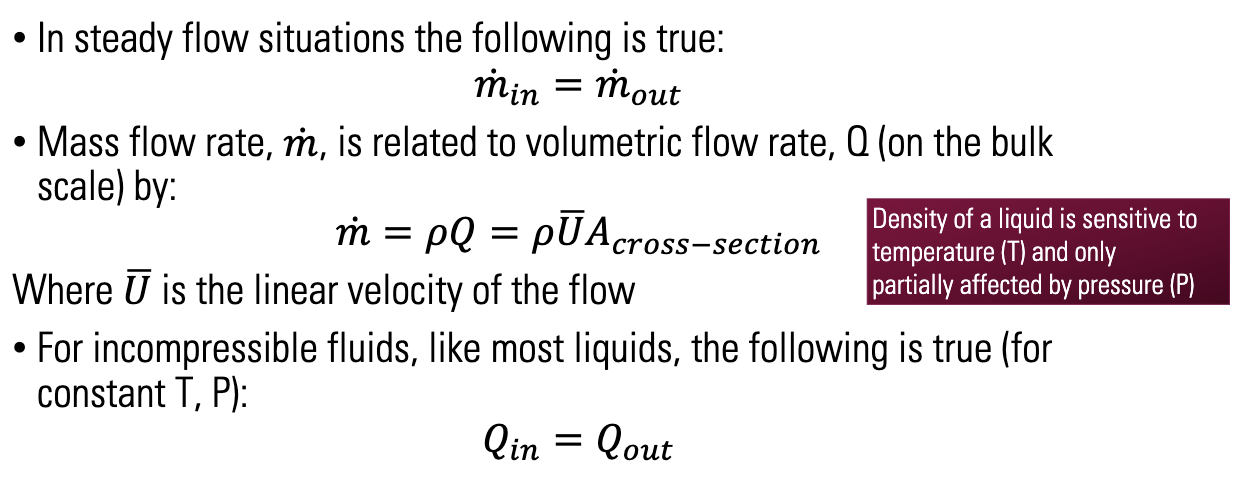
How are flow rate and flow velocity related?
usually enuf to know just one (since we can typically convert between them using eqns), but sometimes need to know both!
-flow rate is easy and most often used since it is a BULK property
-velocity can be a bulk OR local property
the eqns in question….
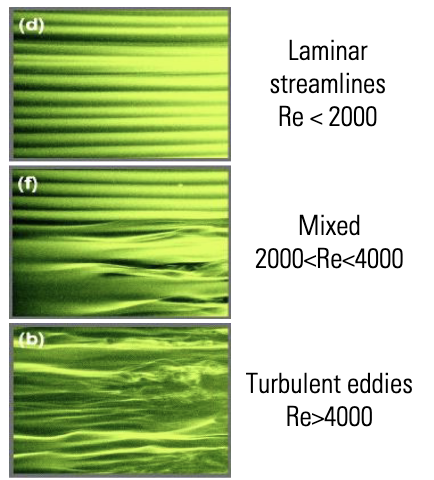
Recall fluid mechanics! What are the types of fluid dynamic flows?
laminar flow ((d) in pic)
transition flow ((f) in pic)
turbulent flow ((b) in pic)
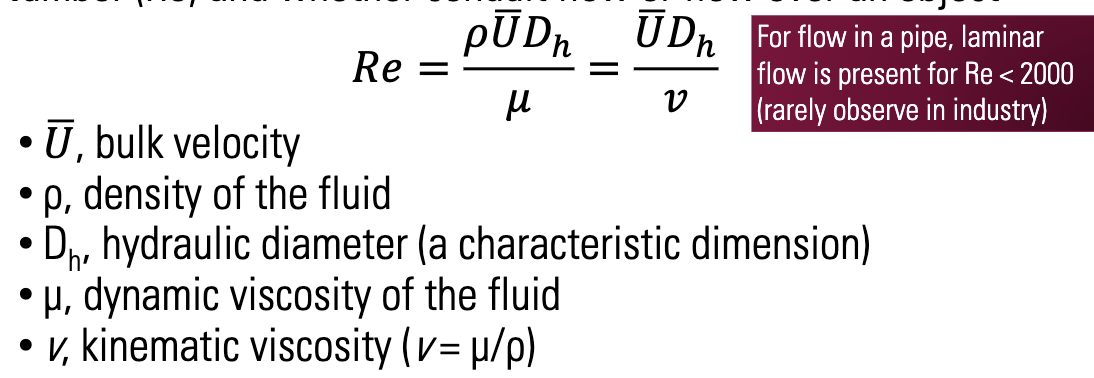
—> Recall how can you tell which kind of flow it is??? Reynold’s number!!
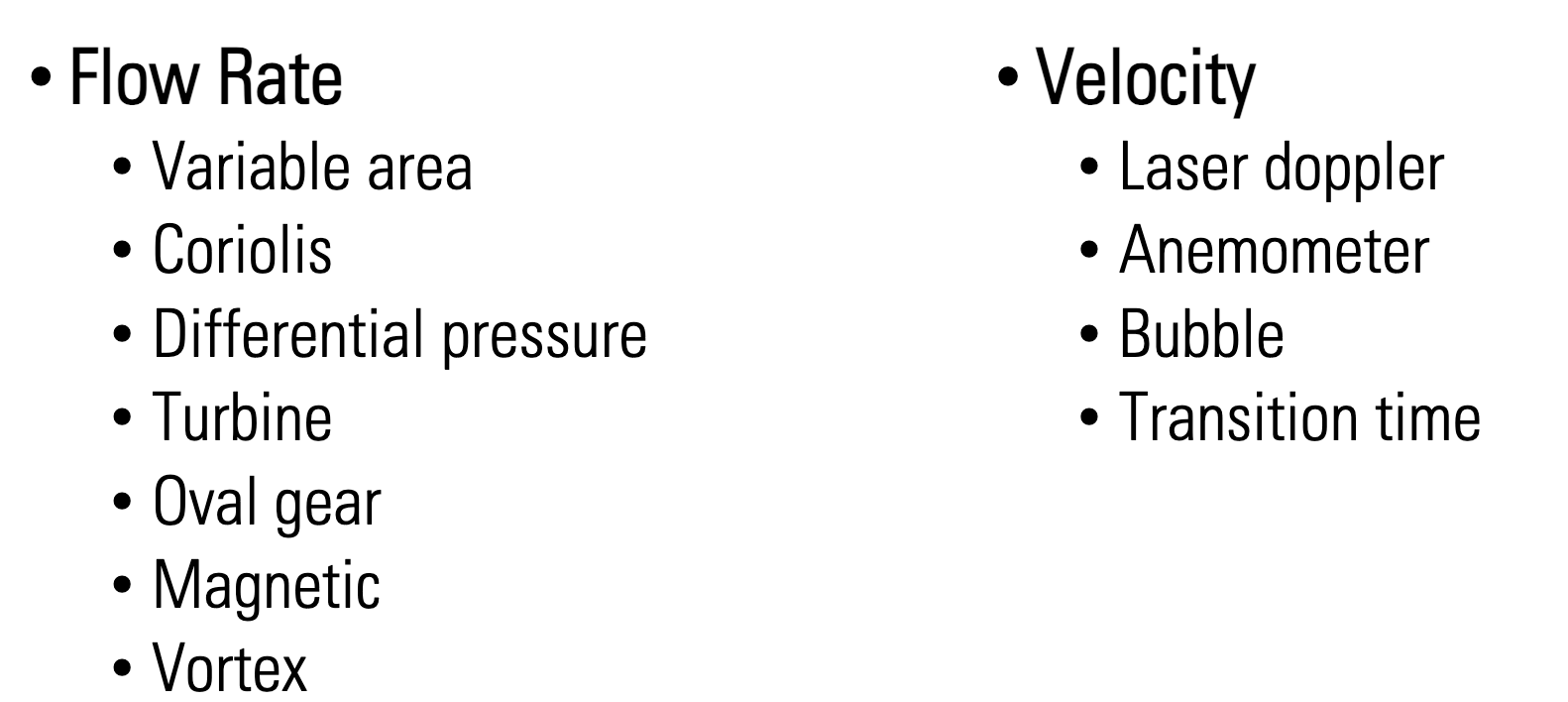
How is flow measured anyway?
-historically, thru eqns like Bernoulli’s principle, hydrostatics, Stoke’s law etc
-thru flow meter devices like venturi meter, orifice meter
—> How can you decide the method of flow measurement ?
-size, accuracy, cost, pressure drop (sensitivity of sensor to flow), pressure losses (obstruction to flow), compatibility w/ flow (will sensor be damaged by fluid, get contaminated etc), fluid properties (viscosity, density, specific heat etc)
Fouling is a major concern
= the gradual deposit of contaminants in a fluid onto surfaces
—> so then the fluid has to be pushed harder and harder over time due to the resistance of those contaminants/obstructions
How can you calibrate a flow sensor?
run a flow, collect it, time it
i.e. calibration is done based on determining flow volume or flow mass displaced over a determined time interval
Most of the time we will be looking at measuring flow of liqs and gases…
and thus measuring the hydrodynamic pressure of a system (and relating it to Q)
Types of sensors for fluids:
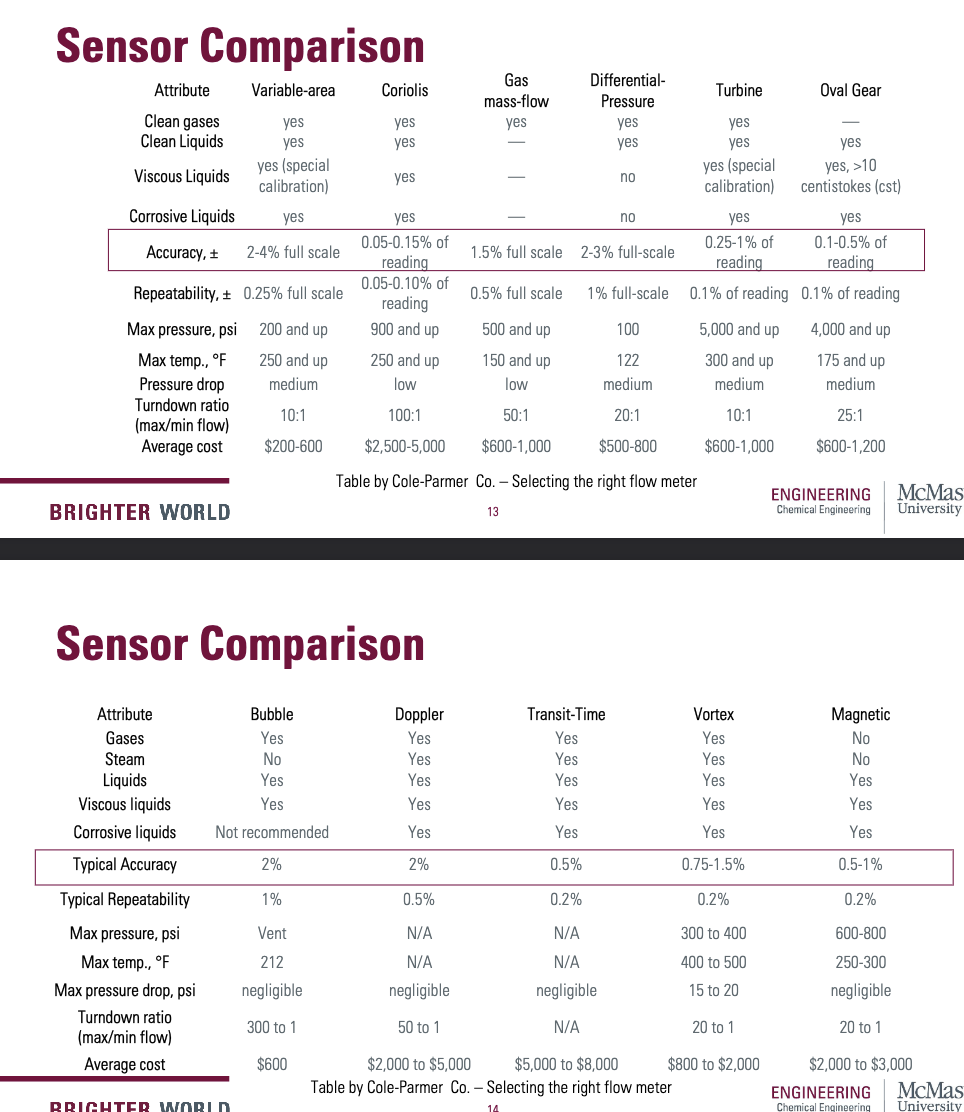
Comparing sensors for different fluids:
What are pressure differential meters?
e.g. venturi, orifice, flow nozzle
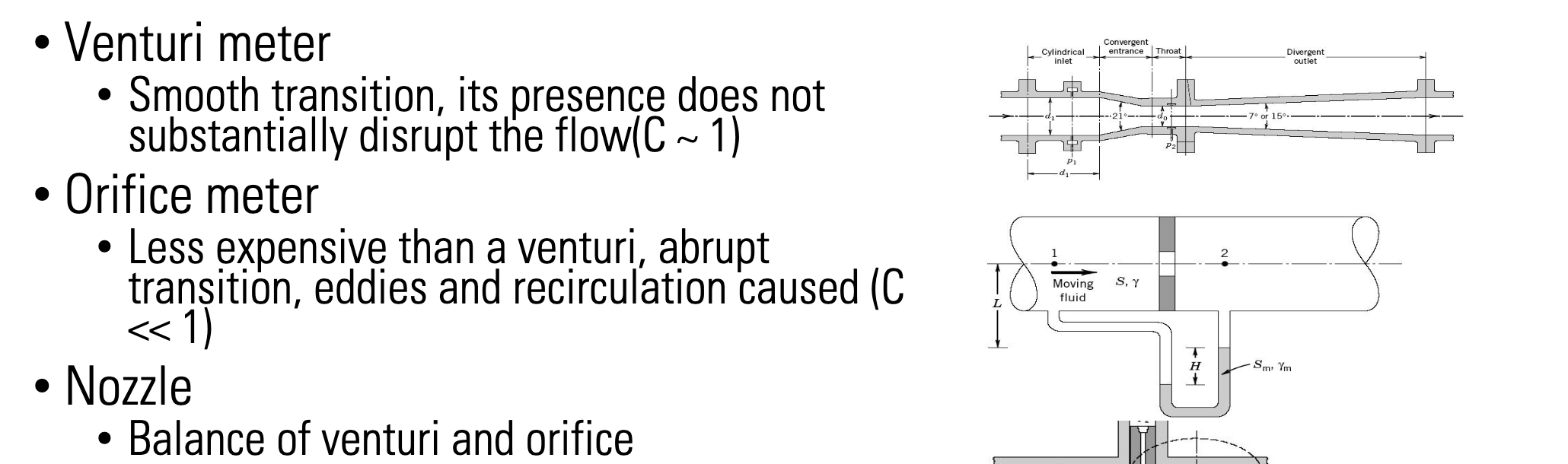
-It’s based on the pressure drop btwn 2 pts along a pipe and relating to flow rate (Bernoulli effect).
-Reducing the flow area creates a higher, more measurable pressure drop
Eqn:
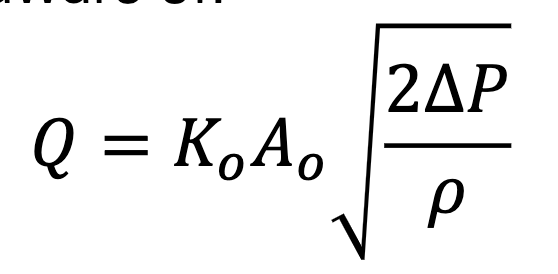
- Part of the flow coefficient, Ko, is the discharge coefficient, C, which is a experimentally derived value (by you or the vendor) which is a function of Re and compensates for the fact that eq. (10.12) was derived for laminar flow but is often applied to turbulent flow
—> How do you know what differential meter to select?
-consider placement, pressure loss, cost, accuracy, range (turndown)
What do laminar flow elements do?
they measure the pressure drop over a laminar region!
and they use a tube bundle to create a laminar flow in the first place.
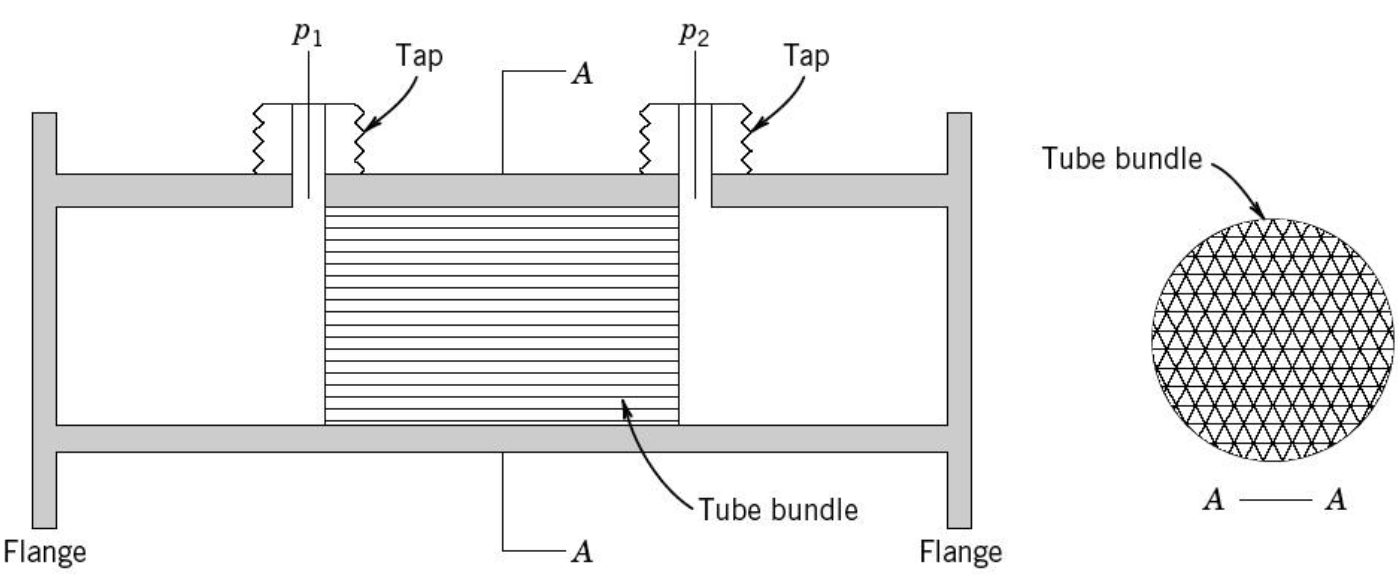
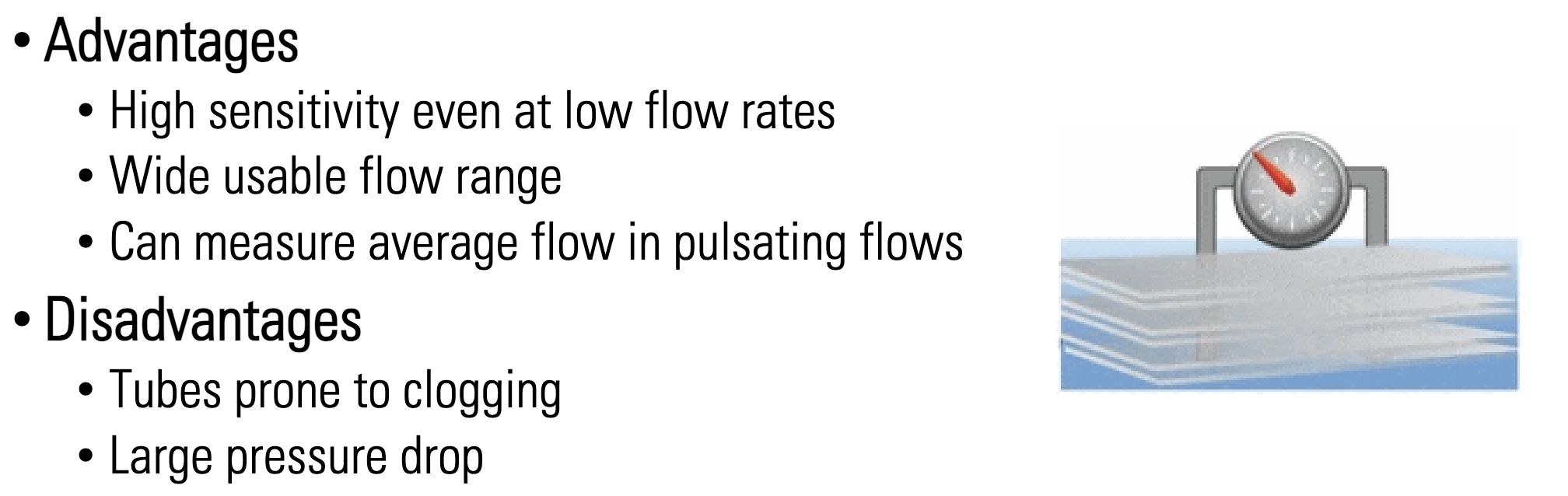
—> Pros/Cons of laminar flow elements
What does an Electromagnetic Flow Meter do?
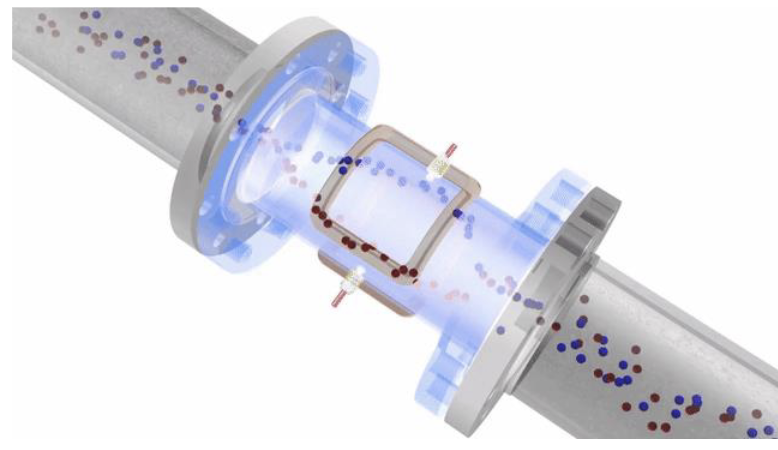
they measure (E) of a fluid passing through an applied electromagnetic field, which is directly related to its flow rate / velocity!
Features:
• Only works for electrically conductive fluids
• No moving parts, no flow obstruction
• Handles corrosive or “dirty” fluids
• Pipe must be filled with fluid
• Pipe diameter may limit choices
• Magnetic field must be perpendicular to the path of flow
∴ since they’re nothing in the tube itself —> much less chance of fouling
…
left slides 26-44 — starting off at vortex flow meters… too lazy to write rn
SUMMARY
Pressure Differential Meters: Measure flow rate by analyzing the pressure drop across two points in a pipe (e.g., venturi, orifice, nozzle). Simple and robust, but prone to pressure losses and fouling.
Laminar Flow Elements: Use pressure drops in laminar flow tubes to measure flow, providing high sensitivity at low flow rates, though they can clog and create significant pressure drops.
Electromagnetic Flow Meters: Measure flow velocity using voltage generated by conductive fluids moving through a magnetic field. These have no moving parts and work well with corrosive or dirty fluids.
Vortex Shedding Meters: Detect flow rate by measuring the frequency of vortices shed from an obstruction in the flow. These are accurate and durable but unsuitable for very low flow rates.
Rotameters: A float in a tapered tube balances drag, buoyancy, and gravity to indicate flow rate. They are simple, cost-effective, and widely used but less precise than other methods.
Turbine Flow Meters: Use a spinning rotor to measure flow velocity, converting momentum into electrical signals. Accurate but prone to fouling and only suitable for clean fluids.
Positive Displacement Meters: Use mechanical parts (like gears or diaphragms) to directly measure flow by volume. These are accurate and linear but obstruct flow and require clean fluids.
Ultrasonic Flow Meters: Non-invasive sensors that measure flow rate using sound waves, either by transit time (for clear fluids) or Doppler effect (for fluids with particles). They are versatile but expensive.
Mass Flow Meters: Directly measure the mass of fluid flowing, often using thermal or Coriolis methods. These are precise but costly, suitable for applications where fluid density changes.