Exam Study Guide
/
1. The Five Basic Types of Taste
Tastes:
Sweet – from sugars and alcohols; signals energy (carbohydrates).
Sour – from acids (like citric acid); warns of spoilage.
Salty – from sodium ions; essential for fluid balance.
Bitter – from alkaloids (like caffeine or quinine); warns of toxins.
Umami – from glutamate and amino acids; signals protein-rich foods.
Tip: Remember S.S.S.B.U. → Sweet, Sour, Salty, Bitter, Umami
2. Chemicals for Each Taste Type
Sweet: Sugars (glucose, fructose), some amino acids.
Sour: Hydrogen ions (H⁺).
Salty: Sodium (Na⁺), potassium (K⁺) ions.
Bitter: Plant alkaloids, caffeine, quinine.
Umami: Glutamate, inosinate, guanylate.
3. Relation to Human Needs
Sweet → energy source.
Salty → maintains electrolyte balance.
Sour → detects spoiled or unripe foods.
Bitter → avoids toxins.
Umami → promotes protein intake for tissue growth.
4. Receptors for Taste Detection
Taste receptor cells are located in taste buds (on the tongue and soft palate).
GPCRs (G-protein coupled receptors) detect sweet, bitter, and umami tastes.
Ion channels detect salty and sour tastes.
5. Taste Signal Pathway
The chemical binds to the receptor on the tongue.
Signal transduction occurs (via GPCRs or ion channels).
Neurotransmitter release triggers a nerve impulse.
Signal travels through cranial nerves (VII - Facial, IX - Glossopharyngeal, X - Vagus).
Medulla oblongata → Thalamus → Gustatory cortex in the brain.
6. Sketch: Taste Signal Pathway
(You’ll need to draw this for the exam!)
Include:
Taste buds
Sensory neurons
Cranial nerves VII, IX, X
Medulla oblongata
Thalamus
Gustatory cortex
7. Brain and Emotional Memory
The amygdala and hippocampus process emotional and memory responses.
Taste signals that reach these areas trigger emotional memories related to food.
8. Taste & Smell Memory Formation
Taste and smell memories form early in life (infancy and childhood) — they are linked to strong emotional experiences.
9. Verbal Cue Memory Formation
Verbal memory develops later in childhood, as language skills form (around age 5+).
This explains why smell memories can feel stronger or more emotional than verbal ones.
10. Detection of Fragrance Chemicals
Olfactory receptors in the nasal cavity detect volatile (airborne) chemicals.
Unlike taste, odor molecules don’t dissolve in saliva — they dissolve in mucus in the nasal epithelium.
11. Sensory Organ for Smell
The olfactory epithelium (in the nasal cavity) is the main sensory organ for smell.
Signals travel via the olfactory bulb → olfactory cortex → limbic system.
12. Human vs. Canine Smell Comparison
Feature | Human | Canine |
|---|---|---|
Olfactory receptors | ~5 million | ~300 million |
Olfactory bulb size | Small | Large (40x greater relative size) |
Sensitivity | Moderate | Extremely high |
Tracking ability | Poor | Excellent (can detect parts per trillion) |
13. Functional Groups in Vanillin
Vanillin contains:
Aldehyde group (-CHO)
Hydroxyl group (-OH)
Methoxyl group (-OCH₃)
(Be ready to identify or label these on a chemical diagram.)
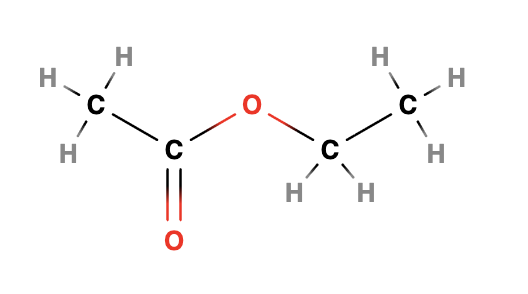
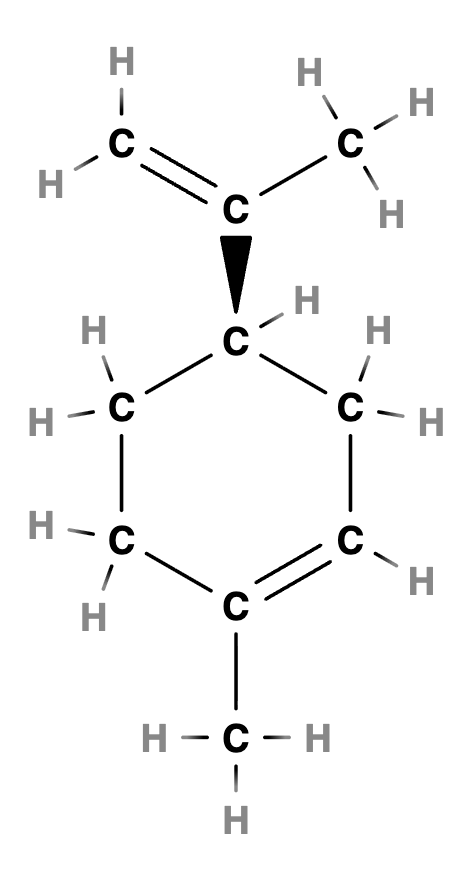
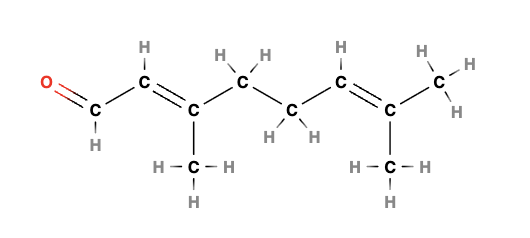
14. Drawing Fragrance Compounds
Be able to sketch or recognize:
Ethyl acetate: C4H8O2 (fruity smell)
Limonene: C₁₀H₁₆ (citrus smell, cyclic structure)
Citral: C₁₀H₁₆O (lemon scent, aldehyde group)
Tip: Practice with simple line structures — focus on functional groups and ring vs. chain shapes.