Mutations and variation
Gene expression
when a gene is ‚switched on or expressed, it is transcribed into an mRNA stand which is then translated into a protein
Proteins such as enzymes can control chemical reactions and therefore determine how an organism grows, develops, and functions
Only some genes will be expressed at once - this is key to controlling development and cell differentiation
Types of gene mutation
a change in the sequence of the DNA can be caused by a change in one or more nucleotides (or base pairs) within a gene
Substitution
Deletion
Insertion
If only one nucleotide is affected
Point mutation
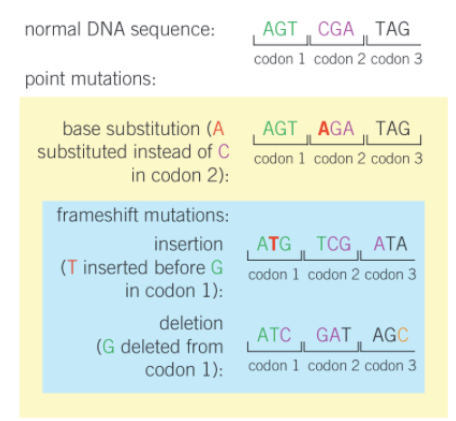
Effects of gene mutations
no effect
The protein produced after mutation is still functional
Silent/neutral mutations
Do not affect phenotype
Sometimes called conservative missense mutations
Involve incorporation of a similar amino acid
Beneficial
Rarely the protein synthesised results in new and useful characteristics in the phenotype
Immunity to HIV due to a mutation that means a protein in the cell membranes of the person’s cells will not let HIV enter
Damaging
The phenotype of the organism is affected in a negative way because proteins are no longer synthesised or the proteins synthesised are non functional
Interferes with one or more natural processes
Nonsense mutation
Causes one codon to become a STOP codon so the protein produced is much shorter and thus non functional
Non conservative missense mutations
Cause the addition of an incorrect amino acid into the primary structure of the protein
This amino acid does not have the same properties as the original one so protein has different and non functional structure
Chromosome mutations
4 types
Deletion
Inversion
Duplication
Translocation
Normally occurs during meiosis
gene mutations occur in single genes or sections of DNA whereas chromosome mutations affect a whole chromosome or the number of chromosomes in a cell
These can be caused by mutagens and normally occur during meiosis
As with single genes mutations, the mutations can be silent but often lead to developmental difficulties
A) UGC
B) TGCTAC
3) the mutation leading to the change in base sequence would change the order of bases causing a disruption in the gene development. This could then mean that when the tertiary structure of the toxin is formed the mutation has caused such a change that the toxin is now incorrectly formed and can no longer function