Transverse & longitudinal
What is a wave?
A wave is a disturbance ( oscillation ) which transfers energy without transferring any matter, there are two types of wave:
TRANSVERSE
The oscillations of a transverse wave are perpendicular ( at a right angle ) to the direction in which waves transfer energy. (Light)
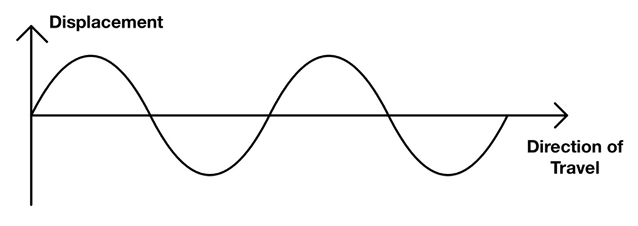
LONGITUDINAL
The oscillations of a longitudinal wave are parallel to the direction of transfer of energy. (Sound)
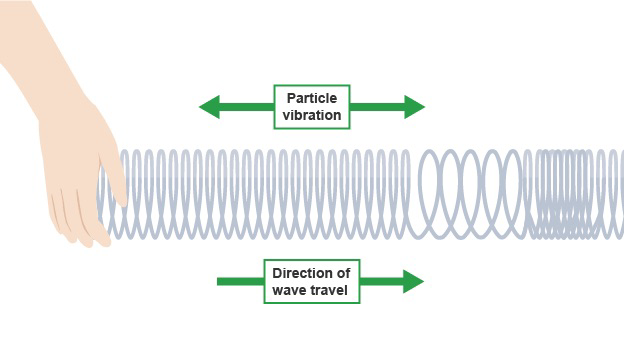
FEATURES OF A WAVE
Wavelength - the length of space between a point and the same point on the next wave
Trough - lowest point of a wave
Peak - highest point of a wave
Equilibrium - middle point of a wave
Amplitude - from the equilibrium to the peak or the trough, NOT the peak to the trough
EQUATIONS
Speed (m/s) = distance (m)/ time (s)
Frequency (Hz) = wave speed (m/s) / wavelength (m)
Fairies = wear slippers over wonderful leggings
Time period = 1 / frequency
Tics, prefer = one over four