Dement & Kleitman
Psychology
Sleep and Dreams
Dement, W. and Kleitman, N.
1957
Biological Approach:
How we think, act, and feel is influenced by our brains and the effects of hormones, evolution, and genetics
Similarities and differences in individuals can be explained by biological factors and their interactions with other factors (environment, people, etc.)
Circadian rhythm (24-hours) and ultradian rhythm (90 minutes) control the stages of sleep
Stages of sleep:
NREM (Non-Rapid Eye Movement): Comprises three stages, including light sleep (Stage 1), moderate sleep (Stage 2), and deep sleep (Stage 3); quiescent
REM (Rapid Eye Movement): Occurs approximately every 90 minutes, characterized by vivid dreams, increased brain activity, and plays a significant role in memory consolidation and emotional regulation.
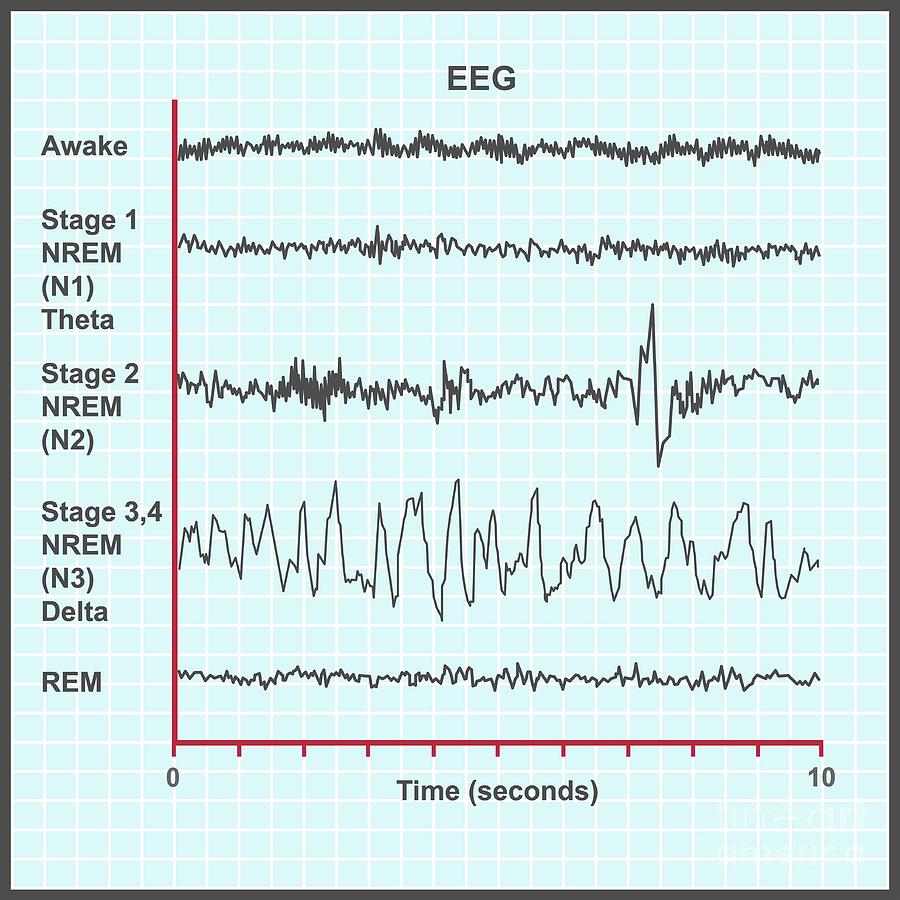
Electroencephalograph (EEG) records changes in electrical brain activity
Produces a chart of brain waves with differing frequencies and amplitudes (heights)
Over time, dream sleep increases and depth of cycle decreases
EEG produces EOG recording of eye movement frequency and direction
Background
Askerinsky and Kleitman (1955) found:
When woken from REM, participants were more likely to recall a vivid dream
REM has alpha waves (like electrical activity when awake)
Eye movements are simultaneous and occur in 90 minute cycles
REM has increased breathing and heart rate, indicating changes in brain activity
Eye movements could correlate with visual activity of dreams
Aim
“To find objective methods to demonstrate a relationship between dream content and physiological indicators of dreaming, such as eye movements”
Questions:
Does dream recall differ between REM and nREM stages of sleep?
Is there a positive correlation between subjective estimates of dream duration and the length of the REM period before waking?
Are eye-movement patterns related to dream content?
Procedure
IV 1: Sleep Stage of Awakening
Participants were woken either in REM or nREM (but not told which).
PM and KC awoken based on a random number table
DN awoken 3 times during REM then 3 times during nREM
WD told he would only wake up during REM, but was really awoken randomly
IR awoken based on experimenters’ choice
They confirmed whether they were having a dream and described the content in a recorder.
IV = Timing of awakenings (during REM or NREM periods)
DV = whether a dream was reported or not.
DV = report of dream narration content.
IV 2: Duration of REM Sleep
Participants were awoken randomly after either 5 or 15 minutes of REM sleep.
Initially, participants were asked to estimate the length of time in REM sleep to the nearest minute.
In the revised procedure participants were given a fixed choice and asked if they were dreaming for 5 or 15 minutes.
The number of words in the dream narrative was counted (although this was affected by how expressive the participant was).
IV = randomly woken after 5 or 15 minutes.
DV = dream duration:
estimate which duration (5 or 15 minutes) they had been dreaming
the number of words in the dream narrative was counted as a measure of dream length.
IV 3: Pattern of Eye Movement during REM Sleep
The direction of eye movements was detected using electrodes around the eyes (EOG).
The eye movement patterns were: mainly vertical, mainly horizontal, both vertical and horizontal, and very little or no movement.
Participants were woken after the persistence of a single eye movement pattern for more than one minute and asked to report their dream.
IV = eye movement pattern type (not manipulated by researchers, so natural experiment)
DV = report of dream content.
Sample
9 adult participants, were predominantly male (7 males and 2 females).
The five main participants were studied intensely: spending between 6 and 17 nights in the laboratory.
The other four participants were used to confirm the results of the main participants: spending only 1 to 2 nights in the lab.
All participants were identified by their initials in the study.
The researchers do not provide information about how the participants were recruited or selected, nor do they mention any specific demographic details beyond gender.
Apparatus
Bed
EEG
Wires in ponytail
Electrodes on eyes and scalp
Quiet, dark room in laboratory
Doorbell
Tape Recorder
Controls
No caffeine or alcohol each day of study
Normal bedtime
Loud doorbell but not alarming
Experimenters waited to ask questions until participants had fully awakened to ensure accurate recall of their dreams and experiences during REM sleep
Dreams must be described (not vague)
Operationalized
Ethics
WD deceived about which stage of sleep he would wake up in
Could cause distress from no informed consent
Positive = kept confidentiality
Results
All participants dreamed each night
Uninterrupted dream stages:
last 3-50 minutes (sample mean = 20 min)
longer later in night
showed bursts of 2-100 REMs
No REM seen in onset of sleep
Cycle length varied between individuals (sample mean = 92)
When woken from nREM, participants fell back asleep in nREM
When woken from REM, participants fell back asleep in nREM until next cycle
IV 1: Sleep Stage of Awakening
79.6% (152 of 191) of awakenings in REM recalled dreams
6.9% (149 of 160) of awakenings in nREM recalled dreams
29% (5 of 17) nREM awakenings after the end of REM recalled dreams
Only 6 of 132 awakenings in nREM after 8 minutes were dream recalls
nREM awakenings described feelings over details (felt anxious, pleasent, or detached)
DN had same results even if he could learn awakening patterns
IV 2: Duration of REM Sleep
88% of estimates correctly guessed 5 minutes
78% of estimates correctly guessed 15 minutes
Correlation r varies between r=0.4 and r=0.71
Narratives after 30-50 minutes were not much longer than 15 minute dreams
IV 3: Pattern of Eye Movement during REM Sleep
Based on 35 awakenings (9 participants)
3 mainly vertical eye movements:
Operating hoist at bottom of cliff
Climbing ladders
Throwing basketballs
1 horizontal eye movement:
Tomato Fight
10 little or no eye movement”
watching something in the distance
2 had eye movement to left by awakening:
Startled by car when driving
Acknowledged person when driving
21 mixed eye movements
Close by, looking for something, or fighting
Used control eye movement patterns from awake participants
Conclusions
Dreaming happens in REM (more likely at the end of the night), not nREM
People can judge length of dreams
REM patterns relate to dream content
nREM dream recalls come from prior REM
Dreams progress in ‘real time’
Strengths
Lab environment controlled participant variables
Deception and disinformation on awakenings reduced demand characteristics
Change from open question to 5 or 15 minute improved validity
Operationalized dream definition
EEG provided objective data
Narratives gave qualitative insight
Weaknesses
Small sample with more men (7) than women (2)
Volunteer sampling means participants may have dreams more frequently or remember dreams better, prompting them to volunteer for this study
Regular coffee or alcohol drinkers could have atypical dreams/results without said drinks
Lab environment is atypical for people, decreasing ecological validity