Supportive Care / Palliative Care
MASCC – The prevention + management of the adverse effects of cancer + its treatment
Term of supportive care preferred over palliative care for patients
- The earlier the better for supportive care
- Improve family’s issues – psychological, financial etc
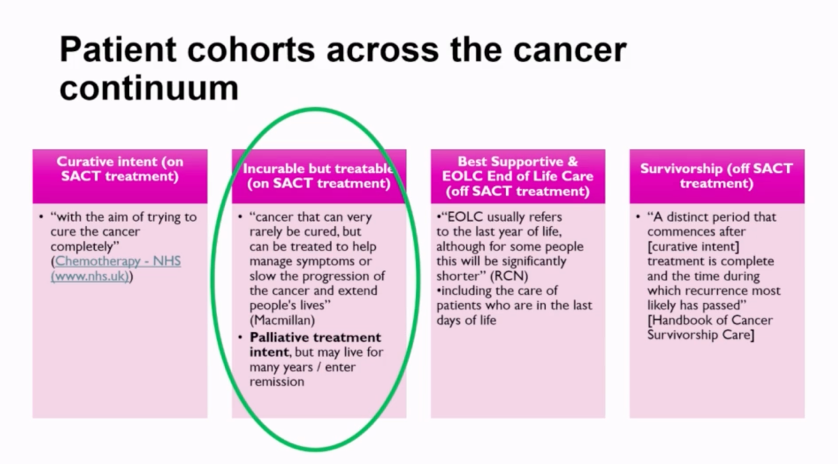
How going to look after all these people?
- More people are living longer with incurable but treatable disease
- There are growing numbers of cancer survivors
- Increasing numbers of pts with significant co-morbidities + frailty are being treated for cancer
- QoL issues (related to disease + treatments) exist across the whole cancer continuum
- Rising costs of treatment + care
- Limited workforce
Increasing complexity of patients
- Increased age / frailty
- Acute medical illness
- SACT
- Multimorbidity/polypharmacy
- PK/PD
- Renal/hepatic function
- Availability of enteral route – some pts may not be able to take enteral meds
- Prognostic uncertainty
Supportive Care MDT
Oncology, Pharmacy, Supportive Care, Physiotherapy, Onco-endocrinology, Psycho-oncology, Other relevant stakeholders in the case
- Osteoporosis is a common complication in cancer pts hence onco-endocrinology specialists are needed
Patients experience problems across the entire spectrum of the disease
During treatment
- Control of pain + symptoms due to the cancer + the cancer Tx (incl curative intent)
- Organ-specific problems requiring specialist care
- Psychological issues
- Acute oncological illness
- Nutrition / exercise issues
- Rehabilitation needs
After treatment
- Chronic survivorship pain
- Long term effects of treatment
- Bone health + endocrinopathies
- Joint + soft issue problems
- Psychosexual issues
- Financial toxicity
- 2nd cancer risk
Symptoms may be cancer or treatment related
- Pain, N+V, Constipation / Diarrhoea
- Oral problems – mucositis, dry mouth, thrush -> feeding will be important
- Poor appetite, cachexia – ie result of polypharmacy -> pts will need supplements
- Fatigue / lethargy / Breathlessness – ie in lung cancers / metastatic lung cancer -> teach breathing issues
- Skin-itching, rash – ie lymphomas + some cancer tx ie BRAF/MEK inhibitors
- Hiccups – steroids due to GI irritation = anti-psychotics/gabapentin can be used to help
- Cough – medication / lung cancer common
- Confusion /delirium – underlying mental health conditions, end of life delirium, Alzheimer’s, dementia -> intensified by opiates)
- Psychological – anxiety, depression
- Endocrine problems
- Seizures
- Abnormal bleeding – consider NSAIDs, anticoagulants meds = review
- Fungating tumour – can develop during course of condition or have been developing for a long period of time
- Late effects
Challenges for the supportive care pharmacy team
- Complexity – Increased multimorbidity + polypharmacy
- Use of high-risk medicines eg opioids
- Managing SACT drug interactions
- Limited evidence-based focus should be on creating the evidence
Focus on cancer pain
At least half of pts will develop some kind of pain when undergoing cancer treatment or due to the cancer itself
Pain is one of the most common Sx in cancer + may be caused by:
1. Tumour growth causing pressure on surrounding organs + structures (nociceptive pain) + nerves (neuropathic pain), bone metastases (somatic)
2. Anticancer treatment eg mucositis, chemotherapy-induced peripheral neuropathy (CIPN) (common with taxane, platinum therapy), tumour pain flare post SACT or RT
- Duloxetine or capsaicin patch can be used
- Steroids for RT induced pain
3. A combination of the above – cancer pain is often multifactorial = mixture of nerve pain, nociceptive pain or somatic pain
4. Non-cancer causes
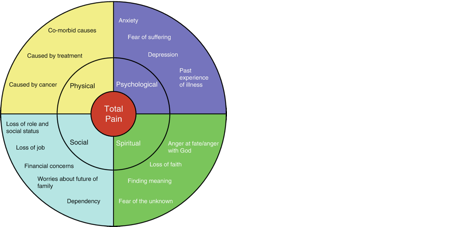
WHO pain ladder can be used but targeted pain therapy is now the approach recommended
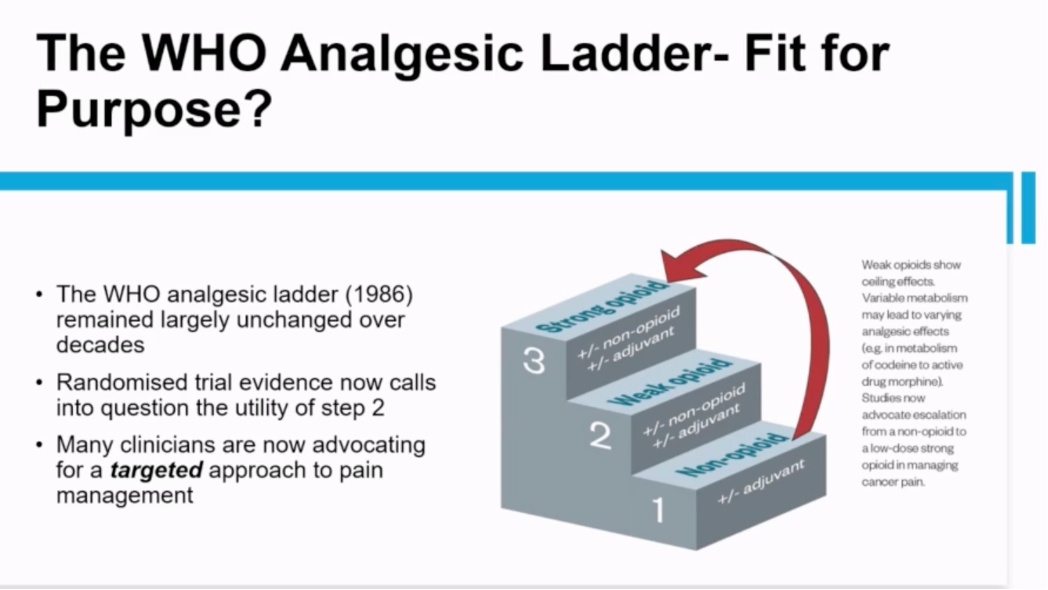
Principles of Analgesic Use
By the mouth – oral where feasible
By the clock – regular time intervals, back up doses for breakthrough pain
By the ladder – may need multimodal approach (no need for step 2)
By the individual – evaluate the pain, select appropriate analgesic + titrate dose to individual need
Attention to detail – monitor benefit + treat undesirable effects
Breakthrough cancer pain (BTcP)
Breakthrough pain is a transient exacerbation of pain that occurs either spontaneously or in relation to a specific predictable or unpredictable trigger, despite relatively stable + adequately controlled background pain
- Predictable event (movement – incident pain) – ie pt moves out of bed = pain
- Spontaneous (no precipitating factors) – pain comes on all of sudden ie nerve spasm
- Don’t confuse with uncontrollable background pain
- Short lived? Resolves spontaneously? – if last a few mins = no need to give analgesic top up
- Usually use same opioid PRN (“rescue”) as background (may be issues with this approach)
- 1/10th to 1/6th of daily modified relief opioid dose – state max dose
BTcP – oral opioids
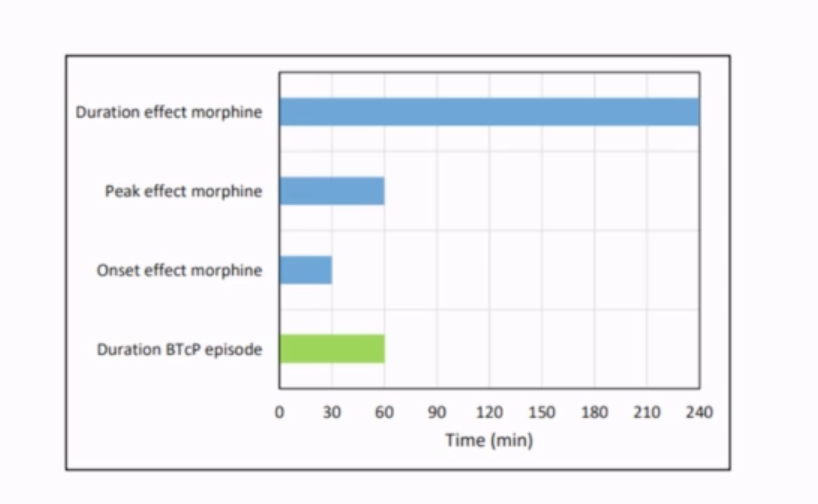
BTcP generally has a relatively rapid onset (median 5-10mins) + short duration (45-60mins) but ranging from <1min to 4-6h. By comparison, oral morphine, on average, takes about 15-30mins (oral solution quicker than tablet) to achieve meaningful pain relief + has a longer duration of effect (3-6h)
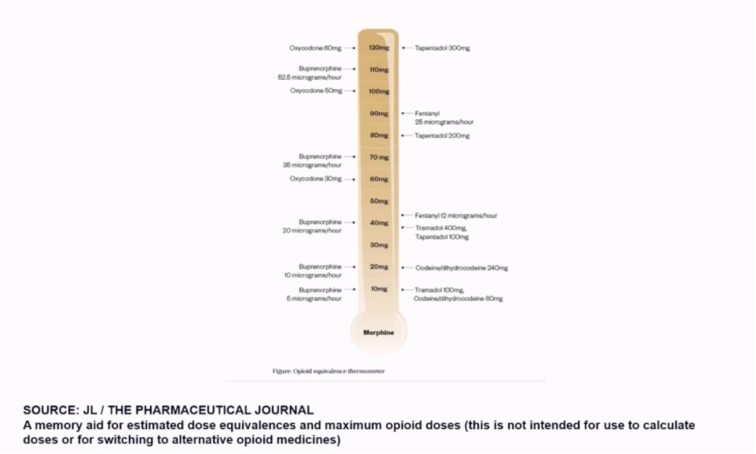
Common analgesics
- Paracetamol
- NSAIDs incl COX-2 inhibitors = need to be careful in pts using chemotherapy
- Opioids – concerns about prescribing opioids in ppl with curable cancer
- Neuropathic agents – antidepressant + gabapentinoids
- Steroids
Strong opioids
Good analgesics for acute pain + at the end of life
Few, if any CIs in advanced disease
Risk of harm increases substantially at doses >120mg oral morphine equivalent per day
Risks + benefits need to be considered, even where pts considered to be in the last 12m of life
Attempts to deprescribe in the chronic (non-cancer) pain setting where risk of harm likely to outweight benefits
Adverse effects of opioids
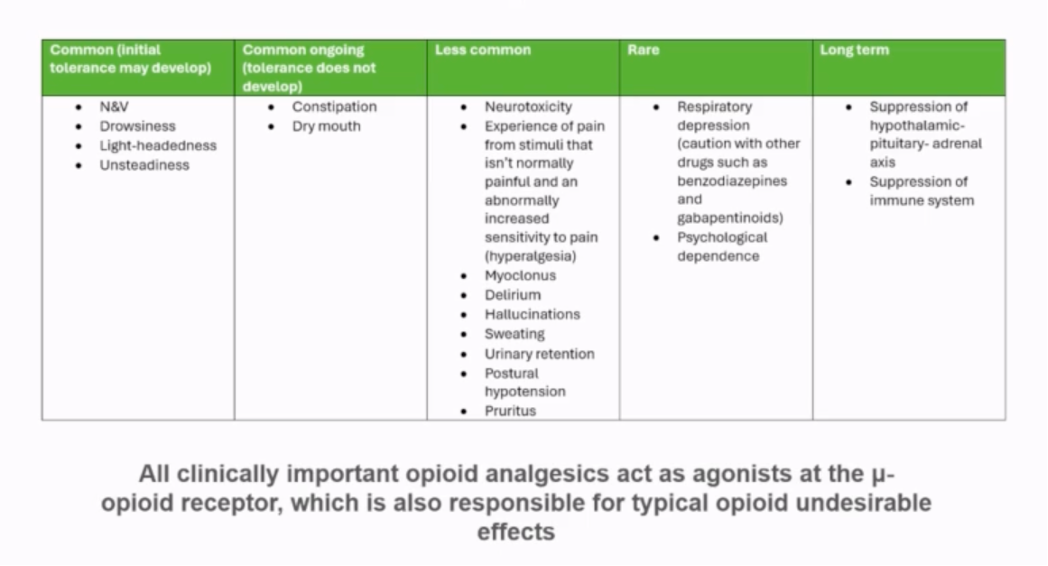
Neurotoxicity – can become delirious with opiates, especially those with underlying cognitive dysfunction
Hyperalgesia – higher doses of opiates seem to make the pt more sensitive to pain stimulus = need regular review to prevent the pt developing this
Psychological dependence – common if using long-term
Immunosuppression – ie fentanyl -> can affect cancer return = affect pt outcomes
Morphine: Strong opioid of choice
- For moderate to severe pain
- Cheap + available
- Oral route preferable
Other opioids used when morphine:
- Not available
- Unacceptable side effects
- Severe renal impairment
Alternative Strong Opioids
When morphine cant be used or is unsuitable:
Oxycodone (oral or SC) – usually 2nd line choice
Fentanyl (transdermal – TD)
Buprenorphine (transdermal – TD)
Transdermal route: only used when pain stabilises – not to be used for acute/uncontrolled pain
Alfentanil + diamorphine are 3rd line opioids which may be used by or on the advice of the SCT. They are not readily available in the community