9.3 & 9.4: The Excretory System
Functions of the excretory system
- Excretion
- concentration of nitrogenous wastes (urea) and removal from the body
- Osmoregulation
- maintain isosmotic conditions between ICF and ECF
- pH regulation
- maintains pH baby secreting/absorbing H+
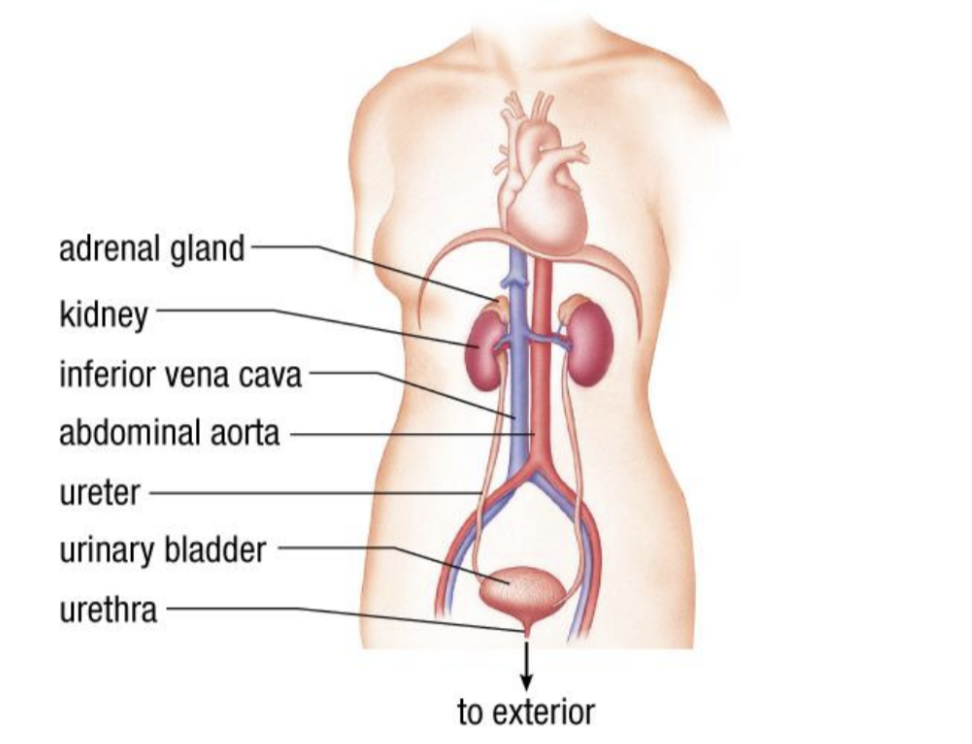
Structures of the excretory system
- Ureters
- Urinary Bladder
- Urethra
- Kidneys
- mammals have 2 kidneys: left & right
- filters wastes from the blood
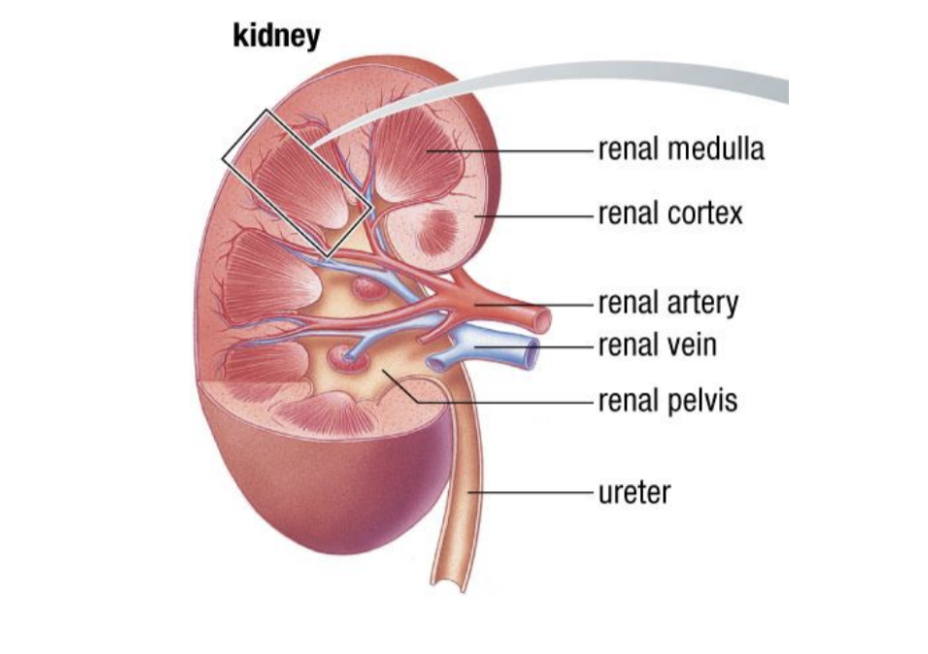
- renal artery supplies blood (waste)
- branches from abdominal aorta
- renal vein removes blood (clean)
- branches from the inferior vana cava
- layers to kidneys:
- renal cortex
- renal medulla
- renal pelvis
- ureter removes urine to urinary bladder, and urethera removes urine from the body
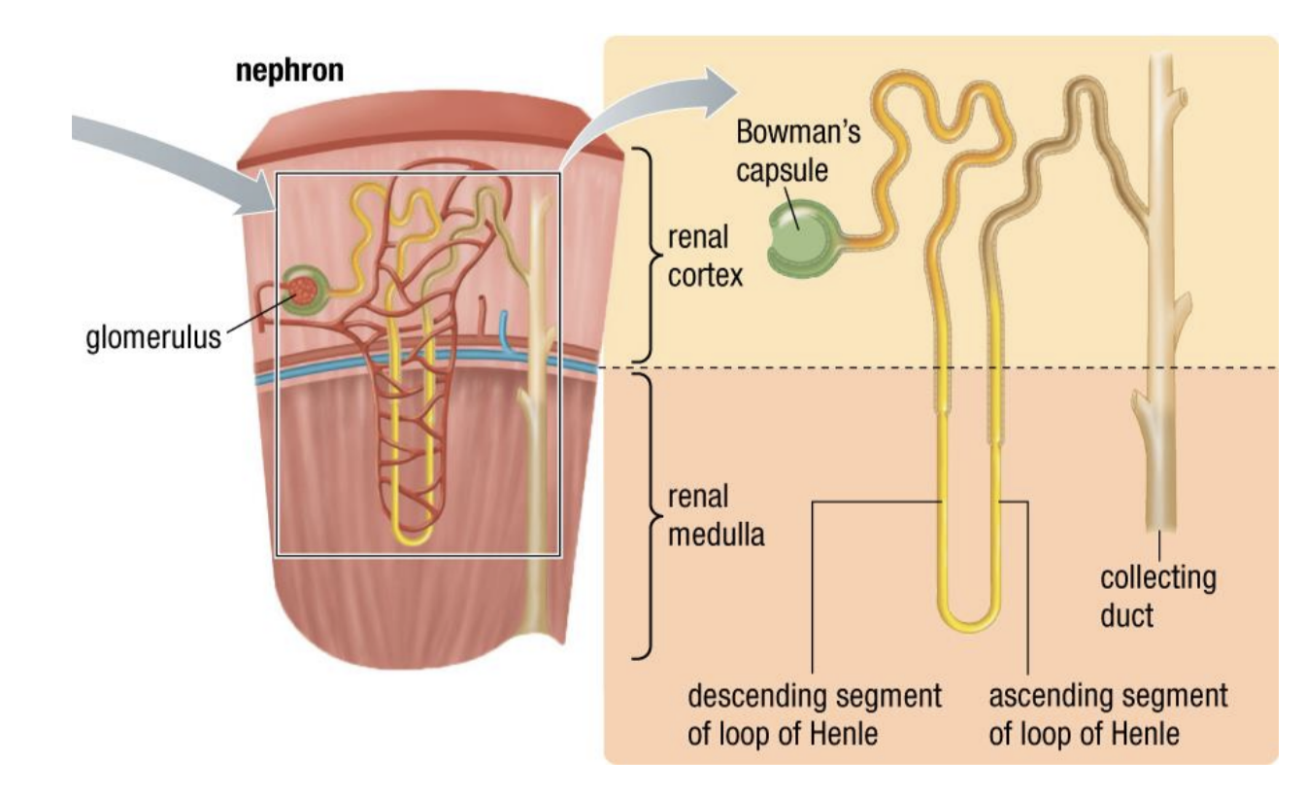
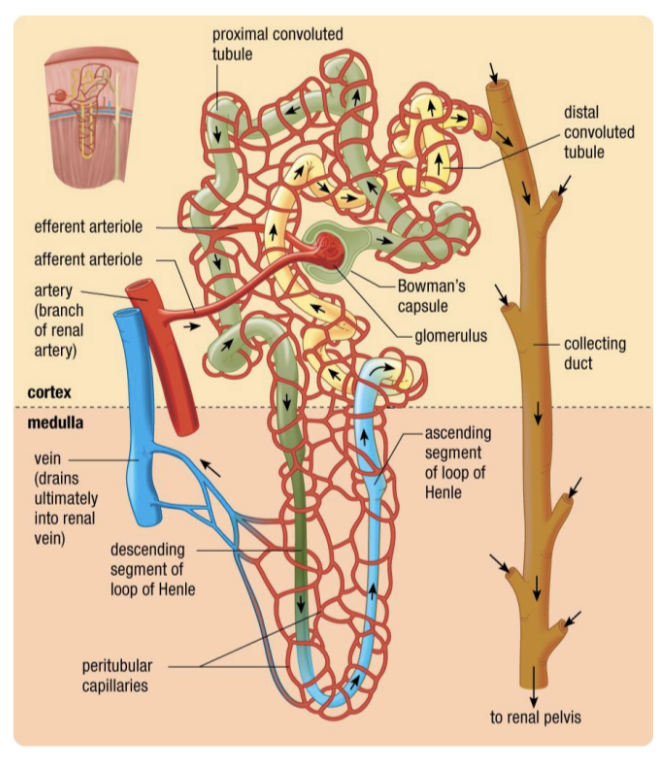
- Nephrons
- functional unit of the kidney
- system of %%blood vessels%% and %%tubes%% that filter waste from blood
- blood enters via renal artery → afferent arterioles → %%glomerulus%% (bundle of capillaries)
- %%Bowman’s capsule%% surrounds glomerulus and performs first filtration step
- Blood moves from the glomerulus to %%peritubular capillaries%% via efferent arterioles
- Peritubular capillaries surround p%%roximal convoluted tubule, Loop of Henle, distal convoluted tubule%% for further filtration and urine formation
- Blood exists kidney via the renal vein
- Urine drains through %%collecting ducts%% to %%urinary bladder%%
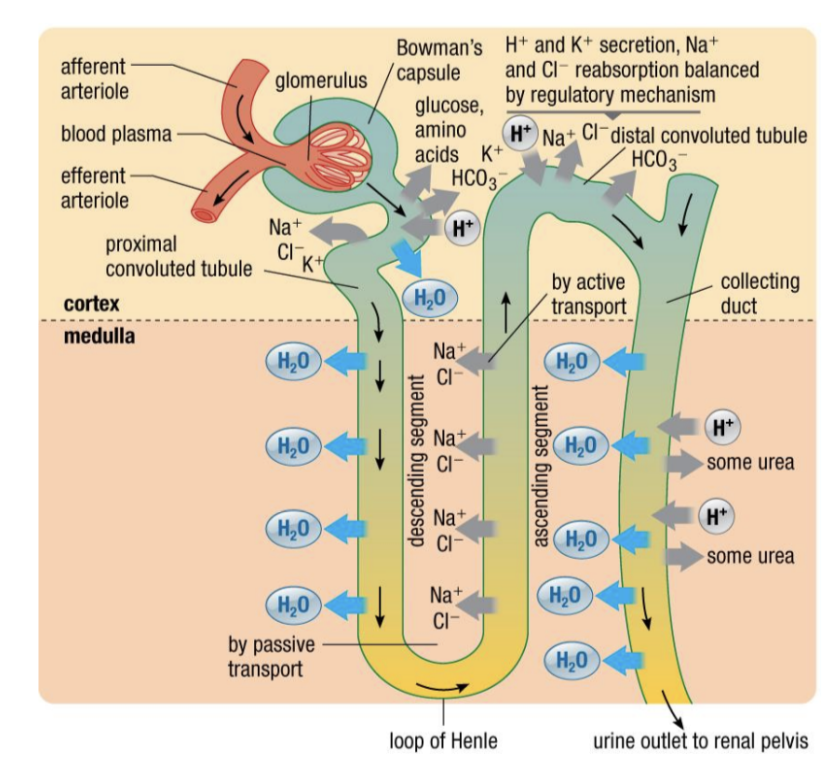
Urine Formation
- Filtration
- Location: Bowsman’s capsule
- Process:
- water, ions, small nutrients (glucose, amino acids), urea move from glomerulus into tubules forming filtrate
- cells and large proteins remain in capillaries
- Reabsorption
- Location:
- proximal convoluted tubule
- loop of henle
- distal convoluted tubule
- collecting duct
- Process:
- ions are pumped from filtrate into interstitial space
- filtrate becomes hypnotic, interstitial space become hypertonic
- water diffuses into interstitial space (reabsorbed into blood)
- nutrients (glucose, amino acids) are actively reabsorbed
- Secretion
- Location:
- proximal convoluted tubule
- distal convoluted tubule
- collecting duct
- Process:
- H+ actively secreted from interstitial fluid tubules, regulates pH
- urea and other wastes passively secreted into tubules