Energy Resources
Materials or elements used to produce energy.
The lithosphere in its depths contains rich reserves of energy resources such as oil, natural gas and coal which we extract in great quantities. We use this energy to power factories, fuel car engines and heat buildings.
- Fossil fuels result from the transformation of organic residue. These energy sources consist of oil, natural gas and coal.
Fossil fuel
Fossil fuel comes from dead marine animals and algae that lived in the sea for a period of time. When they die, these organisms sink to the seafloor and overtime covered by sand, silt, rocks and minerals. The pressure from these sediments slowly turns them into oil.
Natural gas
Natural gas is produced in the same way and comes from the same source as oil.
Fossil fuels is the transformation of organic residue. These energy sources consist of oil, natural gas and coal.
Most of the world electricity is produce from fossil fuels. The energy produced is called fossil energy.
Coal
This does not come from marine organisms but from terrestrial plants and trees that once grew in the swamps and over time, these swamps were buried under sand and silt. The organic residue was compressed and turned into coal.
Uranium
Uranium is a radioactive element that occurs naturally in the earth’s crust.
- Splitting the nucleus of uranium atoms produces a large amount of energy, called nuclear energy that can be converted into electricity.
- A handful of uranium can produce as much electrical power as approximately 70 tones of coals.
- Fission is the splitting of atoms that creates nuclear energy. It does not release greenhouse gasses into the environment, but it contributes to radioactivity.
- The waste associated with nuclear energy is also a problem as the material and equipment that come in contact with radiation continue to be radioactive for hundreds of years. The waste is cooled in huge pools and buried either in former mines or custom-built concrete pits. No method currently exists to neutralize radioactivity.
Nuclear energy is the energy stored in the bonds between the particles in the nucleus of an atom.
Geothermics
Geothermal energy is energy that comes from the internal heat of the earth.
Under the earth’s crust lies molten material that contains large amounts of energy. This type of energy is called geothermal energy.
To obtain geothermal energy a fluid is circulated deep underground. It is then heated by the molten rocks and then rises to the surface. It is now charged with energy that can be converted into electricity or used directly to heat buildings.
- Geothermal energy is used in volcanic regions, parts of the world that consist of hot rocks. The hot water from underground rises to the surface by itself. No other fluid is needed to capture heat.
What will be the energy of tomorrow?
fossil fuels are in danger of running out within the next few decades, nuclear power raises concerns among the population, and geothermal energy is expensive. Therefore, engineers are increasing their efforts to come up with new sources of energy that are both renewable and clean.
Researchers are trying to perfect fuel cells in which hydrogen reacts with oxygen to produce electricity, heat, water and no waste.
Hydrogen is the most abundant element on the earth, and it is always bonded to other atoms. To separate it will require energy.
Nb
Fission is the action of dividing or splitting something into two or more parts.
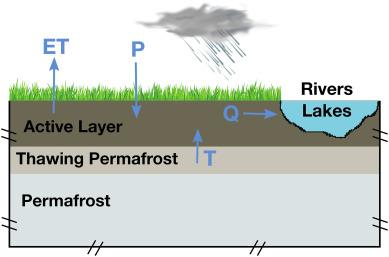
Example of permafrost