LIFESPAN DEVELOPMENT
Lifespan Development Overview
Focuses on growth from birth to death, impacting anatomy and disorders.
Neonatal and Infant Stages
Definitions
Neonates: Birth to 1 month old.
Infants: 1 month to 1 year old.
Vital Signs and Anatomy Differences
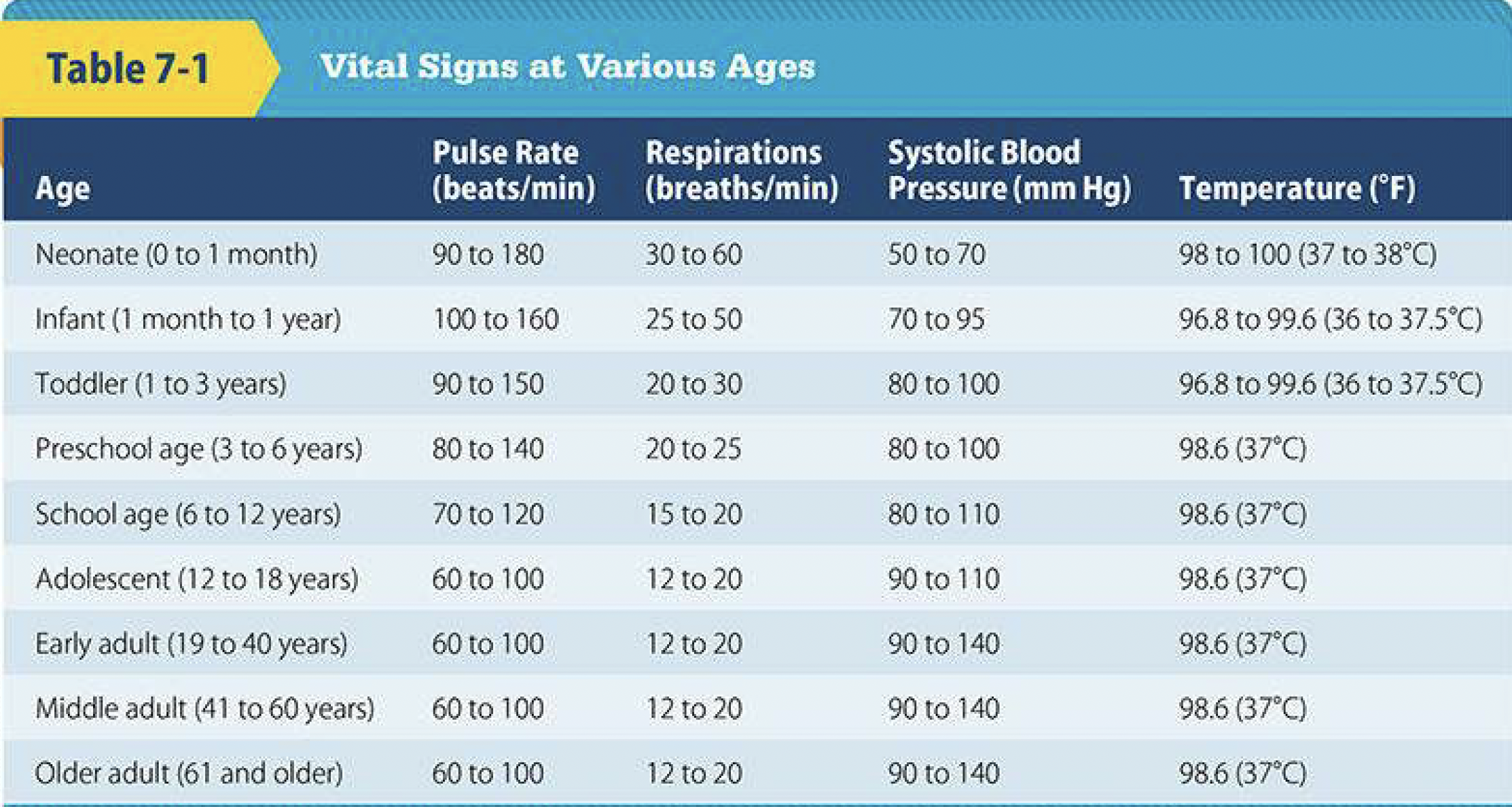
Smaller blood volume and cardiovascular system heart has to work harder. The younger the person the faster pulse and respirations.
Blood pressure directly correlates to p.t. weight and increases with age
Weight
neonate 6-8 lb birth
growth ~30g/day
Increased heart rate, decreased blood pressure:
Neonates/Infants: Higher heart rate due to a smaller heart working harder.
Higher respiratory rate due to smaller lung capacity for oxygen intake.
Cardiovascular system
birth neonate transitions from fetal to independent circulation
Pulmonary system
infants younger than 6 MO prone to nasal congestion
infants large tounges + short/narrow airways→ airway obstruction common
Nervous System Characteristics
Sensitive nervous system; responds strongly to stimuli.
evolves after birth
Key neurological assessments:
Palmar Grasp Reflex: Baby grips objects placed in palm.
Moro Reflex: response when startled or feel like falling
Sucking Reflex: Instinctive sucking response when objects are near the mouth.
Skeletal Considerations
Fontanelles: Soft spots where skull bones haven't fused.
Anterior fontanelle typically closes before birth; posterior fontanelle closes between 9-18 months.
Assess fontanelles in head trauma or dehydration for important health indicators.
Immune System Development
Infants receive antibodies from mother, but their immune systems are immature.
Increased susceptibility to illnesses; frequent respiratory and GI issues.
physcosocial changes begin @ birth and evolve
Developmental Milestones
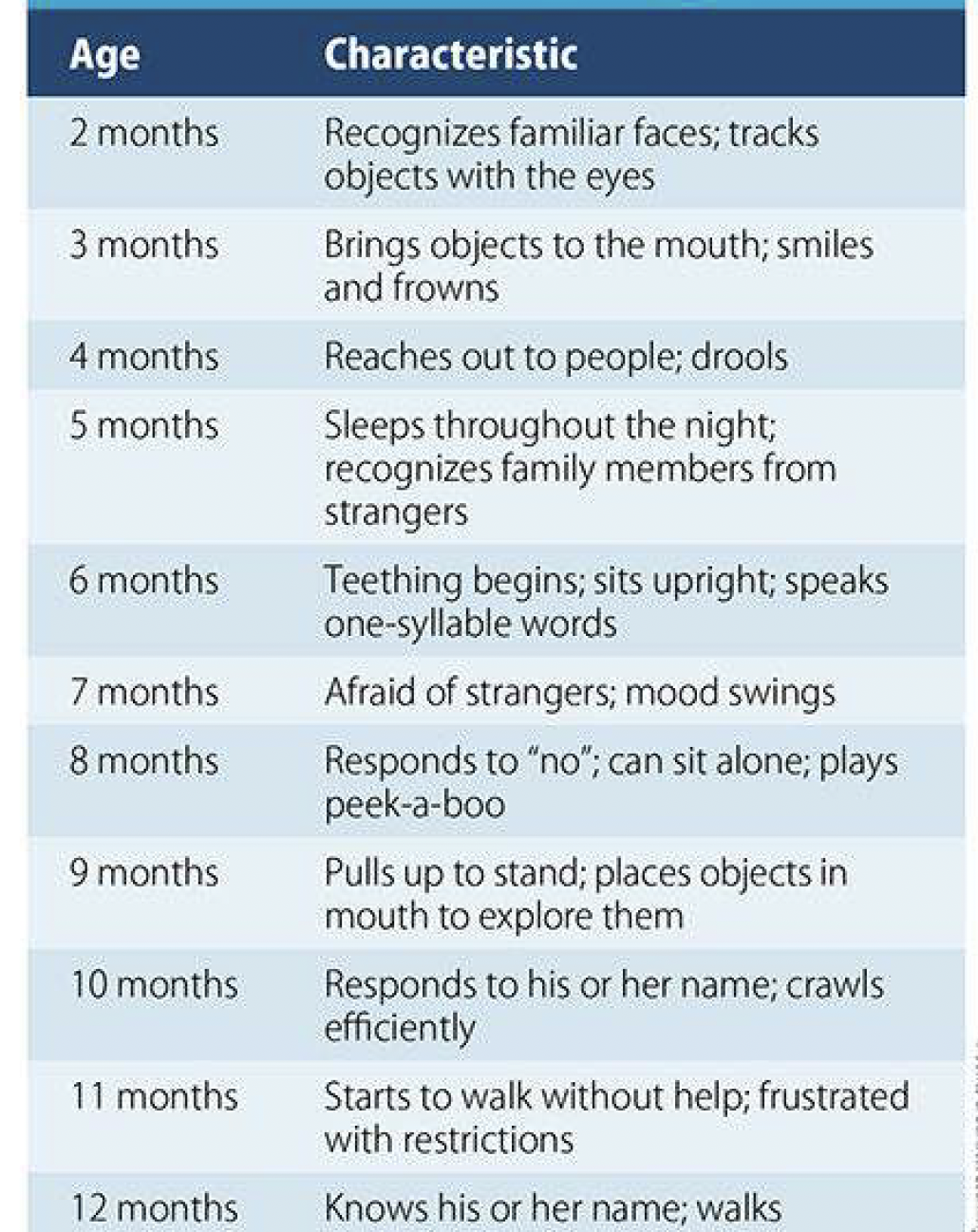
2-5 Months: Increased hand activity, tracking with eyes; no verbal communication.
6-9 Months: Development of communication skills, stranger anxiety noted by 7 months.
10-12 Months: Increased activity (crawling, standing) and risks of falls and choking.
Psychosocial changes
crying is main method of communicating (crying baby is healthy)
bonding is based on secure attachment
separation anxiety is common in older infants
trust and mistrust involves needs being met
Toddler (1-3) and Preschooler Stages (3-6 Years)
Vital Signs
Similar trends to infants with gradual normalization approaching adult levels.
Toddler: 90-150 bpm, 20-30 breaths/min SBP 80-100 mm Hg
Preschoolers: 80-140 bpm, 20-25 breaths/min, systolic bp 80-100 mm Hg
Health Risks
Increased vulnerability to respiratory illnesses (croup, epiglottitis, pertussis).
Loss of passive immunity leads to independent immune responses.
do not have well-developed lung musculature-prone to resp. ill.
Growth and Communication
Significant development in neuromuscular skills and social interactions. (sad, angry, etc)
no response is a little more concerning
Ability to express basic emotions; developing sentences.
Child Stage (6-12 Years)
Physical Changes
Vital signs approaching adult norms (Pulse: 70-120, BP: 80-100, resp 15-20).
Noticeable growth metric: average four pounds and 2.5 inches per year.
permanent teeth come in
brain activity in both hemispheres
Psychosocial Development
Development of reasoning and self-esteem.
Emotional responses become more complex; appropriate reactions to various circumstances critical.
Adolescent Development (12-18 Years)
Vital Signs Normalization
Heart rate normalizes to adult levels. (pulse 60-80, resp 12-20, systolic bp 90-110 mm hg)
Physical Changes
2-3 year growth spurt (girls finish 16 yrs boys by 18 yrs)
Puberty leads to rapid development and identity exploration.
secondary sexual development takes place
voice starts to change
menstruation begins
Psychosocial Issues
Increased anxiety, depression, and risk of substance abuse.
Notable family dynamics shifts and struggle with self-identity;
Higher incidence of suicidal thoughts compared to adults.
privacy becomes an issue
antisocial behaviors and peer pressure peak 14-16 years
smoking, illicit drug use, unprotected sex and eating disorders
Early Adulthood (19-40 Years)
Vital Signs and Health
Peak physical performance typically seen around 19-25 years.
Stable vital signs; potential for developing chronic conditions (high blood pressure, cholesterol).
Psychosocial Priorities
Focus on career, family, and education goals.
Middle Adulthood (41-60 Years)
Health Considerations
Normal vital signs but higher incidence of chronic issues.
Increased cancer incidence and onset of menopause in females.
vuneravle to vision and hearing loss
menopause occurs late 40s early 50s
diabetes, hypertension weight problems
Psychosocial Changes
Life adjustments as children leave home, leading to potential loneliness.
focus on achieving life goals
Older Adults (61+ Years)
Vital Sign Variability
Vital signs may vary based on individual health conditions (hypertension, diabetes, heart conditions).
life expectancy (@time presentation) 78 yrs
vitals depend on
overall health, medical conditions, medications taken
older adults able to overcome medical problems but take lots of meds (i.e. b-blockers with a hr of 66)
cardiovascular system
declines with age due to atherosclerosis
HR and CO decrease
vascular system becomes stiff
ability to replace blood cells declines, as does blood volume
Respiratory
size of airway increases but surface area of alveoli decrease
natural elasticity of lungs decreases
breathing becomes more labor intense
aspiration and obstruction is more likely
vital capacity decreases
residual volume increases
Endocrine System
insulin drops off
metabolism decreases
physical activity slows, but no change in food intake
hormone production decreases
sexual desire is lowered
digestive system
taste sensations decrease
salivia production decreases
ability of intestines to contract and move food diminishes
Renal system
filtration function declines
kidney mass decreases by 20%
decreased ability to clear wastes from the body
decreased ability to conserve fluids when needed
Nervous system
motor and sensory neural networks slow down
neurons are lost
sleep patterns change
peripheral nerve sensation diminishes
brain mass decreases
Sensory changes
hearing loss or vision loss
visual distortions common
hearing 4x more common
Physcosocial changes
most people retain high brain function until about 5 years before death
95% elderly live at home
financial restrictions restrict access to healthcare
isolation and depression can be challenging
Neurological and Sensory Changes
Decreased sensory functions may lead to greater risks of injury/infection.
Psychosocial Factors
Challenges with isolation, loneliness, and increased mental health issues like depression in the elderly.
All Vitals Combined