2 the 1452 coup and the first protectorate
In the early 1450s, Richard, Duke of York, challenged the rule of King Henry VI due to concerns about the king's unstable mental health, his poor leadership, and the growing influence of unpopular royal advisers, particularly the Duke of Somerset. York believed he had a stronger claim to the throne, being a descendant of King Edward III.
In 1452, York launched a coup attempt, aiming to take control of the government. He gathered a small force, but his efforts were quickly thwarted. Despite initial success in rallying support from discontented factions, his rebellion lacked enough backing to effectively challenge Henry VI's power. The king's forces were able to suppress the uprising, and Richard was forced to submit to Henry VI.
York's failed coup didn’t end his ambitions. He continued to position himself as the rightful heir, and tensions continued to rise. This laid the groundwork for the outbreak of the Wars of the Roses in 1455, as Richard later declared open rebellion against Henry VI, leading to the Battle of St. Albans.
In short, the 1452 coup was a failed attempt by Richard to seize power, but it was a crucial moment that signalled his dissatisfaction with the monarchy and his future role in the civil conflict.
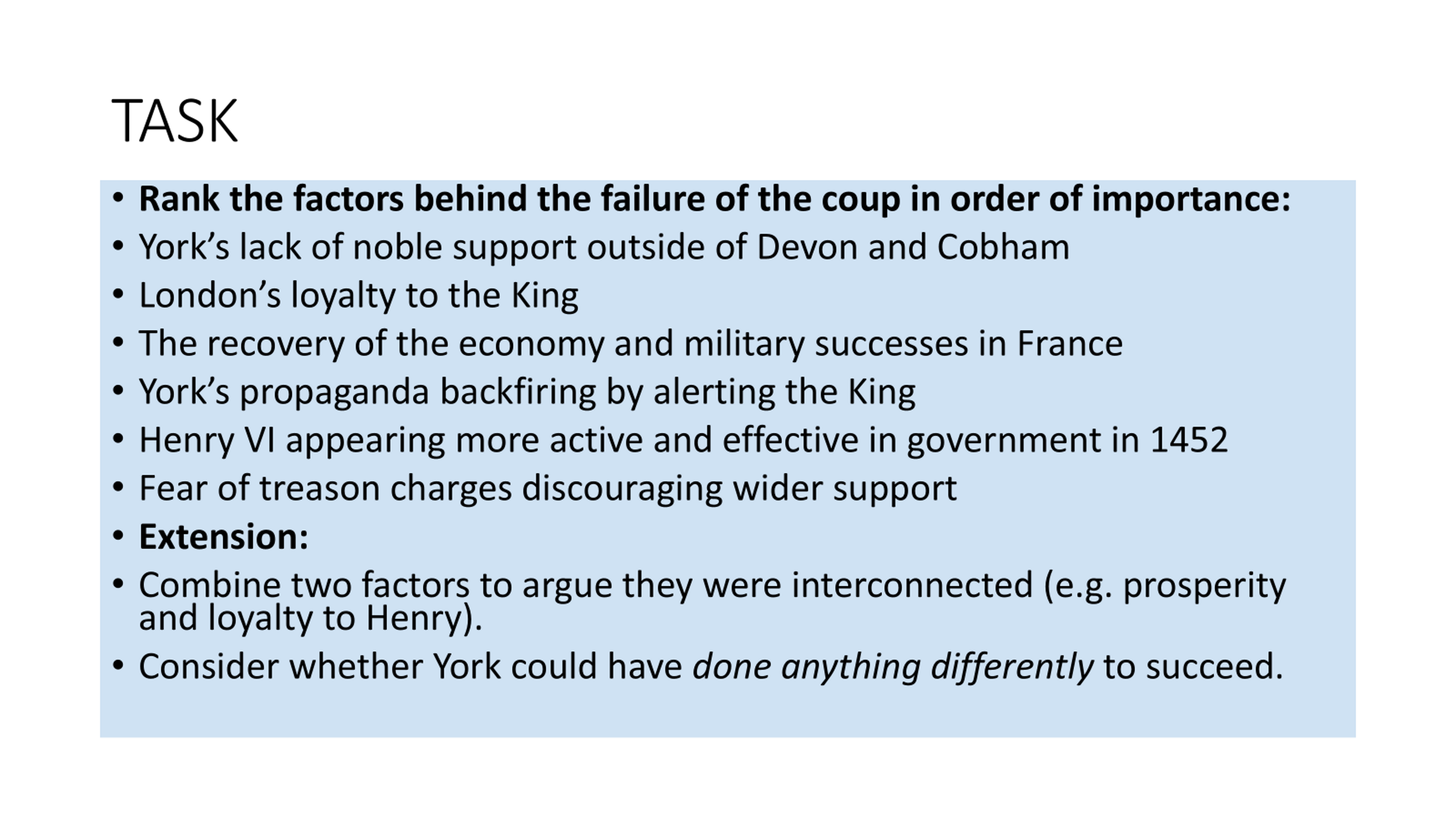
Fear of treason charges discouraging wider support
The potential for being branded a traitor was a significant deterrent for many who might have otherwise supported York’s cause. Treason was a serious crime with severe consequences, and many nobles and gentry would have been hesitant to take up arms against the king, knowing that any failure would lead to their downfall. This fear would have discouraged the kind of widespread rebellion that York needed.
York’s propaganda backfiring by alerting the king
York's decision to openly challenge the king through letters and public statements had the unintended effect of alerting Henry VI to the threat. It allowed the king time to prepare a response, ultimately preventing any element of surprise that York might have hoped for. However, this factor is less significant than the lack of noble support and London’s loyalty, which were more decisive in the failure.
London’s loyalty to the king
London was the heart of royal power and a critical military and financial hub. Despite York's attempts to use propaganda to win over the city, London remained loyal to Henry VI. This loyalty neutralized York’s ability to mobilize resources and troops effectively, as he would have needed London’s backing to challenge the crown on a more sustained and organized basis.
York's lack of noble support outside Devon and Cobham
Most important reason: Without widespread backing from the nobility, York's coup was doomed from the start. The support of powerful and influential figures was crucial in any challenge to royal authority. York's supporters were too limited in scope, especially as key nobles, including those from the core areas of English power, remained loyal to Henry VI. The lack of a broader coalition made it hard to mobilize the necessary military force to challenge the king’s authority effectively.
Henry VI appearing more active and effective in government in 1452
Henry VI's sudden resurgence in activity and his seeming capability in running the government during this period were a serious blow to York’s claims. The perception of a strong, engaged king undermined York’s justification for rebellion. If Henry had continued to appear weak or incapacitated, York might have had a stronger case for seizing power.
The recovery of the economy and military successes in France
While this is a factor in the broader political context, its direct impact on the failure of York’s coup is less significant. The improvement in the economy and some successes in France likely contributed to a perception of stability and royal legitimacy. However, this was not as directly influential on the coup as the lack of support from key factions in England itself.