General Biology I ORGANIC CHEMISTRY AND CELLS Lecture 5
Proteins
Composed of carbon, hydrogen, oxygen, nitrogen, and small amounts of other elements, notably sulfur
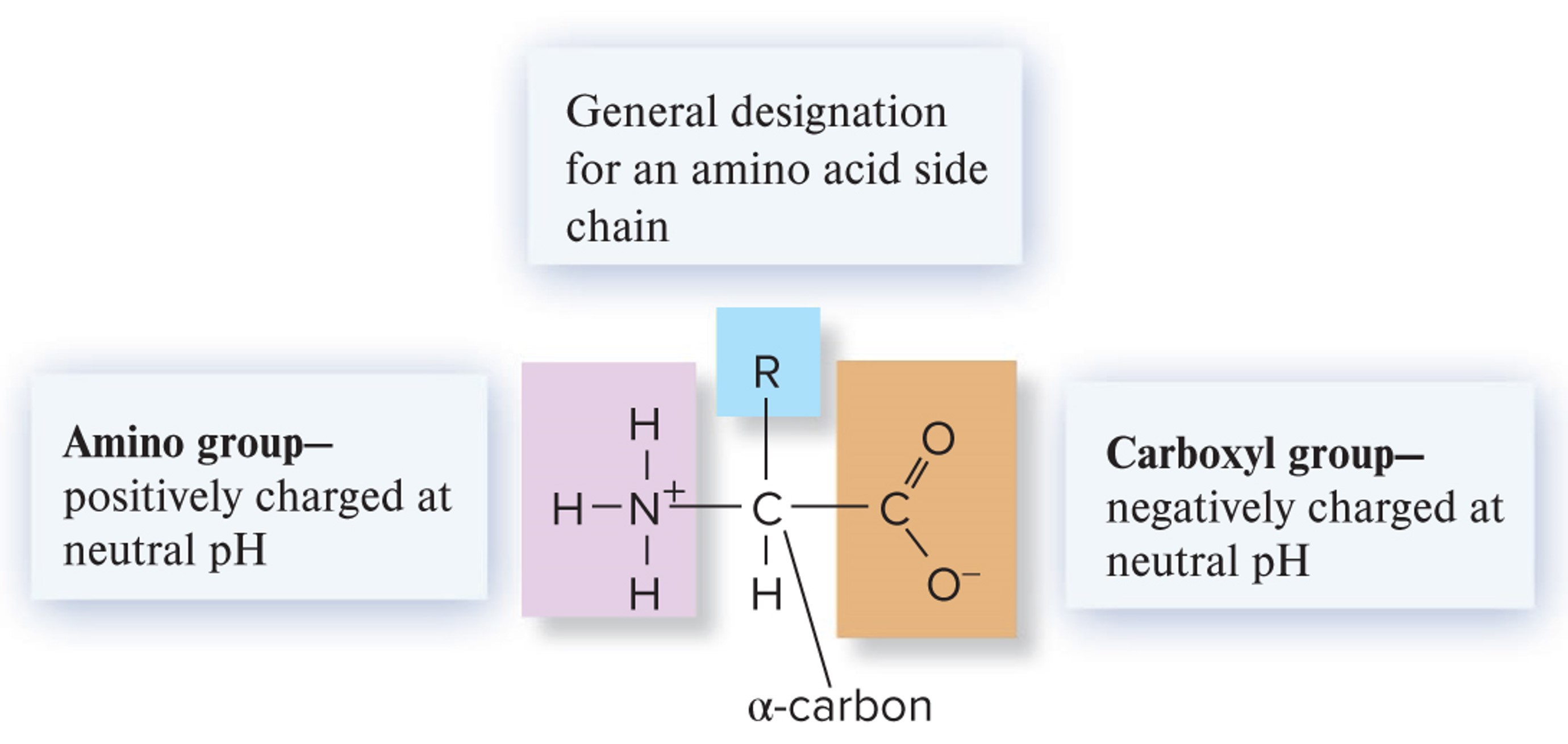
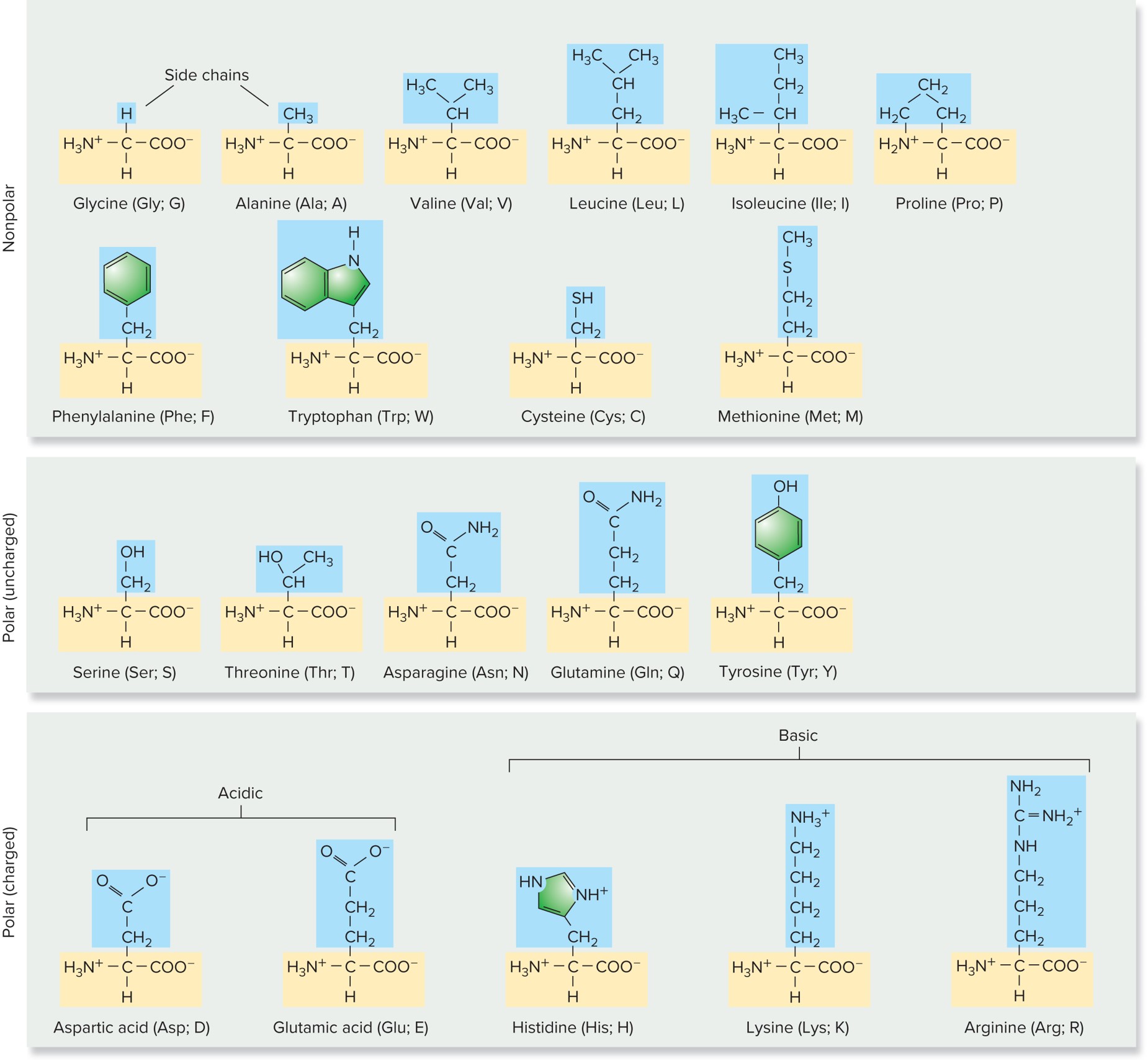
Building blocks of proteins are amino acids
20 different amino acids
Common structure with variable sidechain that determines structure and
functionWhat do they do?
◦ Gene, expression and regulation, Motor proteins, Defense proteins, Metabolic proteins, Cell-Signaling proteins, Structural proteins, Transport proteins
Amino Acid Structure
Polypeptide formation
Amino acids joined by dehydration reaction
Carboxy + amino forms peptide bond
Polymers of amino acids known as polypeptides
The free amino group of a polypeptide is the N-terminus
The free carboxyl end is the C-terminus
Proteins may be formed from one or several polypeptides

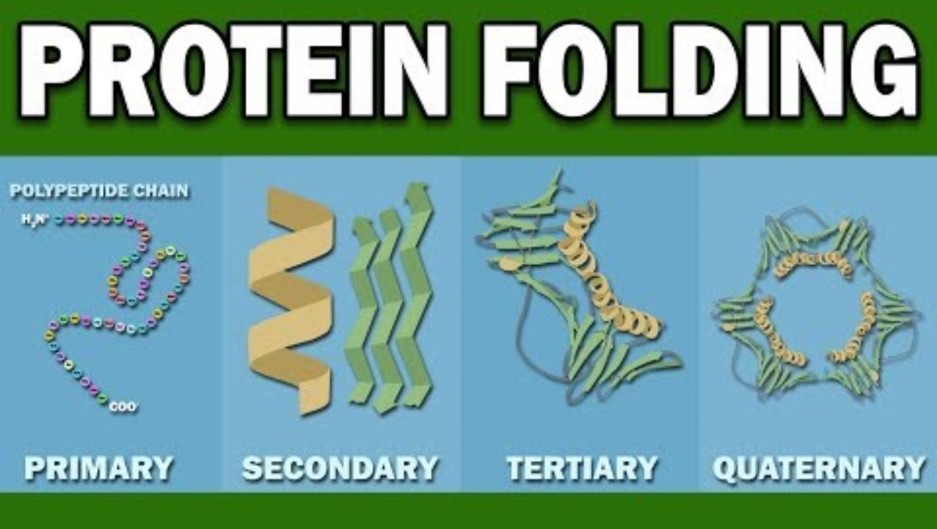
Proteins have a Hierarchy of Structure
Four progressive levels:
◦ Primary
◦ Secondary
◦ Tertiary
◦ Quaternary
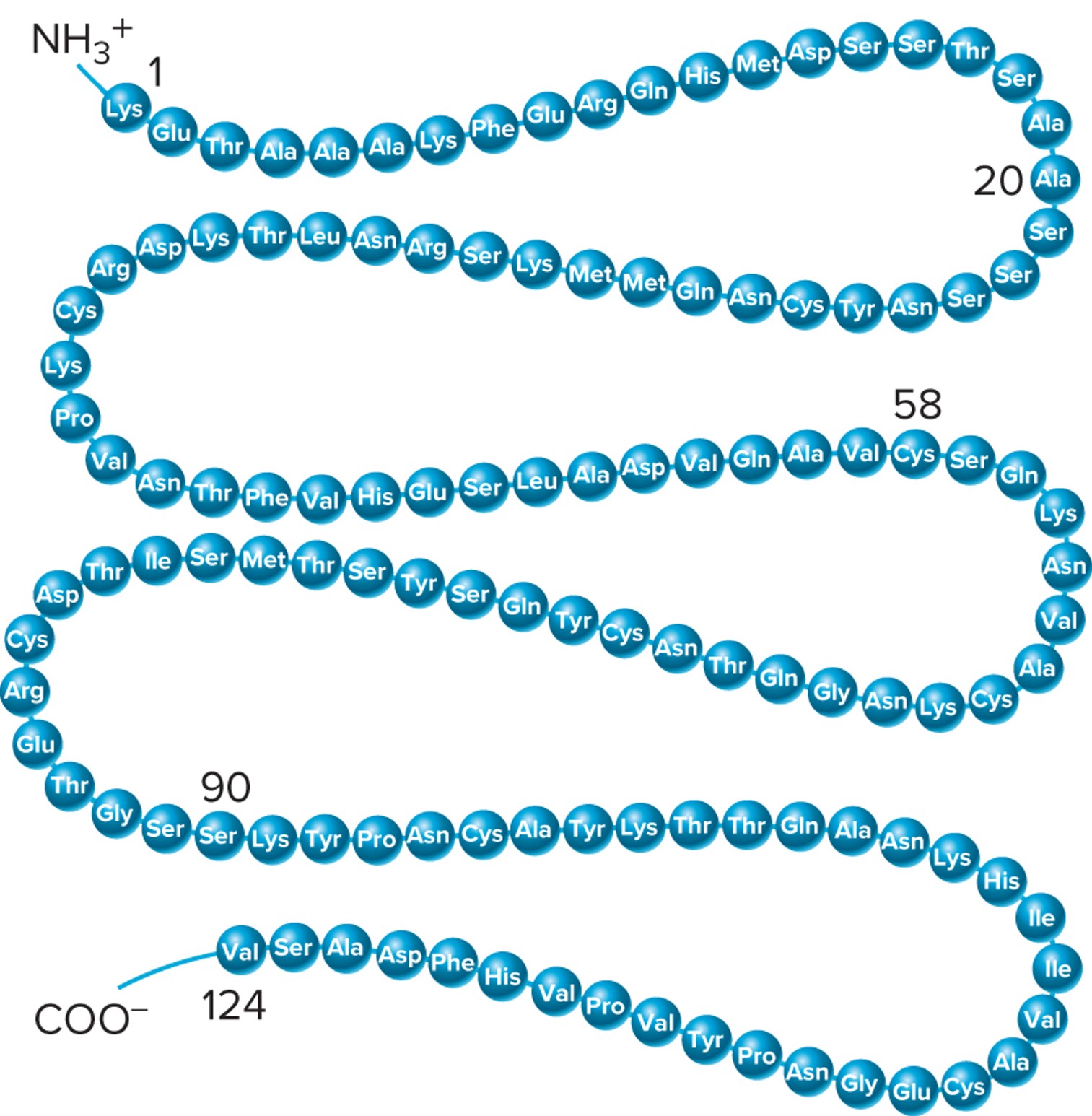
Primary Structure
Amino acid sequence
Determined by genes
Held together by peptide bonds
Secondary Structure
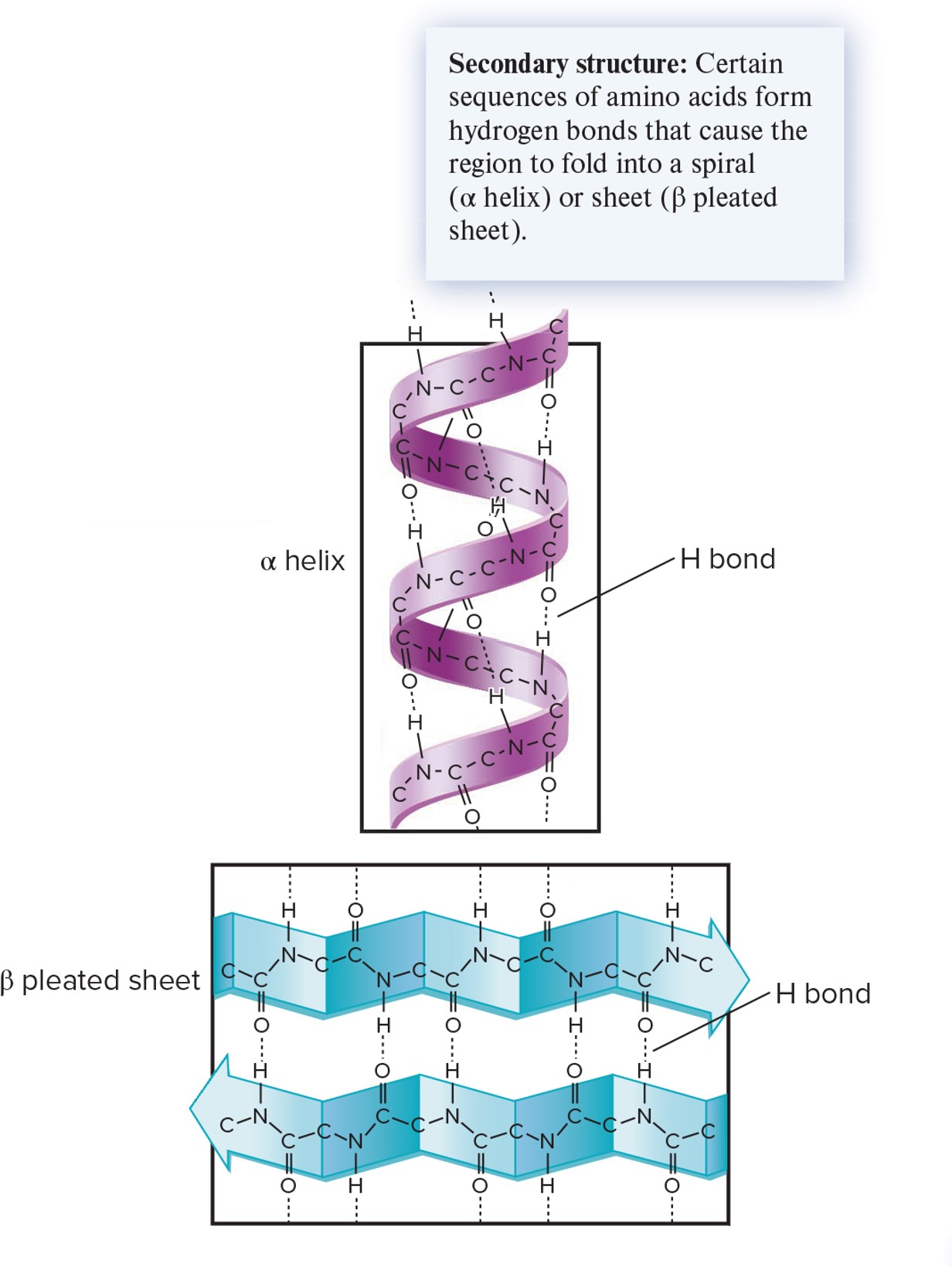
Chemical and physical interactions cause protein folding
α helices and β pleated sheets determinants of a protein’s characteristics
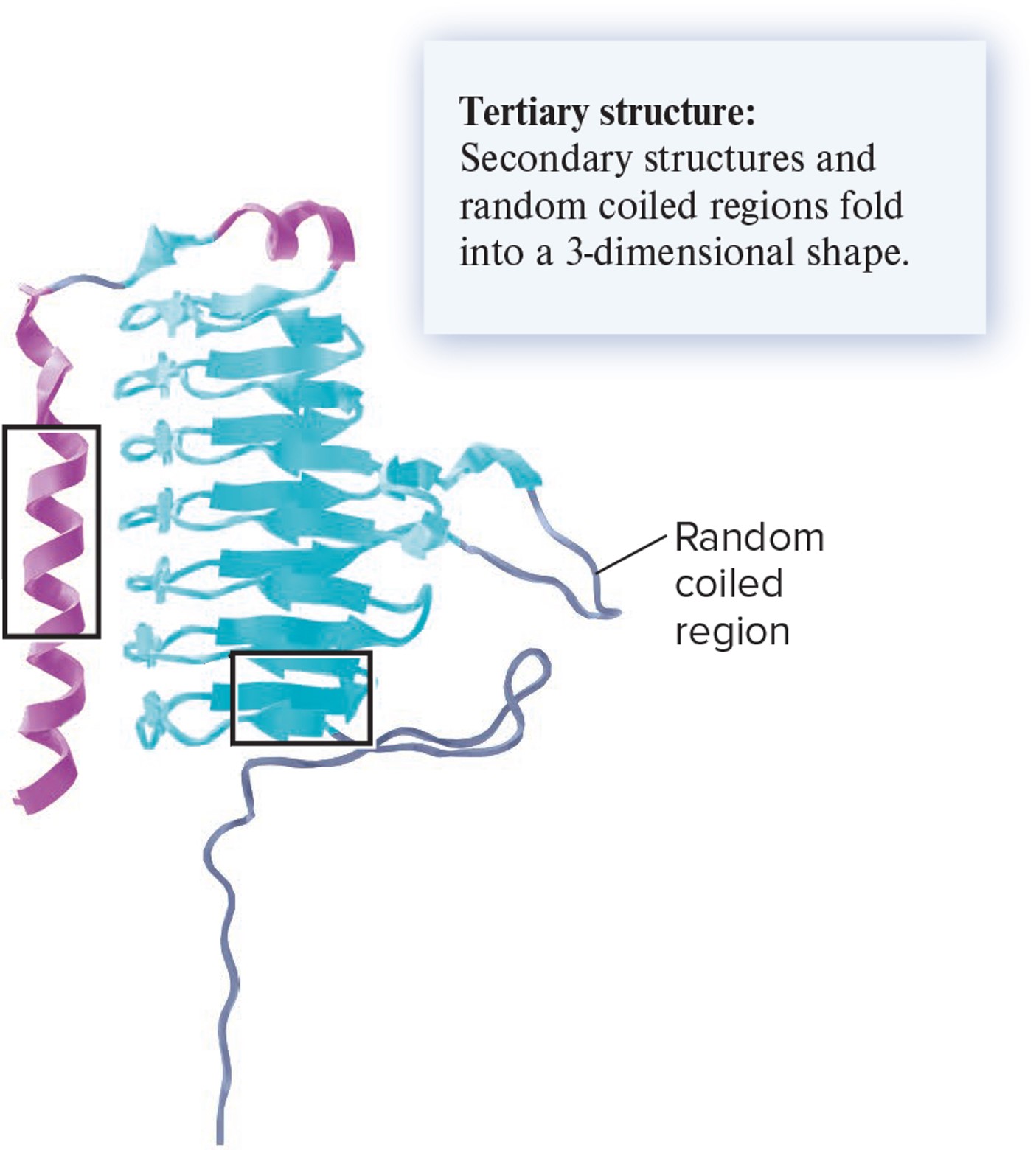
Random coiled regions” Not α helix and β pleated sheet Shape is specific and
important to function
Tertiary structure
Folding gives protein complex 3D shape
This is the final level of structure for a single polypeptide chain
Quaternary structure
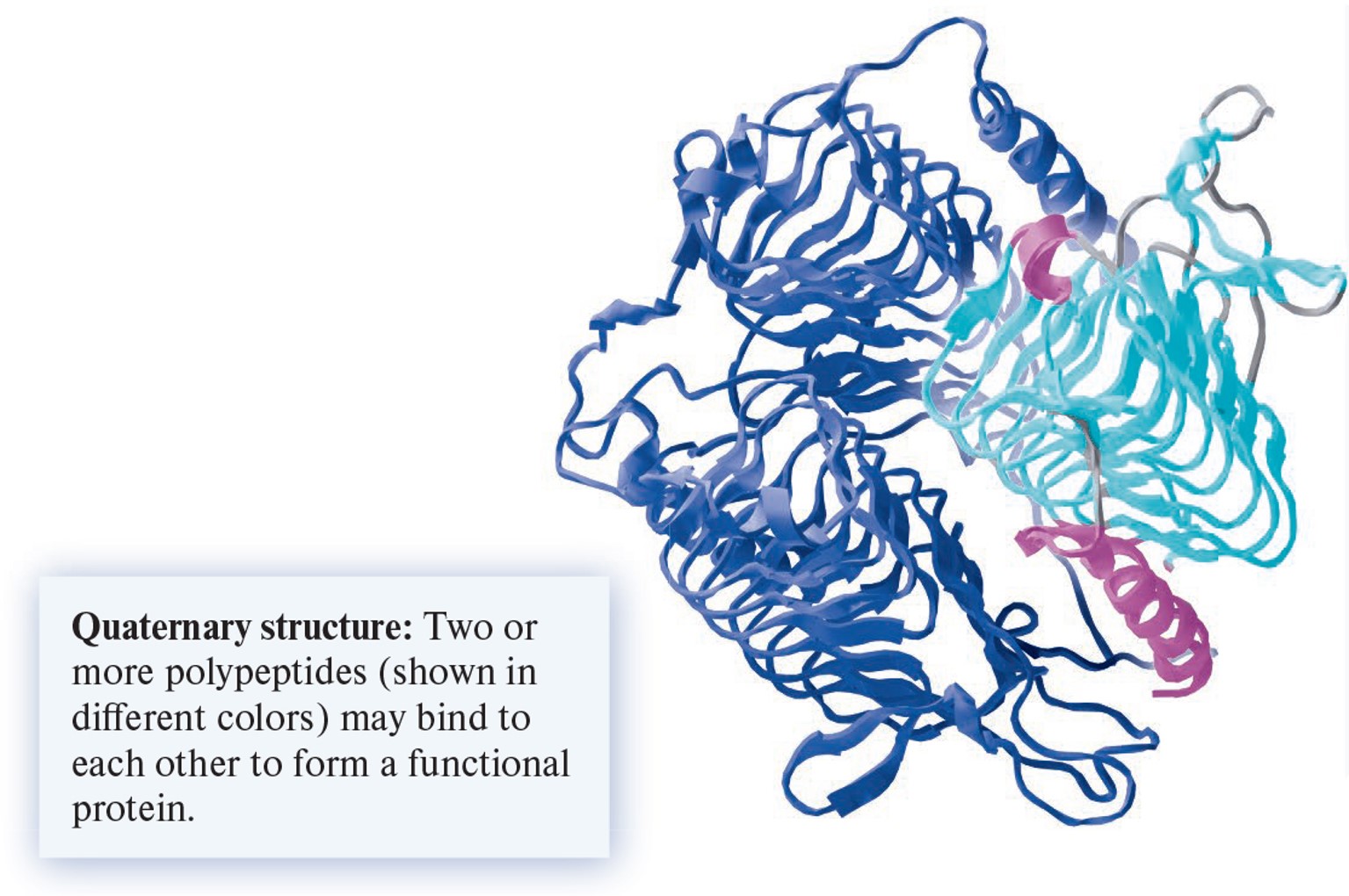
Made up of two or more polypeptides (proteins)
Individual polypeptide chains are protein subunits
Protein can be formed from several copies of the same polypeptide
Proteins
Atoms → Carbon, Hydrogen, Oxygen, Nitrogen, Sulfur
Monomer → Amino Acid
Name of Covalent bond → Peptide
Examples → antibodies, motor proteins, transport proteins, cell-signaling proteins, Structural proteins, enzymes
Functions → immunity, muscle movement, cellular transport and signaling, gene
expression and regulation
Nucleic Acids
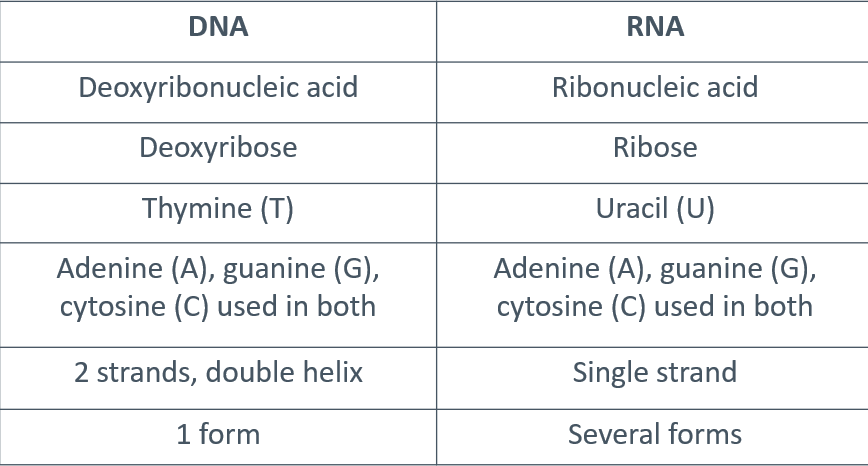
Responsible for the storage, expression, and transmission of genetic information
Deoxyribonucleic acid (DNA)
◦ Stores genetic information encoded in the sequence of nucleotide monomersRibonucleic acid (RNA)
◦ Decodes D N A into instructions for linking together a specific sequence of amino acids to form a polypeptide chain
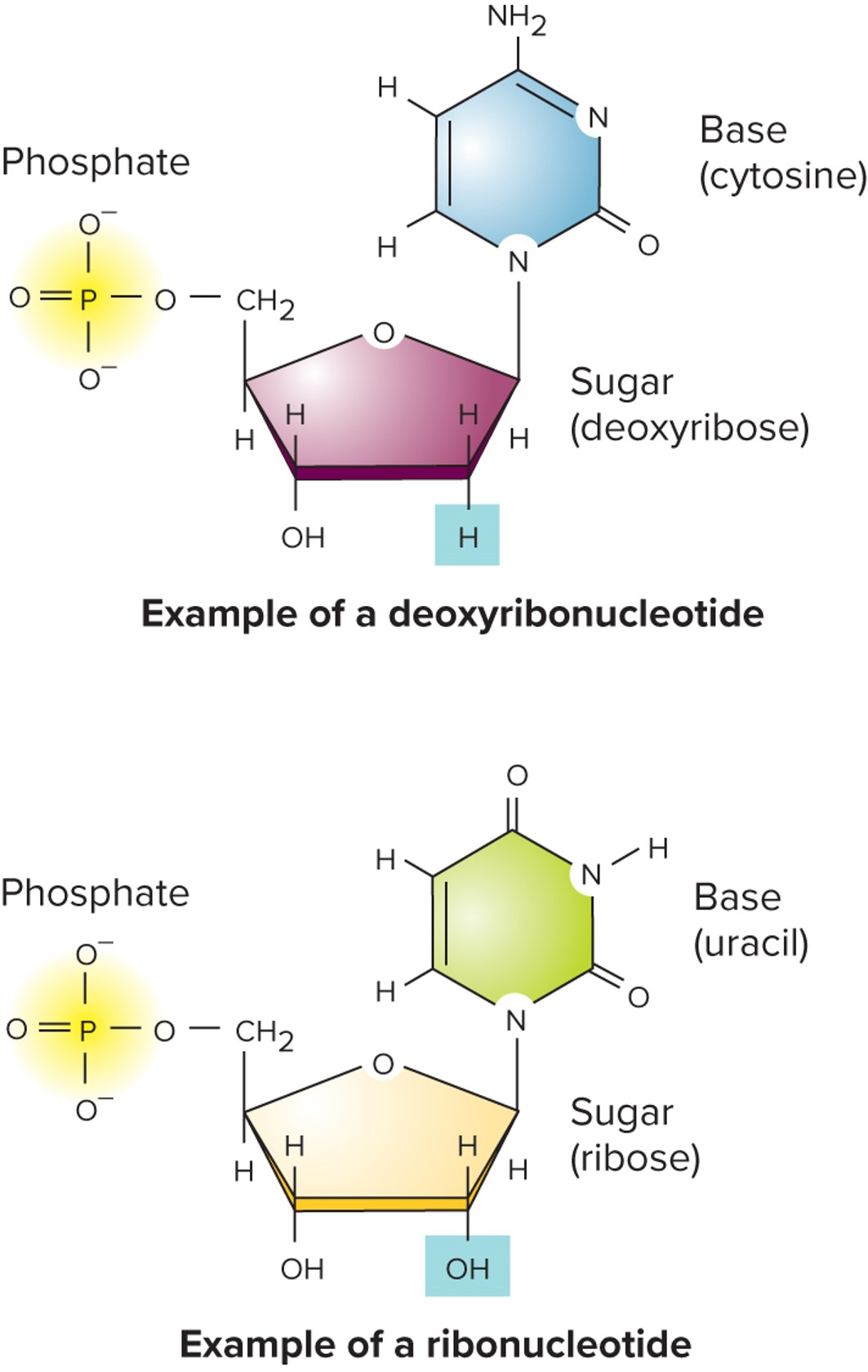
Nucleic acid monomer is a nucleotide
Made up of phosphate group, a five-carbon sugar (either ribose or deoxyribose), and a single or double ring of carbon and nitrogen atoms known as a base
Purines: adenine (A) & guanine (G)
Pyrimidines: cytosine (C) & thymine(T)-Uracil
Nucleotides are linked into polymer by a sugar-phosphate backbone
DNA is Composed of Two Strands of Nucleotides
DNA molecule consists of two strands of nucleotides coiled around each other in a double helix
Held together by hydrogen bonds between a purine base in one strand and a pyrimidine base in the opposite strand
A pairs with T; C pairs with G
Nucleic Acids
Atoms → Carbon, Hydrogen, Oxygen, Nitrogen, and Phosphorus
Monomer → Nucleotide
Name of Covalent bond → Covalent bond (regular)
Examples → DNA, RNA
Function → Genetic Information