3.3b: Memory Technologies: Professor Messer
Error-correcting code (ECC) vs. non-ECC RAM
Error-correcting code (ECC): Used on critical systems (e.g., servers) - RAM that checks itself for any errors inside its code and fixes errors as they occur
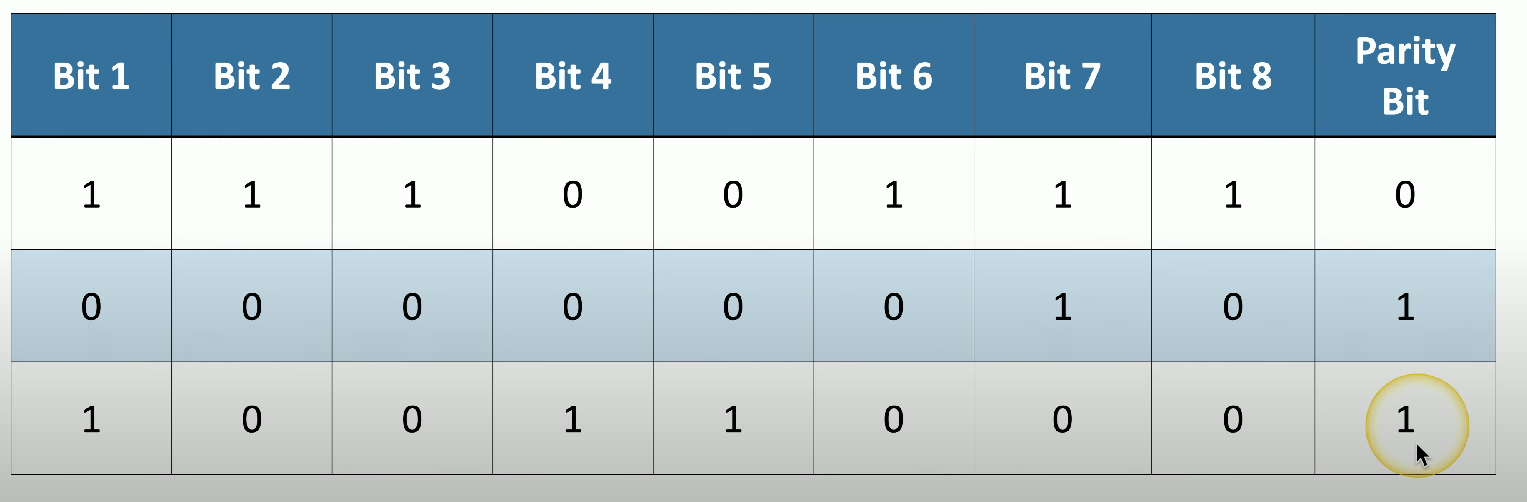
Parity memory: Adds an additional parity bit to the memory stored in RAM - an imperfect way to check for errors.
A memory module checks an 8-bit stream for an even number of 1’s - if there’s an odd number, the parity bit adds an extra 1.
Channel configurations
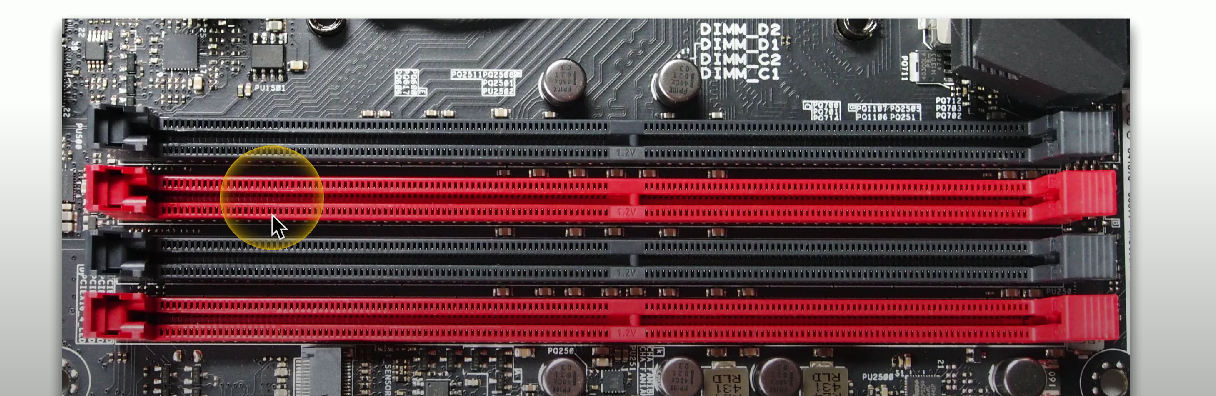
Multi-channels (dual, triple, quad) take the throughput that would be assigned to one particular memory module and spread it across each memory module for increased performance.
Typically indicated by matching colors on module slots
Single-channel
A memory setup that operates using a single memory module, leading to standard performance.
Dual-channel
A memory setup that uses two memory modules to enhance throughput by spreading the load.
Triple-channel
A memory configuration that utilizes three memory modules to improve performance further.
Quad-channel
A memory setup that involves four memory modules, maximizing performance through distributing the workload.