psychology - intelligence T5
intelligence: mental quality having the ability to learn from experience, problem solve, and adapt to new situations
- intelligence test: assess an individuals mental aptitudes
- Spearman’s general intelligence (g factor) - says theres a single factor for intelligence
- factor analysis: statistical procedure that identifies many related items (factors)
- executive functioning: involves mental abilities necessary in planning, focusing, and multitasking -prefrontal cortex
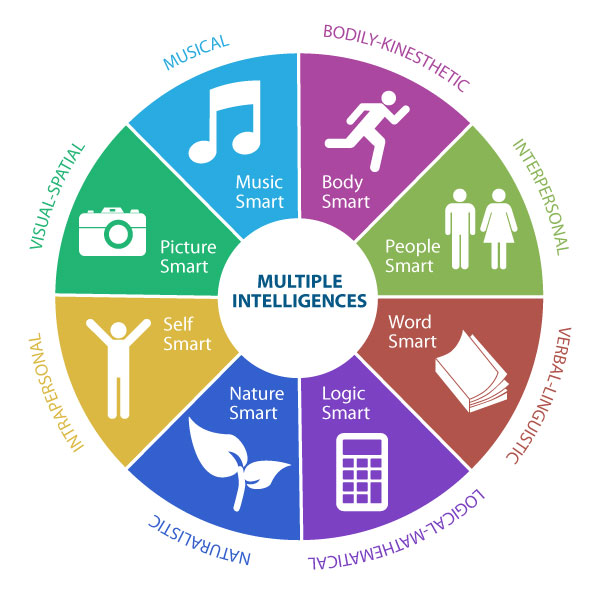
- gardener’s theory of multiple intelligence: opposite of spearman, says there are multiple intelligences (ex: savant syndrome)
- 8 different intelligences:
- interpersonal: good at understanding people
- intrapersonal: knowing yourself
- bodily-kinesthetic
- spatial
- musical
- body kinesthetic: physical awareness, athletic
- visual spatial
- naturalistic: connecting to nature
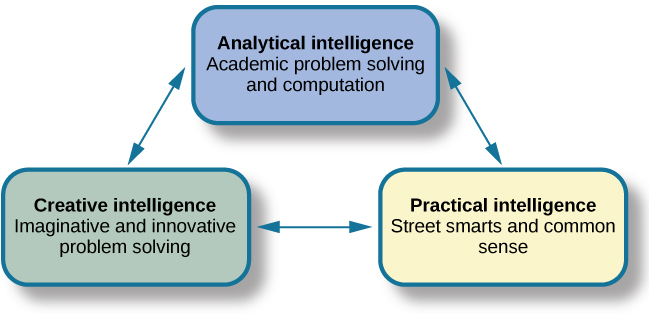
- sternberg’s triarchic theory: there are 3 intelligences, meant to examine things from a different perspective (less biased)
- emotional intelligence: measured in EQ(emotional quotient), examines intra/interpersonal elements
- those with high EI show better job performance and overall success (esp in parenting & marriage)
- accurately identifying emotions in self
- awareness of emotions in decision making
- understand/analyze self emotions
- self control for emotions
- parietal lobe: center for math & spatial processing
- intelligence testing:
- francis galton: began modern intelligence movement through surveying & statistics
- alfred binet: developed IQ tests to assess children’s mental age
- mental age: age that corresponds w level of performance
- lewis terman: believed intelligence was innate
- created the Stanford Binet
- really only works for children
- mental age/chronological age x10
testing
- achievement test: to determine what a person has learned ex:AP test
- aptitude test: test designed to predict future performance ex:college entrance exams
- speed test: large number of questions in short time ex: minute math
- power test: increasingly difficult levels to find the difficulty level someone can solve, each question gets harder till you cant do it anymore ex: videogame
- group test: large number of people at once ex: SAT
- individual test: one on one test - subjective ex: psychological testing ex: individual oral exam
- Wechsler adult intelligence scale (WAIS): most widely used intelligence test, there are 15 subtests, verbal & nonverbal scale
IQ test: 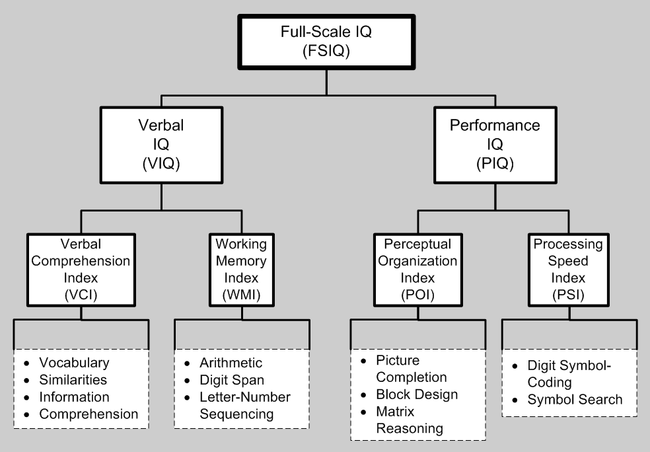
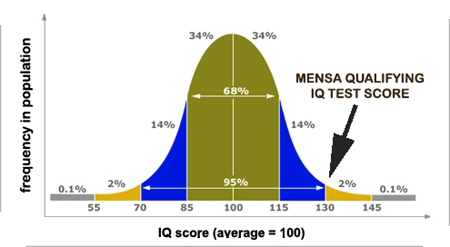
- 100= avg IQ
- standard deviation = 15
- based on how others did
things to be aware of when testing
- standardization: 2 elements, standardization of administration of the test, involves creating a normal curve
- normal curve: most scores fall near the average, few at the extremes
- to keep average wechsler & stanford binet tests are standardized
- flynn effect: IQ scores have been improving since 1920s
- Humans have become steadily more intelligent over the last 100 years
- Found in 30 countries
- Been recorded since WWI - when IQ tests first appeared
- Increase 3 IQ points per decade
- Factors:
- Health
- Diets
- Better at abstract reasoning
- James Flynn
- In western society-scientific thinking has become standardized
- We deal with abstract thinking
- Allowed for high level education
- Future: we will reach a max
assessing intelligence tests:
<<reliabilty:<<
- ^^Reliability:^^ repeatability/consistency of a test, you know its reliable if you get same score
- ^^split half reliability:^^ randomly dividing a test into 2, correlating people’s performance on the two halves, ex: you randomly take 1/2 the FRQ answers and correlate them to 1/2 of the FRQ answers
- ^^equivalent form reliability:^^ correlation btwn performance on different forms of the test, ex: original test & a retake
- ^^test retest reliability:^^ you take the same exact test twice, if it’s reliable you should get the same results,
- ^^inter rater reliability:^^ correlation in scoring between 2 different scorers, ex: you had 2 diff teachers grading your test, you should get the same grade
- ^^intra rater reliability:^^ correlation in scoring when the same scorer scores the test more than once, ex: if a teacher scores the same test twice you should get the same grade each time
[[validity:[[
- ==Validity==: extent to which a test measures/predicts what is should
- ==face validity:== at a face look does the test appear to be on the right topic
- ==content validity:== do the specific questions relate to all elements of the content, ex: if a test has content validity it has questions on all the important parts
- ==predictive validity==: success with which a test predicts the behavior it is designed to predict, does the test (IQ test) predicts how well you will do in academics
- ==criterion validity:== how well results correlate with outside measure, comparing results on this test to an outside test, ex: comparing ACT to SAT
- ==construct validity:== how well does it measure an abstract idea, ex: testing for depression, make sure its testing for depression not anxiety - one thing not anything similar
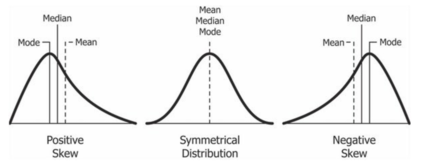
- pos skew: bulk of scores are lower
- neg skew: bulk of scores are higher
Stability of intelligence:
: taking multiple groups of people at diff ages, pro: faster results, con: many factors
test one group of people over time, pro: each person is in control, con: long time
- lewis terman
intelligence remains stable throughout adult life
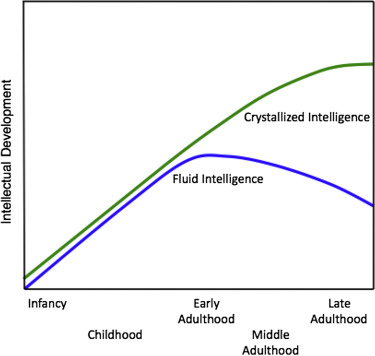
}}crystalized intelligence: info you have learned, facts}}
<<fluid intelligence: speed of processing, problem solving, reasoning<<
intelligence extremes:
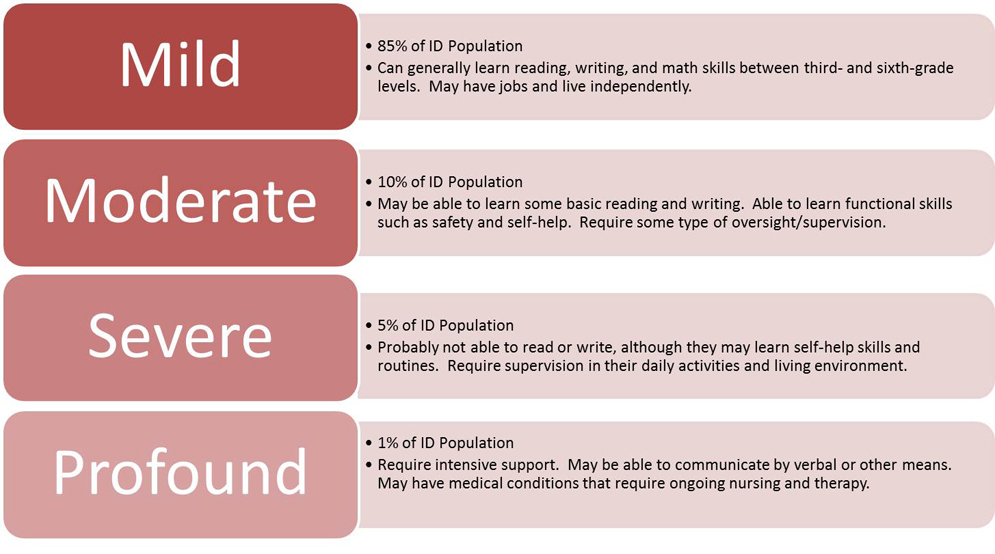
- Intellectually disabled: score of 70 or below on IQ test, 2 SD below mean
- Intellectual disability traits: 1) difficulty in adapting 2) limited social/practical skills 3) (maybe) down syndrome
genetic & environmental influence on Iq
- 1)twin studies 2) adoption studies
- 1) deprivation & malnutrition: takes energy away from brain
- 1) intelligence is roughly 50% heritable
group differences & bias:
- @@female v. male group difference:@@ 1) female- verbal & emotional tasks, locating objects, sensitive to touch, taste, color 2) males - spatial & complex math
- @@racial & ethnic differences:@@ 1) over history the dominant group outscores minority group differences (may be environmental) trends- *social highearchy & wealth gap
- @@bias differences:@@ stereotype threat - when reminded of negative stereotypes people did worse on testing