Amines
Physical properties
boiling point
increases with molecular mass
amines have higher boiling points than corresponding alkanes because of their intermolecular hydrogen bonding
solubility
lower mass compounds are soluble in water due to hydrogen bonding
solubility decreases as the molecule gets heavier
soluble in organic solvents
Amines as bases
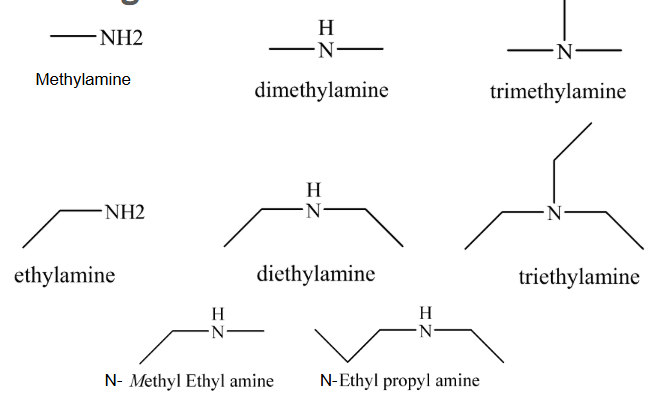
amines behave as bases in their chemical reactions as the lone pair of electrons on the nitrogen atom can accept a proton
when an amine accepts a proton a dative covalent bond is formed between the lone pair of electrons on the nitrogen and the proton
neutralise acids to make salts
Aliphatic amines
nucleophilic substitution of halogenoalkanes
conditions
ethanol as solvent
prevents H2O being substituted instead to make alcohols
warm gently
NH3 in excess
reduces further substitution of the amine group
forms in two stages
salt
amine
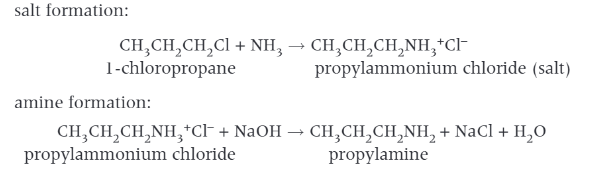
Formation of primary amines
ammonia has a lone pair of electrons on the nitrogen
allows ammonia to act as a nucleophile in a substitution reaction with a haloalkane
produces ammonium salt
aqueous alkali is then added to generate amine from salt
Formation of aromatic amines
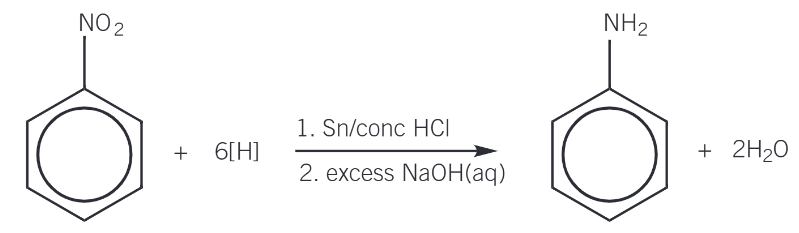
reduction of nitrobenzene
heated under reflux with tin and hydrochloric acid
forms ammonium salt then reacted with excess NaOH
produces phenylamine
tin and hydrochloric acid act as reducing agent