5 what problems faced the new republic
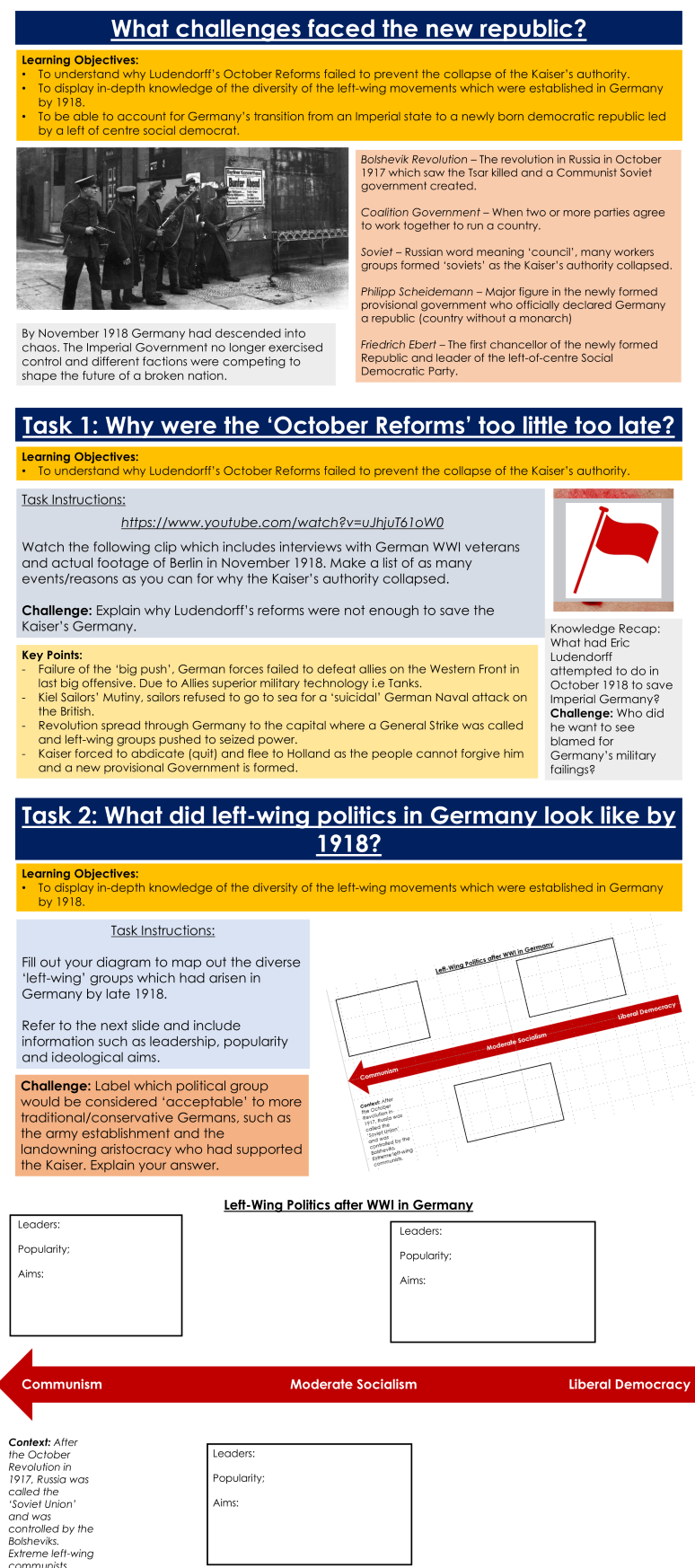
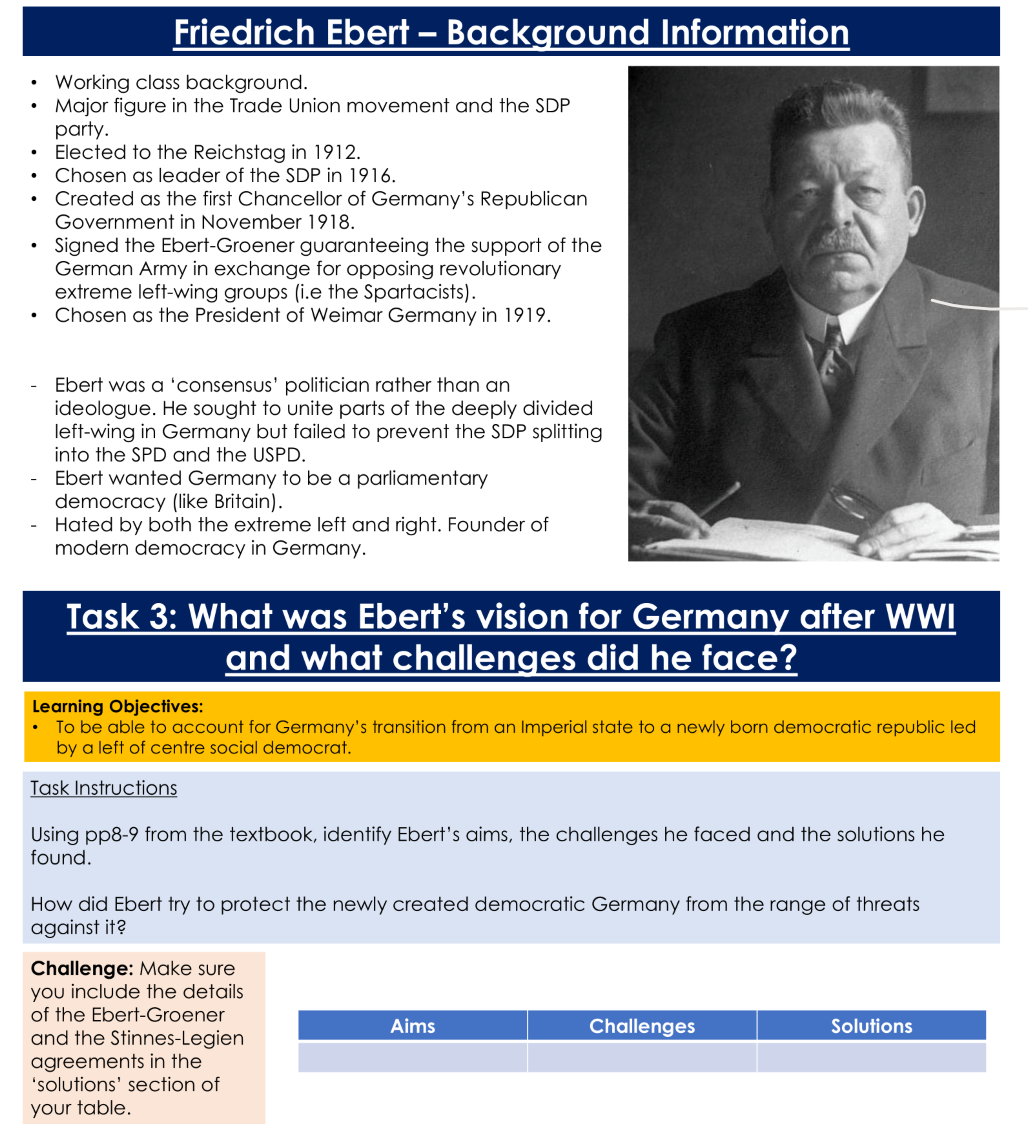
Aims | Challenges | Solutions |
Establish democratic government | Workers and soldiers councils Peace terms | Stinnes legien agreement |
Support Weimar Republic | Inflation Food shortages German army Blockades | Stinnes legien agreement |
Prevent communist revolution | German communists inspired by Russia | Ebert Groener agreement Stinnes legien agreement |
Maintain order | Freikorps Spanish flu Strikes Nationalists | Ebert Groener agreement |
1. Background
Friedrich Ebert (1871–1925) came from a working-class background and trained as a saddler before entering politics.
He joined the Social Democratic Party (SPD) and rose through the party because of his organisational skills and focus on improving workers’ conditions.
2. Germany’s Crisis at the End of WWI
In 1918 Germany lost World War I, causing political collapse and revolution.
The German monarchy ended when Wilhelm II abdicated.
Ebert became the leader of the new government during the November Revolution and tried to prevent chaos and civil war.
3. Creation of the Weimar Republic
Ebert pushed for parliamentary democracy rather than a communist-style revolution.
Elections were held in 1919, creating the Weimar Republic.
Ebert was elected Germany’s first president (1919–1925).
4. Conflict with the Radical Left
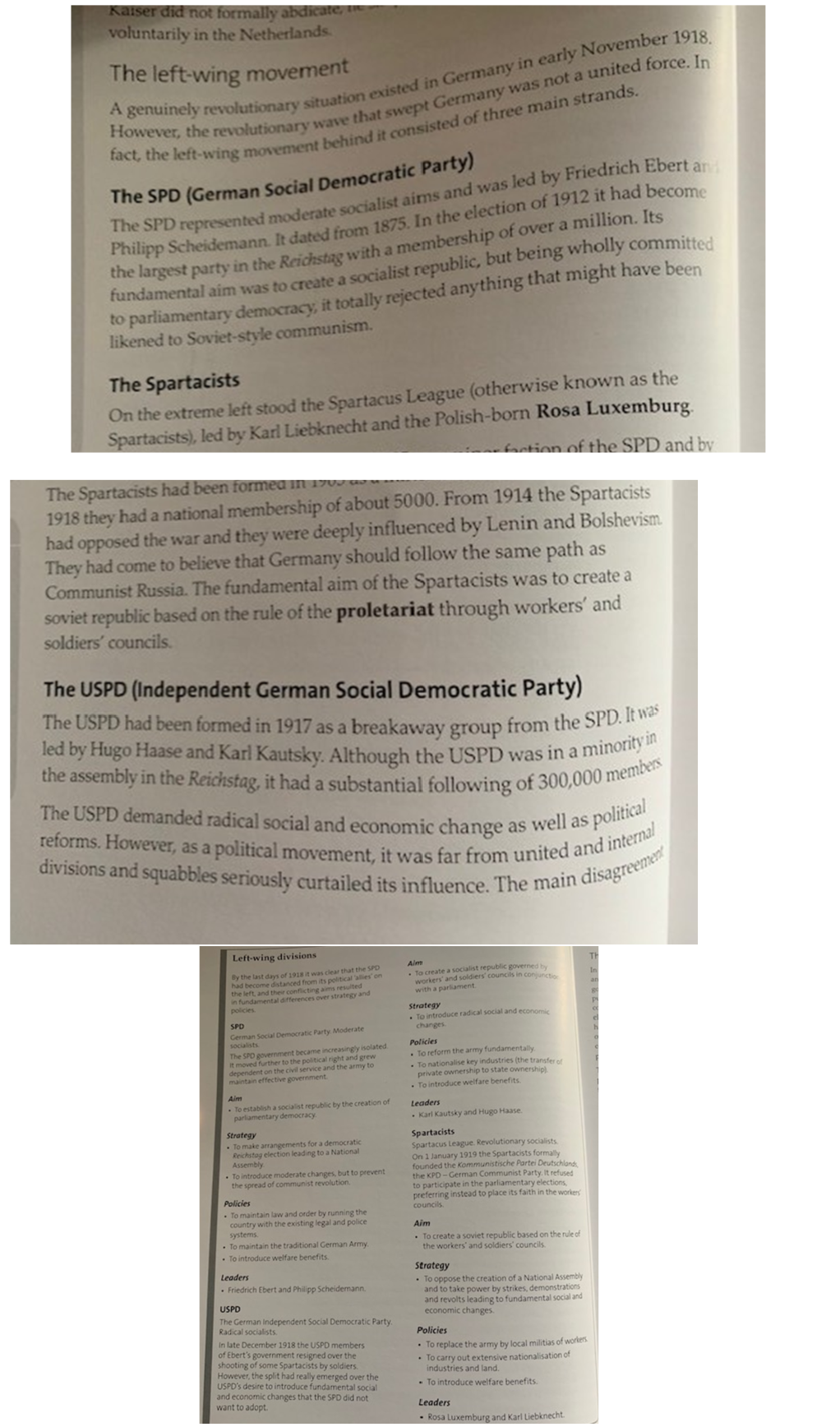
Communist groups such as the Spartacus League wanted a Soviet-style revolution.
Ebert used the army and right-wing paramilitary groups called the Freikorps to crush uprisings.
This decision saved the republic but deeply divided the political left.
5. Constant Crises
Ebert’s presidency faced:
Political violence
Economic crisis
Coups from both the far left and far right
Attempts to overthrow the republic (e.g., early Nazi movements)
Despite this, he worked to keep democracy functioning in Germany.
6. His Legacy
Ebert died in 1925 while still president.
He is remembered as a key founder and defender of Germany’s first democracy, though historians debate some of his decisions.