Unit 5: Telecommunications and Networks
Information Technology Management
Trends in Telecommunications
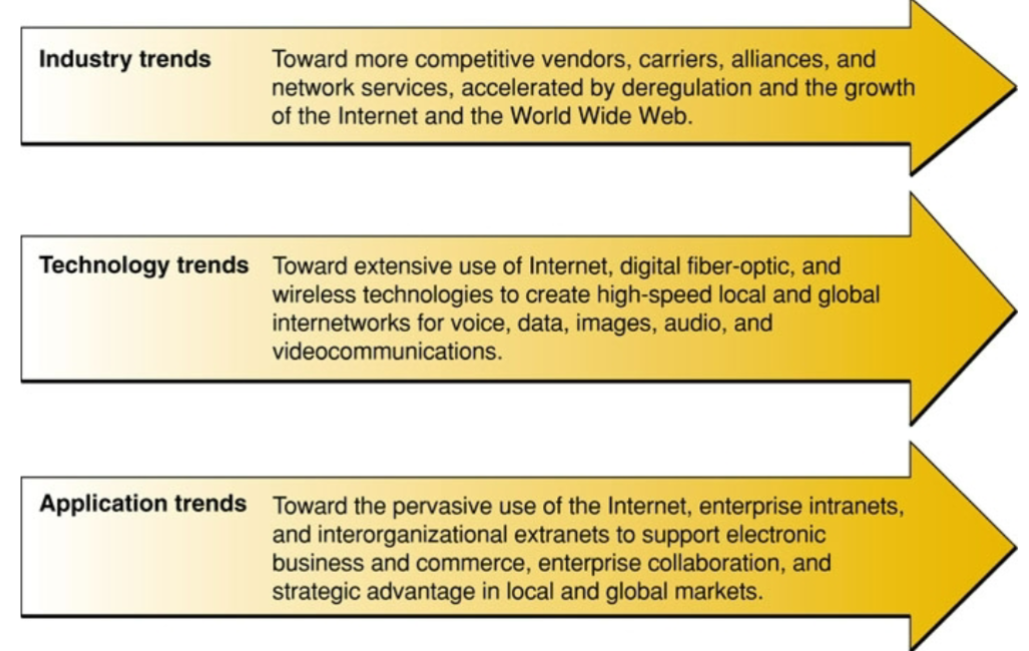
Business Value of Telecommunications and Networks
Cut costs, shorten lead/response times, improve collaboration, support e-commerce
The Internet revolution - a “network of networks”, the largest and most important network, constantly expanding
Business use of the Internet - the Internet adds value to every part of the business cycle
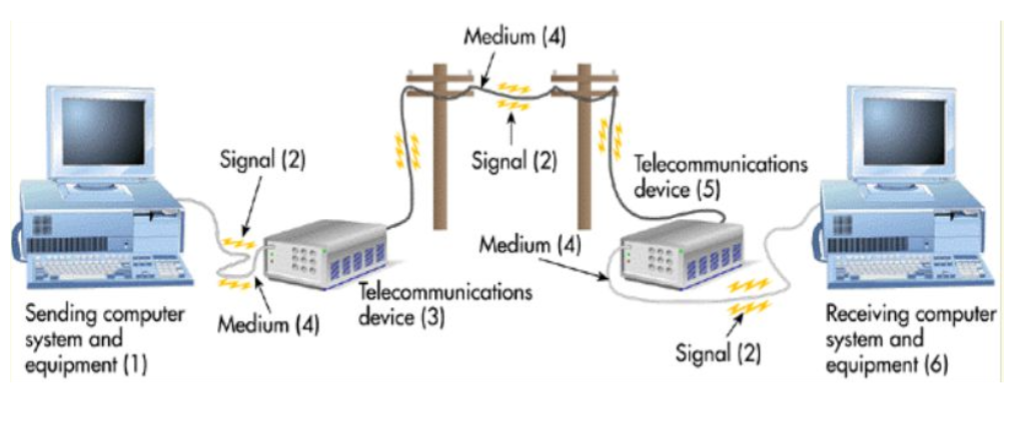
Basic Telecommunication Model
Transmission Media
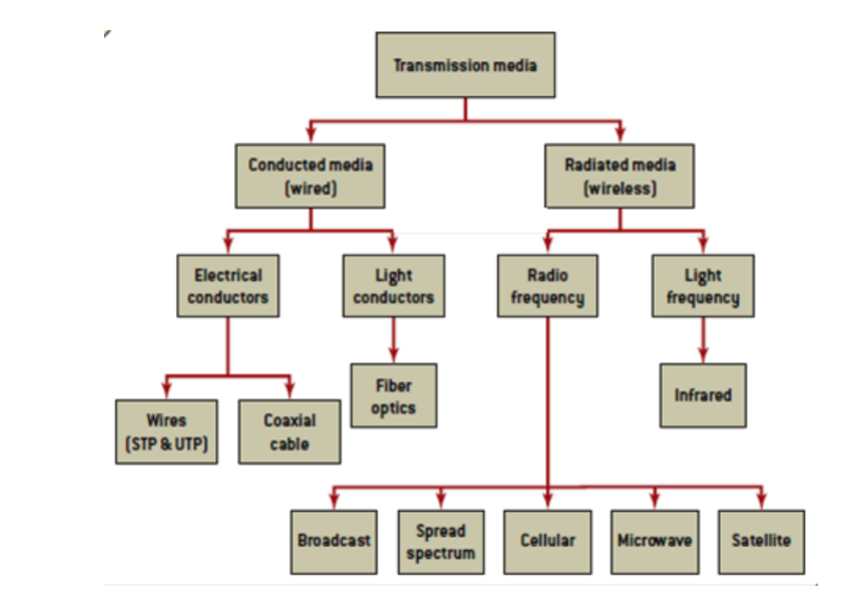
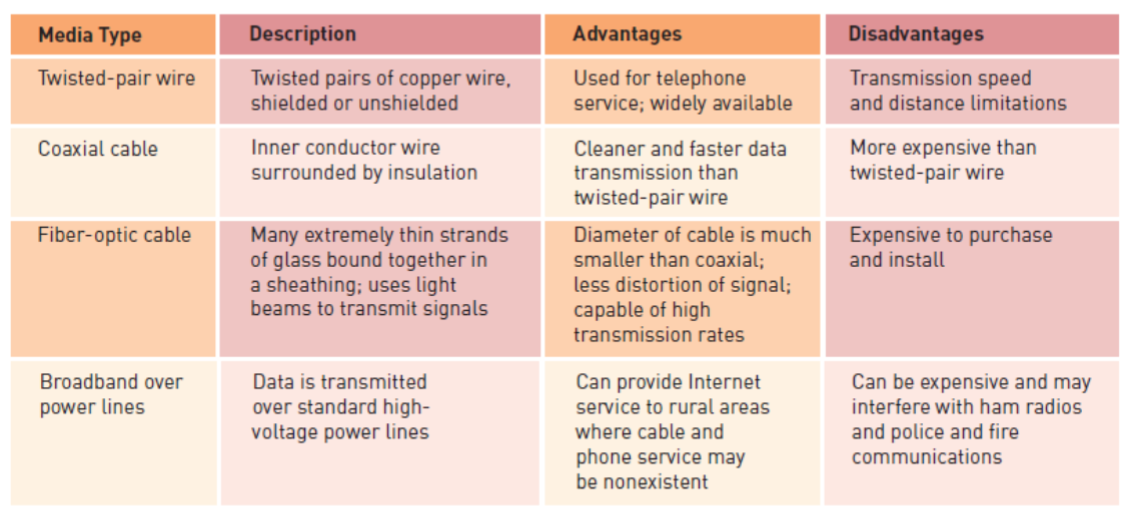
Wired Media
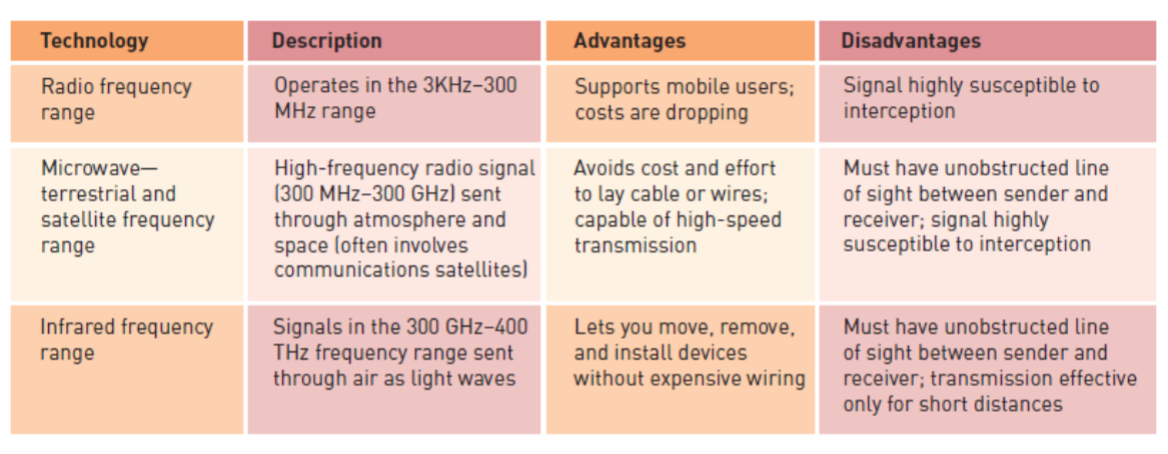
Wireless Media
Changing Communication Patterns
Smart phones and other portable communication devices have changed our communication environment
Talking on smart phone, texting, and using apps to search for information
Social media applications (apps) have changed how people communicate
IT is changing the communication patterns of workers
Workers need access to up-to-date information and communications between co-workers, customers, and suppliers
Changing Collaboration
Teams work more fluidly despite an increasing workload
Teams have learned to collaborate by continually structuring and re-structuring their work
IT helps make work more team-oriented and collaborative via:
Metaverse, wikis, social networking, and video teleconferencing
Workers can more easily share information with their teammates.
The Internet greatly enhances collaboration - especially through e-mail, social media, and Web 2.0 and Web 3.0 technologies
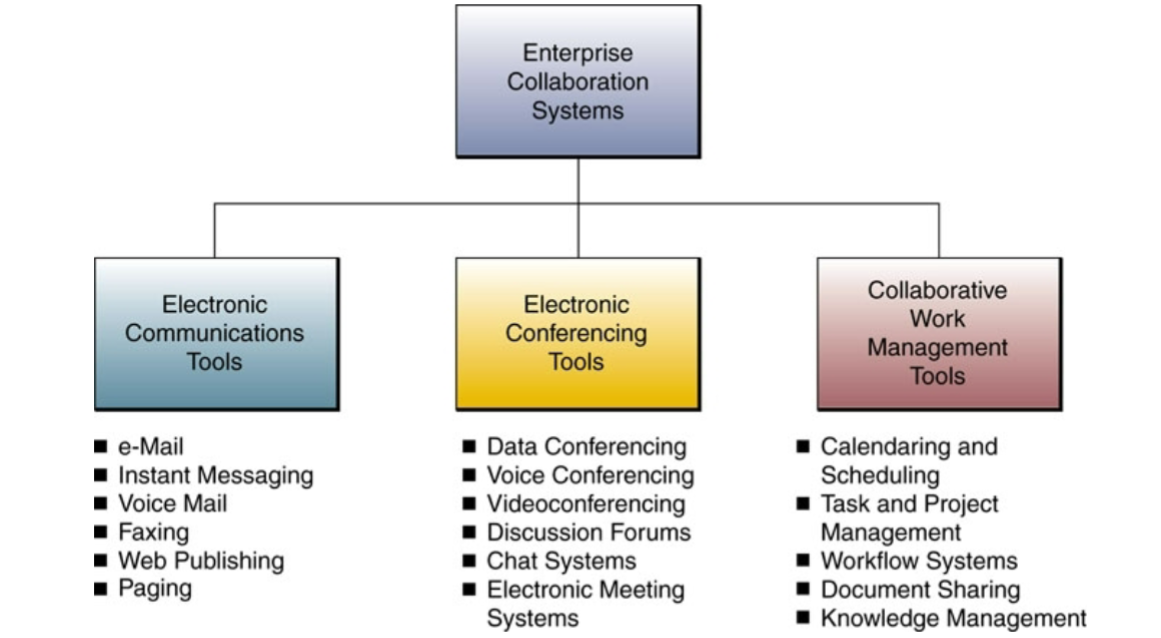
Enterprise Collaboration Systems
Telecommuting and Mobile Work
Telecommuting (or teleworking) - work arrangements with employers that allow employees to work from home, at a customer site, or from other convenient locations instead of the corporate office.
Telecommuting is derived from combining “telecommunications” with “commuting”
Workers use telecommunications instead of commuting to the office
Mobile workers:
Work from wherever they are
Utilize computer/communication technology necessary to access coworkers, company computers, intranets, and other information sources.
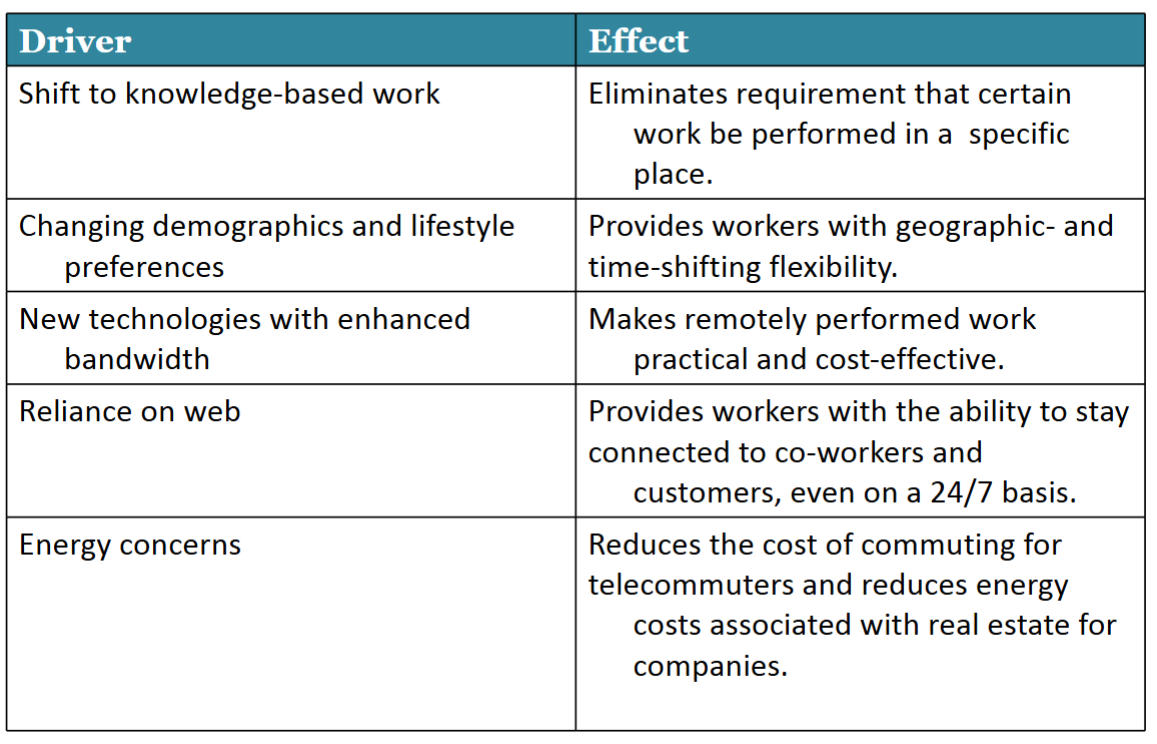
Driving Factors of Telecommuting and Virtual Teams
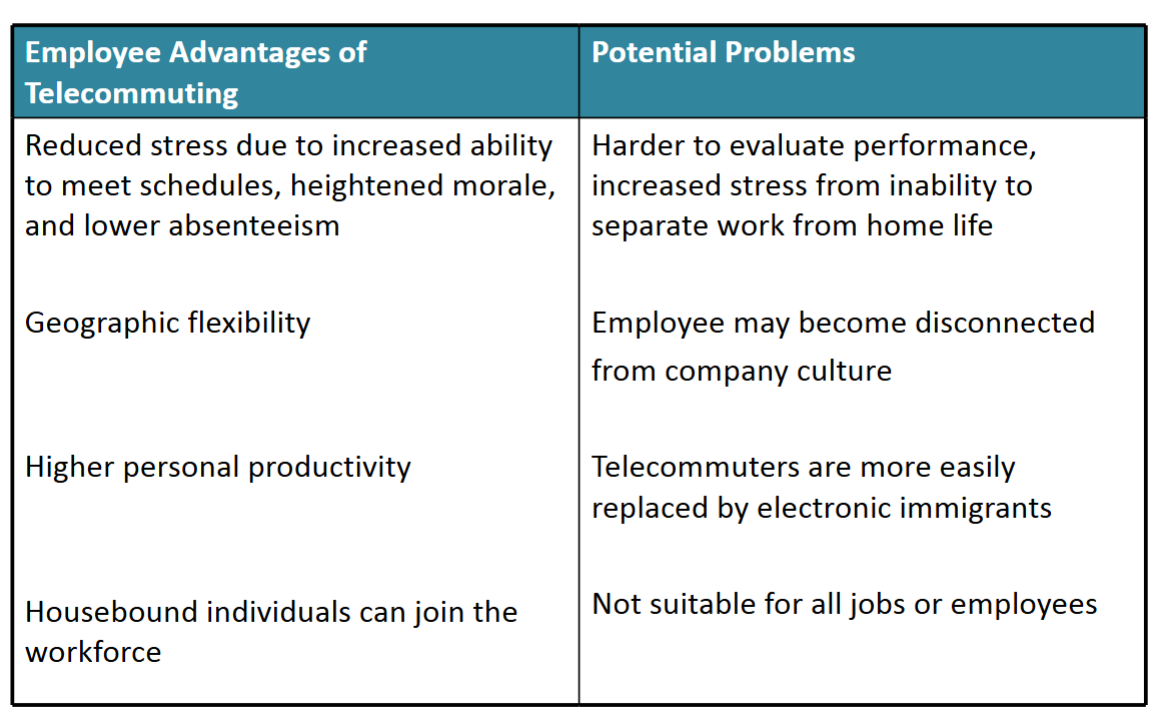
Advantages and Disadvantages of Telecommuting
Virtual Teams
Two or more people who:
Work together interdependently with mutual accountability for achieving common goals
Do not work in the same place and/or at the same time
Use computer/communication technologies to communicate, coordinate their activities, and complete their team’s tasks
Virtual team members may be in different locations, organizations, time zones, or time shifts
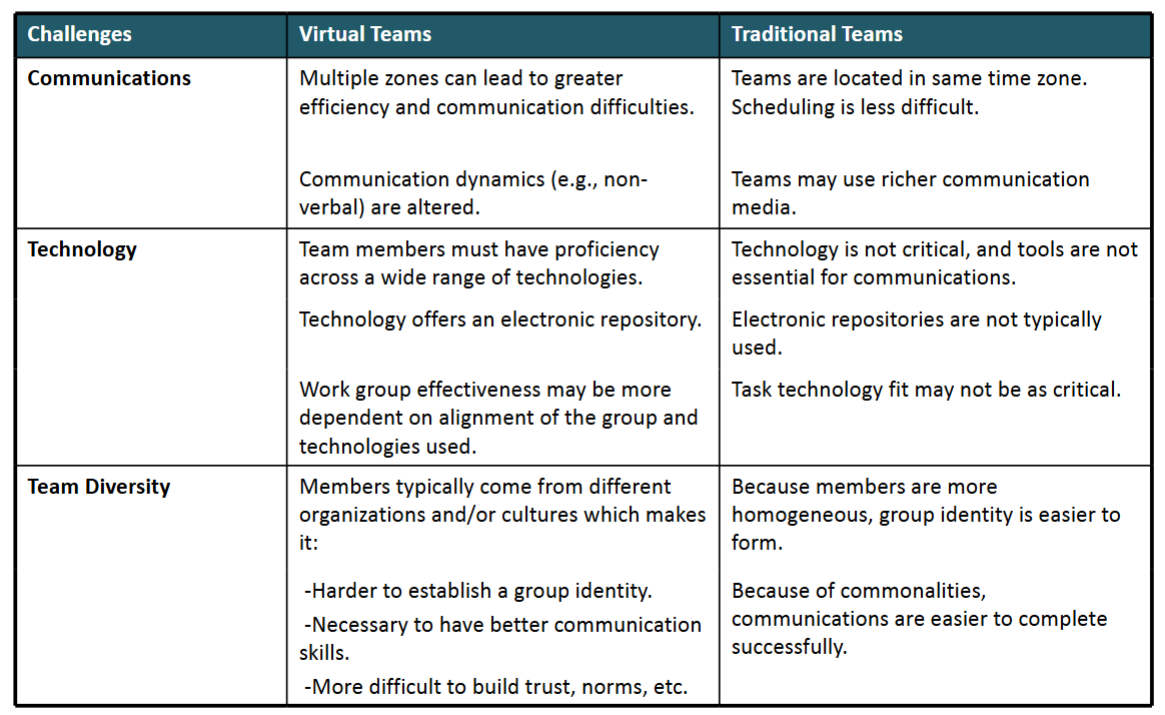
Comparison of Challenges Facing Virtual and Traditional teams
Telecommunications Networks
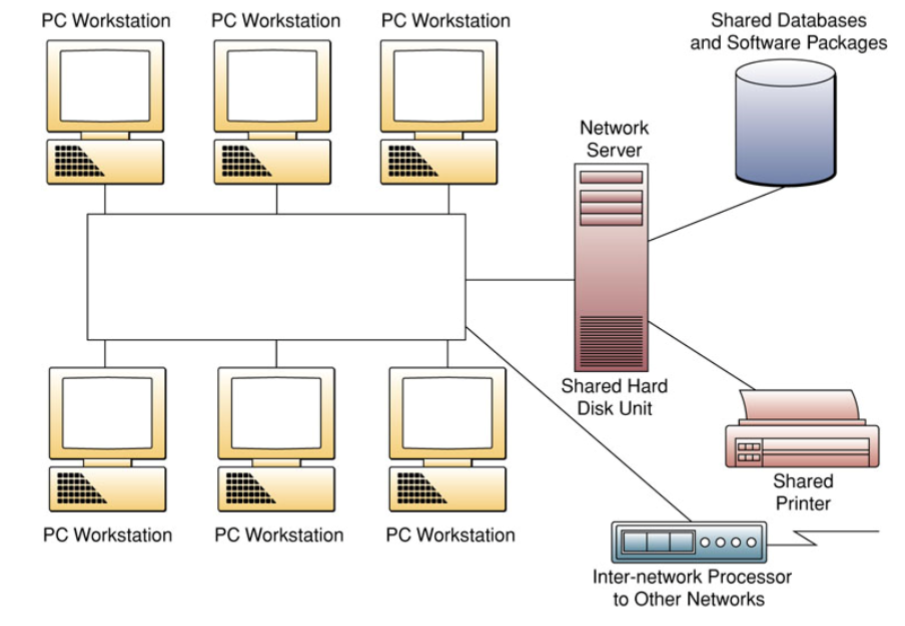
Local Area Networks (LAN) - equipment owned by the firms, short distances, usually within a single building (or room)
Wide Are Networks (WAN) - between cities/large geographic areas, LANs connected by common carrier or leased lines
Metropolitan Area Networks (MAN) - LANs connected over a specific geographical area
Virtual Private Networks (VPN) - a network using the Internet as a backbone but incorporating security for privacy
Client/Server Networks - a powerful, central computer (server) providing information and processing (services) to multiple end-user computers (clients)
Local Area Network
True or False: The Internet is often referred to as a "network of networks" and is the largest network in existence.
Answer: True
True or False: Telecommuting allows employees to work only from the corporate office.
Answer: False
True or False: Mobile workers can work from any location using telecommunications technology.
Answer: True
True or False: Teams can no longer collaborate effectively due to an increasing workload.
Answer: False
True or False: Wired media and wireless media are types of transmission media in telecommunications.
Answer: True
True or False: Virtual teams consist of members who must always work in the same place.
Answer: False
True or False: The Internet has no impact on enhancing collaboration among workers.
Answer: False
True or False: Local Area Networks (LAN) are usually owned by individuals, not corporations.
Answer: False
True or False: Telecommuting originated from the combination of the words "telecommunications" and "commuting."
Answer: True
True or False: Enterprise Collaboration Systems are designed to facilitate communication and collaboration within organizations.
Answer: True