The Legislative Branch
As we have previously studied, Article I of the Constitution establishes the legislative branch of the federal government. The legislative branch consists of both houses of Congress. The upper house is the Senate, and the lower house is the House of Representatives. Each state is allotted two senators, but the representatives are apportioned according to population.
Qualifications to Be in Congress
To serve in Congress, there are certain qualifications that have to be met. These qualifications are slightly different depending on whether a person is seeking a seat in the House of Representatives or in the Senate. Review the tabs below to learn about these qualifications.
The qualifications to serve as a representative in the United States House of Representatives are as follows:
Must be at least twenty-five years of age when taking office (not when elected—in other words, a twenty-four-year-old could be elected to the House in November as long as he or she will be twenty-five when taking office on January 3).
Must have been a citizen of the United States for at least seven years.
Must be an inhabitant of the state from which elected.
 The qualifications to serve as a senator in the United States Senate are as follows:
Must be at least thirty years of age when taking office (not when elected).
Must have been a citizen of the United States for at least nine years.
Must be an inhabitant of the state from which elected.
 Checks and Balances of the Legislative Branch
As part of the system of checks and balances in the Constitution, the legislative branch has several checks on the other two branches. Explore the tabs below to see how the executive and judicial branches are checked by the legislative branch.
Congress can impeach and convict the president, removing him or her from office.
The Senate must approve all treaties negotiated by the executive branch.
The Senate must approve all presidential appointments.
Only Congress can declare war, enact taxes, and allocate funds for government expenditure.
Congress can impeach and convict judges, removing them from office.
Congress must approve federal judges and justices in order for them to take office.
Congress is responsible for determining the number of federal courts and how many judges serve on each court.
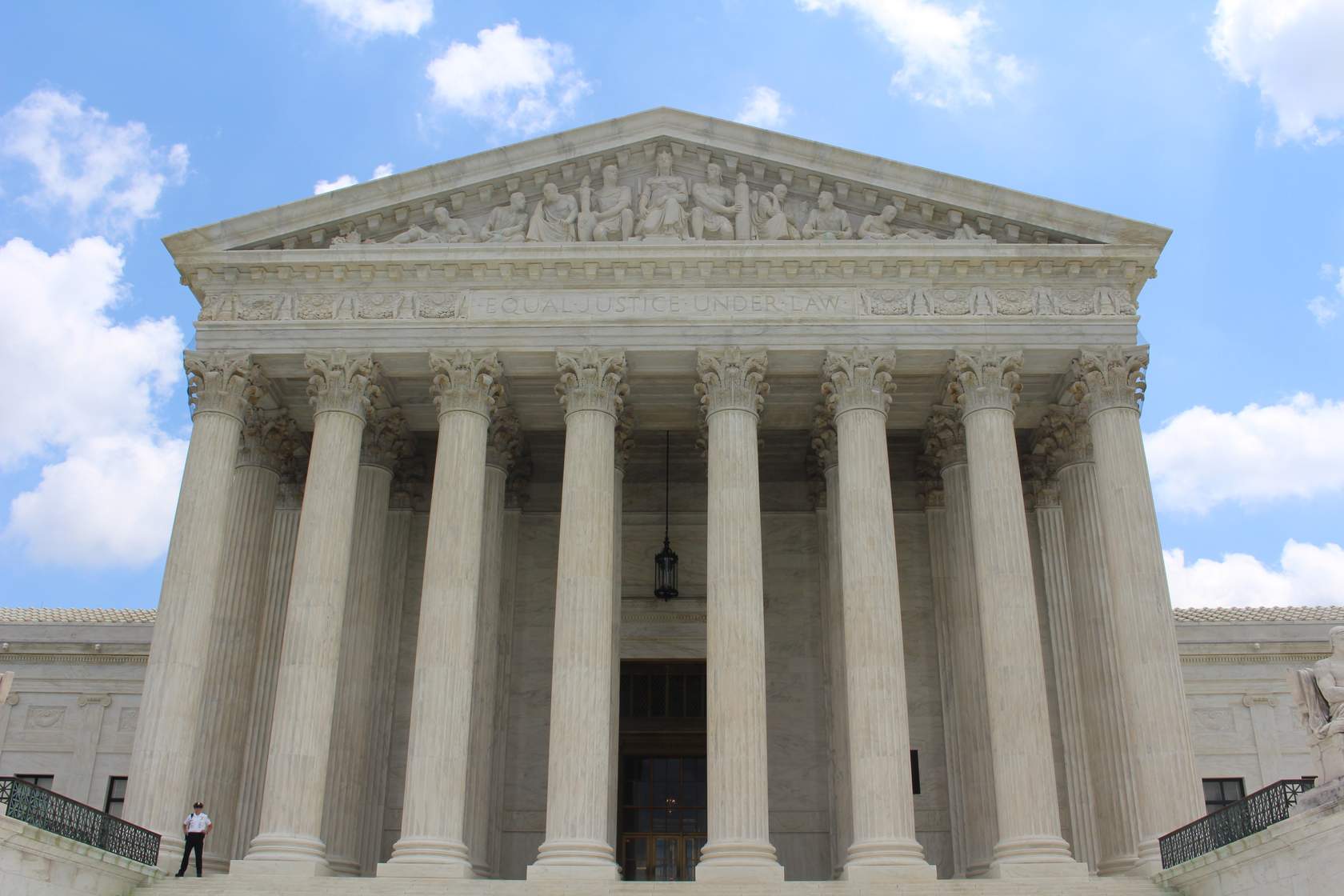 Just as the legislative branch checks the other branches, the other branches also check the legislative branch. The executive branch has several checks on the legislative branch: the vice president presides over the Senate and casts tiebreaker votes, and the president has the power to call special sessions of Congress. The president also has veto power over congressional bills (although Congress can override these vetoes, as shown above). The judicial branch can check the legislative branch by declaring laws unconstitutional through a process called judicial review, which we'll discuss in more detail later in the course.
Organization of Congress
Congress is not a single organization; it is comprised of two separate, distinct, powerful, and complex bodies that work together to legislate the federal government. We will examine how each body is organized in the following sections.
Senate
The Vice President of the United States shall be President of the Senate, but shall have no Vote, unless they be equally divided.
The Senate shall chuse their other Officers, and also a President pro tempore, in the Absence of the Vice President, or when he shall exercise the Office of President of the United States.
Article I, Section 3 of the US Constitution
The Vice President of the United States shall be President of the Senate, but shall have no Vote, unless they be equally divided.
The Senate shall chuse their other Officers, and also a President pro tempore, in the Absence of the Vice President, or when he shall exercise the Office of President of the United States.
Article I, Section 3 of the US Constitution
When choosing Senate leadership, the majority party chooses one of its members, usually the senator with the most seniority, to be president pro tempore of the Senate. This position is an honorific position to preside over the Senate. Although the vice president serves as the president of the Senate, the president pro tempore will take on that role if the vice president is absent.
The real leadership is in the hands of the majority and minority leaders. The leader of the party that has the most senators is known as the majority leader, while the leader of the party with fewer senators is known as the minority leader. The primary task of the majority leader is to schedule the business of the Senate, but the minority leader is usually consulted by the majority leader.
Each party also chooses one person to be the party whip. The whip helps party leaders stay informed about what the party members are thinking, gathers members together when important votes are taken, and tracks how controversial votes are going. Whips are known as majority whips or minority whips, depending on whether their party is the majority or minority party in the Senate.
Each party also chooses a policy committee composed of a dozen or so senators who help the party leader schedule Senate business. They have to choose which bills will be given major attention and in what order they will be considered.

Mitch McConnell, Senate minority leader (2007–2015, 2021–)

Chuck Schumer, Senate majority leader (2021–)
House of Representatives
Leadership in the House carries more power than in the Senate because of the House rules. Because it is so large (435 members), the House must restrict debate and schedule its business with great care. The Speaker of the House presides over the House and is the most powerful person in that body. The Speaker is elected by whichever party has a majority. Unlike the president pro tempore of the Senate, the Speaker's position is not an honorific position. The Speaker is the principal leader of the majority party and is expected to use his or her power to help pass legislation favored by the majority party. The Speaker also decides who should be recognized to speak on the floor of the House, rules whether a motion is relevant to the business at hand, and decides the committees to which new bills are assigned. In the House, as in the Senate, the parties elect a majority leader and a minority leader. Each party also has a whip in charge of rounding up the numerous members when it is time to vote on a bill.

Nancy Pelosi, Speaker of the House (2007–2011; 2019–2023)

Paul Ryan, Speaker of the House (2015–2019)
How Does Congress Work?
Each house of Congress has about two dozen committees, and under each committee, there are several subcommittees. It is in these committees and subcommittees that the real work of Congress takes place. The power of Congress is found in the committees. There are three kinds of committees: standing committees, select committees, and joint committees.
Standing Committees. These are permanent committees with specific legislative responsibilities. In 2020, the Senate had sixteen standing committees, and the House had twenty. The number of members on each committee ranges from six to fifty. Standing committees usually cover broad topics that are dealt with on a regular basis. Examples in the Senate include the Committee on Finance, the Committee on Environment and Public Works, and the Committee on Foreign Relations. The House has standing committees that cover many of the same subjects. Standing committees are the most important type of committee because, typically, they are the only committee that can propose legislation by reporting a bill out to the full House or Senate.
Select Committees. These committees are appointed for a limited time and purpose and generally do not introduce legislation. Examples include the Select Committee on the Modernization of Congress and the Select Committee on Indian Affairs.
Joint Committees. These committees contain members from both houses of Congress and are utilized for coordinating legislation between the House and the Senate. An especially important kind of joint committee is a conference committee, which has representatives of both the House and Senate. A conference committee resolves any differences a bill might contain between the House and Senate versions before final passage of the bill.
In a committee, the members of the majority party occupy most of the seats and name the chairperson of the committee. Usually, the ratio of Republicans to Democrats on a committee corresponds to their ratio in the House or Senate. In other words, if the Senate had sixty Democrats and forty Republicans, then a ten-person committee would likely have six Democrats and four Republicans.
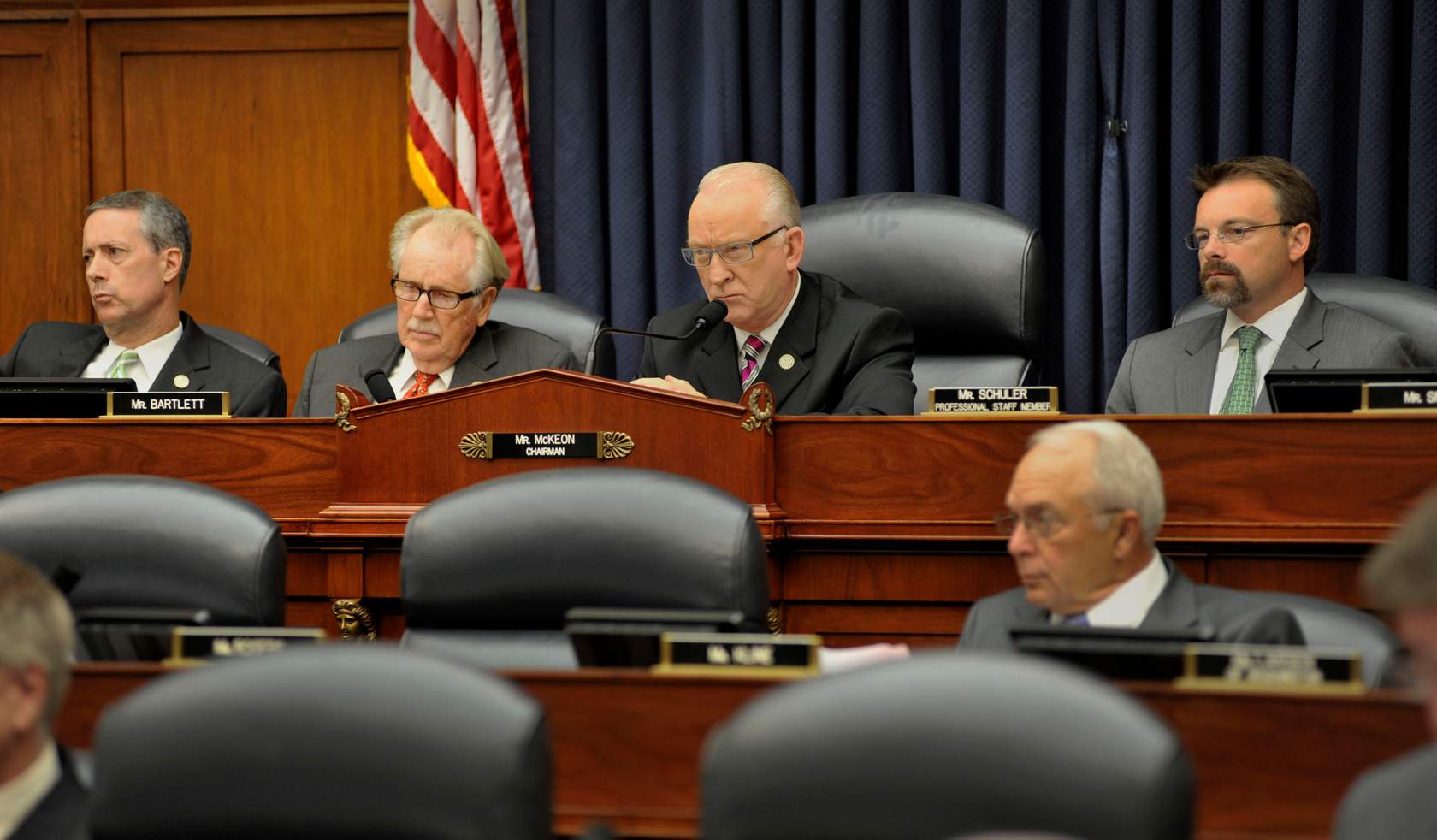
The House Armed Services Committee (2012)