The Labour Market
; a place where the market forces of supply and demand interact. Within the labour market, supply refers to employees or people who supply their labour and demand refers to employers or people who need the labour.
Example of a labour market diagram:
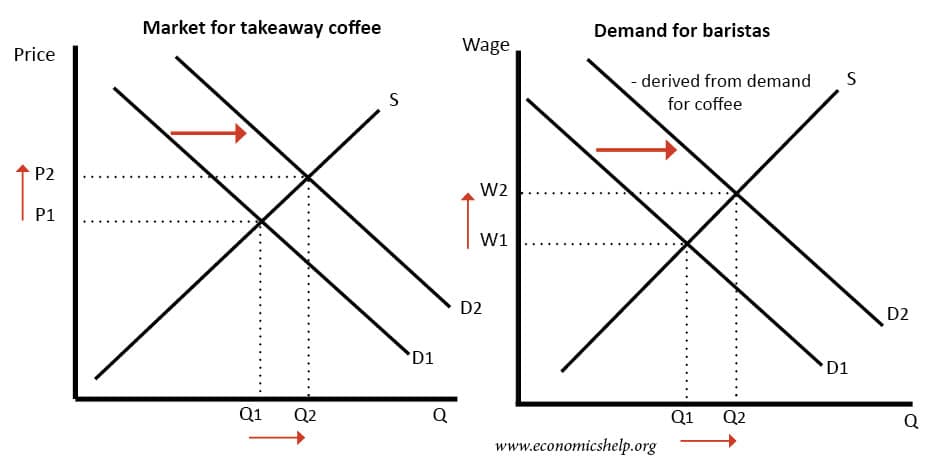
Factors affecting the demand for labour:
Labour is derived demand adn therefore influenced by the level of economic activity. As aggregrate demand increases, the demand fro labour also increases
Price of labour (wages)
Productivity (output per given unit) of labour: as labour productivity increases firms will require less labour to complete tasks to meet current demand, as labour productivity decreases firms will require more labour to complete tasks to meet current deamnd
- in the long run, if labour is more productive than capital, there will be a labour/capital substituion (more likely to be the opposite way around)
- in the short run, an increase in labour productivity leads to a decrease in the demand for labour.
Cost of other inputs: relative cost of capital and labour- labour/capital substitution
Output of the firm- will increase or decrease the demand for labour
Industrial relations policy: e.g., unfair dismissal legislation
Factors affecting the supply of labour:
Wage price (the price of labour itself)
improved working conditions
size of population
participation rate
age distribution of the population
geographic mobility→ ease of movemen of workers between locations
occupational mobility→ ease of movement of workers between occupation
skills: education levels of labour (directly affects productivity)