Lung anatomy and Physiology
Primary function
The respiratory system is responsible for delivering oxygen to the body and removing carbon dioxide
Gas exchange - main role is oxygen intake and CO2 removal
Regulation of pH
Sound production
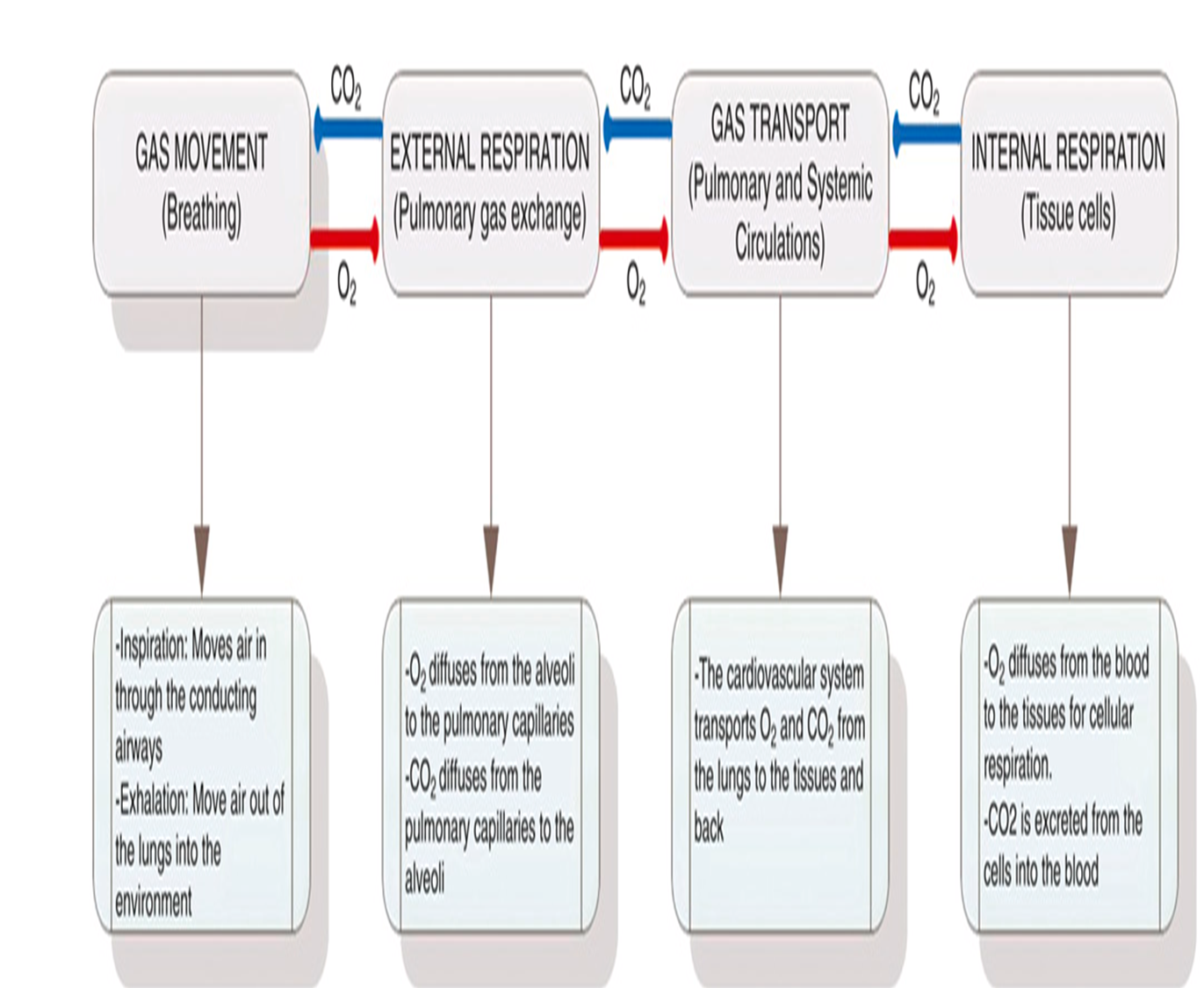
Four Processes of respiration
Since gas exchange occurs only at alveoli level, the rest of the respiratory system structures are just conducting airways moving air through the lungs to the alveoli, where external respiration occurs
Upper respiratory tract
Nose, Nasal cavity, Pharynx, Larynx
Primary Functions of upper airways
act as conduct of air
humidify and warm
Prevent foreign material from entering tracheobronchial tree
Vital area involved for both speech and smell
Structure of the nose
Outer portion of the nose is composed of bone and cartilage
Upper 1/3 is formed by nasal bones and the frontal process of the maxilla
Lower 2/3 is lateral cartilage, greater alar cartilage, lesser alar cartilage, septal cartilage, and fibrous fatty tissue
Nasal Vestibule
located in nostrils
lined with skin and contains - sebacepus glands, sweat glands, and vibrassae
transitions into deeper respiratory mucosa