(10) 4.7a Motivational Concepts
Motivation
A need or desire that energizes and directs
Instinct/Evolutionary Theory
Motivations are unlearned instincts caused by adaptations of our ancestral past
Drive-Reduction Theory
Physiological need creates an aroused tension (a drive) that motivates one to satisfy the need
The physiological aim of drive reduction is homeostasis
Ex. eating to satisfy hunger, drinking to relieve thirst, and sleeping to alleviate tiredness
Optimal Arousal Theory
Aims to seek optimum levels of arousal, not to eliminate it
Ex. A person in a hectic environment might choose to meditate or listen to calm music to lower their arousal levels.
Ex. A person with low stimulation might play video games or engage in social outings to increase arousal.
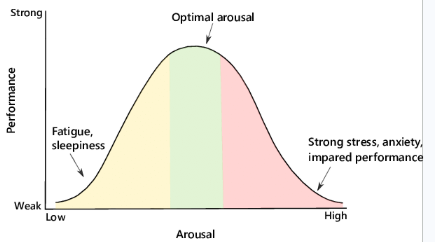
Yerkes-Dodson Law
Moderate arousal can lead to optimal performance
Incentive Theory
A desire for external rewards dictates our behavior
Ex. A student studies for a difficult exam to keep a scholarship, rather than out of interest in the subject.
Intrinsic Motivation
Internal desire to accomplish a goal
Ex. Reading a challenging book simply to understand the topic better, not for a class
Ex. Offering time to a local charity because it fulfills a personal sense of purpose.
Extrinsic Motivation
External rewards and praise
Ex. An employee works overtime specifically to receive a bonus or promotion