cell division
intro
most multicellular life begins as a single fertilized egg called a zygote
huge ahh cell
cell div is key to developing into more complex, multicellular organisms and growing/maintaining adult cell types
biologically tightly regulated
failure of this regulation can be deadly
the cell’s genome
the duplication of a cell’s DNA is central to cell division
nearly all somatic cells in the body have identical versions of this code
a genome is the full collection of an organism’s DNA
the genome is present in nearly all cell in a multicellular animal
packed into several large, liner double-stranded DNA molecules called chromosomes
humans have 23 pairs of chromosomes (46 total)
genome structure
the length of the entire human genome is abt 2m
10uM
dna is tightly packed into chromosomes esp during cell division
cell cycle
the cell cycle is an ordered series of events involving cell growth and cell division that produces two new daughter cells
precisely timed and carefully regulates
three main phases
interphase = cell grows, dna is replicated
g1 - cell grows and prepares for dna replication
s phase - dna is replicated, chromosomes are copied
g2 - cell prepares for division and checks DNA for errors
miotic phase = replicated dna and cytoplasmic contents are separated
right before mitosis
centrosome - organelle that is key to orchestrating mitosis
sister chromatids - duplicated and connected chromosomes
mitosis
duplicated chromosomes are aligned, separated into two new identical cells
dna of the cell’s nucleus is split into equal sets of chromosomes
majority of the cell divisions in the body involve mitosis
goal: make sure that each daughter cell gets a perfect full set of chromosomes
MITOSIS PHASES
prophase
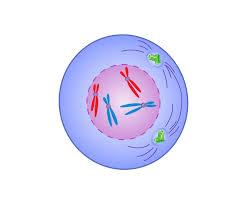
early prophase
organize chromosomes during mitosis
miotic spindle starts to form
chromosomes start to condense
nucleolus is gone
late prophase (prometaphase)
nuclear envelops breaks down
chromosomes r fully condensed
miotic spindle starts to capture chromosomes
SPINDLE ANATOMY
centromere - dna region where sister chromatids are tightly joined
kinetochore - a protein structure that forms on the centromere of chromosomes.
metaphase
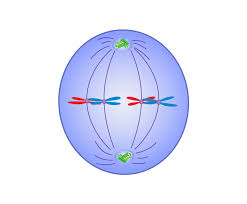
chromosomes line up at a metaphase plate
each chromosome’s kinetochores must attach to microtubules from opposite spindle poles
anaphase
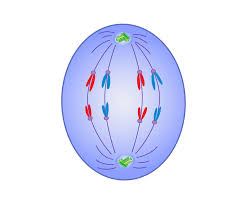
kinetochore microtubules pull chromosomes toward poles
microtubules push poles apart
sister chromatids separate from each other and are pulled towards opposite ends of the cell
telophase
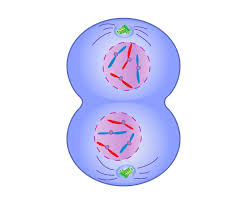
chromosomes start to condense
spindle disappears
nuclear membrane re-forms
nucleolus reappears
the cell is nearly done dividing, starts to re-establish its normal structures
cytokinesis = cell is split into identical daughter cells.
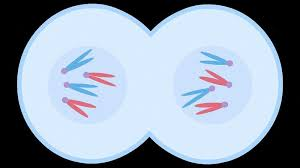
overlaps with anaphase and telophase
forms acting ring and cleavage furrow
when complete, fully separates cells
g0 phase
not all cells are cycling/not actively dividing
some are in a quiescent state, a state of rest
this can either be temporary or permanent depending on the cell or cellular environment
internal checkpoints
daughter cells must be EXACT duplicates of the parent cell
if not they gna make bad kids
internal checkpoints at g1, g2, and M phases to prevent continuation of the cell cycle
g1 checkpoint - cell reserves, cell size, no dna damage
g2 checkpoint - all chromosomes duplicated, dna damage
m checkpoint - sister chromatids attached to miotic spindle
positive regulation of the cell cycle
the cycling and cyclin-dependent kinases (Cdks) are proteins that positively regulate the cell cycle
responsible for the progress if the cell through the various checkpoints
“forward momentum”
different cyclins are fluctuating at specific points in the cell cycle
the cyclin-cdk complex must be phosphorylated to be active and continue the cell cycle.
negative regulation of the cell cycle
block the progression of the cell cycle until problems are resolved
best studied are retinoblastoma protein, p53, and p21
discovered to be damaged or non-functional in cells that had begun to replicate uncontrollably (cancerous)
act primarily at the g1 checkppint
p53 detects dna damage and stops cell cycle
if damage too bad, triggers apoptosis
p21 is activated by p53 and blocks Cdk/cyclin activity to enfore the cell cycle to stop
Rb prevents S phase entry by blocking growth dactors until enough positive signals lead to its inactivation
cancer
proto-oncogenes
genes that code for the positive cell-cycle regulators
oncogenes
mutated genes that cause cancer
tumor suppressor genes
code for negative regulator proteins which when activated can prevent the cell from undergoing uncontrolled division
Rb, p53, ps1
a cell that carries a mutated form of a negative regulator might not be able to stop the cell cycle
mutated p53 genes have been identified in more than 50% of all human tumor cells