Performance appraisal
Review:
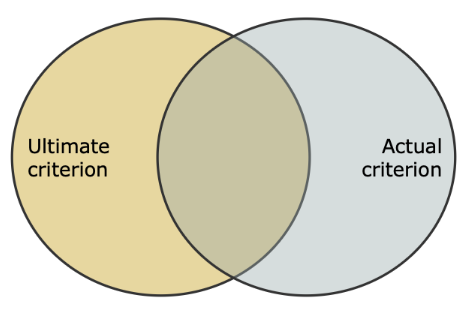
Criteria: evaluative standards for measuring success or quality
the most important criterion is job performance
point out: relevance, contamination, deficiency
ultimate: missing, theoretical - not covered in actual (deficient of actual)
overlap: relevance
actual criterion: contamination (bias)
Review:
there are 3 main performance dimensions:
task performance: behaviors that contribute to technical core of organization (i.e. in-role job performance)
Contextual performance: behaviors that contribute to social context (i.e organizational citizenship behaviors; OCBs)
Counterproductive work behaviors (CWBs): behaviors that harm or detract from the organization (eg theft, sabotage, abuse)
Review: Measuring performance criteria
performance dimensions can be rated objectively or subjectively
objective criteria: non-judgemental measures taken from organizational records; ‘hard data’
includes productivity, accidents, absence, lateness, turnover, grievance
Subjective criteria: based on judgements and evaluation of others'; “soft data”
includes performance ratings
human judgment
today is for subjective criteria
Perfomance Appraisal
systematic evaluation of job performance, and provision of feedback
uses:
personnel decisions (promoting, firing, etc)
employee development (coaching, training)
Documentation (defense against litigation)
Performance appraisal
ineffective appraisal systems have disastrous consequences:
wrong people are promoted and fired
employees feel unfairly treated and act accordingly
low motivation and satisfaction, high turnover
potential for legal problems
Research on Performance Appraisal
Earlier research focused on accuracy of subjective ratings
rating format
rate errors
rater training
more recent research on social context of performance appraisal
rater and ratee reactions
multi-source feedback
participation and fairness
Rating formats
overall premise: good ratings forms will improve rater accruacy and precious
4 rating formats
checklist
employee comparisons
graphic rating scales
behaviorally anchored rating scales (BARS)
Rating Formats
Checklists
rater checks off each behavior that employees exhibit
eg “arrives on time”, “smiles at customer” “works hard”
checked items are summed for overall score
items can be weighted differently (if desired)
Rating Formats
Employee comparisons: rater rank-orders employee (from best to worst)
eg if ranking fast-food options: Culver’s; Chipotle; Panda Express; McDonalds
Can be done using:
paired comaprions
compare everyone to everyone, then sum whoever ‘wins’ most
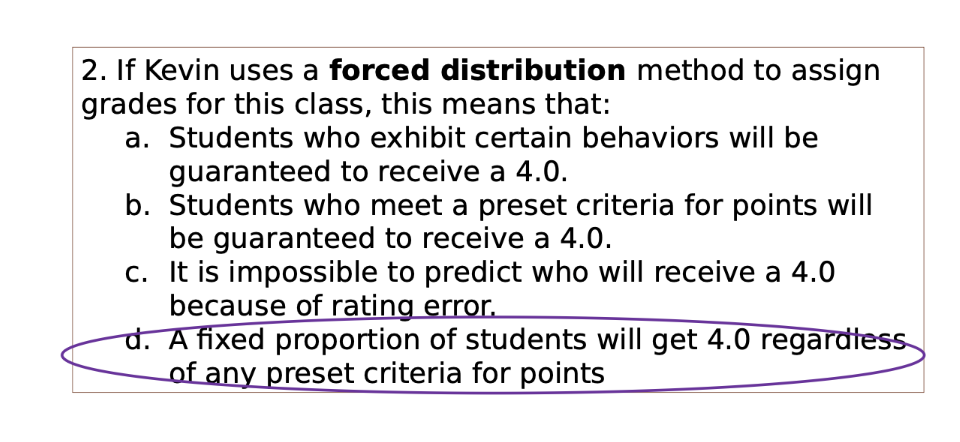
forced distribution
eg 1/3rd poor. 1/3rd ok, 1/3rd exceptional
Rating Formats
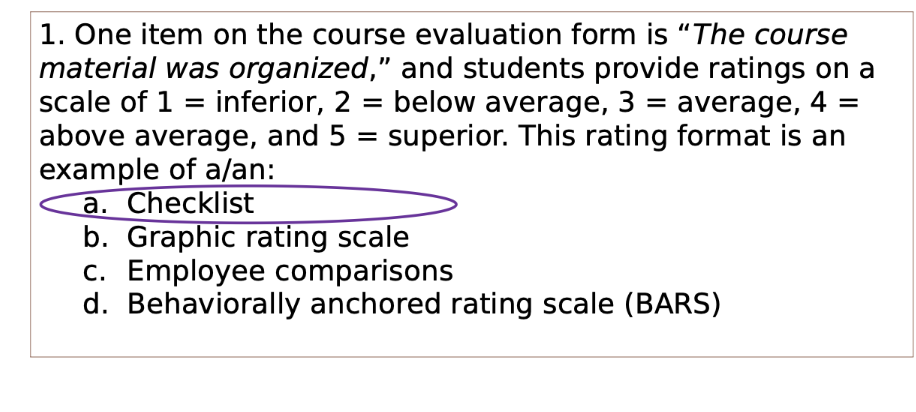
Graphic rating scales (most common)
numerical scale with verbal anchors
most common format
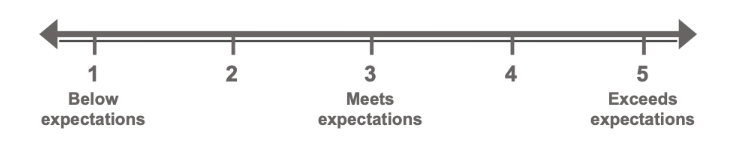
fast food examples
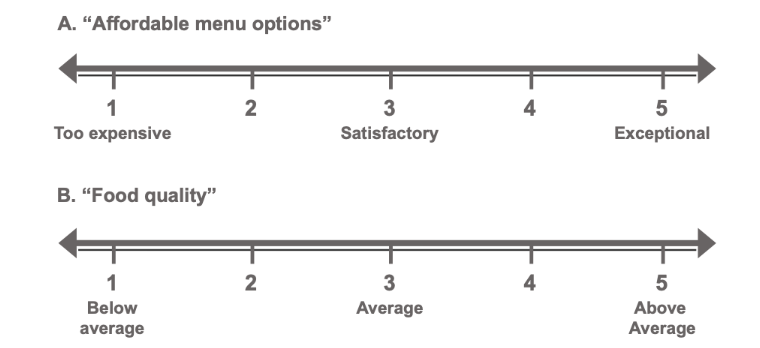
Rating Format
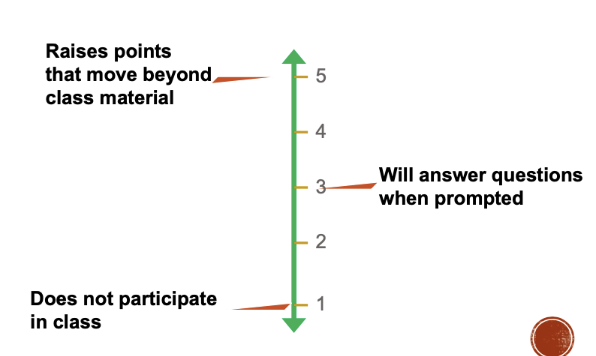
Behaviorally anchored rating scales (BARS)
graphic rating scale + behavioral examples as scale anchors (key behaviors)
behaviors are ‘critical incidents’
example for class participation
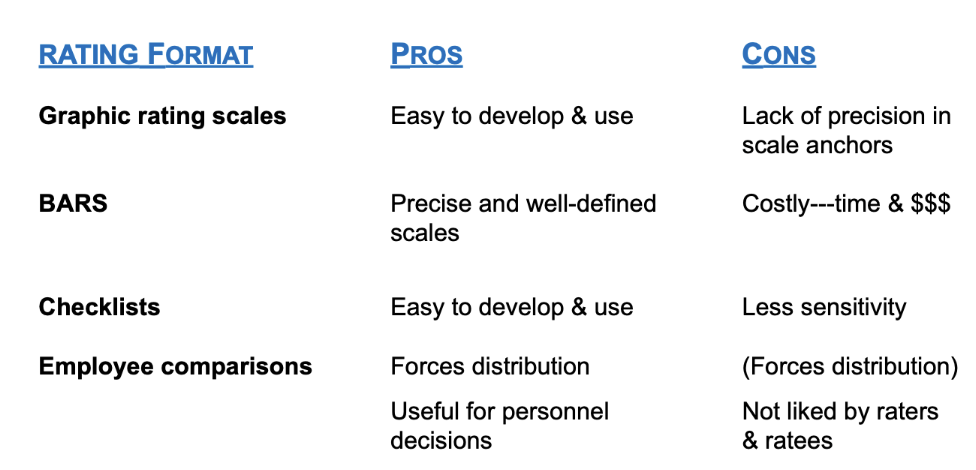
Summary: Rating Formats - Pros and cons
Rater Errors
Rating errors can be intentional or unintentional
may occur at various steps of rating process:
observing employees
storing info in memory or retrieving it
translating info into rating
Rater Errors
Common Rater Errors
Halo error: give high rating for all dimensions, despite different performance
“Lizzie brings up great points in meetings, so she must be great all-around”
Recency effect: Overly relying on most recent info
what do i remember most recently - performed good 10 months, last month not so hot
Primary effect: First impression bias (opposite of above)
employee starts out good, now not so great - remember the beginning
Similar-to-me bias: Higher rating to similar others
Rater Errors
Common distributional errors
problem: cant discriminate between in/effective employees
Leniency errors: everyone gets very high ratings
can happen when raters like ratees (or want to keep the peace)
Severity errors: everyone gets very low ratings
can happen when raters are overly strict, or have misguided motivational strategies
Central tendency errors: everyone rated as average
can happen due to poor rater training, unfamiliarity with ratees
Review from job analysis
(importance of rater training)
provide definitions of rating dimensions
define scale anchors
describe behavuors for each dimension
allow raters to practice
provide feedback on practice
Current trends: worker surveillance
worker surveillance: monitoring employees behavuir during work hours (often via computer software)
sometimes used for remote workers, who can’t otherwise be observed
Giving performance feedback effectively
performance appraisal occurs within a social, organizational, and legal context
effective appraisals re nto only accurate, but they asl elicit positive employee reactions
to the extent possible (Sometimes, hard conversations are necessary)
Giving performance feedback effectively
important considerations:
feedback environment: org. culture related to performance feedback includes:
organizational politics: people are often motivated to protect self-interests
trust in the appraisal system: affects raters and ratees (acceptance)
Feedback orientation: each employees level of receptivity towards feedback
Reaction criteria: outcomes that reflect how employees respond to appraisals - measuring reactions to feedback
includes satisfaction with rating system, perceived utility, and fairness
Giving performance feedback effectively
A few more considerations
Participation: more employee participation (eg, self-ratings, time to talk) associated with better reactions
Multi-source feedback (eg 360 degree)
use ratings from multiple perspectives
popular for developmental purposes (more participation )
Legal Issues in Performance Appraisal
performance appraisals can be legally challenged
organizations lose - 40% of cases
Practice that minimize legal challenges
use job analysis to define performance dimensions
develop rating form to assess dimensions
train raters and review ratings before giving feedback
allow employees to appeal
document performance records
help employees with unsatisfactory performance
EXAM REVIEW