Cell signalling
The transfer of information from one cell to another. also called cell-cell signalling and intercellular communication
Essential part of many biological processes
It controls the inner workings of organisms allowing them to respond, adapt and survive
What happens when cell communication goes wrong
losing the signal- type 1 diabetes
When signal does not reach the target- MS multiple sclerosis
when the target ignores the signal- type 2 diabetes
too much signal- excitotoxicity
Multiple breakdowns- cancer
Main principles of cell signalling
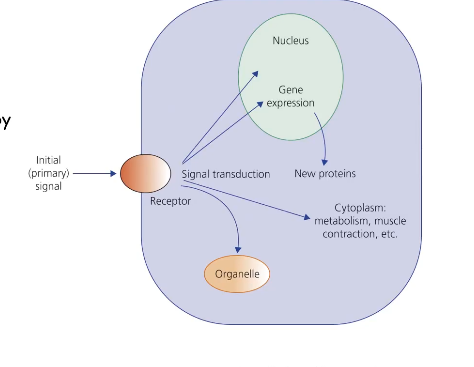
Arrival of signal
Perception of the signal by receptors
Transmission of the signal by the receptor to the cell
Passing on the message- signal transduction
The arrival of the message at the final destination
A response by the cell
Commonly seen changes
An alteration of the concentration of intracellular molecule such as cAMP or cGMP
Changes in the activity of a protein- enzymes
Changes in the conformation of a protein
Changes in the location of a molecule
Changes in gene expression
A good signal
A signal should be able to be made, mobilised and altered relatively quickly
Mechanism of intercellular communication
direct communication through gap junction or through recognition of surface markers
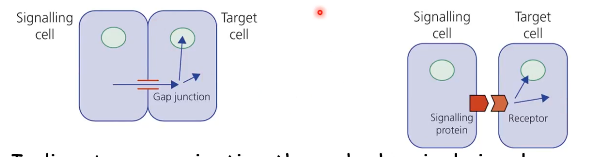
Indirect communication through chemical signals
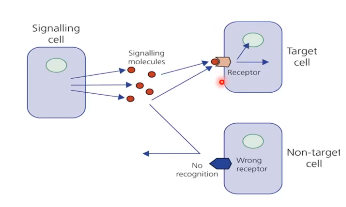
Direct communication through gap junction
composed of membrane proteins — connexions
Link cytosol of 2 adjacent cells
Particles movement between cells act as signal
Communication is direct
Common in smooth and cardiac muscles
receptor-ligand signalling
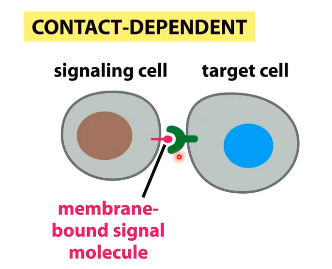
Signal molecule remains bound to cell surface
Influences only cells that contact it
Important in development, immune response
Indirect communication through chemical signals
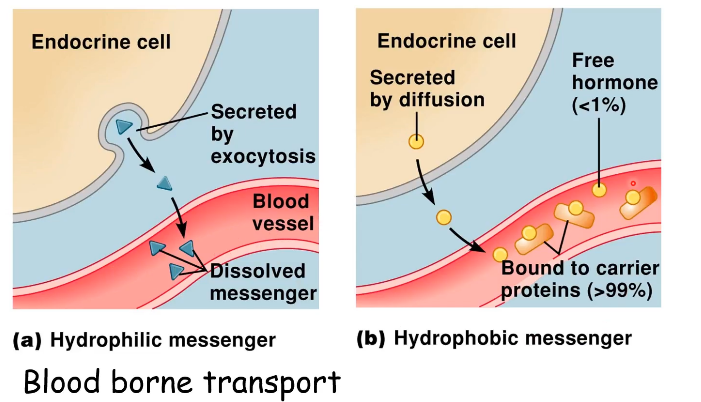
messenger is produced by source cell
messenger is transported to target
Target cell has receptor for messenger
Binding of messenger to receptor triggers a target cell response
Communication is indirect
Four forms of indirect intercellular signalling
Endocrine signalling- release of chemical messenger known as hormones. travel in the bloodstream. travel to a distant target cells, INSULIN, OESTROGEN, THYROXIN
Paracrine signalling- source cells release signal - effect neighbouring cell only affect adjacent cells- HISTAMINE
Autocrine signalling- source cell and target cell are the same - chemical messenger affects its own cell- CYTOKINES, GROWT FACTOR
Neurocrine signalling/synaptic- neuron release neurotransmitter at synapse- effect cell as end of synapse- ACETYLCHOLINE, GLYCINE, SEROTONIN
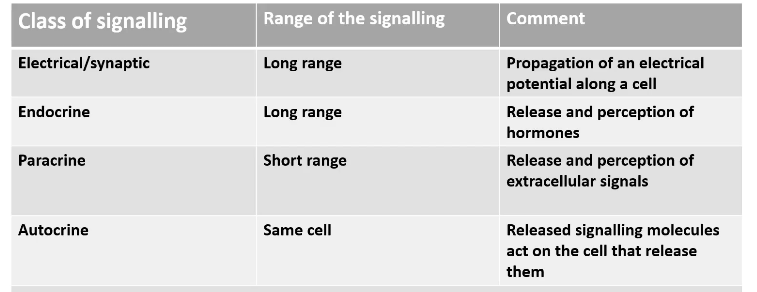
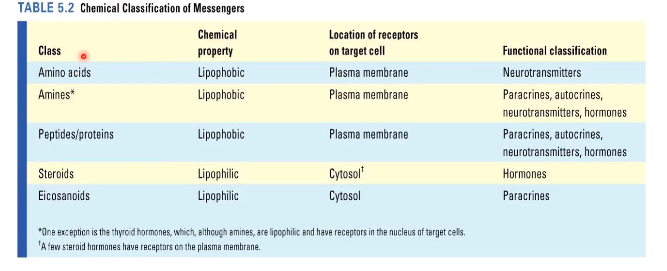
Chemical messengers can be classified by chemical properties
Lipophobic ligand
Not lipid soluble, is water soluble
Does not easily cross cell membrane require pumps/channels
Receptors on cell membrane
General action of target response- enzyme activation, membrane permeability changes
Lipophilic ligand
lipid soluble not water soluble
easily diffuse across membrane
Receptor location within cell
General action of target response via gene activation
How a chemical signal is translated
messenger bonds to receptors
Binding results in cell response
Signal transduction- process of producing response in target- amplification of the signal
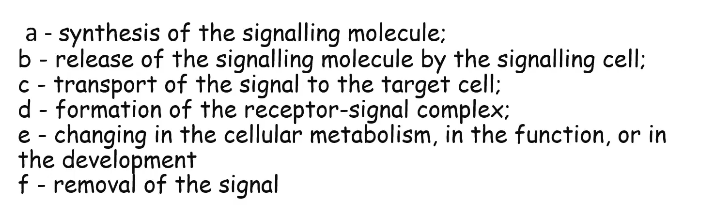
cell signalling in correct order
Receptor binding
specificity
Binding is brief and reversible
Affinity= strength of binding
Location of binding - lipophobic= cell membrane lipophilic= within cell
One messenger may bind to many receptor types
One target may have many types of receptors
Number of receptors per cell varies and is dynamic