Biology
Cells
==Eukaryotic Cells== - When a cell has a nucleus (e.g animal, plant, fungal and protist cells)
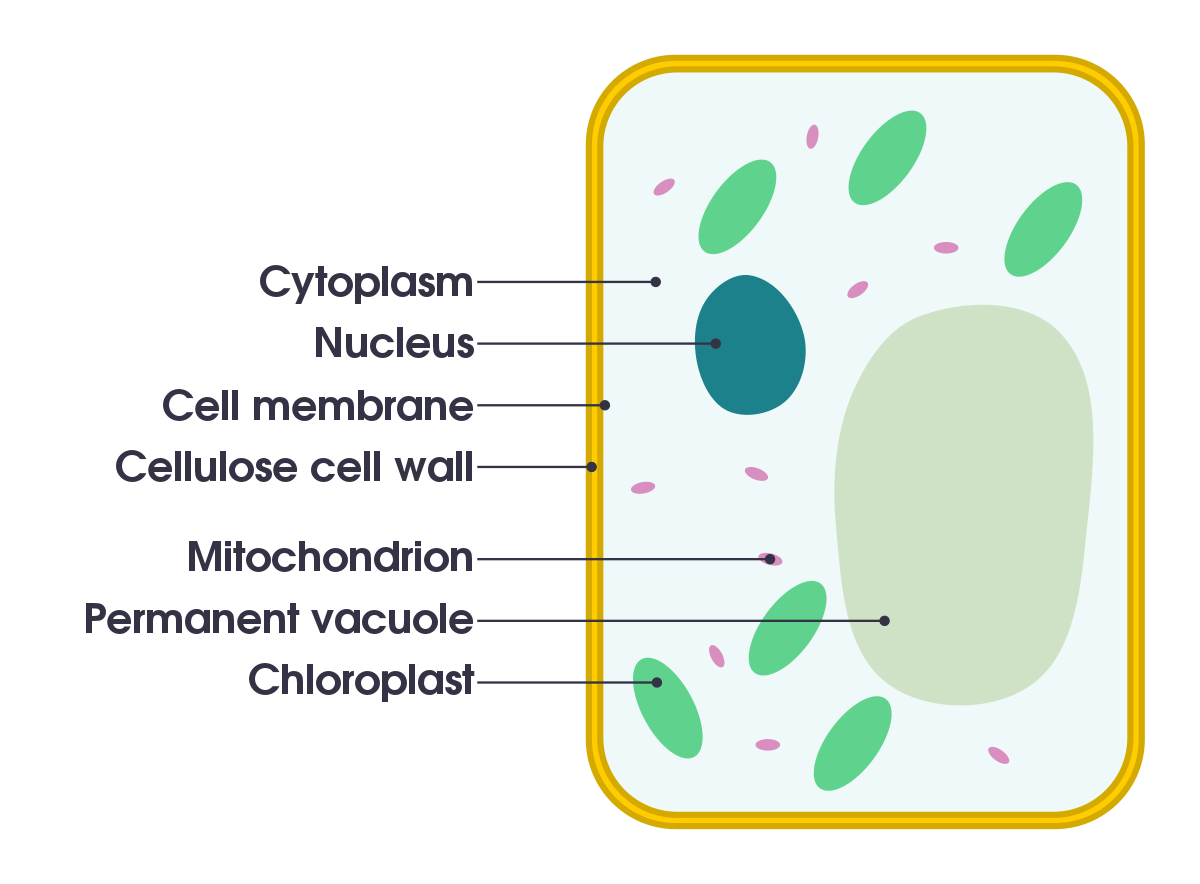
==Prokaryotic Cells== - When a cell has no nucleus (e.g only bacteria cells)
animal cells
@@Cell membrane ;@@ - controls what exits and enters the cell
ribosomes ; - produces protein
mitochondria - releases energy by respiration
@@nucleus@@ - contains DNA and controls cell activity
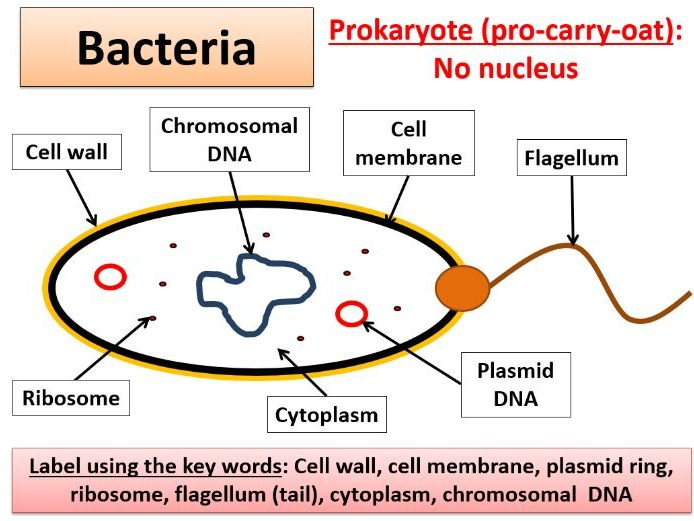
plant cells
- controls what exits and enters the cell
- produces protein
mitochondria - releases energy by respiration
- contains DNA and controls cell activity
cell wall - strengthen and support the cell + made of cellulose
- stores cell sap
- site of photosyntheis
cytoplasm - a gel like substance where most reactions take place
bacteria cells
%%Chromosomal DNA -%% controls the cell’s activities and replication. It floats free in the cytoplasm
%%Plasmid DNA%% - small loops (circles)of extra DNA that arent part of the chromosome, Plasmids contain genes for things like drug resistance, and can be passed between bacteria
%%Flagellum -%% structure that rotates to make the bacterium move. it can be used to move away from harmful toxins and towards nutrients or oxygen
Slime coat - produces bacterium to protect
cell wall - strengthen and support the cell + made of cellulose
- produces protein
- controls what exits and enters the cell
cytoplasm - a gel like substance where most reactions take place
Specialised Cells
==differentiation-== when a cell specialises, it adapts to its function.
Early on in a cells life it will ==differentiate== to become a ==specialised== cell. The sub-cellular structures (organelles) can change.
egg cell
function- carry female’s DNA and noruish the developing embryo
adaptation:
- lots of nutrients in cytoplasm to feed embryo
- nucleus with half the genetic information
- cell membrane and jelly coat hardens after fertilisation to stop from other sperm entering egg cell
muscle cell
function- contract and relax to allow movement
adaption:
- lots of mitochondria for contraction
- special fibres which slide over eachother to let fibres contact
- stores glycogen which can be converted into glucose for repiration
sperm cell
function- transports male DNA to the egg and fertilises the egg
adaptations:
- long tail for movement
- lots of mitochondria to swim
- digestive enzymes in acrosome to break through membrane of egg cell
- half the genetic information in nucleus
ciliated epithelial cell
function- move substances in one direction on the surface of organs (for example found in airways)
adaptions:
- lots of cilia on the top surface of cells
- cilia beat to move substances in one direction along surface
- function- absorb water and mineral ions
root hair cell
function- absorb water and mineral ions
adaptions:
- no chloroplast, as no light for photosynthesis reaches the roots
- lots of mitochondria for active transport
- large vacuole to speed up osmosis
- hair to increase surface area so water can be absorbed by osmosis
red blood cells
function- to transport oxygen throughout the blood/body
adaptatios:
- extra haemoglobin which picks up oxygen
- biconcave shape to move through narrow blood vessels
white blood cells
function- to protect the body from harmful pathogens
adaptations:
- \
Microscopes and Magnification
Microscopes
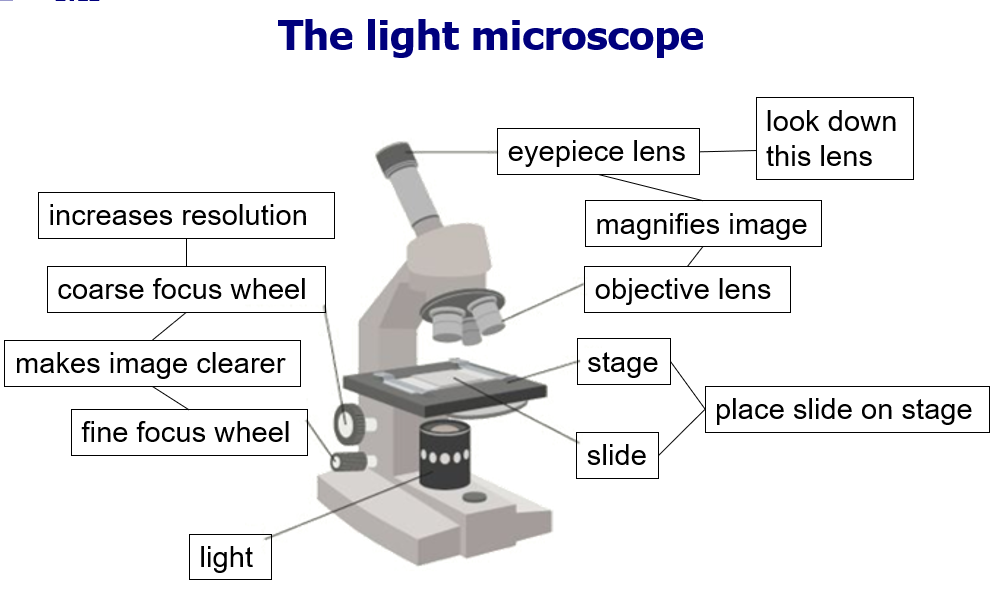
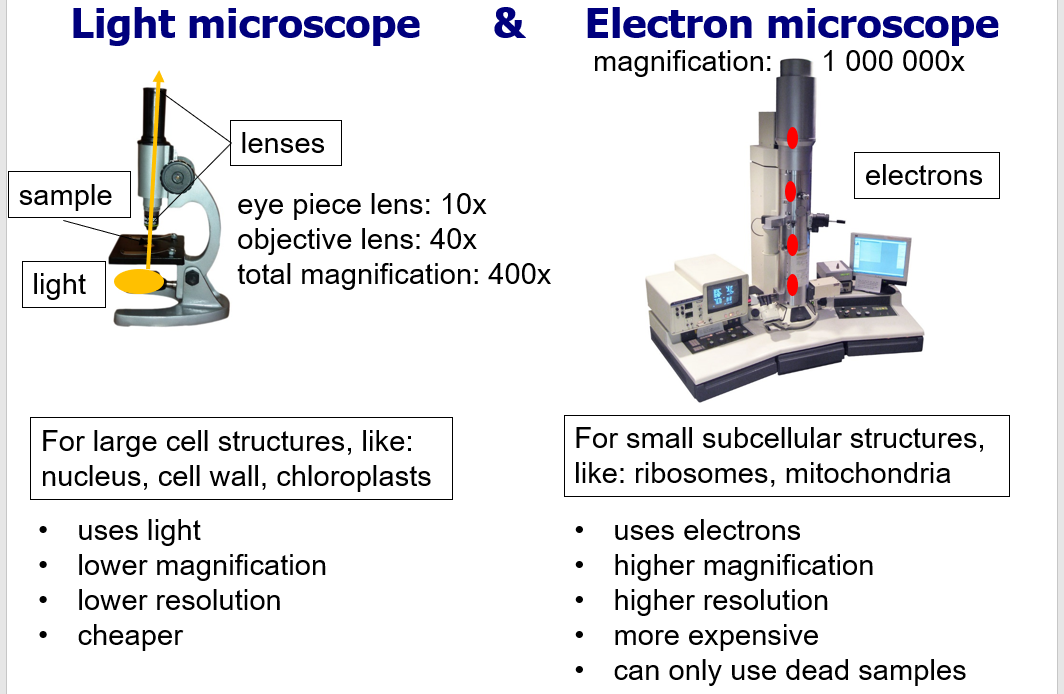
light microscope
comparing microscopes
magnification
magnification- how much bigger something looks
resolution - how clear the image is
magnification equation =
magnification = image size / real size

microscope CPAC
preparing a slide
- place a thin specimen on slide
- drop of water or stain
cells become visible under microscope
can see cell organelles
- slowly lower coverslip over stained specimen at 45 degree angle
keeps specimen flat
holds specimen place
stops specimen from dying out
using the microscope:
- place a slide on the stage
- set to the lowest magnification objective lens
- look through eyepiece
- turn focus wheel to increase resolution
- change the objective lens to increase magnification
- turn focus wheel again
Digestion
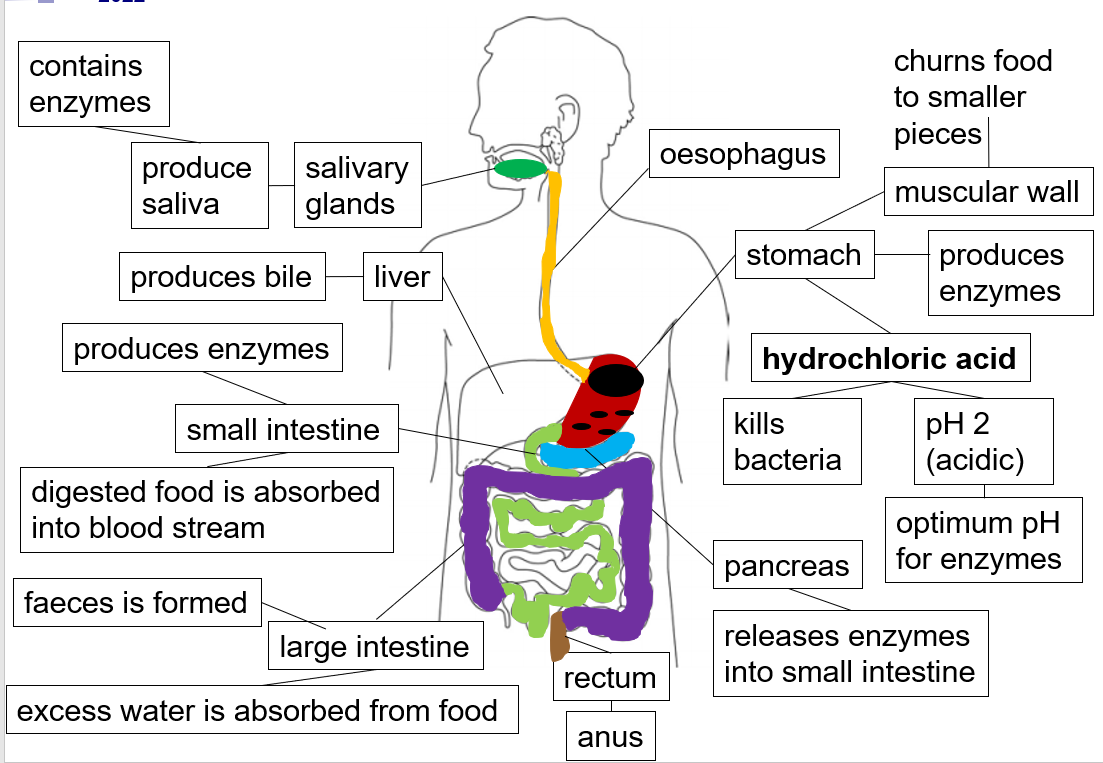
digestion - breaks down large insoluble molecules of food into small soluble molecules that the body cells can absorb and use
digestive system