Medical Terminology
Blood
Blood
Fluid tissue of the body
55% liquid plasma
45% formed elements (cells)
Hematopoiesis
Bloods cells produced in red bone marrow through the process of hematopoiesis
- Erythrocan abnrytes: Red blood cells, no nucleus
- Leukocytes: White blood, 5 different types
Basophil -l
Eosinophil
Neutrophil
Monotype
Lymphocyte
- Thrombocytes: Platelets, part of clotting system, not a complete cell
Cardiovascular New Word Parts
angi/o, vas/o - blood or lymph vessel
aort/o - aorta
arteri/o - artery
ven/o - vein
phleb/o - vein
ather/o - plaque
thromb/o - clot
isch/o - to hold back
hem/o, hemat/o - blood, blood condition
-globin - protein
-cyte, cyt/o - cell
-penia - deficiency
-emia - blood, blod condition
-rrhage - bleeding, abnormal excessive fluid discharge
-stasis - stopping or controlling
-pathy - disease
Tachy- - fast, rapid
Brady- - slow
Anti- - against
End-, endo- - in, within, inside
Cardiovascular Pathology Terms
Terms
Arteriosclerosis - hardening of an artery
Atherosclerosis - hardening and narrowing of arteries due to building of cholesterol plague inside arteries
Ischemia - insufficient supply of oxygen to tissue (to hold back blood)
Myocardial Infarction - a heart attack
Cardiomyopathy - disease of heart muscle
Hypertension - high blood pressure
Hypotension - low blood pressure
Tachycardia - (>100 bpm in adult) abnormally fast resting heart rate
Bradycardia - abnormally slow resting heart rate (< 60 bpm in adult)
Phlebitis - inflammation of vein
Endocarditis - inflammation of inner lining of heart
Hemostasis - to stop or control blood
Hemoglobin - oxygen carrying blood protein, pigment of erythrocytes
Leukopenia - deficiency in number of white blood cells
Thrombocytopenia - deficiency in number of thrombocytes in blood
Anemia - lower than normal number of red blood cells
Hemorrhage - loss of large amount of blood in a short period of time
Leukemia - a type of cancer, increase in number of abnormal white blood cells
Thrombus - blood clot, interior wall of an artery or vein
Thrombosis - abnormal condition of having a thombus
Embolus - a foreign object circulating in the blood
Embolism - sudden blockage of a blood vessel by an embolus
Aneurysm
Atherothrombosis
Cardiomegaly
Cardiovascular Procedure Terms
Electrocardiogram - record of electrical activity of the myocardium
Holter Monitor - portable electrocardiogram, to monitor hear rates and rhythms
Cardiopulmonary Resuscitation - CPR
Defibrillation - use of electric shock to restore the heart's normal rhythm
Angiography - process of recording an x-ray of the blood vessels after the injection if contrast medium
Angioplasty - technique of mechanically widening a narrowed/obstructed blood vessel; surgical repair of blood vessel
Coronary Artery Bypass Graft (CABG) -
Carotid endarterectomy -surgical removal of lining of a clogged carotid artery (which leads to brain)
Valvoplasty - surgical repair or replacement of heart valve
Cardiac Catheterization - diagnostic procedure in which a catheter is passed into a vein or artery, which is then guided to the heart and contrast medium is then injected to produce an angiogram
ECG Electrodes
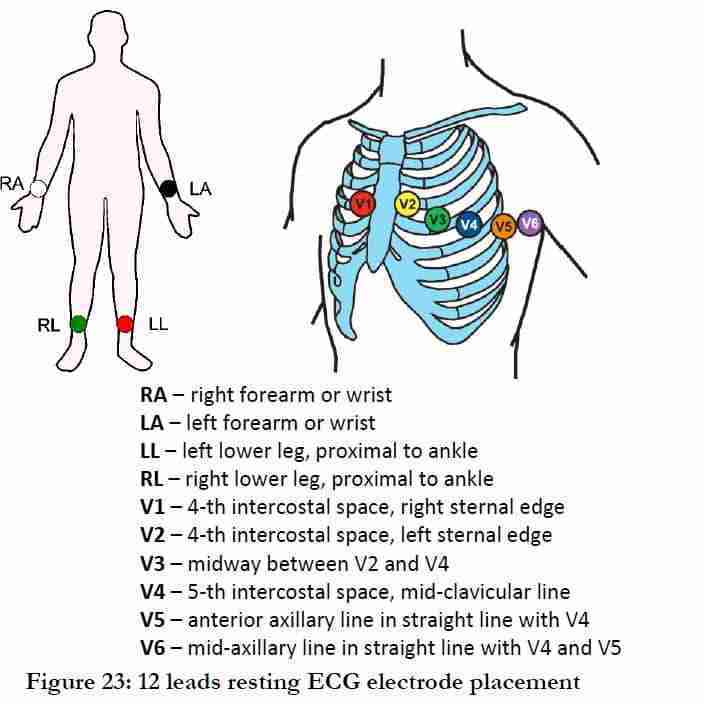
World Building Cardiovascular System
Thrombocytosis - abnormal increase in the number of thrombocytes in the circulating blood
Arteriostenosis - abnormal narrowing of an artery
Cariomegaly - enlargement of the heart
Aneurysm - localized weak spot or balloon-like enlargement of the wall of an artery
Pericarditis - inflammation of the pericardium
Atrial fibrillation - rapid, irregular twitching of the atrial wall
Ventricular fibrillation - rapid, irregular, contractions of the ventricles
Arrhythmia - loss of normal rhythm of the heartbeat
Asystole - lack of electrical activity in heart
Defibrillation - use of electric shock to restore heart's normal rhythm
Perfusion - flow of blood through vessels a part of an organ
Hypoperfusion - deficiency of blood passing through vessels
Myocarditis - inflammation of myocardium
Dyscrasia - pathological condition of the cellular elements if the blood
Atherectomy - surgical removal of plague
-
Functions of the the lymphatic system and immune
Return filtered lymph to the veins at the base of the neck
Absorb fats and fat-soluble vitamins through the lacteals of the small intestine
Remove waste products from the tissues and cooperate with the immune system in destroying pathogens
Structures-Lymphatic Circulation
Includes lymphatic capillaries which are blind-ended tunes that collect lymph
Lymphatic vessels - Extend from the capillaries, becoming larger
The larger vessels are joined together to form two ducts, each drains a specific part of the body and returns the lymph to the venous circulation
Lymph:
Part of interstitial fluid
Interstitial Fluid and Lymph
Interstitial Fluid = intercellular fluid = tissue fluid
Plasma from arterial blood thar goes out through the capillaries delivering nutrients, etc. To the cells
Leaving the cells, it brings waste products out
90% is returned to the blood
Lymph - 10% doesn’t go back into blood
Lymph - returned to blood through lymphatic vessels
Lymph is clear; containing electrolytes and proteins
Remove dead cells, debris, and pathogens
Work with immune system
Structure:
Lymph Nodes -
Lymph Vessels -
Tonsils -
Thymus Gland -
Appendix -
Spleen - large mass of lymphoid tissue, left upper quadrant
Lymphatic New Word Parts
Lymph/o - Lymph, lymphatic tissue
Lymphaden/o - lymph node or gland
Lymphangi/o - lymph vessel
Sarc/o - flesh, connective tissue
Splen/o - spleen
Tonsil/o - tonsils
Adenoid/o - adenoids
Immun/o - immune, protection, safe
Onc/o - tumor
Carcin/o - cancer
Tox/o - poison, poisonous material
Lymphatic Pathology and Procedures
Lymphadenitis - Inflammation of the lymph nodes
Lymphadenopathy - disease process affecting the lymph node
Lymphangioma - benign tumor formed by abnormal collection of lymphatic vessels
Lymphedema - swelling of tissues due to abnormal accumulation of lymph fluid within tissues: prevents lymph from draining properly
Splenomegaly - abnormal enlargement of spleen
Splenectomy - surgical removal of spleen
Autoimmune disorder - large group of diseases. Characterized by a condition in which an immune system produces antibodies against itself
Carcinoma - malignant tumor in epithelial tissues (cancerous)
Sarcoma - malignant tumor that arises from connective tissues (flesh tumor)
Lymphoma - malignancies of lymphoid tissues
Cytotoxic drug - drug that is poisonous to cells
Word Building Lymphatic and Immune System
ne/o, neo- - New
Phag/o, -phagia - To eat/swallow
-plasm - Formative material of cells
Pathogen - Microorganism that causes disease phagocytes - specialized leukocytes that swallow pathogens
Macrophage - one of the types of phagoctyes
Immunity - state of resistant toward a specific disease
Splenorrhagia - Bleeding from spleen
Lymphedema - swelling of tissues due to accumulation of lymph fluid
Antigen - substance of body regarding being foreign
Hypersensitivity (allergy) - overreaction body has to a particular antigen
Allergen - antigen that produces an allergic reaction
Neoplasm - tumor, abnormal growth of body tissue
Metastasize - cancer spreading process
Metastasis - new cancer site
Tonsill/o - tonsils
Respiratory Structures and Functions
Structures:
Upper -
Lower -
Sinuses -
Pharynx -
Larynx -
Epiglottis -
Trachea -
Bronchi -
Alveoli
Lungs
Diaphragm
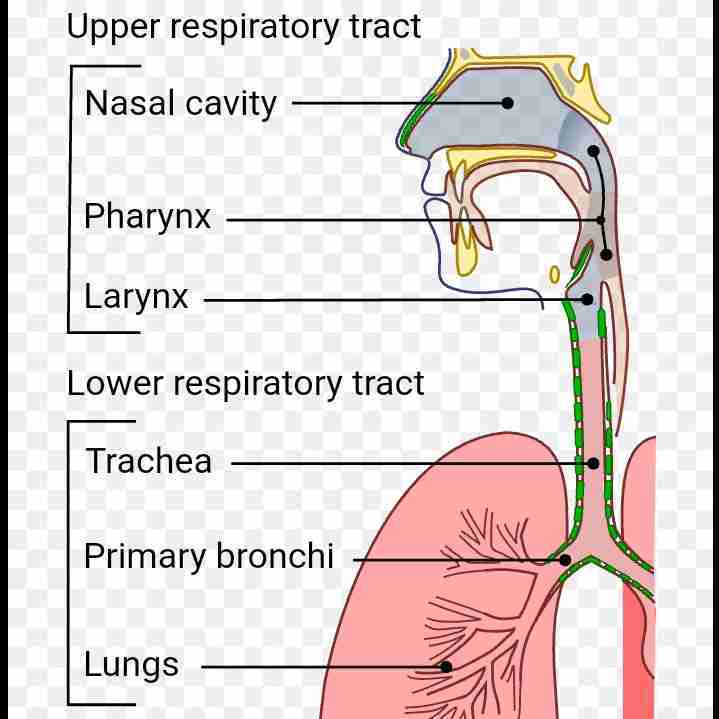
Structure of lungs:
Skin Structures and Functions
The Integumentary System - The Skin
Primary function:
First line of defense for the immune system
Waterproofs the body
Major receptor for the sense of touch
Skin structure:
Epidermis: outermost layer
Dermis: thick layer of living tissue, under the epidermis
Nerves, tissue, blood vessels, etc.
Subcutaneous layer: fatty tissue that is between the skin and muscles
Sweat Glands
Secretes sweat to regulate body temps and water content
Excreted some metabolic waste
Hair
Aids in controlling loss of body heat
Structure:
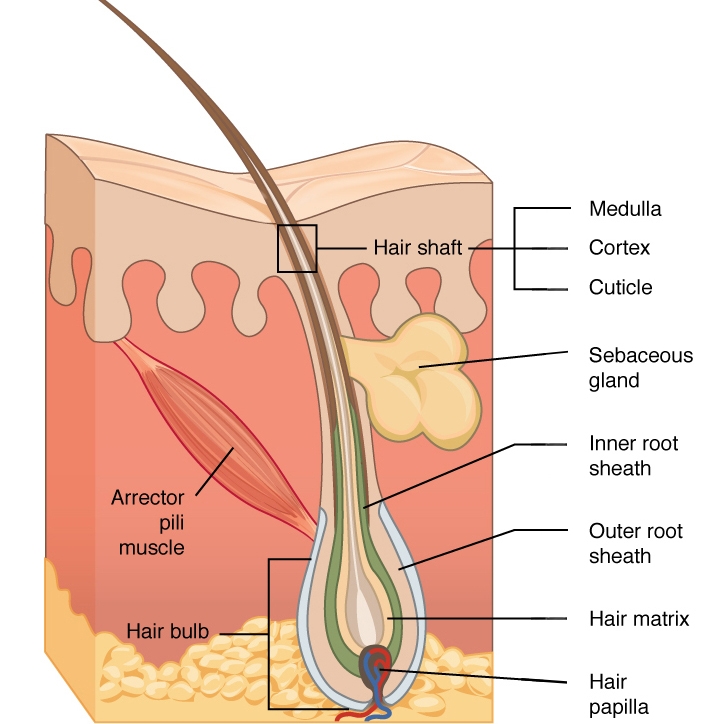 2. Arrector pili muscle retracts, causing goosebumps and our hair to stand up
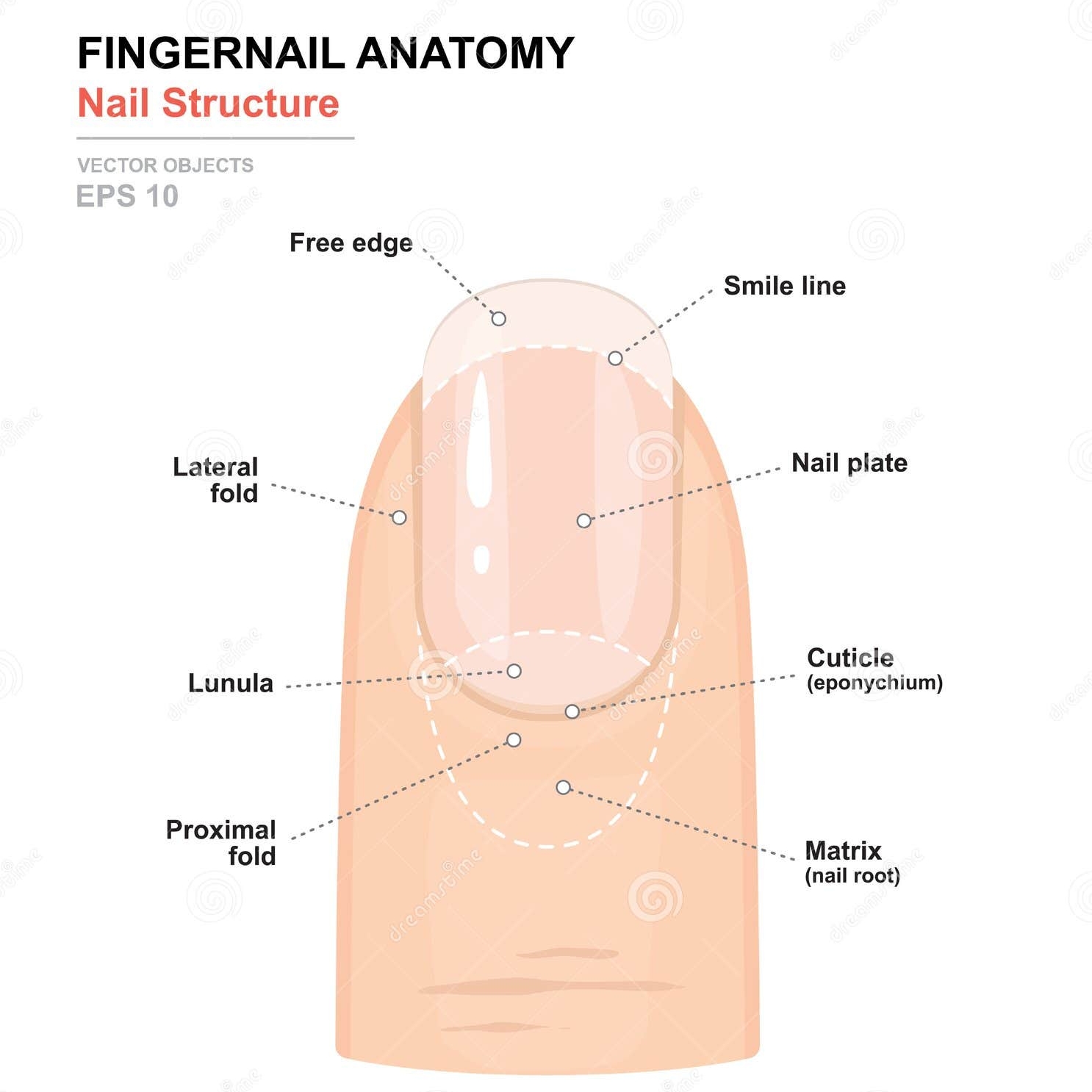
Nails
Protects dorsal surface of the last bone of each finger and toe
Sebaceous Glands
Secret sebum (oil) to lubricate skin
Discourages growth of bacteria on skin
Integumentary New Word Parts
Cuntane/o - skin
Derm/o, dermat/o - skin
Hidr/o - sweat
Hirsut/o - hairy, rough
Kerat/o - horny, hard
Lip/o - fat, lipid
Melan/o - black, dark
Myc/o - fungus
Onych/o - fingernail or toenail
Pil/i, pil/o - hair
Py/o - pus
Rhytid/o - wrinkle
Seb/o - sebum
Urtic/o - rash, hives
Xer/o - dry
Integumentary Pathology Terms
Seborrhea - overactivity of Sebaceous glands
Anhidrosis - abnormal condition of not sweating
Hyperbidrosis - abnormal condition of excessive sweating
Hirsutism - abnormal condition of excessive facial and body hair in women
Onychomycosis - abnormal condition of fungal infection of nail
Onychophagia - nail biting or eating
Ecchymosis - a bruise
Vesicle - a small blister
Dermatitis - inflammation of skin
Cellulitis - acute, rapidly spreading bacterial infection within connective tissues
Pyoderma - acute, pus-forming bacterial skin infection
Cicatrix - normal scar gromcthe healing of a wound
Pruritis - itching
Wheal - welt; small bump that itches
Urticaria - hives, itchy wheals caused by an allergic reaction
Xeroderma - excessively dry skin
Lipoma - benign fatty tumor between skin and muscle layer
Melanoma - type of skin cancer that occurs in melanocytes
Burns and Procedure Terms
First-degree burn - no blisters, superficial damage to epidermis
Second-degree burn - blisters, damage to the epidermis and Dermis
Third-degree burn - damage to Dermis, epidermis, and subcutaneous layers. Possibly even to muscle and bone
Terms
Lipectomy - surgical removal of fat
Dermatoplasty - skin graft; replacement of damaged skin with healthy tissue from a donor
Rhytidectomy - facelift; a surgical removal of excess skin and fat from the face to eliminate wrinkles
Blepharoplasty - a lid lift; surgical repair of upper and lower eyelids with the removal of excess skin
Cauterization - destruction of tissue by burning
Cryosurgery - destruction of tissue by freezing
Debridement - removal of dirt, foreign object, damaged tissue and cellular debris from a wound
Word Building Integumentary System
an- - without
Hypo - - decreased
Dermat/o - skin
Melan/o - dark, black
Myc/o fungus
Onych/o - nails
Py/o - pus
-pathy - disease
-derma - skin
-it’s- inflammation
-oma - tumor
-sclerosis - hardening
-osis - abnormal condition
Albin/o - white
Diaphoresis - profuse sweating
Folliculitis - inflammation of hair follicle
Alopecia - baldness, partial loss of hair
Onychocryptosis - ingrown toenail
Albinism - deficiency or absence in pigment in skin, hair, irises
Petechiae - small, pinpoint hemorrhages, less than 2mm
Hematoma - swelling of clotted blood trapped in tissues
Crust - scab
Purulent - producing or containing pus
Exudate - fluid leaking out of a wound
Erythema - redness of skin
Keloid - abnormally raised or thickened scar
Blepharoplasty - lid lift