37 | Plant Nutrition
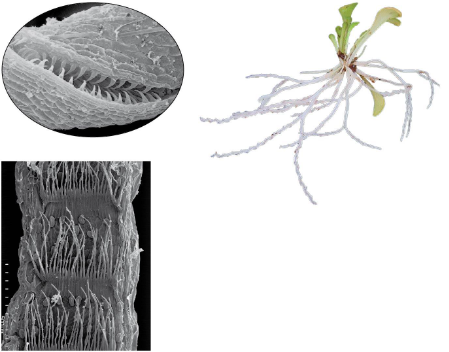
The Corkscrew Carnivore
(True) - Most plants take up CO2 from the air through the shoot system. Water and nutrients are taken from the soil through the root system.
(True) - Some plants that live in nutrient-poor soils use carnivory to obtain mineral nutrients. Example, Genlisea uses modified underground leaves to capture soil organisms as a source of nutrients.
Genlisea - Also known as the “Corkscrew Carnivore”
 Concept 37.1: Soil Contains a Living, Complex Ecosystem
(True) - Plants obtain most of their water and minerals from the upper layers of the soil and living organisms play an important role in these soil layers.
Texture, Composition - The basic properties of soil are?
Soil Texture
(True) - Soil particles are classified by size.
Sand, Silt, Clay - What are the classifications of soil particles from largest to smallest.
Topsoil - It consists of mineral particles, living organisms, and humus.
A decaying organic material - What is Humus?
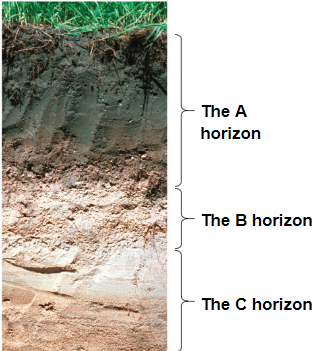 (True) - Soil solution consists of water and dissolved minerals in the pores between soil particles.
(True) - After a heavy rainfall, water drains from the larger spaces in the soil, but smaller spaces retain water because of its attraction to clay and other particles.
Loams - These are the most fertile topsoil and contain equal amounts of sand, silt, and clay.
(True) - Sandy soils don’t retain enough water to support plant growth, while clay retains too much.
Pores - These contain about 50% water and 50% air. Very fertile topsoil (i.e. loam) typically have these.
Topsoil Composition
Soil Composition - It refers to a soil’s inorganic (mineral) and organic chemical components.
Inorganic Components
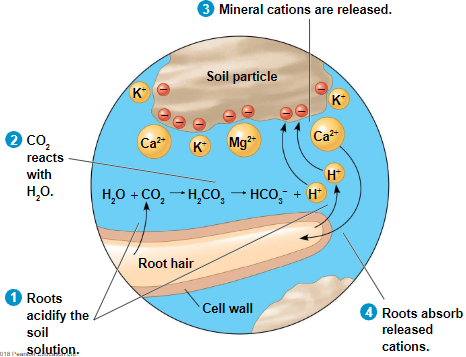
(True) - Cations adhere to negatively charged soil particles. This prevents them from leaching out of the soil through percolating groundwater.
K+, Ca2+, Mg2+, H+ - Give examples of cations.
Cation Exchange - During this phenomenon, cations are displaced from soil particles by other cations, particularly H+.
(True) - Displaced cations enter the soil solution and can be taken up by plant roots.
(True) - Anions do not bind with soil particles and can be lost by leaching.
Organic Components
(True) - Humus builds a crumbly soil that retains water, but is still porous. It also increases the soil’s capacity to exchange cations and serves as a reservoir of mineral nutrients.
(True) - Topsoil contains bacteria, fungi, algae, other protists, insects, earthworms, nematodes, and plant roots. These organisms help decompose organic material and mix the soil.
Humus - It increases the soil’s capacity to exchange cations and serves as a reservoir for mineral nutrients.
Soil Conservation and Sustainable Agriculture
Fertilization - It is the addition of mineral nutrients to the soil to combat yield reduction that is experienced when crops are cultivated in the same location over many seasons.
(True) - Soil management--by fertilization and other practices--allowed for sedentary agriculture and the formation of villages.
(True) - In contrast with natural ecosystems, agriculture depletes the mineral content of soil, taxes water reserves, and encourages erosion.
The American Dust Bowl of the 1930s - It is an issue that occurred in the 1930s due to soil mismanagement. It involved a massive dust storm.
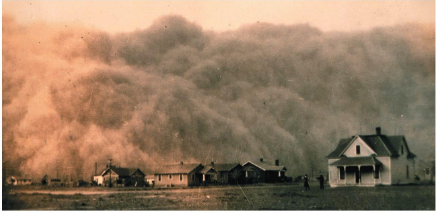 (True) - At present, 30% of the world’s farmland has reduced productivity because of soil mismanagement.
Sustainable Agriculture - Its goal is to use farming methods that are conservation-minded, environmentally safe, and profitable.
Irrigation
(True) - Irrigation is a huge drain on water resources when used for farming in arid regions. 75% of global freshwater use is devoted to agriculture.
Aquifers - These underground water reserves are the primary source of irrigation water.
(True) - The depletion of aquifers can result in land subsidence--the settling or sinking of land.
(True) - Irrigation can lead to salinization.
Salinization - It occurs when salts are concentrated in the soil as water evaporates. This reduces water potential of the soil solution and diminishes water uptake by plants.
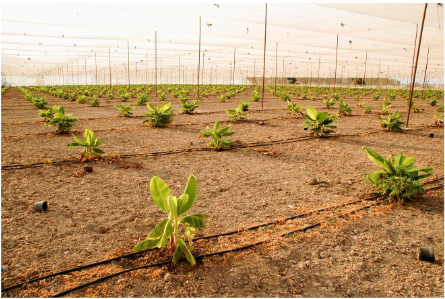
Drip Irrigation - A solution to salinization and reduces water use by slowly releasing water directly at the root zone.
Fertilization
(True) - Soil can be depleted of nutrients as plants and their nutrients are harvested.
Fertilization - This replaces mineral nutrients that have been lost form the soil.
Nitrogen, Phosphorus, Potassium - Commercial fertilizers are enriched with?
(True) - Excess minerals are often leached from the soil and can cause algal blooms in lakes.
Organic Fertilizers - These fertilizers are composed of manure, fishmeal, or compost. They gradually release N, P, K as they decompose.
Adjusting Soil pH
(True) - Soil pH affects cation exchange and the chemical form of minerals.
(True) - Cations are more available in slightly acidic soil, as H+ ions displace mineral cations from clay particles.
(True) - The availability of different minerals varies with pH. For example: At pH 8, plants can absorb calcium but not iron. At soil pH 5 or lower, toxic aluminium ions become more soluble. Uptake of these ions stunts root growth and prevents calcium uptake.
Controlling Erosion
Water & Wind Erosion - These erosions are the major causes of topsoil removal and loss of soil nutrients.
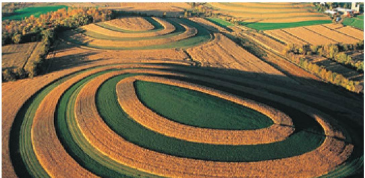
(True) - Erosion can be reduced by 1.) planting trees as windbreaks ; 2.) terracing hillside crops ; 3.) cultivating in a contour pattern.
No-Till Agriculture - This method also reduces erosion by creating furrows for seeds and fertilizer with minimal soil disturbance.
Phytoremediation
(True) - Some areas are unfit for agriculture due to contamination of soil or groundwater with toxic pollutants.
Phytoremediation - It is a biological, nondestructive technology that reclaims contaminated areas. It planting plants capable of extracting soil pollutants which are the disposed of safely.
Concept 37.2: Plant Roots Absorb Essential Elements from the Soil
(True) - Water, air, and soil minerals all contribute to plant growth.
Fresh Mass - 80-90% of a plant’s _____ mass is water.
Dry Mass - 96% of a plant’s ___ mass is from CO2 assimilated into carbohydrates during photosynthesis
Dry Mass - 4% of a plant’s ___ mass is inorganic substances from soil.
Essential Elements
(True) - Not all of the 50+ chemical elements identified in plants are essential.
17 Essential Elements - Only how many chemical elements are essential for plants to complete their life cycle and reproduce?
Hydroponic Culture - What do researchers use to determine which chemical elements are essential?
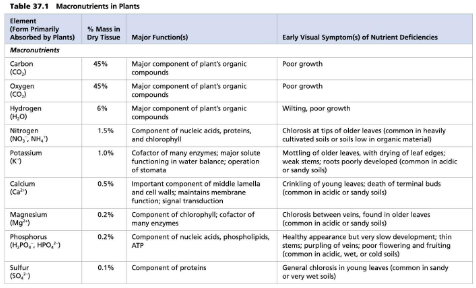
Macronutrients - These are nine of the essential elements, called as such because plants require them in large amounts.
Carbon, Oxygen, Hydrogen, Nitrogen, Phosphorus, Sulfur. Potassium, Calcium, Magnesium - Enumerate the macronutrients (COHNPSKCaMg)
Nitrogen - What essential element contributes most to plant growth and crop yields?
Micronutrients - These are the remaining eight essential elements, which plants need in very small amounts.
Chlorine, Iron, Manganese, Boron, Zinc, Copper, Nickel, Molybdenum - Enumerate the micronutrients (ClFeMnBZnCuNiMo)
(True) - Plants with C4 and CAM photosynthetic pathways also require sodium.
Cofactors - These are nonprotein helpers in enzymatic reactions and micronutrients function as such.
Symptoms of Mineral Deficiency
(True) - Symptoms of mineral deficiency depend on the nutrient’s function and mobility within the plant.
Deficiency of a Mobile Nutrient - Deficiency in usually affects older organs
Deficiency of a Less Mobile Nutrient - Deficiency in this usually affects younger organs.
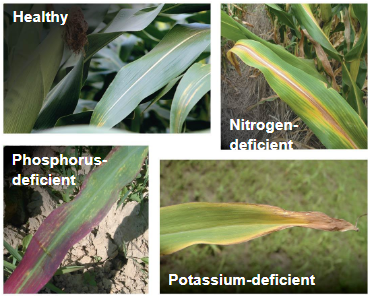
(True) - The most common deficiencies are those of nitrogen, phosphorus, and potassium (NPK).
Improving Plant Nutrition by Genetic Modification
(True) - Plants can be genetically engineered to improve nutrition and fertilizer usage.
Resistance to Aluminum Toxicity
(True) - Aluminum in acidic soils damages roots and greatly reduces crop yields.
(True) - The introduction of bacterial genes into plant genomes can cause plants to secrete acids that bind to and tie up aluminum.
Smart Plants
“Smart” Plants - These are plants the inform the grower of a nutrient deficiency before damage has occured. Example: A blue tinge indicates when these plants need phosphorus-containing fertilizer.
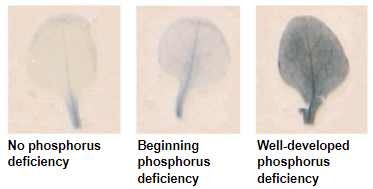
Concept 37.3: Plant Nutrition Often Involves Relationships with Other Organisms
(True) - Plants have a mutualistic relationship with soil bacteria and fungi. Examples: 1.) Dead plants provide energy needed by soil-dwelling microorganisms ; 2.) Secretions from living roots support a wide variety of microbes in the near-root environment.
(True) - Many mutually beneficial relationships occur between species from different kingdoms or domains.
Mutualism Across Kingdoms and Domains
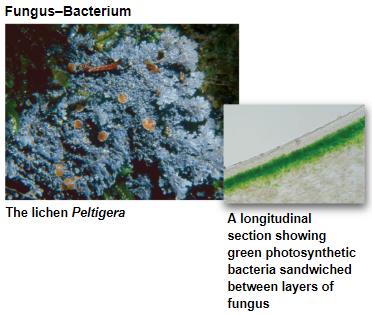
%%Fungus-Bacterium%%
Lichen - It is a mutualistic association between a fungus and a photosynthetic partner.
 %%Animal-Bacterium%%
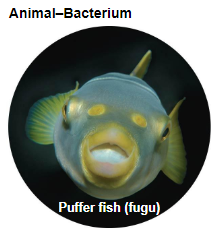
(True) - Most puffer fish form a mutualistic association with a bacterium that produces a nerve toxin.
Tetrodotoxin - The nerve toxin produced by the bacterium mutually associated with puffer fishes.
 %%Plant-Bacterium%%
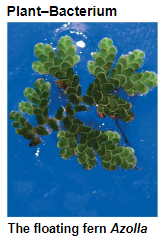
(True) - The floating fern Azolla forms mutualistic associations with nitrogen-fixing cyanobacteria.
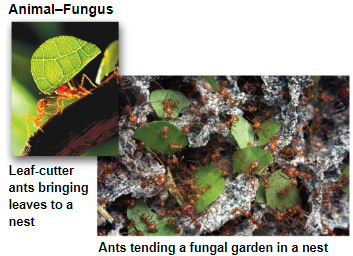
 %%Animal-Fungus%%
(True) - Leaf-cutter ants harvest leaves to provide nutrition for fungal gardens in their nests.
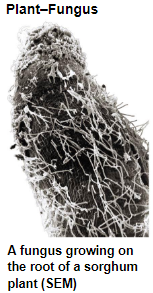
 %%Plant-Fungus%%
(True) - Most plant species are associated with mycorrhizal fungi.
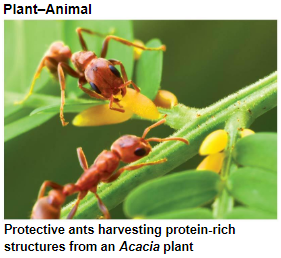
 %%Plant-Animal%%
(True) - Some species of Acacia plants provide nourishment to ants that protect them from predators and competitors.
Bacteria and Plant Nutrition
(True) - A variety of soil bacteria play roles in plant nutrition.
Rhizobacteria
Rhizosphere - It is the layer of soil closely surrounding the plant’s roots.
Rhizobacteria - These are bacteria that live in close association with plant roots or in the rhizosphere.
(True) - Some rhizobacteria are free-living, while others are endophytes.
Endophytes - These are nonpathogenic bacteria that live between the cells of host plant tissues.
(True) - Endophytes and rhizobacteria depend on nutrients secreted by plant cells and in return, they help enhance plant growth.
(True) - The species composition of bacterial communities living endophytically and in the rhizosphere vary markedly.