Copy of Pre-AP Final Exam Review Packet
Name: ______________________________________________________________
FINAL EXAM

REVIEW PACKET
Self-Guided Review
Geography

Step 1: Create a legend Land  Water  Mountains   Desert | Step 2: Create a orientation (compass) on the top right corner | Step 3: Label the following: North America South America Europe Africa Asia | Australia Middle East Atlantic Ocean Pacific Ocean Southern Ocean Indian Ocean | Arctic Ocean Mediterranean Sea Himalaya Mts Andes Mts Sahara Desert Fertile Crescent |
|---|
Key Concept G.1 - Principles of Geography
Generally speaking, geographers make maps to identify the location of places. However, they do so much more than that. Geographers use maps and data to________________________________ and examine how _______________________________________________.
Draw examples of the two types of maps below:
Choropleth Map | Proportional Symbol Maps |
|---|---|
Key Concept G.2 - Regionalization
Geographers will often use regional boundaries to separate places from one another. Depending on the purpose of the map, these regional boundaries can be based on different information. The separation of the two regions shows they are different from one another, but they may not be different in every aspect or among all data. Regional boundaries can based in _____________________________________________ as well as _______________________, _______________________, and _________________ regions.
Describe details for each of the following types of regional boundaries
Type of Regional Boundary | Description |
|---|---|
Physical | |
Human | |
Perceptual | |
Functional | |
Formal |
Key Concept G.3 - Spatial Reorganization
Spatial reorganization is the changes in the _____________________________________________ and activities resulting from improvements in ____________________ and __________________________ technology.
While population pyramids display current population makeup, the same data can be used to predict future trends.
What trends can a population pyramid predict?
Describe the difference between a push and pull factor for migration
Factor | Description | Example |
|---|---|---|
Push | ||
Pull |
Key Concept G.4 - Human Adaptations to the Physical Environment
Geographers can also use maps to show the_____________________________________________ between humans and their physical environment. Human adaptations can lead to __________________ and ________ ______________________________________. Also, humans use innovations to adapt to the environment and those innovations can alter the environment.
List positive consequences of human adaptation to the environment:
List negative consequences of human adaptation to the environment:
Key Concept G.5 - Comparison of World Regions
For all of the explorations of political, economic, cultural, and social topics that appeared in our course, it is important that we don’t overlook the importance of how_________________________________________
____________________________________________________. World regions are often be shaped by cultural and economic patterns but are not limited to these patterns.
Name TWO cultural patterns that can exist in maps when comparing world regions
Name THREE measurements of quality of life
Give examples of economic and political patterns that can be compared worldwide
Economic | Political |
|---|---|
Self-Guided Review
Period 1: The Ancient Period, to 600 BCE
Key Concept 1.1 - Human Adaptation and Migration in the Paleolithic World

Color-Code the map with the locations of FIVE foundational civilizations | From the Map | |
|---|---|---|
 Mesopotamia  Indus River Valley  China  Egypt  Olmec | One example of trans-regional trade in period 1 was between what two River Valley Civilizations? Pastorialists are semi-nomadic herders. What is the significance of pastoralists in period 1? (What did they spread?) |
Throughout the Paleolithic Era, humans developed sophisticated _____________________________ and adapted to different geographical ________________________ as they migrated from ______________ to _______________________, _____________________, and the _____________________.

CIRCLE ONE: Fire was developed during the (PALEOLITHIC or NEOLITHIC) era.
What is the importance of fire?
Humans developed a wider range of _______________ specifically adapted to different environments from _______________________ to ____________________________.
People lived in small ________________ that structured social, emotional, and political activity. These bands exchanged _________________, ______________________, and _____________________.
Key Concept 1.2 - Causes and Effects of Neolithic Revolution
Around ___________ years ago, likely in response to warming ______________ at the end of the last Ice Age, agriculture emerged independently in various regions around the world. Complete the chart as you read the italicized paragraph and scroll past the Crash Course videos:
THREE BENEFITS OF AGRICULTURE | THREE DRAWBACKS OF AGRICULTURE |
|---|---|
Patriarchy and social hierarchies developed in early agricultural societies.
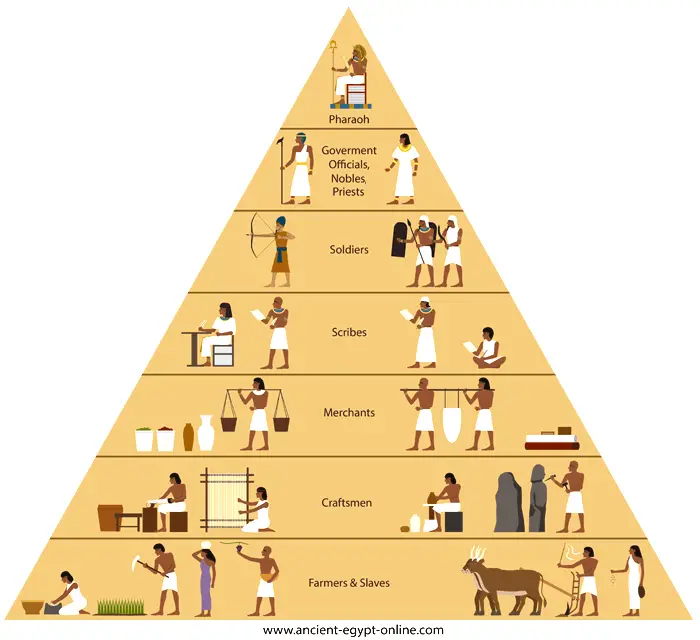
Explain the connection between patriarchy and agriculture. | Draw the Egyptian social pyramid as a representative example of social stratification in period 1. | |
|---|---|---|
Key Concept 1.3 - Origins of Complex Urban Societies in the Ancient World
The term “civilization” is normally used to designate large societies large societies with cities and powerful states. Complete the chart with 6 similarities among the period 1 civilizations.
1 |
|---|
2 |
3 |
4 |
5 |
6 |
River Valley Civilizations: Match the rivers to their civilization below.
Civilizations | Rivers | |
|---|---|---|
Mesopotamia | Huang He (Yellow) | |
Nile | ||
Indus River Valley | Ganges | |
Tigris | ||
China | Yangtze | |
Euphrates | ||
Egypt | Indus |
Culture - including writing systems, law codes, religious practices, art, architecture, and literature - helped unify civilizations starting in period 1.
Identify THREE examples of monumental architecture in period 1.
What does the scale of these architectural projects reveal about the civilizations that built them?
Identify THREE systems of record keeping in period 1.
How was your ability to write connected to your social status?
Identify TWO law codes from period 1.
Did these law codes seek to reform the inequalities in their respective societies?
Identify THREE religious beliefs that developed in period 1.
TERMS TO KNOW:
Ethnic Religion - A belief system handed down from generation to generation within an ethinicty or culture.
Universalizing/Proselytizing/Missionary Religion - A belief system that attempts to be global; they appeal to a diverse people of various ethnicities and cultures. They tend to spread far beyond place of origin.
ISLAM BUDDHISM JUDAISM
HINDUISM CHRISTIANITY
Based on the definitions above, classify the 5 major world religions.
ETHNIC RELIGIONS (Hint: there are 2) | UNIVERSALIZING RELIGIONS |
|---|---|
Interactions between civilizations will only increase over time, but that does not mean that period 1 civilizations were isolated. (Based on the map) Identify TWO examples of period 1 migrations and TWO examples of interregional trade.
MIGRATIONS |
|---|
TRADE |
|---|
People to Know
Who | When | Importance? |
|---|---|---|
Ur-Nammu | 2050-2000 BCE | |
Hammurabi | 1792-1750 BCE | |
Abraham | 2nd millennium BCE (?) |
Art Pieces to Know
Name | Place/Date | Importance? |
|---|---|---|
Pyramids of Egypt | Egypt 2,500 BCE | |
Ziggurats | Mesopotamia 2,000 BCE | |
Oracle Bones | China 2,000 BCE |
Self-Guided Review
Period 2: The Classical Period, 600 BCE - 600 CE
Key Concept 2.1 - Development of Religious/Cultural Traditions

Color-Code the map with the locations of SIX major empires | From the Map | |
|---|---|---|
 Maya  Greek City-States  Persia  China  Rome  India | List major cities of the time period and their regional location: Identify major invaders and where they invaded: |
Religions and belief systems provided a ___________________________ code to live by. These shared beliefs also influenced and reinforced _____________________________________
____________________________________________________________________________.
Religious and political authority often _________________ as rulers used religion, along with military and legal structures, to ______________________________________________ and ensure its continuation.
Use the following chart to keep track of the major belief systems of the Classical Period.
Belief System | Region/ Context of Development | Major Beliefs | Sacred Texts | Effect on Society |
|---|---|---|---|---|
Judaism | ||||
Hindusim | ||||
Buddhism | ||||
Confucianism | ||||
Daosim | ||||
Christianity | ||||
Philosophy |
Key Concept 2.2 - The Development of States and Empires
As the early states and empires grew in number, size, and population, they frequently competed for resources and ________________________
___________________________________.
Use the table below to keep track of the details for all of the Classical States.
Empire | Region | Political System | Significant Details | Decline & Fall |
|---|---|---|---|---|
Greek City-States | ||||
Qin & Han | ||||
Maurya & Gupta | ||||
Rome |
Key Concept 2.3 - Emergence of Trans-Regional Trade Networks
With the organization of large-scale empires, the ____________________ of long-distance trade _______________________________________________. Much of this trade resulted from the demand for ____________________________ and ___________________________. Land and water routes linked many regions of the Eastern Hemisphere. List the things tha were exchanged along with trade on these routes:
List the major trade routes of the time and the regions they connect:
List the major innovations in trade durings this time period:
Explain how the following transformed as a result of their spread (through trade):
Buddhism -
Christianity -
Hinduism -
People to Know
Who | When | Importance? | |
|---|---|---|---|
Siddhartha Gautama | 563 BCE - 483 BCE | ||
Confucius | 551 BCE - 479 BCE | ||
Alexander the Great | 356 BCE - 323 BCE | ||
Ashoka the Great | 304 BCE - 232 BCE | ||
Qin Shi Huangdi | 259 BCE - 210 BCE | ||
Augustus | 63 BCE - 14 CE | ||
Jesus | 4 CE - 33 CE | ||
Constantine | 272 CE - 337 CE |
Art & Architecture to Know
Name | Place/Date | Importance? |
|---|---|---|
Parthenon | Athens, 438 BCE | |
Great Wall | China, 220 BCE | |
Terracotta Soldiers | China, 210 BCE | |
Aqueducts | Rome, 50 CE |
Documents to Know
Name | Place/Date | Importance? |
|---|---|---|
12 Tables | Rome, 451 BCE |
Self-Guided Review
Period 3: The Post-Classical Period, 600 CE - 1450 CE
Key Concept 3.1 - Expansion of Communication & Exchange Networks

Color-Code the map with the locations of SEVEN major states | From the Map | |
|---|---|---|
 Aztec  Mali  China  Mongol  Byzantine  Inca  Islamic Caliphates | List major cities of the time period and their regional location: Identify FOUR major trade routes: |
Although Afro-Eurasia and the Americas remained separate from one another, this era witnessed a deepening and widening of old and new networks of human interaction within and across regions. The results were unprecedented ______________________________________________________ and the intensification of ___________________________________________________. Innovations in transportation, state policies, and mercantile practices contributed to the expansion and development of commercial networks, which in turn served as conduits for cultural, technological, and biological diffusion within and between various societies. ___________________________________________ groups played a key role in creating and sustaining these networks.
Improved transportation technologies and commercial practices led to an increased volume of trade, and expanded the geographical range of existing and newly active trade networks.
Identify how each of the following developments helped facilitate trade.
Innovation | Description | Effect on Trade & Where |
|---|---|---|
Caravans | ||
Compass | ||
Astrolabe |
Identify how the following state practices facilitated trade:
State Practice | Description/Effect |
|---|---|
Grand Canal | |
Inca Road System |
The expansion of EMPIRES facilitated Trans-Eurasian trade and communication as new peoples were _____________________________________________________________________
_______________________________________________________________________.
(We’ll get to the empires/states in a bit…)
The movement of peoples caused environmental and linguistic effects. The expansion and intensification of long-distance trade routes often depended on environmental knowledge and technological adaptations to it. Detail them here.
Movement & People | Location | Effects |
|---|---|---|
Europeans | ||
Arabs/Berbers | ||
Pastoral Groups |
Some migrations has a significant environmental impact. Name one way in which migrations impact the environment:
Some migrations and commercial contacts led to the ___________________________________ throughout a new region or _______________________________________________________.
Name one language below that spread due to migration or commercial contact AND where it originated from/spread to:
Cross-cultural exchanges were fostered by the intesitfication of existing, or the creation of new networks of trade and communication.
Islam, based on the revelations of _________________________________, developed in ___________________________________. The beliefs and practices of Islam reflected interactions with ____________, ______________________, and _________________ with the local Arabian peoples. Muslim rule expanded to parts of Afro-Eurasia due to __________________________, and Islam subsequently expanded through the activities of _____________________ and ________________________.
In key places along important trade routes, merchants set up diasporic (the movement, migration, or scattering of a people away from an established or ancestral homeland) communities where they introduced their own cultural traditions into the indigenous culture. Detail them below.
People | Where they settled | Details/Effects |
|---|---|---|
Muslims | ||
Jews | ||
Chinese |
As exchange networks intensified, an increased number of travelers within Afro-Eurasia wrote about their travels.
Person | Info on Travels/Effects |
|---|---|
Ibn Battuta | |
Marco Polo |
List as many instances of cultural diffusion as you can during this period:
List as many instances of diffusion of CROPS during this period and where they went:
Key Concept 3.2 - Continuity and Innovation in State Forms & their Interactions
Following the collapse of empires, most reconstituted governments, including the Byzantine Empire and the Chinese dynasties - Tang and Song - combined ____________________________________________________________________________ with ________________________________________________________________________________.
Use the table below to keep track of the details for the Post-Classical States that fit the description above.
Empire | Region | Context of Rise | Political System | Significant Details |
|---|---|---|---|---|
Byzantine Empire | ||||
Tang & Song Dynasties |
In some places, new political entities emerged. Use the table below to keep track of the details for these Post-Classical states.
Empire | Region | Context of Rise | Political System | Significant Details |
|---|---|---|---|---|
Islamic Empire | ||||
Empire | Region | Context of Rise | Political System | Significant Details |
Mongol Empire | ||||
Medieval Europe | ||||
Aztec Empire | ||||
Inca Empire |
Interregional contacts and conflicts between states and empires encouraged significant technological and cultural transfers. Use the space below to note causes, details, and effects of the Crusades. Note why they are a turning point, especially for Europe.
Key Concept 3.3: Increased Economic Productive Capacity & its Consequences
Changes in trade networks results from and stimulated increasing productive capacity, with important implications for _________________________ and environmental processes. Productivity rose in both ________________________ and ____________________________ but also strained environmental resources and at times caused dramatic demographic swings. Shifts in production and the increase volume of trade also stimulated new __________________________________, inducing adaptation of existing patterns of free and coerced labor. Social and gender structures evolved in response to these changes.
Technological Innovations:
Innovation | Region | Importance/Effect |
|---|---|---|
Champa Rice Variations | ||
Chinampas | ||
Terrace Farming |
The fate of cities varied greatly, with periods of significant decline, and with periods of increase urbanization buoyed by rising productivity and expanding trade networks. (Use Freeman-pedia packet to help)
List cities that declined:
Why?
List cities that were on the rise:
Why?
Note different types of labor systems used in the Post-Classical Era:
Identify how the spread of religions impacted different places:
People to Know
Who | When | Importance? |
|---|---|---|
Muhammad | 570 CE - 632 CE | |
Genghis Khan | 1162 CE - 1227 CE | |
Kublai Khan | 1215 CE - 1294 CE | |
Mansa Musa | 1280 CE - 1337 CE |
Pre-AP World: CRQ Review
Question 1: Contextualization
You will be required to read a document, then provide either the historical or geographic context for the historical developments referenced in that document.
Prompt | 1. Explain the historical circumstances that led to the historical development in the document. [1] | OR | 1. Explain the geographic context for the historical developments shown on the map. [1] | ||
|---|---|---|---|---|---|
Words and Phrases | Describe what came BEFORE the historical development in the document that LED TO it. You are describing a CAUSE of the development.
| ||||
Document 1
Raymond d'Aguiliers was an eyewitness to the First Crusade. He followed the crusading armies army to Jerusalem and wrote a history of his experiences. The passage below is a modified excerpt from his account of the Crusaders’ siege of Jerusalem that he wrote sometime after the First Crusade. |
|---|
Finally, our men took possession of the walls and towers, and wonderful sights were to be seen. Some of our men (and this was more merciful) cut off the heads of their enemies; others shot them with arrows, so that they fell from the towers. It was necessary to pick one's way over the bodies of men and horses. In the Temple of Solomon, men rode in blood up to their knees and bridle reins. Indeed, it was a just and splendid judgment of God that this place should be filled with the blood of the unbelievers, since it had suffered so long from their blasphemies. Some of the enemy took refuge in the Tower of David, and, petitioning Count Raymond for protection, surrendered the Tower into his hands. How the pilgrims rejoiced and exalted and sang a new song to the Lord! On this day, the children of the apostles regained the city and fatherland for God and the fathers. |
Source: Raymond d'Aguiliers, “The Siege and Capture of Jerusalem,” in The First Crusade: The Accounts of Eyewitnesses and Participants, ed. August. C. Krey (Princeton: 1921), 257-62. From the Stanford History Education Group, https://sheg.stanford.edu/first-crusade. |
Explain the historical circumstances that led to the Crusades.
Question 2: Sourcing
You will be required to read a primary source, then respond to a prompt about the author’s audience, purpose, point of view, or bias. See the prompts below that could appear on your Exam.
Prompt | Sentence Stems |
|---|---|
Point of View 2. Using document 2, identify ___’s point of view concerning ___. [1] | _____ [author’s] point of view is… _____ [author’s] believes/thinks that… |
Bias 2. Using document 2, explain ___’s bias concerning ___. [1] | _____ [author’s] bias is that that [he/she] thinks _____ because… _____ [evidence from the document] shows that _____ [author] is biased because… |
Purpose 2. Using document 2, explain ___’s purpose for writing about what occurred in ___ on ___. [1] | _____ [author’s] purpose for writing _____ [title of document] is to… By writing _____ [title of document] _____ [author] hoped/wanted to... |
Audience 2. Using document 2, explain how the audience affects the way ____[author] presents their ideas. [1] | The audience of _____ [title of document] was _____ [audience], so [author]...[description of presentation of ideas] _____ [author] _____ [description of presentation of ideas] because/since his audience was _____ [audience] and we wanted them to... |
Document 2
Ibn al-Athir (1160-1233) was an Arab historian who wrote a history of the first three crusades, though he only witnessed the third one. The passage below is a modified excerpt from his account of the siege of Jerusalem during the First Crusade. |
|---|
Jerusalem was taken from the north on the morning of July 15, 1099. The population was put to the sword by the Franks, who pillaged the area for a week. A band of Muslims barricaded themselves into the Tower of David and fought on for several days. They were granted their lives in return for surrendering. The Franks honored their word, and the group left by night for Ascalon. In the Al-Aqsa Mosque the Franks slaughtered more than 70,000 people, among them a large number of Imams and Muslim scholars, devout men who had left their homelands to live lives of religious seclusion in the Holy Place. The Franks stripped the Dome of the Rock of more than forty silver candelabra and more than twenty gold ones, and a great deal more booty. Refugees reached Baghdad and told the Caliph’s ministers a story that wrung their hearts and brought tears to their eyes. They begged for help, weeping so that their hearers wept with them as they described the sufferings of the Muslims in that Holy City: the men killed, the women and children taken prisoner, the homes pillaged. |
Using document 2, identify Ibn al-Athir’s point of view concerning the siege of Jerusalem during the First Crusade.
Question 3: Cause and Effect Relationship, Turning Point, Similarities and Differences
You will be required to use both documents in the CRQ set to respond to a prompt about a cause and effect connection between the two documents, a turning point associated with the two documents, or a similarity or difference between the two documents.
FOR ALL QUESTION THREE PROMPTS | Make reference to BOTH documents either by quoting from them, referring to them using their titles, by stating “Document 1/2,” or parenthetically (Document 1). | ||
|---|---|---|---|
Cause and Effect
Prompt | 3. Identify and explain a cause-and-effect relationship associated with the events, ideas, or historical developments in documents 1 and 2. Be sure to use evidence from both documents between the events or ideas found in these documents. [1] | ||||||
|---|---|---|---|---|---|---|---|
Words and Phrases |
| ||||||
Similarities and Difference
Prompt | 3a. Identify a similarity or a difference between the events, ideas, or historical developments presented in documents 1 and 2. [1] 3b. Explain a similarity or a difference in the events, ideas, or historical developments presented in these documents. Be sure to use evidence from both documents 1 and 2 in your response. [1] | ||||||
|---|---|---|---|---|---|---|---|
Words and Phrases |
| ||||||
Base your answer on both Documents 1 and 2 and on your knowledge of social studies.
Similarity — tells how something is alike or the same as something else.
Difference — tells how something is not alike or not the same as something else.
Using evidence from both Documents 1 and 2 and your knowledge of social studies:
a) Identify a similarity or a difference between the events, ideas, or historical developments presented in documents 1 and 2.
b) Explain the similarity or difference you identified using evidence from both documents.
Pre-AP World: Enduring Issues Review
Follow the steps below to identify the enduring issue in the documents.
Step 1. Read your document and underline or highlight any PROBLEMS or CHALLENGES you see.
Step 2. Based on what you underline or highlight, write POSSIBLE ENDURING ISSUES present in the document in the section labeled “Write POSSIBLE ENDURING ISSUES present in the document in the space below.”

Step 3. Go on to the next document and repeat steps 1-2.
Read your document and underline or highlight any PROBLEMS or CHALLENGES you see.
Document 1
Hindu Caste System |
|---|
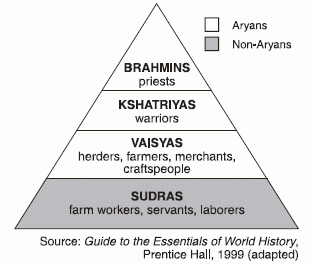 |
Source: Guide to the Essentials of World History, Prentice Hall, 1999 (adapted) from the New York State Global History and Geography Regents Exam. |
Write POSSIBLE ENDURING ISSUES present in the document in the space below.
Read your document and underline or highlight any PROBLEMS or CHALLENGES you see.
Document 2
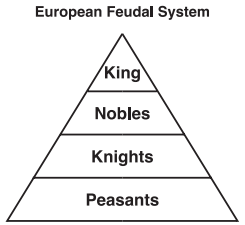 Source: New York State Global History and Geography Regents Exam. |
|---|
Write POSSIBLE ENDURING ISSUES present in the document in the space below.
Read your document and underline or highlight any PROBLEMS or CHALLENGES you see.
Document 3
 |
|---|
Write POSSIBLE ENDURING ISSUES present in the document in the space below.
 Construct Arguments | Construct an Enduring Issues Argument Using the documents and activities above, complete the tasks below to construct an enduring issues argument. |
|---|
Task 1 Identify at least three issues related to the document(s) identified above. You are not limited to the issues in the bank. | 1. | An Issue is a challenge of a problem. |
|---|---|---|
2. | ||
3. | ||
Task 2 From the list of issues you identified, choose one that is an enduring issue evident in at least three documents. | An enduring issue is an issue that
|
Task 3 Identify two documents that support the enduring issue you chose (When you write your essay on the final you will use THREE). | Doc: | Doc: |
|---|
Task 4 Make a claim that argues why the enduring issue you chose is significant. | ||
|---|---|---|
Examples of claims that argue an enduring issue is significant because... | ||
|---|---|---|
it AFFECTS A LOT OF PEOPLE | its EFFECTS are LONG LASTING | it AFFECTS A LOT OF PEOPLE and its EFFECTS are LONG LASTING |
Conflict is a significant enduring issue because major conflicts like wars affect millions of people. | Conflict is a significant enduring issue because its effects are felt generations later. | Conflict is a significant enduring issue because major conflicts like wars affect the millions of people involved in them and later generations. |
Task 5 Write a thesis that you would use for an enduring issues essay based on the documents examined. | ||
|---|---|---|
Thesis Template:
CLAIM | + | EXAMPLES | |||||
|---|---|---|---|---|---|---|---|
______ | is a significant enduring issue | because | ___________ | as demonstrated by | ____, ____, and ____. | ||
Enduring Issue | Argument why the issue is significant | List of examples that will be discussed in the essay to show the issue has endured and is significant | |||||
Global History I: Enduring Issues Outline
Introduction Paragraph:
An enduring issue is…
One example of an enduring issue is…
___________ is a significant enduring issue because…..
It can be seen in topic of 1st doc, topic of 2nd doc, topic of 3rd doc
Body Paragraphs 1, 2, & 3: (Repeat same steps for ALL THREE)
I: Introduce the topic of the document by PROVIDING HISTORICAL CIRCUMSTANCES
Connect the document back to the Enduring Issue in Intro paragraph
C: Cite evidence from the document that supports the Enduring Issue
E: Explain how this evidence and this topic is an example of the EI and how society has been affected by or attempted to resolve this issue
Repeat x2
Conclusion Paragraph:
Review the topic of this essay (your chosen enduring issue)
Review the 3 areas this was mentioned above (topics of documents)
Why is this considered an enduring issue?
Where in the world can we see this EI still occurring or see the resolution of this issue?
Why is this issue still important or relevant?