Four Wheel Drive Systems
Types of Four Wheel Drive Systems
Part-time Four Wheel Drive
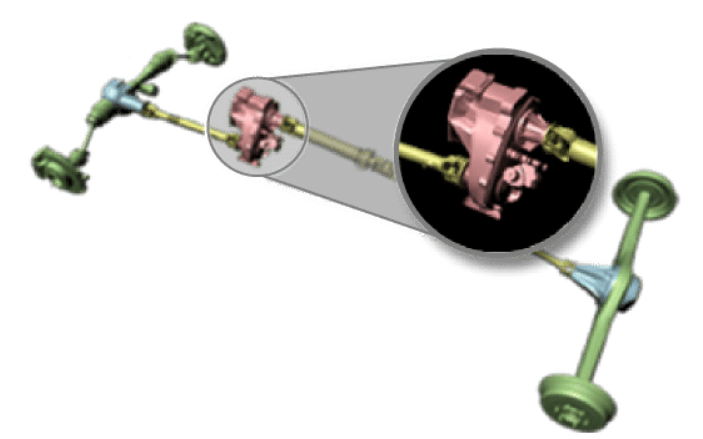
A part-time four-wheel drive (4WD) vehicle allows the driver to switch between 2WD and 4WD using a switch or lever.
Engaging 4WD powers all four wheels, providing better traction on slippery or uneven surfaces compared to 2WD.
Part-time 4WD systems often include a 4WD low range, where engine power flows through a planetary gearset in the transfer case.
The gear reduction in low range increases torque to the wheels, improving off-road capability and pulling power.
Full-time Four Wheel Drive
Full-time four-wheel drive (4WD) refers to a system where the transmission powers all four wheels continuously.
The system automatically adjusts power distribution between the front and rear wheels based on wheel slippage or road conditions.
All Wheel Drive
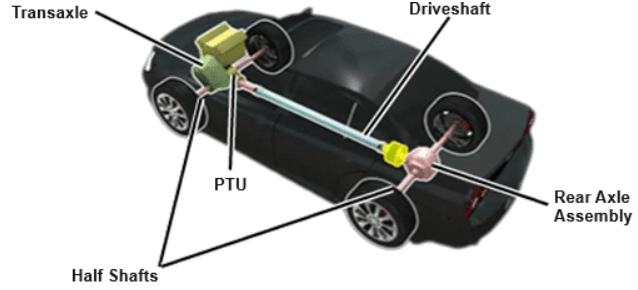
All-wheel drive (AWD) vehicles are typically front-wheel-drive-based, using a differential or viscous clutch to transfer power to the rear wheels.
The majority of engine power drives the front wheels, while the rear wheels receive a smaller portion.
When the main drive wheels slip, power is transferred to the other wheels to improve traction and stability.
Auto Four Wheel Drive
The auto four-wheel drive (4WD) system is a hybrid system combining features of part-time 4WD and automatic engagement.
Vehicles with this system have 2WD, 4WD high, and 4WD low range.
The system can automatically engage the transfer case to send engine power to the front axle when the rear wheels slip.
Once additional traction is no longer needed, the system automatically disengages the front axle, returning the vehicle to 2WD.
Part-time Four Wheel Drive
Manual Shift
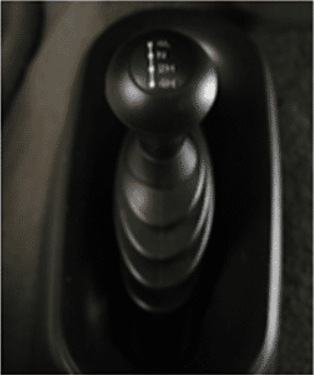
Pulling a lever shifts a part-time 4WD system from 2WD to 4WD.
The lever connects to a relay rod, which moves a pivot lever on the transfer case.
The pivot lever operates the shift fork inside the transfer case to engage 4WD.
On vehicles with a disengaging front axle, moving the lever closes a switch that powers the front axle shift motor.
When the front axle engages, the front axle engagement switch closes, grounding the circuit for the dashboard indicator light.
The indicator light turns on when the vehicle successfully engages four-wheel drive.
Electronic Shift
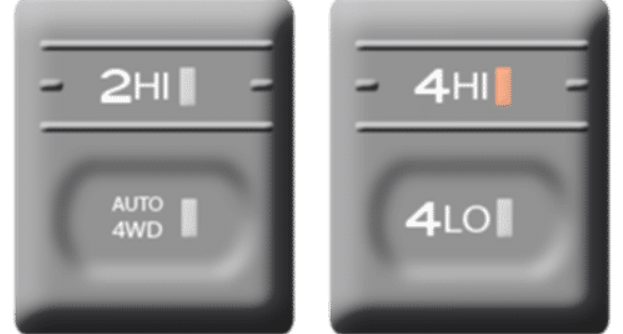
Some vehicles engage four-wheel drive (4WD) using a push-button switch.
Pressing the button sends a signal to the transfer case control module.
The control module operates an actuator on the transfer case.
The actuator rotates the input lever, which moves the shift forks inside the transfer case, shifting the system into 4WD.
Details of a Four Wheel Drive
Differential Added to the Transfer Case
Adding a differential to the transfer case prevents tire scrubbing when a 4WD vehicle turns.
This differential works like a standard axle differential, but instead of allowing wheels to spin at different speeds, it allows the front and rear axles to rotate at different speeds.
If one axle has less traction, the differential directs the majority of power to that axle.
Clutch packs can be added to provide resistance to axles operating at different speeds.
The clutch packs help evenly split engine power between the axles, maintaining traction even if one axle has more grip than the other.
Eliminates axle windup
Allows the axles to rotate at different speeds
Viscous Coupler
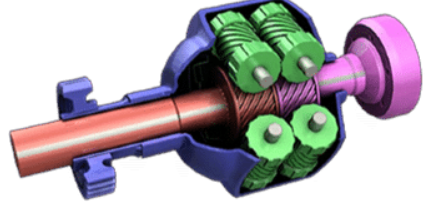
A viscous coupler uses silicone fluid to transfer power between axles while allowing them to spin at different speeds.
Inside the sealed unit are closely spaced plates.
When the axles rotate at different speeds, the plates move at different speeds, generating heat in the silicone fluid.
The heated fluid expands, causing the plates to stick together and rotate at nearly the same speed, transferring torque.
During normal turns, the speed difference is too small to generate enough heat, allowing the axles to rotate independently.
Larger speed differences produce more heat, causing fluid expansion and torque transfer between the axles.
Ranges and Modes
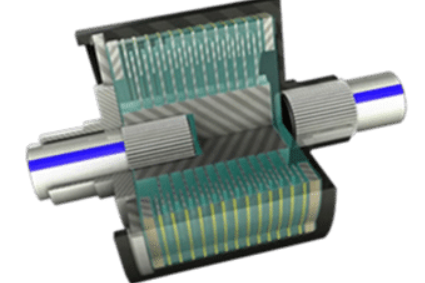
Full-time four-wheel drive (4WD) systems typically offer only a 4WD high range, though some vehicles allow shifting between high and low ranges.
These systems may use an electrically controlled clutch, viscous clutch, or center differential to transfer torque to both the front and rear differentials.
It is critical that all four tires have the same circumference.
Mismatched tire sizes can overwork the differential or transfer case, leading to premature wear and potential damage.
All Wheel Drive
All-wheel drive (AWD) systems provide power to all four wheels continuously.
These systems automatically adjust to changing road conditions without driver input.
AWD is designed primarily to improve traction and performance on-road, not for heavy off-road use.
AWD systems are typically adapted from front-wheel-drive or rear-wheel-drive platforms.
A center differential, viscous coupling, or electronically controlled clutch is used to enable power distribution to all wheels.
Electronically controlled all-wheel drive (AWD) vehicles normally operate as two-wheel drive.
When traction is lost, the control module detects differences in wheel speeds.
The system then automatically engages a clutch to transfer power to the axle with the most traction, improving stability and grip.
Auto Four Wheel Drive
Auto Four Wheel Drive Transfer Case
The auto four-wheel drive (4WD) transfer case is a modified part-time transfer case.
It can shift into 4WD high, 4WD low, and NEUTRAL.
Instead of a synchronizer, it uses a clutch pack to transfer power.
To send engine power to the front axle, the clutch pack clamps onto the transfer case output shaft.
The drive chain sprocket is splined to the clutch pack housing, transferring power via the drive chain to the front axle.
The clutch pack also regulates the amount of engine power delivered to the front axle.
Engagement of Auto Four Wheel Drive
Auto four-wheel drive (4WD) powers all four wheels only when needed.
The driver activates the system by pushing a button on the dashboard.
Pressing the button sends a signal to the transfer case control module (TCCM).
The TCCM commands the front axle to engage, connecting the front wheels to the differential.
Normally, the system operates in two-wheel drive until it detects a speed difference between the front and rear wheels.
When a speed difference is detected, the TCCM engages the transfer case, sending engine power to the front axle and helping equalize wheel speeds.
Disengagement of Auto Four Wheel Drive
Auto four-wheel drive (4WD) disengages when the front and rear axles rotate at the same speed.
At this point, slippage stops because the transfer case has sent power to the front axle as needed.
The TCCM then disengages the transfer case, leaving the rear axle engaged.
This engaging and disengaging cycle continues automatically as needed while in auto 4WD mode.
The system’s automatic function stops when the auto 4WD button is switched to 2WD high, which turns off the signal to the TCCM.
Overview of Four Wheel Drive Systems
Transfer Case Operation
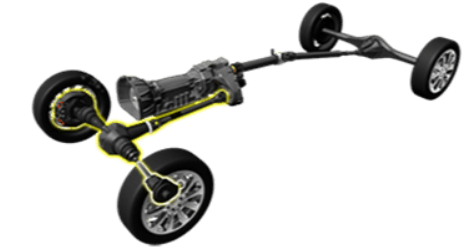
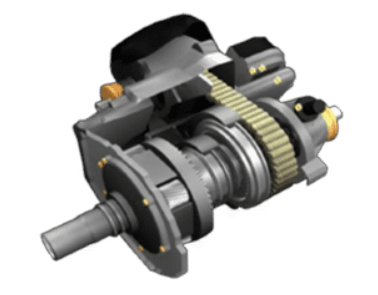
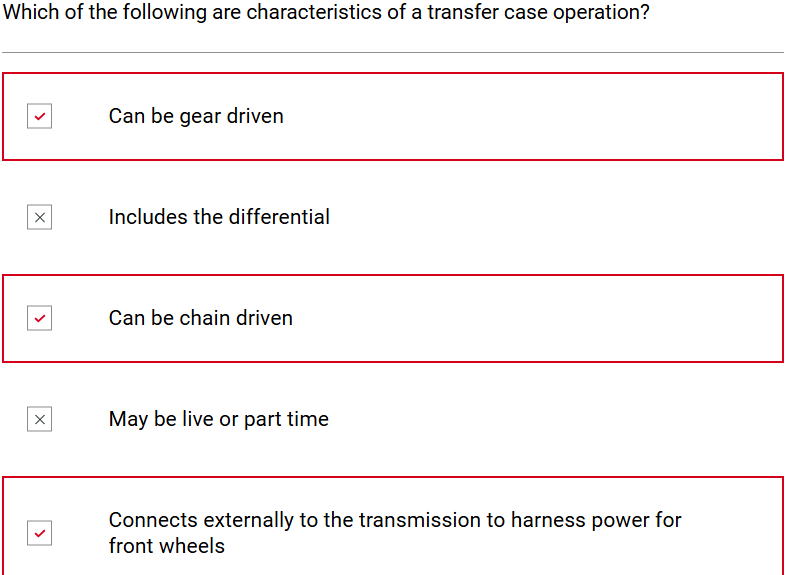
A transfer case delivers power to the front axle in a four-wheel drive (4WD) vehicle.
Inside the transfer case, a sprocket or set of gears connects to the rear of the transmission.
The sprocket or gears transfer power to the front driveshaft, which runs to the front differential.
The front differential then distributes power to the front wheels.
Front Axle Operation
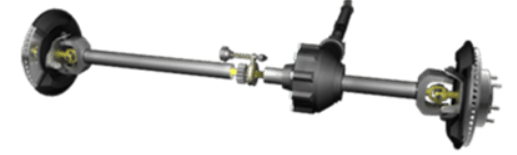
The front axle operates similarly to a rear axle in a rear-wheel drive vehicle.
In a four-wheel drive (4WD) system, the front axle receives power from the transfer case.
The differential in the front axle allows the front wheels to rotate at different speeds when the vehicle is turning, preventing tire scrubbing and improving handling.
Transfer Case Operation
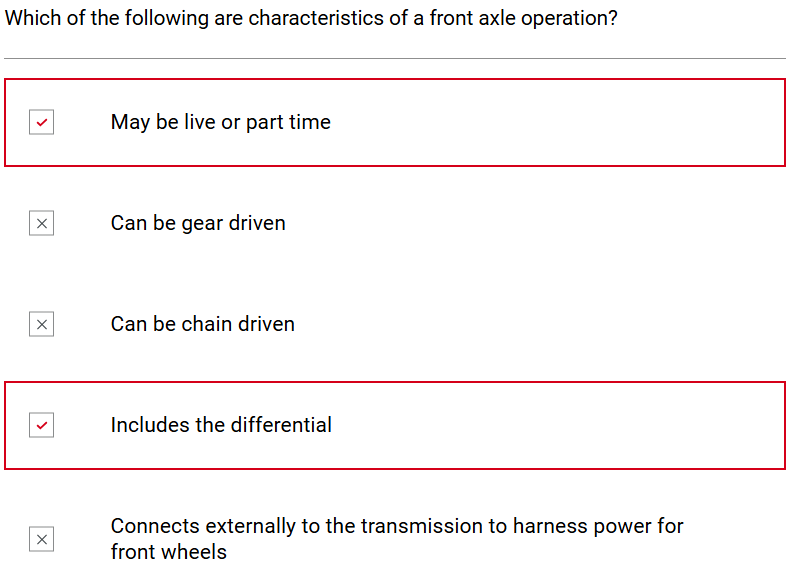
Manual Transfer Case Components - Input Shaft and Planetary
The input shaft of the transfer case is splined to the transmission output shaft.
It transfers power from the transmission to the planetary carrier inside the transfer case.
The planetary carrier distributes power either:
In a 1:1 ratio for 4WD high, or
Through a gear reduction for 4WD low, providing increased torque to the wheels.
Range Clutch
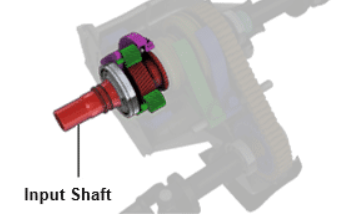
The range clutch has internal splines that connect to the output shaft and external splines to engage the planetary carrier.
Sliding the range clutch transfers power from the planetary carrier to the output shaft.
When the driver selects 4WD low, the range clutch engages the planetary carrier, placing the transfer case in gear reduction.
In most passenger vehicles, the gear reduction is approximately 2:1, though some manufacturers adjust this ratio based on vehicle application.
Synchronizer
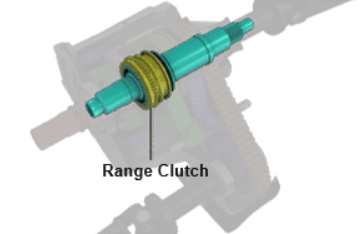
The synchronizer locks the drive chain sprocket to the output shaft, transferring engine power to the front output shaft, which connects to the front driveshaft.
The synchronizer operates similarly to a transmission synchronizer:
The synchronizer sleeve moves the clutch insert.
The clutch inserts push on the blocking ring, which contacts the drive chain sprocket to equalize the speed of the sprocket and output shaft.
The synchronizer sleeve then engages the clutching teeth on the sprocket, locking them together.
This mechanism transfers power through the drive chain to the front axle.
Output Shaft
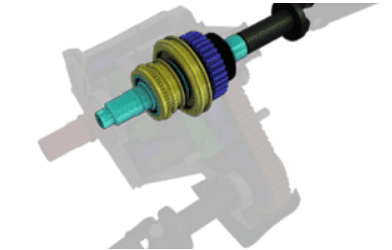
The transfer case output shaft has four external splined sections:
Front section splines to the range clutch.
Second section splines to the synchronizer.
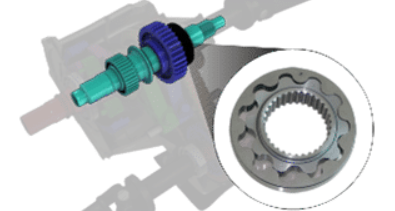
Third section splines to the lubrication pump rotor.
Rear section splines to the slip yoke of the driveshaft.
The output shaft transfers engine power to the rear axle continuously, and to the front axle when 4WD is selected.
It also contains lubrication holes and passages to supply lubrication to various transfer case components.
Lubrication Pump
The lubrication pump is powered by the rotational movement of the transfer case output shaft.
It draws fluid from the bottom of the transfer case through a pickup screen and tube.
The pump rotor forces the fluid through lubrication holes and passages, delivering it to the bearings and rotating components of the transfer case to ensure proper lubrication.
Electric Shift Transfer Case Components - Electric Shift Motor
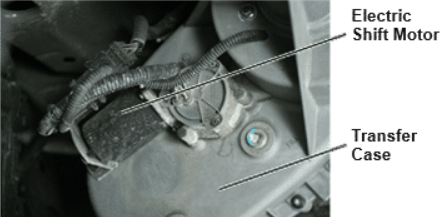
The electric shift motor (or encoder motor) shifts the transfer case between 2WD, 4WD high, 4WD low, and NEUTRAL.
It typically uses a bi-directional motor to rotate the shift detent lever.
The detent lever connects to the shift forks, moving them to engage the desired transfer case gears.
There are various types of electric shift motors, so it is important to consult the vehicle’s service information for proper identification and diagnosis.
Auto Four Wheel Drive Transfer Case Components - Electric Shift Motor
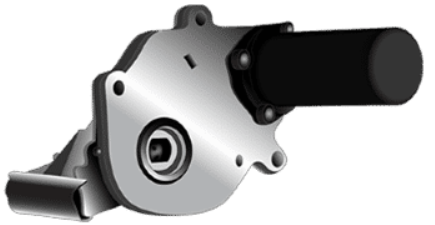
The electric shift motor in an auto four-wheel drive (4WD) transfer case operates like a standard electric shift motor.
When in 4WD mode, the motor rotates back and forth as commanded by the TCCM.
This action engages and disengages the clutch pack in the transfer case as needed.
In summary, the electric shift motor in an auto 4WD system:
Cycles on and off
Engages and disengages the transfer case clutch pack to transfer power to the front axle.
Clutch Pack
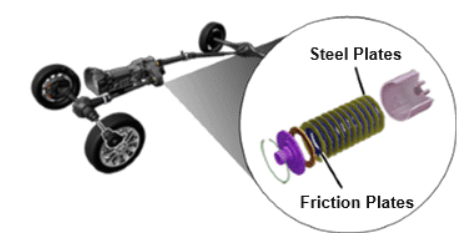
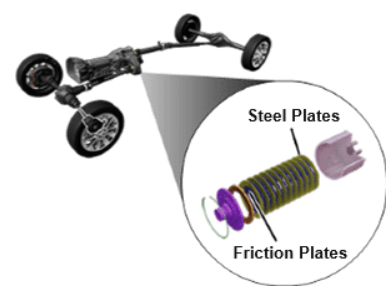
The clutch pack of an automatic four-wheel drive transfer case consists of:
An outer housing splined to the drive chain sprocket.
Fiber clutch plates that spline to a clutch hub, which connects to the output shaft.
Steel plates that spline to the outer clutch housing.
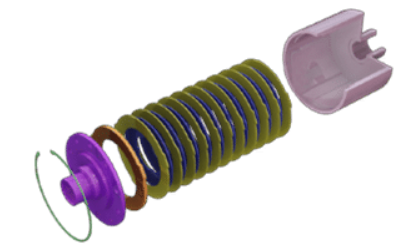
When the clutch pack is compressed, the fiber and steel plates lock the clutch hub to the outer housing, transferring power to the drive chain sprocket and the drive chain.
Mode Changes - Two Wheel High to Four Wheel High
In four-wheel drive (4WD) mode, engine power must be split to drive both the front and rear axles.
To shift into 4WD high, the synchronizer slides to engage the drive chain sprocket.
Once the drive sprocket and output shaft are locked together, the drive sprocket rotates with the output shaft.
The drive chain then rotates, transferring power to the driven sprocket.
The driven sprocket splines to the front output shaft, which rotates at the same speed as the rear output shaft, powering both front and rear wheels.
Summary when 4WD is selected:
Power is transferred to both axles
Synchronizers engage the drive chain sprocket
Drive chain movement transfers power to the driven sprocket
Range Changes - Two Wheel High to Four Wheel Low
When shifting from 2WD high to 4WD low:
The range fork moves the range clutch toward the front of the transfer case.
The range clutch engages the planetary gearset.
With the range clutch engaged, power from the transmission transfers to the output shaft at a reduced gear ratio—typically about 2:1 (two turns of the input shaft for one turn of the output shaft).
After shifting to 4WD low, the transmission operates normally, but without synchronizers, internal transfer case components cannot move while changing transmission gears.
Summary when changing from 2WD high to 4WD low:
Range fork moves the shift fork forward
Range gear meshes with the planetary gearset
Front Axle Operation
Manual Locking Hub - Engage Locking Hub
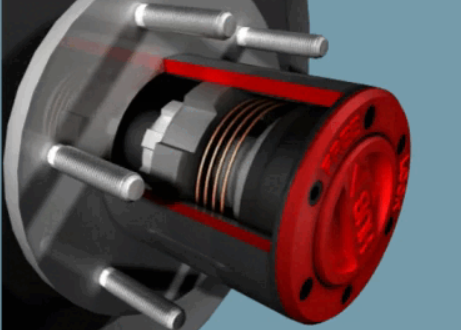
The manual locking hub stays in 2WD until the driver manually switches it to 4WD.
Turning the knob in the center of the hub locks the hub to the axle.
When locked, the clutch ring engages the splines on the axle shaft.
A detent holds the hub and axle together in 4WD mode.
To engage the manual locking hub:
Turn the knob
Clutch engages the axle splines
Disengage Locking Hub
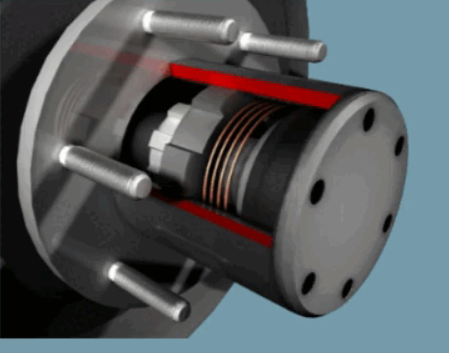
Disengaging the manual locking hubs disconnects the front wheels from the axle shafts.
Turning the knob in the center of the hub allows the spring to release the clutch, unlocking the hub from the axle.
When disengaged, the vehicle operates in 2WD, leaving the front differential inactive.
This feature helps reduce wear on front drivetrain components when 4WD is not needed.
To disengage the manual locking hub:
Turn the knob
Clutch splines are released from the axle
Automatic Locking Hub - Engage Locking Hubs
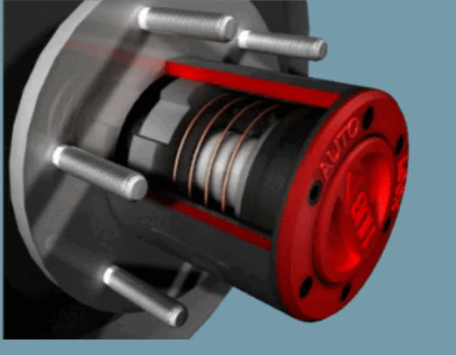
Automatic locking hubs engage only when four-wheel drive (4WD) traction is needed.
When the vehicle is shifted into 4WD, power flows to the front differential, which automatically engages the hubs, sending power to the front wheels.
Key points about automatic locking hubs:
Engage automatically when required
Transmit power to both front and rear axles when 4WD is selected
Disengage Locking Hubs
Automatic locking hubs typically remain engaged after shifting out of 4WD until the vehicle drives in reverse.
After backing up a few feet in 2WD, the hubs release, disconnecting the axles from the wheel hub.
The front wheels then rotate independently of the axle.
To disengage the automatic locking hubs:
Drive the vehicle in REVERSE gear
The hubs automatically disconnect and spin freely
Vacuum Locking Hub - Engage Locking Hubs
Some automatic locking hubs use vacuum to engage and disengage the hub.
The driver can select manual or automatic mode via a knob in the hub center.
In automatic mode, the hub engages when 4WD is selected.
A solenoid supplies vacuum through the steering knuckle and spindle.
The control module activates the solenoid for about one minute, then turns it off.
The vacuum moves a diaphragm inside the hub, which locks the hub to the axle.
Key points about vacuum locking hubs:
Some auto-locking hubs are vacuum charged by the engine or an auxiliary pump
A splined sleeve connects the front drive axle to the hub
Disengage Locking Hubs
When the driver selects 2WD, the control module signals the solenoid to manage vacuum to the hub.
The hub releases, disconnecting the front drive axle from the wheel.
The hub operates similarly to a retractable ballpoint pen:
Supplying vacuum engages the hub
Applying vacuum again disengages the hub
When 2WD is selected:
The vacuum canister vents air
The splined sleeve disconnects the front drive axle
Axle Disconnect - Electric Engage
In many front-wheel-drive vehicles with axle disconnects, the system disengages the differential from the wheels until 4WD is selected.
An electric actuator engages the axle when the driver selects 4WD.
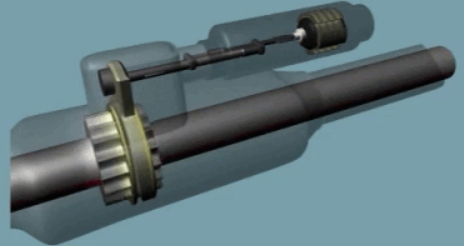
Typically, the right-side axle shaft consists of two pieces connected by a sleeve.
A shift fork, assisted by a spring, moves the sleeve to engage or disengage the axle.
The control module signals the electric actuator, which moves the plunger and shift fork, connecting the inner and outer axle shafts.
When the axle engages, a switch closes, signaling the control module that engagement is complete.
In front-wheel-drive vehicles with axle disconnects:
The electric actuator signals the plunger and shift fork
The shift fork moves the sleeve
The sleeve connects the inner and outer axle shafts
Electric Disengage
When the driver selects 2WD, the control module signals the electric actuator.
The plunger and shift fork move, causing the sleeve to disconnect the inner and outer axle shafts.
When the axle disengages, a switch opens, notifying the control module of the disengagement.
When 2WD is selected:
Control module signals the electric actuator
Plunger moves with the shift fork
Sleeve slides to disconnect the inner and outer axle shafts
Vacuum Engage
When the driver selects 2WD, the control module signals the electric actuator.
The plunger and shift fork move, causing the sleeve to disconnect the inner and outer axle shafts.
When the axle disengages, a switch opens, notifying the control module of the disengagement.
When 2WD is selected:
Control module signals the electric actuator
Plunger moves with the shift fork
Sleeve slides to disconnect the inner and outer axle shafts
Vacuum Disengage
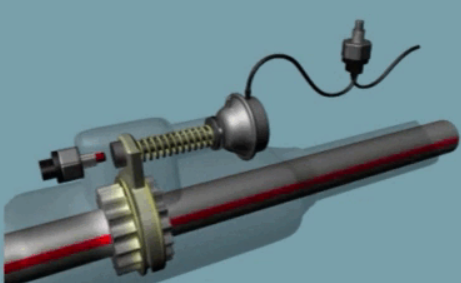
When the transfer case shifts to 2WD, a vacuum switch on the transfer case exhausts vacuum to the vacuum servo.
The plunger and shift fork move, causing the sleeve to disconnect the inner and outer axle shafts.
When the axle disengages, a switch opens, signaling the control module or turning off the 4WD indicator in a manual shift system.
When 2WD is selected:
Vacuum switch exhausts vacuum
Plunger moves the shift fork
Sleeve disconnects the inner and outer axle shafts