Endocrine System
Endocrine System
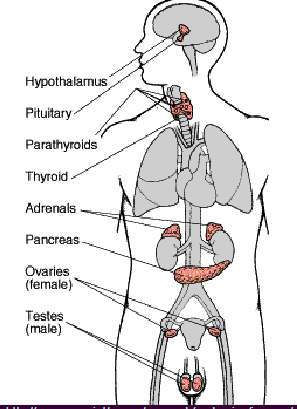
Composed of ductless glands that secrete hormones (chemical messengers) into the internal body
Hormones act on very specific receptors of target cells
Help to regulate metabolic processes, but have longer effects than the nervous system

Secretion of Hormones
Pass through membranes into bloodstream
Secretion is precisely regulated
Continually excreted in urine and broken down by certain enzymes

2 Main Types of Hormones
Steroid (lipid)
Complex, ring-shaped lipid molecules
Derived from cholsterol
Enter nucleus of target cell to activate genes (direct gene action)
Peptide (protein)
Involve larger molecules that bind to receptors on target cell membrane without entering cell
Cause second messengers within cell to make functional changes

Second Messenger Systems
Second messengers within the cell initiate molecular reactions that change the physiological state of the cell
Hormones are the first messengers

3rd Type of Hormone: Also a NT Category
Biogenic amine
Modified amino acids
Include epinephrine, norepinephrine, and thyroid hormone
Many biogenic amines function in the nervosu system as NT
Hormone Classes

Control of Hormone Release
Blood levels of hormones are controlled by
Negative feedback systems (most hormones)
Vary only within a narrow desirable range
Hormone release is decd when hormone level is high in the blood

Positive feedback systems (few hormones)
Greater range of variation
Hormone release is incd when hormone level is high in the blood
Hypothalamus
Regulates most endocrine activity
Regulates pituitary gland and sends a chemical stimulus to the anterior pituitary
Hypothalamic releasing hormones stimulate the synthesis and release of pituitary hormones
Like a light switch; turning it on
Hypothalamic inhibiting hormones shut off the synthesis and release of pituitary hormones
Like a light switch; turning it off

Pituitary Gland (Hypophysis)
Pituitary gland = master gland
Produces sm of the body’s hormones
Two-loved organ that secretes nine major hormones
Neurohypophysis—posterior lobe (neural tissue) and the infundibulum (stem)
Receives, stores, and releases 2 hormones from the hypothalamus
Adenohypophysis—anterior lobe, made up of glandular tissue
Synthesizes and secretes 7 hormones that regulate other endocrine glands

Thyroid
Largest endocrine gland; located in anterior neck
Secretes thyroid hormone, the body’s major metabolic hormone (consists of T3 & T4)
Stimulated by hypothalamus through the anterior pituitary gland (TSH—thyroid stimulating hormone)
Also secretes calcitonin
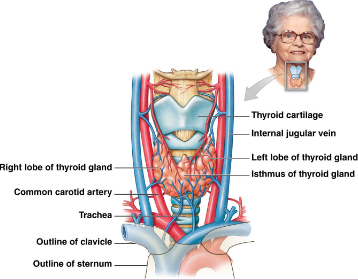
Parathyroid Glands
Located on posterior side of thyroid gland
PTH (parathyroid hormone or parathormone) regulates blood calcium
Stimulated by low blood calcium levels
Stimulates osteoclasts to break down bone and move calcium to blood
Stimulates kidneys to prevent calcium loss in the urine
Stimulates intestines to absorb calcium from food


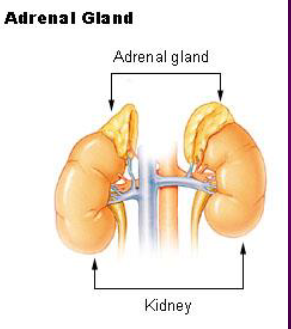
Adrenal Glands
Paired, pyramid-shaped organs on top of kidneys that deal w/ stress
Cortex produces corticosteroids that control sugar, salt, and sex hormone levels
Medulla produces adrenaline (epinepherine) and noradrenaline (norepinephrine)

Pancreas
Located posterior to the stomach
Pancreatic islets (islets of Langerhans) produce hormones to modify blood sugar
Stimulated by sugar levels within the blood

Other Endocrine Glands
Many organs secrete additional hormones
Reproductive organs
Digestive organs
Cardiovascular organs
Lymphatic organs
Urinary organs
These help to regulate blood contents, BP, sexual development and sexual functions, immune functions, digestive functions, metabolism, etc.