Nov 12th - Lecture 30 ~ Enzyme-coupled receptors
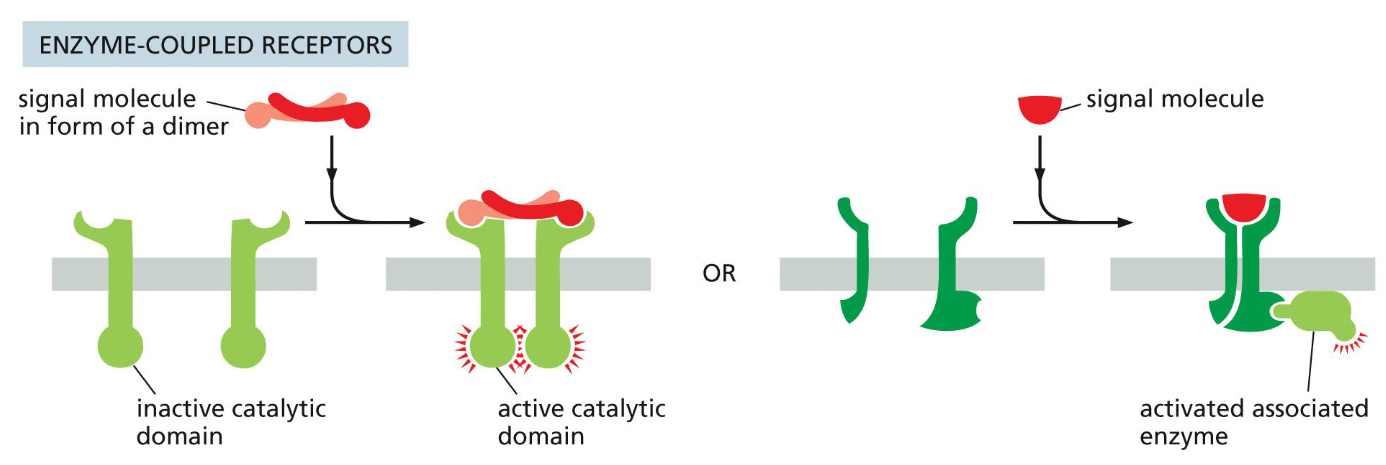
enzyme-coupled receptors either have enzymatic function or recruit proteins that do
many enzyme-coupled receptors have intrinsic catalytic domains that are activated upon ligand induced dimerization
Some lack catalytic function, but rather recruit enzymes
Many enzyme coupled receptors have kinase functions that promote signaling complex assembly through site specific phosphorylation
Receptor tyrosine kinases (RTK) and receptor serine/threonine kinases are common
RTK phosphorylates tyrosine amino acids in proteins
RTK's regulate diverse functions
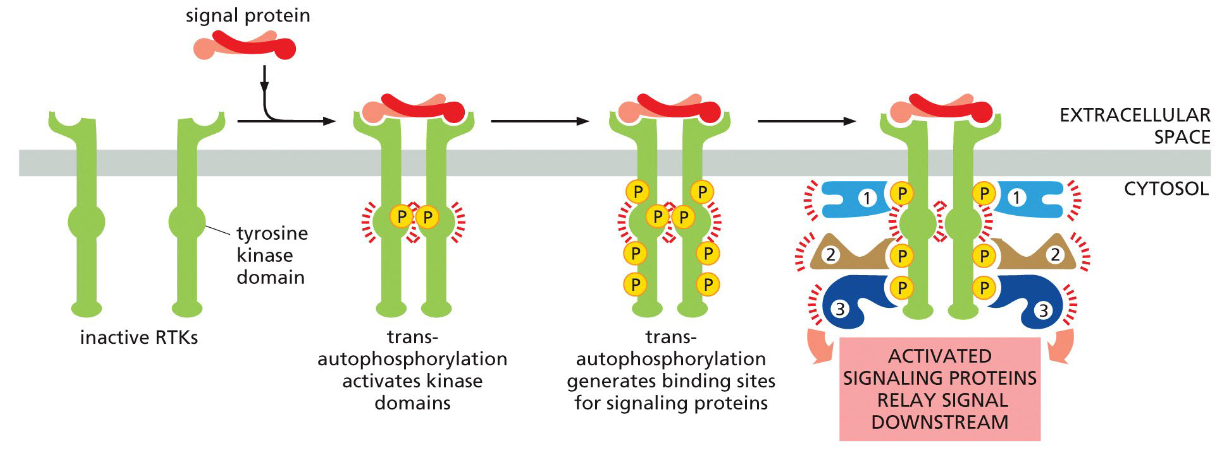
RTK autophosphorylation upon ligan-induced dimerization
receptor tyrosine kinases have kinase domains that specifically phosphorylate tyrosine residues
Ligands for RTKs are typically dimers, and, upon binding, they induce receptor dimerization
Dimerization brings the kinase domains into close proximity to tyrosine residues — autophosphorylation
phosphorylation of the receptors creates binding sites for signaling complex assembly
In the absence of ligand, RTKs dimerize at a low level, but ligand-independent signaling is possible if alterations in regulatory DNA sequences result in high receptor expression
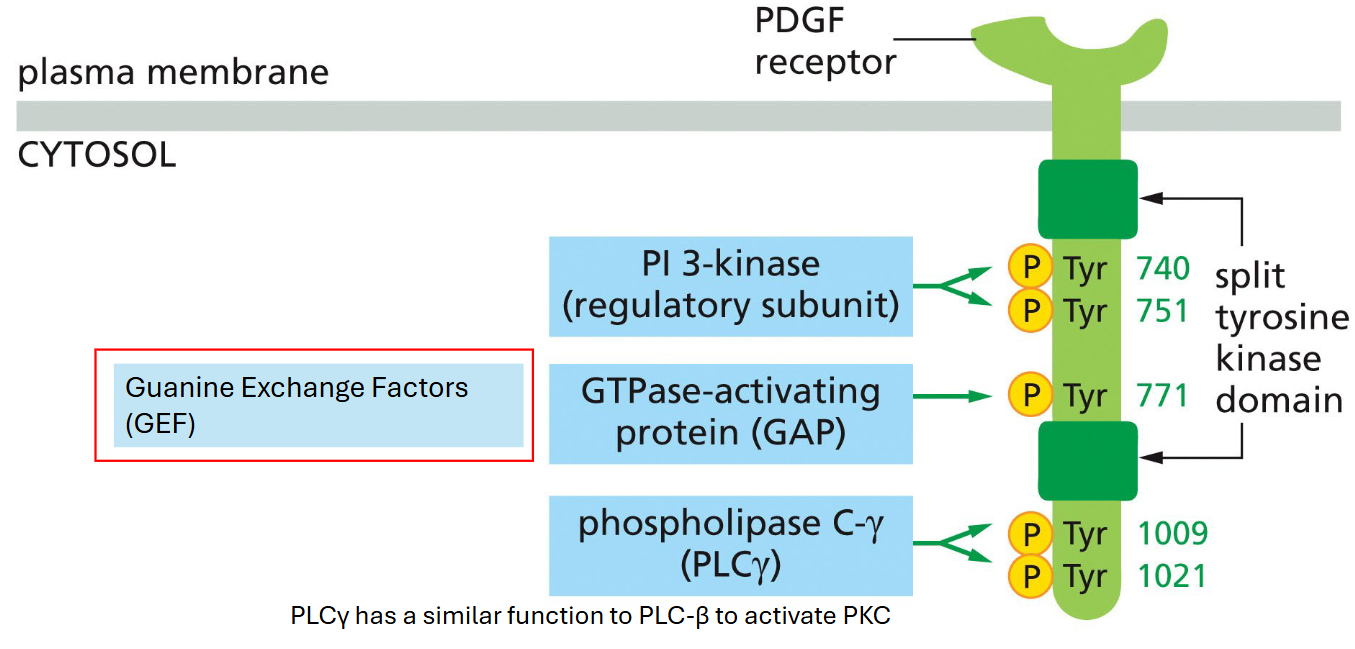
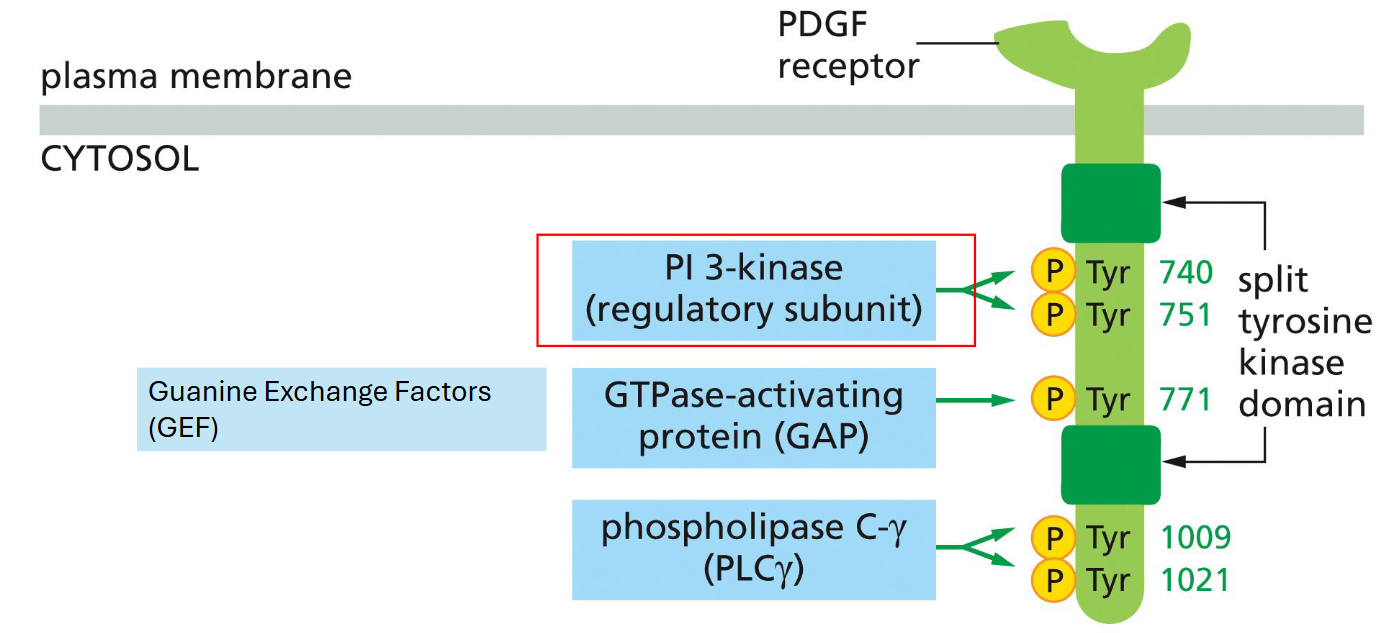
phosphorylation of RTKs generates docking sites for intracellular signaling proteins
creates a site where other proteins can interact with the RTK to get activated
examples — PI 3 kinase, GAPs, GEFs, and PLC-gamma
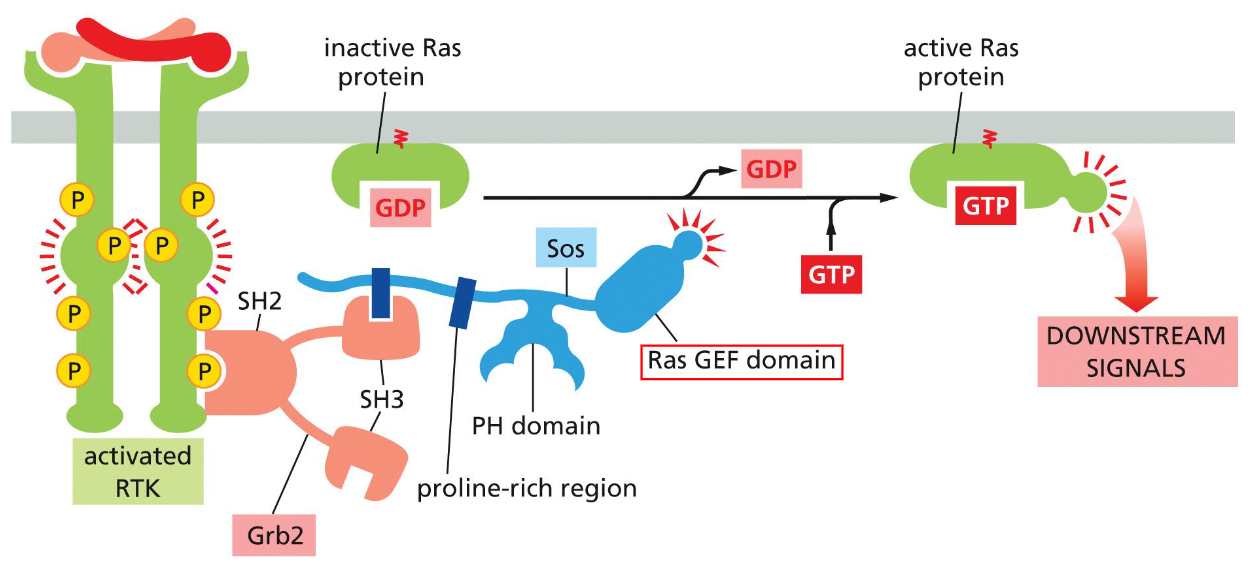
Ras is a monomeric (small) G protein activated by many different RTKs
binding of an activated RTK by Grb2 recruits Sos (a Ras-GEF) that exchanges GDP on inactive Ras with GTP
Ras is a monomeric G protein (distinct from the trimeric G proteins of GPCR signaling)
activated Ras passes the signal forward until its bound GTP is hydrolyzed
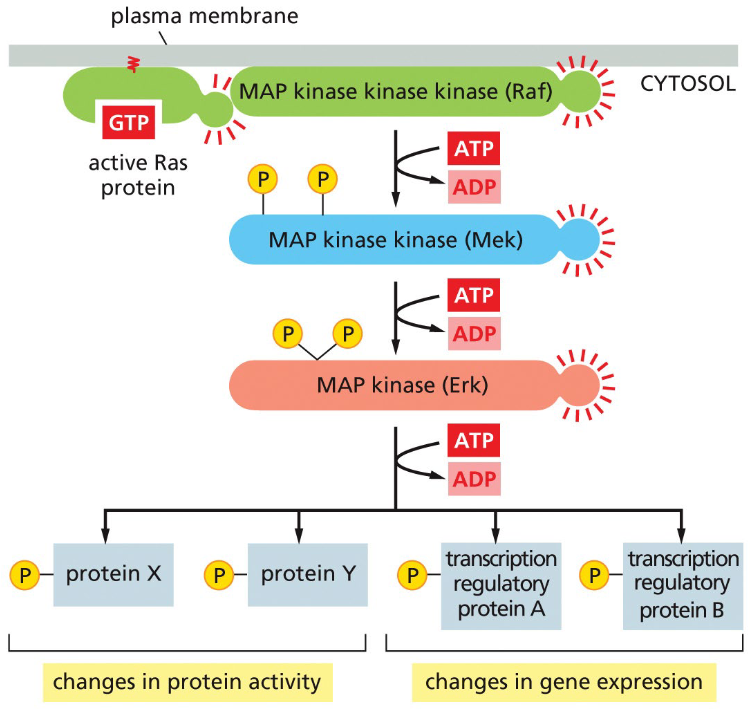
Ras initiates a MAP kinase phosphorylation cascade
Mitogen-Activated Protein (MAP) Kinase pathways, as the name suggests, are intracellular signaling processes driven by ATP-dependent phosphorylation that promote cell division
a mitogen is any signal that results in cell proliferation
there are multiple MAPK pathways, but the general structure is depicted:
a top-level MAP kinase kinase kinase phosphorylates a MAP kinase kinase
the MAPKK phosphorylates a MAPK which phosphorylates effector proteins
Since each activated kinase activates another kinase, this form of signal transduction is called a phosphorylation cascade
No phosphorylation cascade is linear, each kinase has multiple targets
The specific members of the MAPK pathway initiated by Ras
are as follows:
MAPKKK = Raf (Rapidly Accelerated Fibrosarcoma)
MAPKK = MEK (MAPK/ERK Kinase)
MAPK = ERK (Extracellular signal-Regulated Kinase)
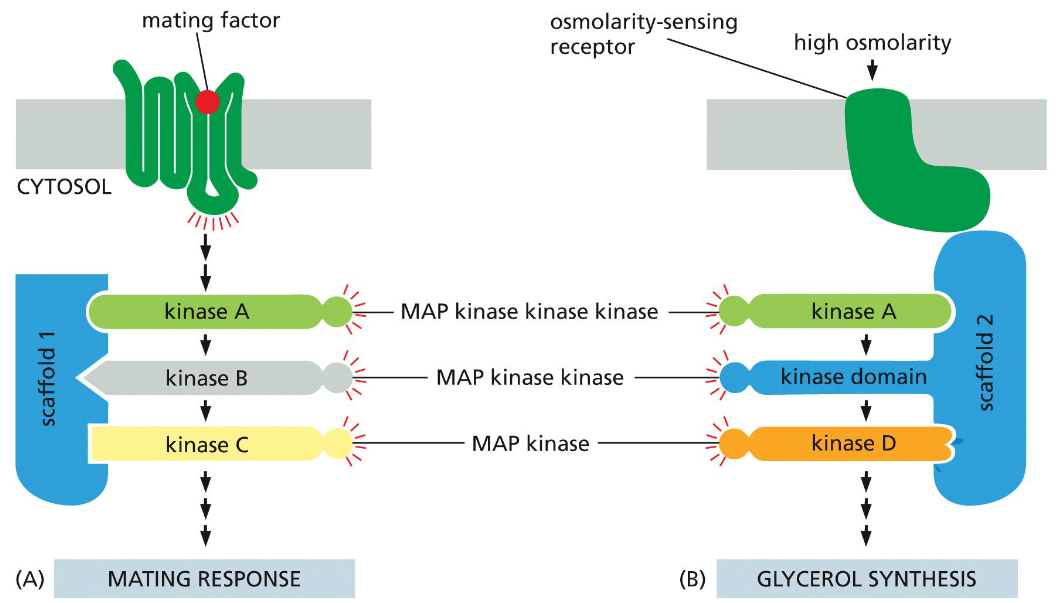
MAP kinase pathways are modular and different combinations produce different effects
there are many different MAPKs, so to prevent cross-talk, different MAPKs are held together by scaffold proteins
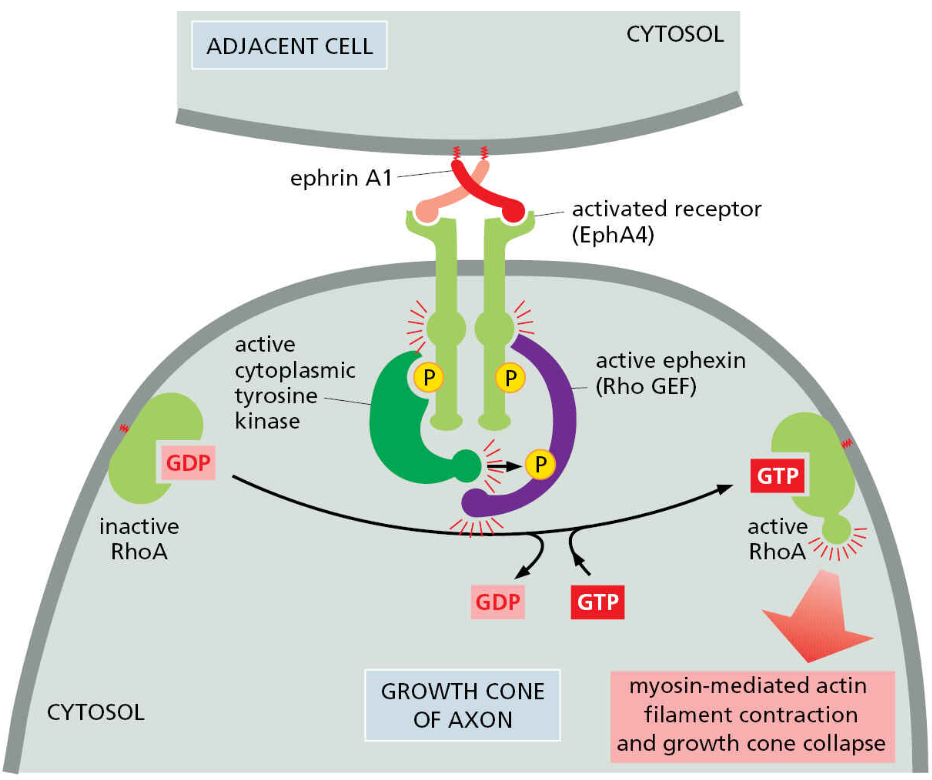
Rho family G proteins link extracellular signaling to the cytoskeleton
phosphorylation of RTKs generates docking sites for intracellular signaling proteins
an example of PI 3-kinase enzyme-coupled receptors is Akt & PIP
Summary / Key Concepts
Enzyme-coupled receptors are either enzymes themselves or recruit enzymes as part of a signaling complex
The largest group of enzyme-coupled receptors are the receptor tyrosine kinases (RTKs)
RTKs are activated by ligand-induced dimerization and phosphorylation of tyrosine residues – signal complex proteins bind these phosphotyrosines
RTKs have variable ligand-binding extracellular domains and intracellular kinase domains – phosphorylation occurs on c-terminal tails and within “kinase insert” regions
the specifics an RTK’s signaling depend on the enzymes recruited. RTKs that recruit a signal through Ras and MAPK pathways
RTKs that recruit PI3K signal through PI(3,4,5)P 3 and Akt
PI3K produces the PI(3,4,5)P 3 that allows binding of AKT and the enzyme that activates it
MAPK pathways contain different kinase modules
different combinations result in different responses
scaffolds can assemble MAPK pathways and limit crosstalk between different receptors
MAP Kinases promote cell division
Akt promotes cell survival and growth (via Tor)
Rho family GTPases interact with cell surface receptors to control the cytoskeleton
When neuron growth cones find their target, ephrin signaling through Rho leads to termination of actin polymerization, myosin-based contraction, and growth cone collapse – this creates a synapse