Ch 5: Conflict Styles
preview:
Defining conflict styles and how they manifest
Contexts that influence one’s conflict style
The interactive nature of conflict
When conflict turns violent
Breaking the conflict style rut
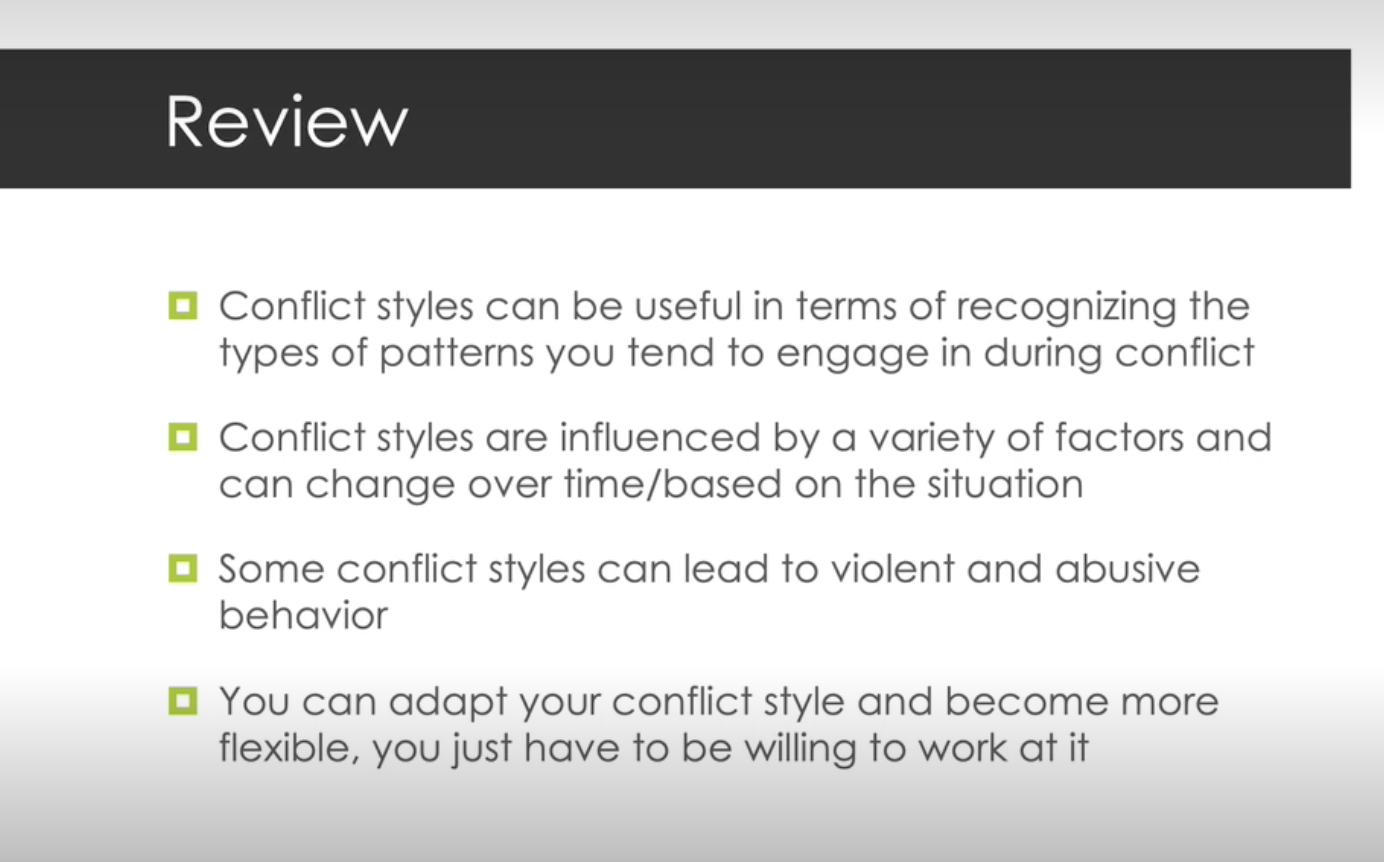
Conflict Styles: Patterns of behavior and communication (responses) people utilize during conflict situations
The Dual Concern Model helps us understand Conflict
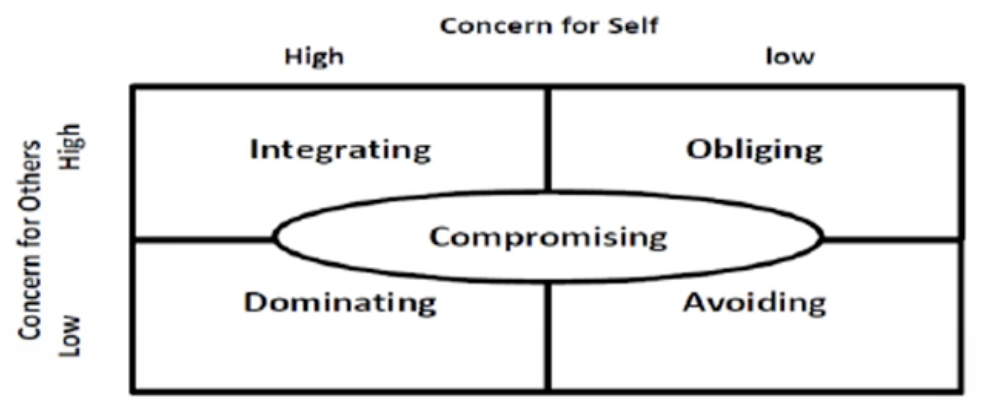
The Dual Concern Model suggests that your approach to a conflict is shaped by two independent dimensions:
Concern for Self: The degree to which you try to satisfy your own goals and needs.
Concern for Others: The degree to which you try to satisfy the other person's goals and needs.
Combining these two dimensions leads to five conflict management styles:
1. Integrating (Collaborating)
Concern Level: High concern for self and high concern for others.
Description: Involves working together to find a solution that fully satisfies both parties' needs. It requires openness, information sharing, and a joint search for mutually beneficial alternatives. This is a win-win strategy.
Advantages: Satisfies both parties, generates new ideas and shows respect, helps create long-term solutions, affirms the importance of the relationship and partnerships
Disadvantages: Not useful if investment in the relationship or topic is low, can be used in a manipulative way when person draws out conflict by suggesting ur trying to find a solution for everyone, when really your intention was to stall, and not always possible
2. Obliging (Accommodating)
Concern Level: Low concern for self and high concern for others.
Description: The individual yields to the other party's wishes to maintain harmony or support the relationship. They put the needs of the other person first.
Advantages: Can be a reasonable strategy if you are wrong, can be useful if the issue is more important to the other person and u allow them to just act, can promote harmony, can give the lead to someone with more experience on the topic
Disadvantages: obliging to manipulate and make urself appear as a martyr, obliged back and forth (no, I’m the better person!), makes it seem like everyone is on the same page, keeps people in a lower position of power, can signal low investment
3. Dominating (Competing)
Concern Level: High concern for self and low concern for others.
Description: The individual prioritizes their own goals, often at the other party's expense. This is a win-lose approach where one party "wins" and the other loses.
Advantages: Asserting without being aggressive, useful for quick and decisive action, when the external goal is more important than the relationship, when the goal is to generate ideas
Disadvantages: Can harm the relationship, can reduce the conflict to only two options, can cause the other to retreat or become aggressive
Tactics:
Threats: Use negative communication or behaviors to try to control the outcome of a situation (ex: “If you don’t listen to me, you’re grounded!”)
Destructive Domination: Statements that demand the other person give in or that seek to gain an advantage over the other
Verbal Aggression and Abuse: Using communication to attack the self-concept of another person, or utilizing violent communication
4. Avoiding
Concern Level: Low concern for self and low concern for others.
Description: This involves sidestepping, withdrawing from, or denying the existence of the conflict altogether— it’s avoiding. It's unassertive and uncooperative.
Advantage: Can provide time to think carefully, can keep people safe if they expect a harmful response, can be useful if the relationship is not important
Disadvantage: Might suggest you do not care about the other person, might cause conflict to escalate, might lead to a blow-up later
Avoidance Criticizing Loop: Person who is avoiding also criticizes the other person (ex: “I’m not going to talk to you unless you stop being so stupid”)
5. Compromising
Concern Level: Moderate concern for self and moderate concern for others.
Description: This approach seeks a convenient solution by finding a middle ground that satisfies some of each party's needs, but not necessarily all of them.
In the middle for a reason
Advantages: Power balances/shared power, helps both people accomplish important goals, appears reasonable
Disadvantages: Can feel like a loss, can become a go-to that seems easy but does not really satisfy either party, requires a willingness to give up something, might lead to avoidance of more creative solutions.
**Please note that Conflict Styles change over time and depend on context, who you’re communicating with
Which Conflict Styles are Avoidant and which are Engaging?
Avoidance: the desire or tendency to move away from conflict or act like it does not exist
Avoiding
Obliging
Engagement: The desire or tendency to take part in conflict and discuss issues
Integrating
Compromising
Dominating
What determines your conflict style?
Cultural Context
Relational Context and History
Complimentary Patterns: When conflict styles are different, but reinforce one another
Symmetrical Patterns: conflict styles mirror one another
Conflict Styles are malleable\
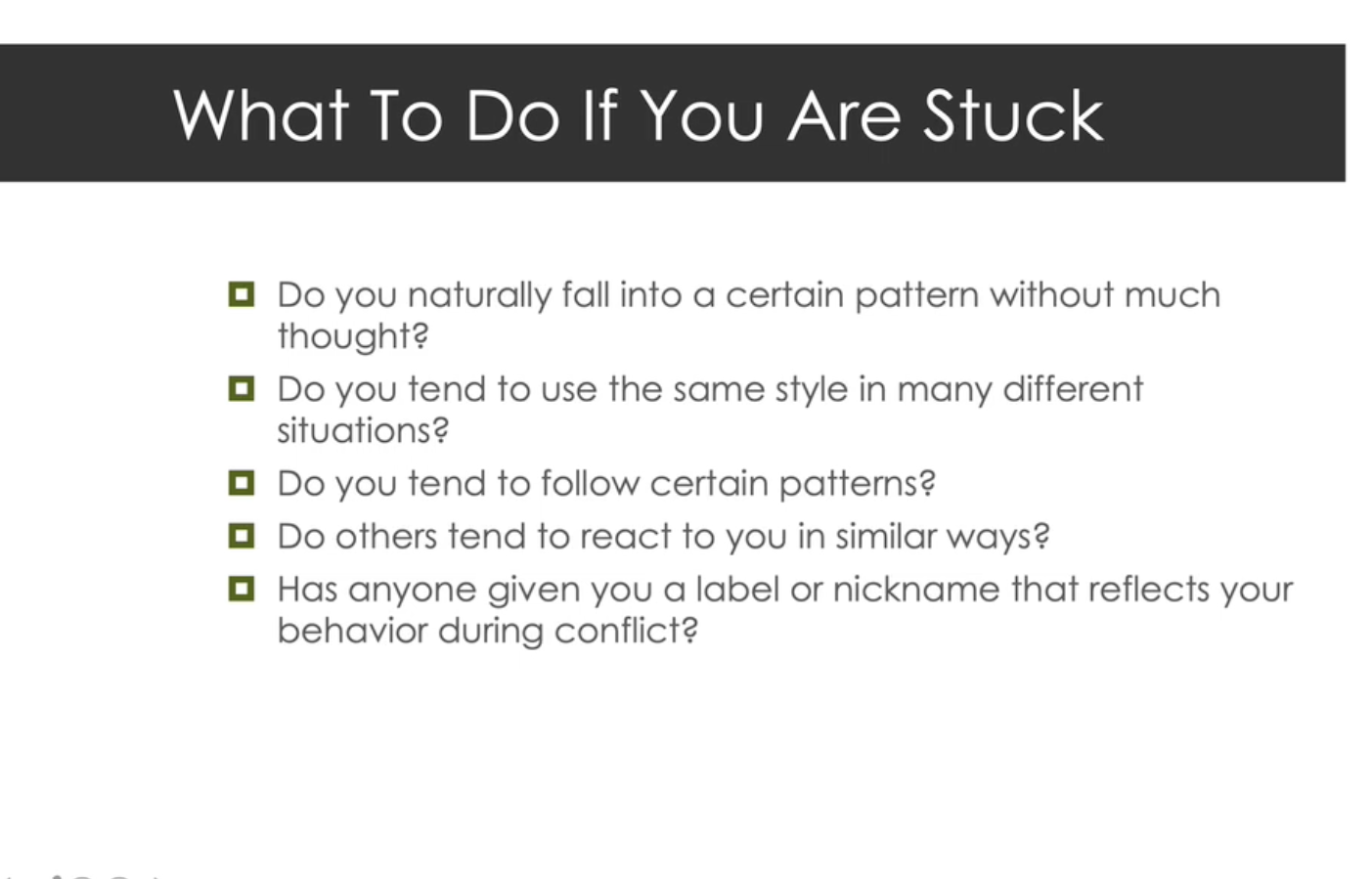
Are you in a conflict style rut?
Chapter Summary: