Haemoglobin
protein - quaternary structure
structures - specific sequence of amino acids, folded + coiled, more folding, four strands (four polypeptide chains, each bonded to haem group (bound with iron ion - so can bind to four oxygen molecules in total))
varies throughout organisms
within red blood cells
carry oxygen to respiring tissues
two faced - behaves dependent on location (lungs or respiring tissue) allow it to change shape (for different properties)
load oxygen in lungs
higher affinity - binds easily - high concentration of oxygen
unload (dissociate) in respiring tissue
low oxygen - higher concentration of carbon dioxide - lower affinity (wants to let go)
high partial pressure - lots of oxygen (higher affinity - form oxyhaemoglobin in alveoli)
low partial pressure - less oxygen (lower affinity - dissociates oxygen)
Dissociation curve
start - low concentration - partial pressure increase - low affinity - binding sites closed off - haemoglobin changes shape to expose more binding sites when binding to first oxygen
steep curve - as first bond occurs, second gets easier then third gets easier (positive-cooperativity) however…
curve + plateau - no oxygen - shape of haemoglobin doesn’t expose all binding sites initially (difficult to find last binding site)
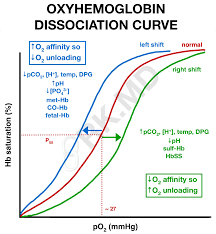
Bohr effect
oxygen in environment
alveoli - less carbon dioxide - less acidic (pH effects shape- easier for oxygen to load) - higher pH = higher affinity for oxygen (curves shifts left)
oxygen used up in cells - carbon dioxide builds up in cells - more acidic so lower pH = lower affinity for oxygen (haemoglobin unloads oxygen easier) - (line shifts right)
organisms in different environments
in low oxygen environment, an organism’s haemoglobin has higher affinity for oxygen in low oxygen conditions to load any available oxygen - dissociation curve shifted to the left
active organisms have lower affinity for oxygen to unload oxygen to respiring cells that need it - dissociation curve shifts to right
developing foetus - more efficient at loading oxygen in low oxygen concentrations - mothers blood lower in oxygen concentrations then air in alveoli