Plant adaptation to water availability
Xerophytes
adapted to dry conditions
Thick waxy cuticle
minimise water loss
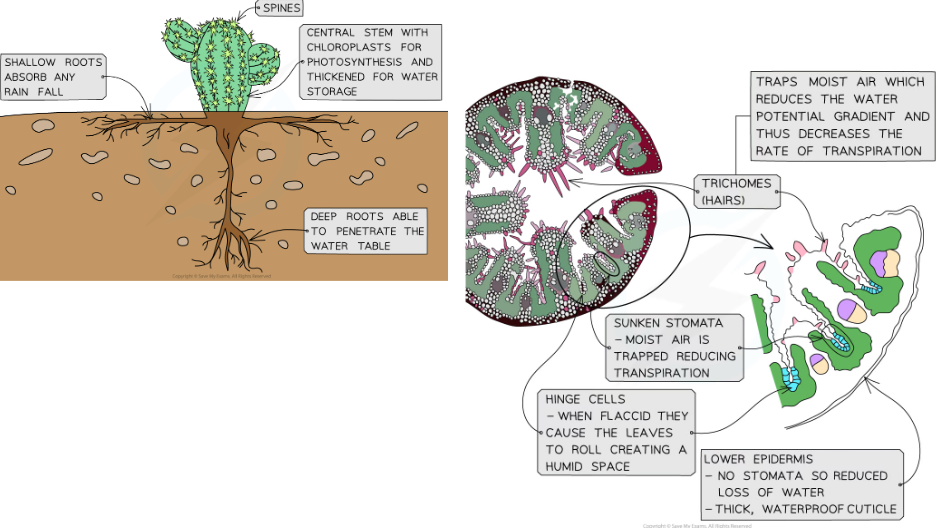
sunken stomata
reduces air movement/increases humidity
fewer stomata
decrease rate of transpiration
fewer leaves
decreases rate of transpiration
hairy leaves
increase local humidity - decreases transpiration
curled leaves
stomata inside the curled area traps moist air
succulents
water stored in specialised parenchyma in stems and roots
leaf loss
some plants drop their leaves when water not available and photosynthesise using trunk and branches
root adaptations
long roots to reach deep water
lots of wide shallow roots to absorb water before it evaporates from the surface
dormancy/death
some die back and wait until water available or produce seeds to replace themselves or as storage organs eg. bulbs
examples include cacti and marram grass
Hydrophytes
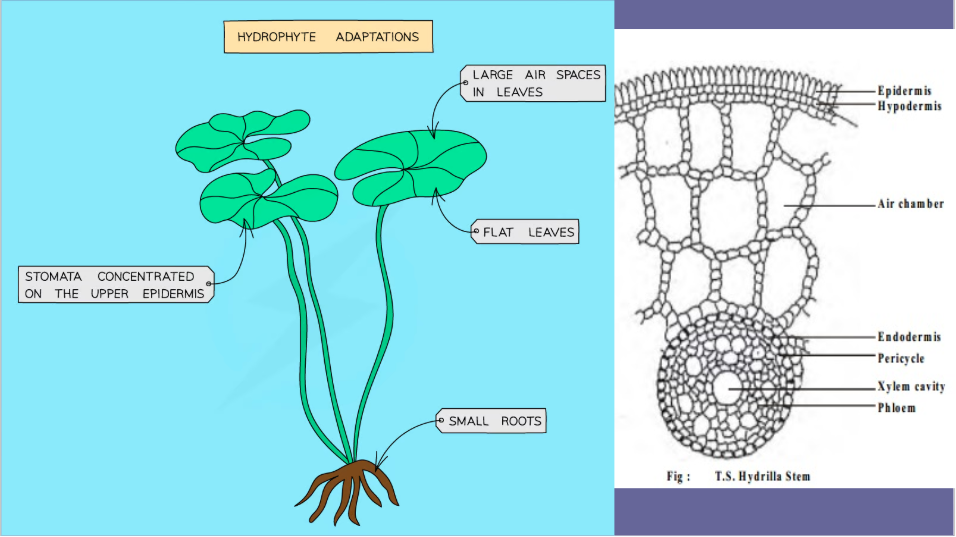
adapted to wet conditions/growing in water
very thin/no waxy cuticle
water loss not an issue
stomata on surface of leaf
maximises gaseous exchange into the air
stomata always open
maximises gaseous exchange
reduced structure
support provided by water
wide flat leaves
catch light for photosynthesis
small roots
water can diffuse straight into leaves and stems from the water
large surface area of roots and stems under water
increases area for diffusion and photosynthesis
air sacs
enables leaves and flowers to float to the surface
aerenchyma
air spaces in parenchyma creates buoyancy and allows for low resistance to the movement of substances eg oxygen to tissues
some plants eg mangroves have aerial roots as normal roots can become waterlogged
examples include water lily