Pharmacodynamics
Quantifying drug-receptor interactions
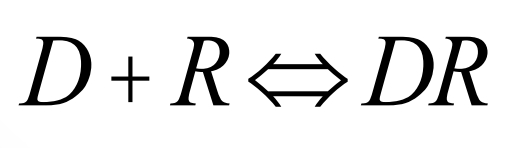
Drugs bind to receptors at a rate proportional to drug concentration.
Rate at which they unbind is dependent on chemical properties of drug-receptor complex.
Law of mass action implies that…
Forward rate is K+[D][R]
K+ = forward rate constant
Reverse rate is K-[DR]
K- = Reverse rate constant
This can be use to derive the Hill-Langmuir equation
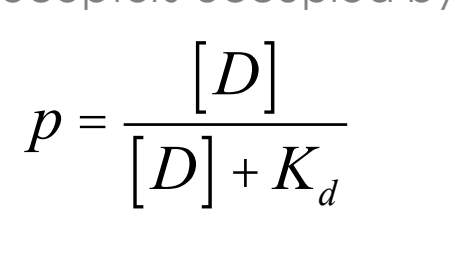
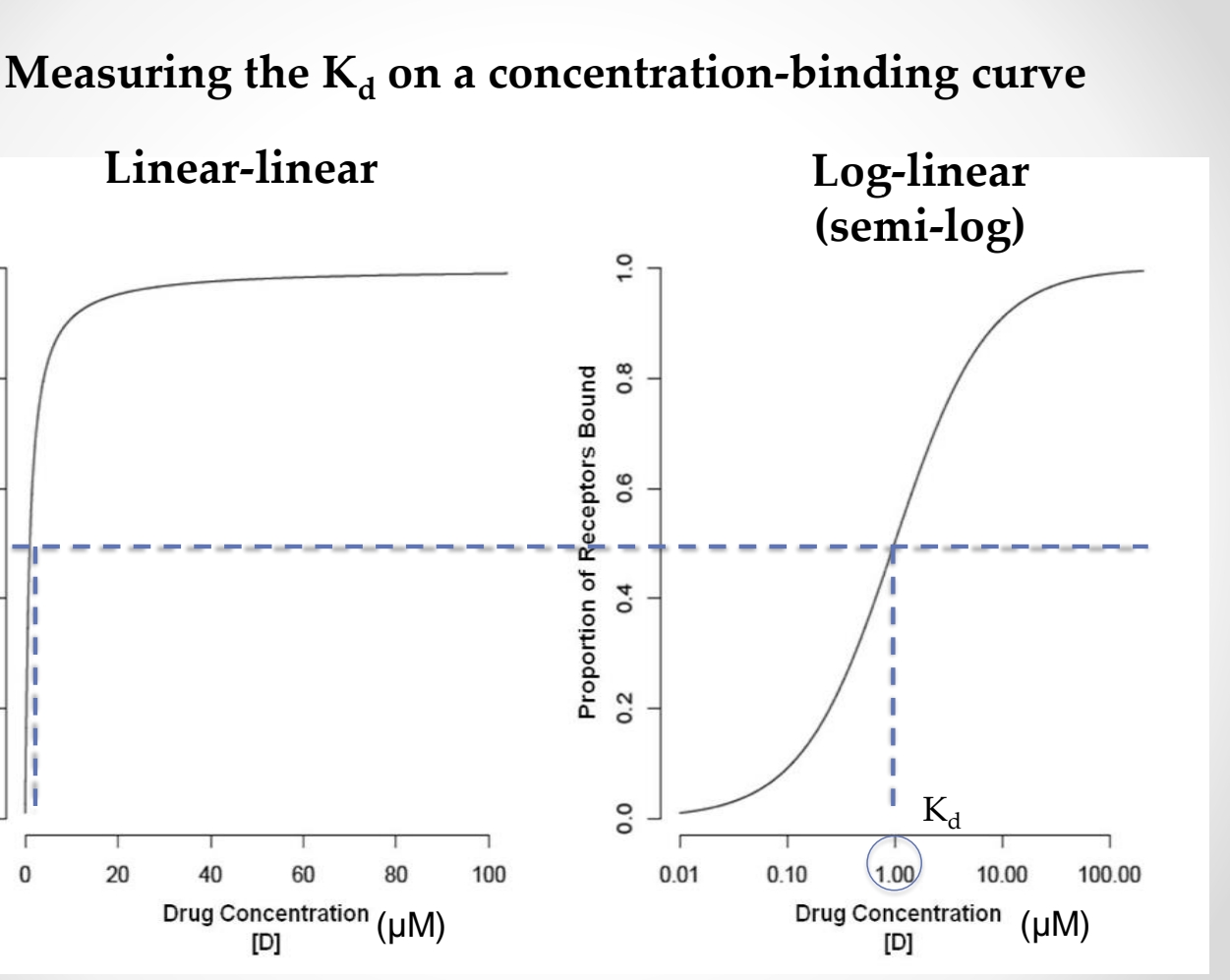
Kd = drugs's association constant from its receptor = concentation at which, at equilibrium, half the rceptors will be bound with a drug.
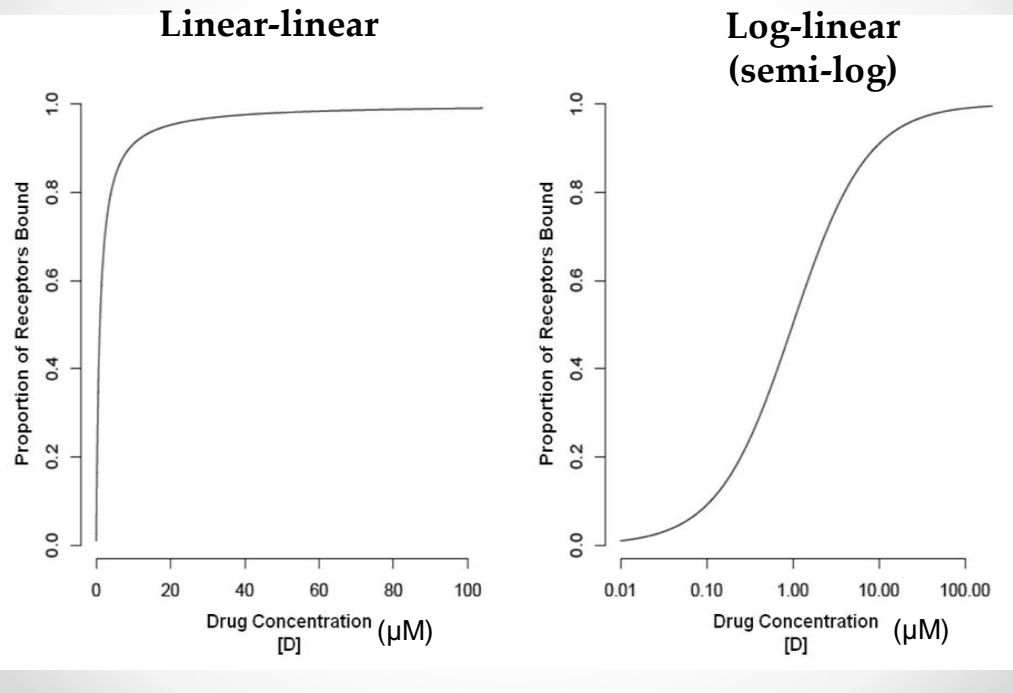
2 ways to plot a concentration binding curve:
Affinity = affinity of a drug for its receptors
Measured using Kd.
Actions of drugs at receptors:
Agonist = chemical (drug, hormone, neurotransmitter or oother signalling molecule) that binds to its target to increase its activity
Antagonist = chemical that opposes action of another chemical
In the absense of an agonist, antagonists should have no action on their targets
Endogenous agonist = substance naturally produced by the body that binds to and activates a specific receptor, resulting in a physiological response.
E.g. hormone, continuousy present in the body
Agonists like propanolol will cause physologcal effects by themselves