7: Stems
Major Functions of Stems:
conduct H2O and minerals from roots to leaves
provide aerial support for leaves
some are photosynthetic
conduct nutrients via phloem to roots , flowers, young leaves
some modified for storage → potato/ginger
some horizontal and run just above or below ground
Some stems are diminished (less prominent) but still serve important functions!
carnivorous plants → stems are leaf-anchoring
A. EXTERNAL MORPHOLOGY
Many stems are characterized as being herbaceous or woody.
Herbaceous stems generally have not undergone significant secondary growth and are often green, fleshy, and flexible
Woody stems have undergone secondary growth and developed a periderm. They are typically not green, are harder or firmer, and less flexible.
Note that some herbaceous stems can become woody over time.
Examples of species that are herbaceous at maturity:
monocots: lily, orchid, some grasses, onion
dicots: mint, parsley, beans, Coleus, clover
Examples of species that are woody at maturity:
monocots: palm, date, coconut
dicots: apple, oak, maple, Azalea, pecan, redbud
Stem Structures—Familiarize Yourself With These Structures, Using Supplied Images and Lab Specimens
Node: a point of attachment, typically of a leaf or a flower
internode: the area of the stem between 2 nodes
axillary bud: a structure composed of a dormant apical meristem and scales (modified leaves) covering it. Occurs specifically in the axil, which is the angle between a leaf attachment and the main stem axis.
Terminal bud: a dormant apical meristem covered by scales at the apex or end of the stem or the stem branch
Leaf (petiole) scar: the location where a leaf was once attached. Vascular bundle scars may be visible.
Terminal bud scale scars: a ring-like array of scars indicating the location of a previous terminal bud.
Lenticels: small perforations in the periderm of woody stems through which limited gas exchange may occur.
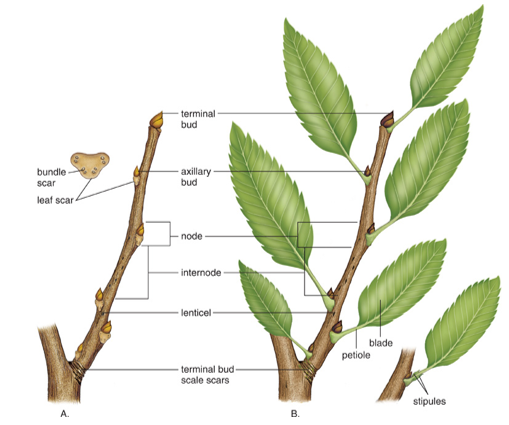
B. Developmental Pattern or Arrangement of Leaves on Stems
Opposite (2 leaves per node): Dogwood, Maple, Ash
Alternate (1 leaf per node): Oak, Hickory, Tulip Tree
Whorled (3 or more leaves per node): Catalpa, Oleander
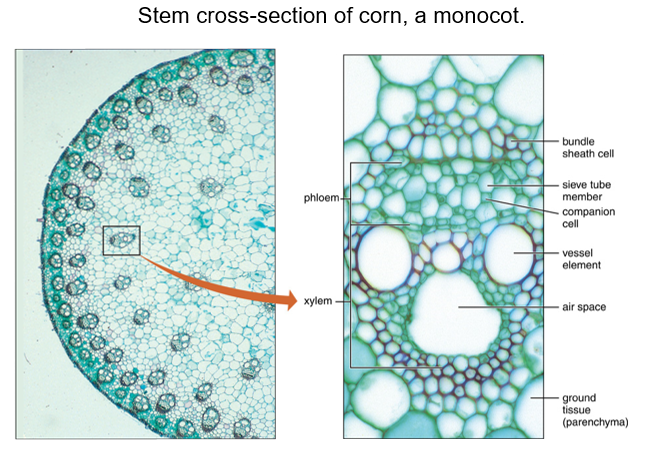
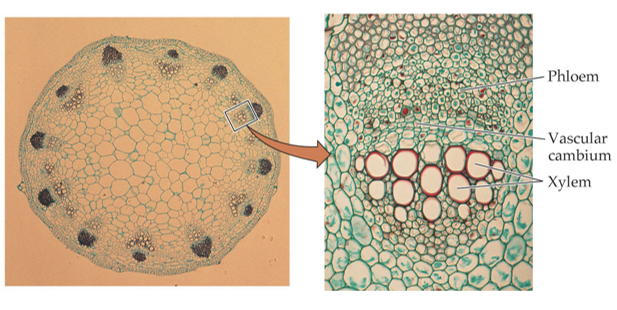
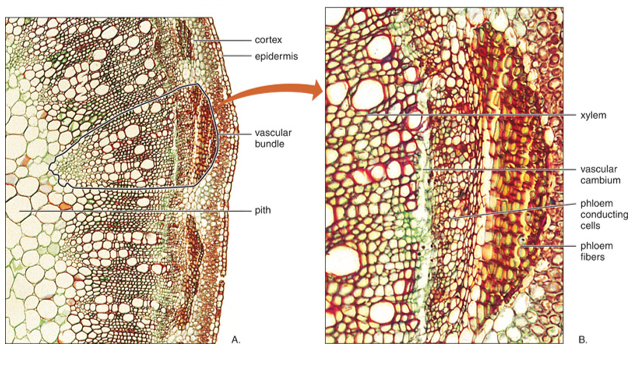
C. Anatomical Differences Between Monocot and Dicot Stems
Monocot:
vascular tissue arrangement: scattered
presence of pith: no
cortex cells: yes
 Dicot:
vascular tissue arrangement: in a ring
presence of pith: yes
cortex cells: yes
What Exactly Are The Differences Between Potatoes, Sweet Potatoes, and Yams?
Potato
Solanum sp.
Nightshade family
Solanaceae
Stem
Dicot
Temperate climate
Sweet Potato
Ipomoea sp.
Morning glory family
Convolvulaceae
Root
Dicot
Subtropical
Yam
Dioscorea sp.
Yam family
Dioscoreaceae
Stem
Monocot
Tropical
Nonbotanical factoids:
the “candied yams” you eat are most likely sweet potatoes
NC is the #1 sweet potato producer in the USA
Questions you should think about:
What are the anatomical patterns you would expect to find in the roots and stems of these three plants?
Could you distinguish which was a root and which was a stem based on external features?
How could you distingush a monocot stem from a dicot stem?