Ocean Gateways and Climate Change
Overview:
Week 5 Overview:
Understand the hypsometric curve
Understanding of the continental drift theory, what it is based on and its shortcomings
Understanding of basis of the theory of plate tectonics – key observations that led to its development
Understanding how plate tectonics works (especially plate rotations)
Understanding of how continental rifts lead to ocean basin formation
Understanding of the tectonic and magnetic structure of ocean crust
Rigid plates versus plate deformation
The Wilson Cycle
Week 6 Overview:
Plate tectonics wrapup – subduction zone volcanism, plate collisions
Understand ocean topographic features
Understand hypsometry and isostasy
Understand the origin and distribution of different ocean sediment types
Understand the Carbonate Compensation Depth
Understand how deep ocean currents modulate the distribution of deep-sea sediments
Week 7 Overview:
Understand the formation of submarine channels, fans and turbidites
Understand the formation of some sedimentary resources including sand, salt, metalliferous nodules and methane
Week 8 Overview:
Understanding the drivers of ocean and atmosphere circulation
Understanding the Coriolis force
Understanding wind forcing of ocean circulation
Understanding deep water formation
Understanding the Ekman spiral
Understanding upwelling
Week 9 Overview:
Understand governing processes of long-term climate change
Understand observational proxies for long-term climate change
Understand features of Pliocene climate
Week 5
What is the antartic climate Current → strongest and largest
Tasman Gateway opened ~34 My ago. (between antarica and australia)
Wind driven current that extends from sea level to the sea bed
Drake passage and obstical
The ocean conveyor belt
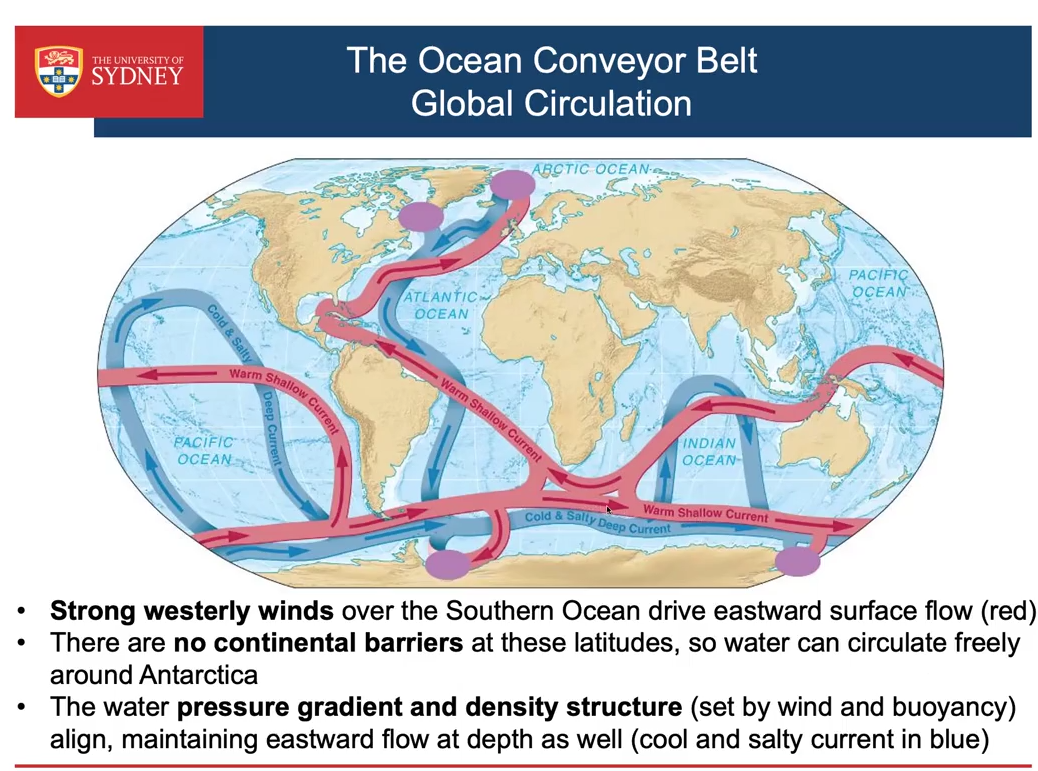
Strong westerly winds over the southern ocean drive eastward surface flow
ACC gives insight into the arrangement of continets and ocean basins → long term oceanic circulation, global sea levels and climate change
ACC is important for our understanding of how, why and to what degree our earths climate changed in the deep geologic past and how this compares with future change
Lecture 10 - Plate Tectonics: Tectonic features of ocean basins
Volcanism → plate tectonics
Crations very old → millions of years old
500 Ma - Gondwanaland
1000 Ma - Rodina
First person to relies open and closing of ocean basins → Tuso Wilson
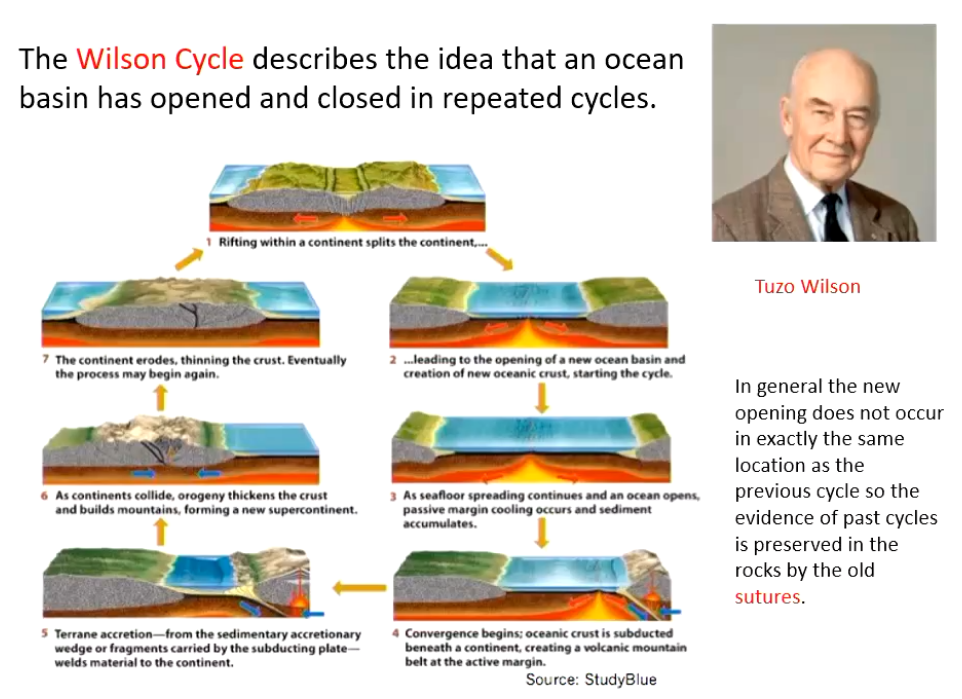
ocean basins have opened and closed
geological evidence → suture zones, ophiolites, Mountain belts (orogens)
Ocean basin evidence → seafloor spreading & magnetic stripes, Passive margins, Active margins & trenches
Tectonic process evidence → Subduction zones & volcanic arcs, deep subduction zone earthquakes
Early - stage evidence → continental rifting (e.g East Africa)
plate Boundaries → convergent, divergent and transform
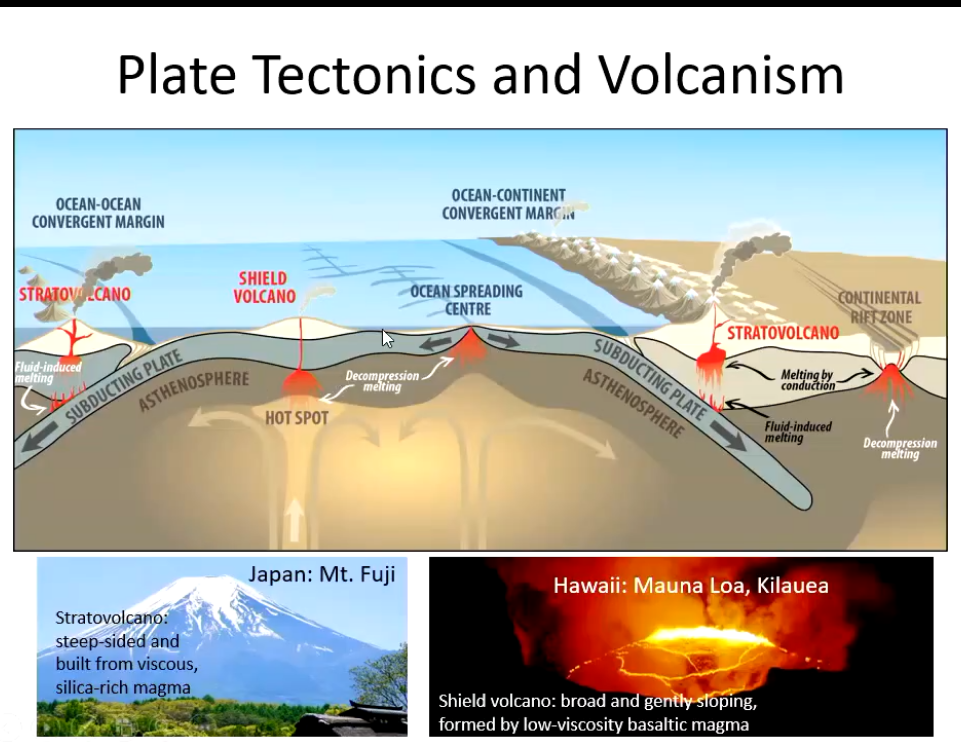
Mid ocean ridges → plates pull apart; decompression melting. produces basaltic magma (low viscosity) effusive eruptions. Pillow lava.
Subduction zones → Slab releases water and flux melting in mantle. → produces andesitic dacitic magma (silica rich), explosive eruptions, forms volcanic arcs
Magma Plumes →
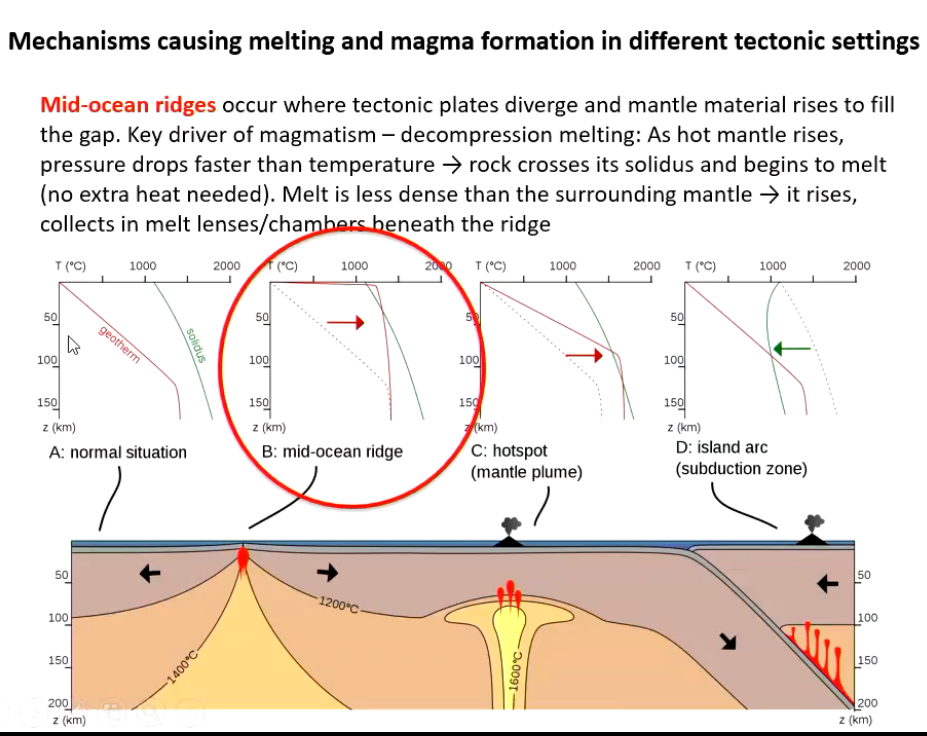
Continetial breakup - East Africa
deep sea mantle plume