con bio final
Biome Crisis:
21.8% of all Earth’s land area has been converted to human use
habitat conversion exceeds habitat protection by 10:1 in >140 ecoregions
grassland, shrubland, and savannas exhibit the greatest disparity between rates of habitat lost to protected area
Biological Responses to Habitat Fragmentation
Initial Exclusion – loss of species given remaining fragments represent only a sample of the original habitats
Isolation – Modified landscape restricts movement & dispersal
Island-Area Effects – Fragments include fewer habitats with smaller populations more susceptible to local extinction events
Edge Effects – Climatic influence and environmental degradation results in increased predation and competitors, reduced area of suitable core habitat
Critical Concept: Edge
Ecotone- natural transition zone between vegetation types.
important features that contributes to structuring landscape patterns
fragmentation introduces “artificial” edges and disrupts ecotones.
Impacts to patch:
temperature
light
humidity
wind
predation
exotic species
parasitism
disease
Types of Fragmentation
Perforation
dissection
fragmentation
shrinkage
attrition
all fragmentation is NOT equal
Perforation- creation of non-habitat within a matrix of continuous habitat

Dissection- linear segmentation of habitat matrix

Fragmentation- breakup of habitat matrix into multiple patches of unequal size
sometimes may result in “habitat shredding” effect

Shrinkage- reduction in size of the remaining patches in a landscape

Attrition- elimination of remaining patches in a fragmented landscape

Designing Reserves
SLOSS debate
single large or several small
Oversimplifies available choices
Depends on how much land you are trying to optimize (e.g. 10,000 acres vs. 100,000 acres)
Advantages of large reserves:
Contiguous areas- preserve intact communities of interdependent species
Contiguous areas- maintain viable populations of species that require large areas (e.g. large vertebrates)
Advantages of small reserves:
may preserve a broader range of species
protect small species with limited spatial needs
habitat refugia (e.g. urban areas, migratory birds)
SLOSS debate viewed as bifurcation in opinion. those advocating single large reserves classified as preservationists and those advocating several small reserves as conservations
reserve networks as middle ground where there is an intermixing of large and small reserves
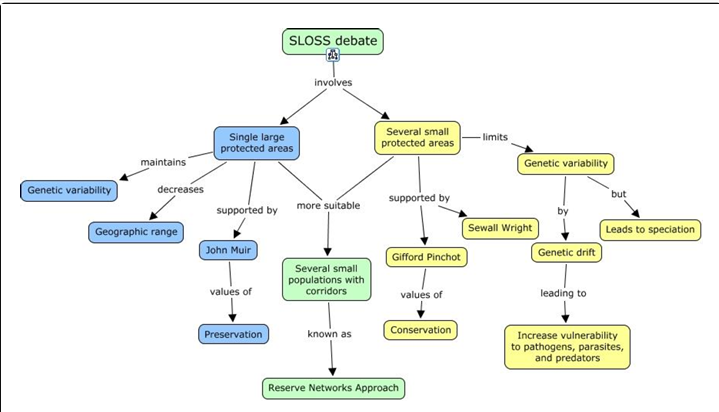
Influence of Island Biogeography Theory
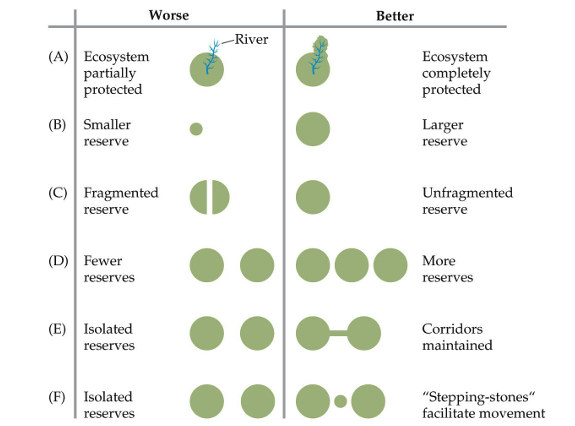
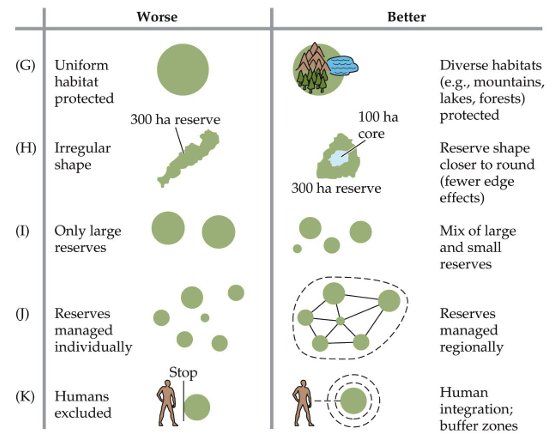
Non-equilibrium paradigm lessons for reserve design:
conservation units are not viable as isolated reserves
reserves will not maintain themselves in a stable and balanced configuration
reserves incur continuous human and natural disturbances, likely change as a result
Goals of reserves:
retain diversity of biological elements (ecosystem, biodiversity, umbrella species) and ecological processes inherent in nature that would otherwise be lost through continued habitat degradation
protect species or groups of species of interest, of consumptive or non-consumptive importance
these goals are not mutually exclusive. the more they’re integrated, the more that a particular site will function as a true reserve
ideally, reserve size should account for Minimum Dynamic Area (MDA)
Based on patch dynamics theory, MDA represents smallest area that can accommodate a complete natural disturbance regime
area maintains internal colonization sources and minimum extinction by maintaining a complete mosaic of patches at any given time
MDA requirements
Determination of Minimum Dynamic Area requires extensive empirical knowledge of site
MDA should be larger than the largest patch that can accommodate even rare and extreme disturbances
Small Reserves
small reserves may be vulnerable to disturbance
however, it does NOT mean small reserves are undesirable or have no conservation value
Small reserves of value to small species (insects and plants) that benefit from patchy spatial distribution
Viability of small reserves can be improved by:
buffer zones
adequate and usable corridors
replication of habitat areas (i.e. several similar small units)
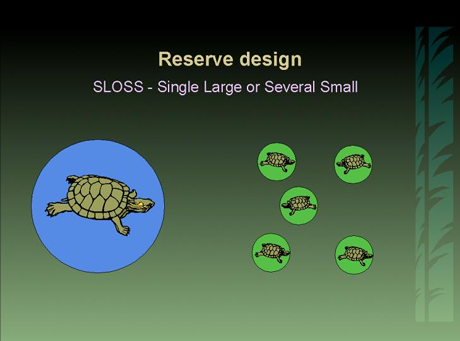
Landscape Context and Reserve Design
What constitutes the surrounding non-reserve matrix?
industrial, residential, agricultural?
has consequences to conservation effectiveness of reserves
Reserve edge
administrative boundary based on political, not ecological considerations
false edge= more protection within reserve than outside
biotic vs. legal boundaries
Area-perimeter ratio. as A:P decreases:
increased edge effect, fewer interior, undisturbed habitats
increased need for management, more cost
Buffers
influence land-use plans around reserve
human intervention
direct and indirect
legal and illegal
Landscape context is an important consideration in the design of reserves
May influence specific reserve functions within surrounding non-reserve landscape
can have positive and negative consequences for reserves
mixture of threats determining I/E rates and protection of interior habitat
ecological and administrative or “legal” boundary of reserve can be different in size and location
may maximize transitional aspects of reserve boundaries
Generated edge- false boundary product of greater protection within the reserve and lesser protection outside
Generated Edge may develop at some distance from the legal boundary
if deep in the reserve, may reduce the effective size of the reserve
biotic boundaries of a reserve may commonly extend beyond the legal boundaries
In 7 of the 8 largest reserves of the western US, biotic boundaries exceed legal boundaries by factors of 1-10 times for MVPS (50 years) of large carnivores
Area/perimeter ratio of reserves important when considering boundaries
Low A:P ratio indicates small amount of interior habitat. Large ratio indicates considerable amount of interior habitat exists well removed from edge influences
Low A:P ratio implies additional costs required if small tracts of interior habitat is to be retained
if interior species are a conservation concern
High A:P ratio reserves are better but may lose interior habitat if disturbances promote increase in edge
Buffer zones can alleviate edge processes and benefit biodiversity content of reserves
buffer zones often incorporate consumptive uses
human activities need to be considered in analysis of reserve context
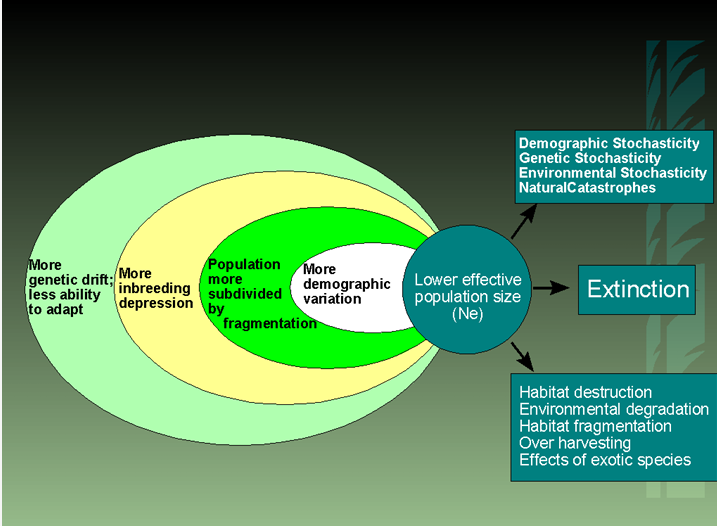
Minimum Viable Population (MVP): minimum number of individuals required for a population to have a 99% probability of persisting for 100 years.
Major factors influencing MVP include:
demographic
genetic
environmental stochasticity
Ways to estimate MVP size:
experimental (rarely done)
biogeographic patterns (e.g. percent of range occupied)
theoretical models (applicability)
simulation models (lack generality)
genetic considerations (can be overly simplistic), need to know heterozygosity and breeding (Ne) structure)
Population Viability Analysis: Quantitative approach to forecast extinction risks and compare alternative management options
MVP highlights threshold levels that may ensure population persistence over a given interval of time. Thresholds being critical populations factors below which, inbreeding and loss of genetic variation become intractable problem for continued survival
Distinguishes between deterministic extinction and stochastic extinction
Deterministic extinction is based on a single set of assumptions
Stochastic extinction is based on random elements
Four Types of variation that contribute independently to extinction:
Population Stochasticity-chance events in survival and reproduction
Genetic Stochasticity-fluctuations in gene frequencies due to influence of factors such as founder effect and inbreeding depression
Environmental Stochasticity-random variation in habitat conditions and population levels of predators, pathogens, parasites, and competitors
Natural Catastrophes-random events in the physical environment (earthquake, hurricane, volcanic eruption, etc)
Variation types 1 and 2 may become particularly significant as a population becomes gradually smaller in size
Nodes, Networks and Multiple Use Modules
isolated protected areas rarely reflect regional biodiversity
regional reserve system often critical for biodiversity conservation
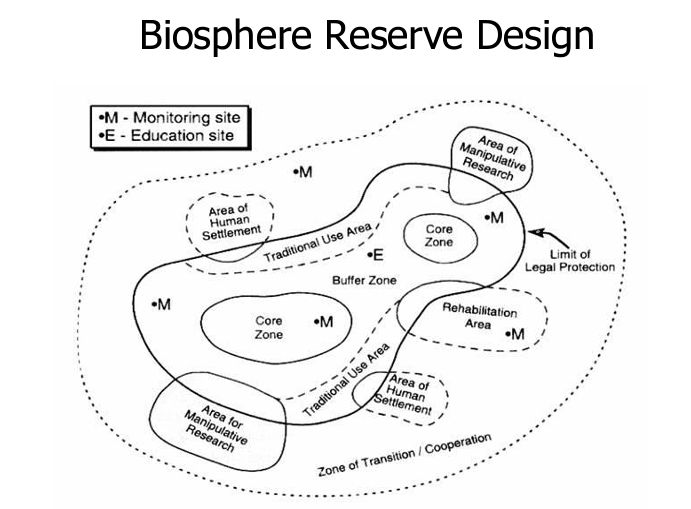
Node: high conservation value, many endemic species, critical resources including indigenous knowledge
Networks: nodes connected by corridors of suitable habitat
MUMs: multiple-use-modules-formed core areas surrounded by buffer zones of increasingly heavy use
core areas are off limits to any use beyond that of indigenous peoples
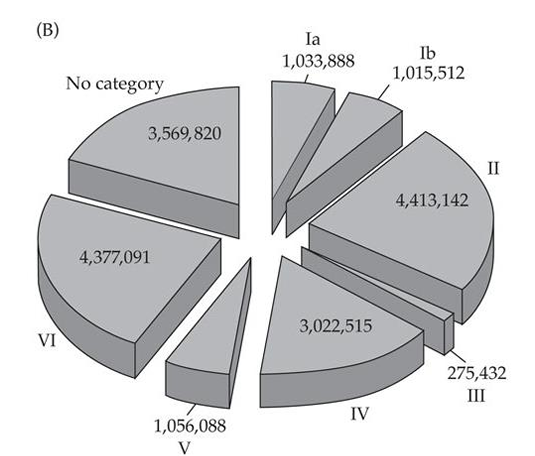
IUCN Protected Area Categories
Ia- Natural reserves for scientific research
Ib- Wilderness areas
Il- National parks
Ill- Natural monuments
IV- habitat/species management areas
V- protected landscapes/seascapes (conservation and recreation)
VI- managed resource protected areas
types:
environmental
remnant
introduced
disturbance
regenerated
functions
habitat
conduit
sink
source
filter/barrier
READ: Corridors restore animal-mediated pollination in fragmented tropical forest landscapes
experimental approach tested corridor effects on hummingbird (and pollen) movements. Sites consisted of forest patches surrounded by pasture and a living fencerow
a central artificial “flower” treated with pollen analogue (fluorescent dye) encircled by three ‘pollen receiver’ flowers placed at equal distances (range 40-120 m)
‘pollen receivers’ differed in type of intervening land cover to ‘pollen donor’: forest, corridor or pasture
animal-mediated pollination required for >94% tropical plant species, 75% of major global food crops
field experiment demonstrated corridors boosted forest-associated pollinator availability (hummingbirds)
corridors increased visitation frequency by forest hummingbirds, no difference for generalists
Aims and Objectives of Reintroductions
Aims
establish viable populations in the wild of species, subspecies or race which has become either locally extinct, or extirpated
organisms should be reintroduced within natural habitat and native range and require minimal long-term management
Objectives
Enhance long-term survival of a species
Re-establish a keystone species (ecological and cultural sense)
Maintain and/or restore natural biodiversity
provide long-term economic benefits to the local and/or nation economy
promote conservation awareness
IUCN Translocation Categories
1. Reintroduction: reestablishment of a species to portions of its range where extirpated or locally extinct
2. Re-enforcement/supplementation: adding individuals to an existing population
3. Conservation/Benign Introduction: establish species outside their known geographic range for conservation purposes only, but within appropriate habitat and ecogeographical area
Category #3 is a feasible conservation tool only when no remaining area left within a species’ historic range
Reasons for Translocation
Make use of individuals who would otherwise be lost
restore community or ecosystem processes or increase populations in protected habitats
Develop new approaches and techniques
Genetics aspects of translocation broadly divided into:
a. aspects associated with composition of source population (e.g. heterozygosity)
b. problems may emerge if introduced individuals interbreed with conspecific residents (e.g. outbreeding depression)
Final Thoughts-
Importance of Partnerships
Current global trends aimed at decentralizing reserve design
works best when mutual interests and mutual benefits coincide
if effective, it broadens “ownerships” and promotes conservation effectiveness
not necessarily a means to an end, but a process to better outcomes
USFWS Migratory Bird Joint Ventures is a very good example of these partnerships.
collaborative, regional partnerships
government agencies, NGOs, private corporations, tribes, and individuals
conserve habitat for benefit of priority bird species, other wildlife, and people
LMV-JV partnership as example of regional conservation planning efforts.
Uses available data to prioritize areas in the MAV for conservation delivery.
Mini-partnerships within prioritized areas called Conservation Delivery Networks.
Delivery networks consist of local entities that work together to implement conservation.
Importance of Monitoring
Benefits:
builds and maintains support for protected areas
helps refine management strategies
way to optimize needs
can help lead to informed choices
Northern Gulf of Mexico waterbird monitoring program established following Deep Water Horizon oil spill
Frequently, there can be resistance from partners to provide funding for monitoring conservation activities
improves adaptive management options and outcomes of conservation design
Importance of Local Communities
Local communities should be fully involved in the reserve process.
planning and management
needs of community need to be assessed and incorporated
coordination and support of traditional/sustainable land use
retaining subsistence activities should be assured and encouraged
Employing and training staff recruited from local communities often improves reserve effectiveness
nature guides
anti-poaching patrols (timber, wildlife)
support staff (maintenance, cooking)
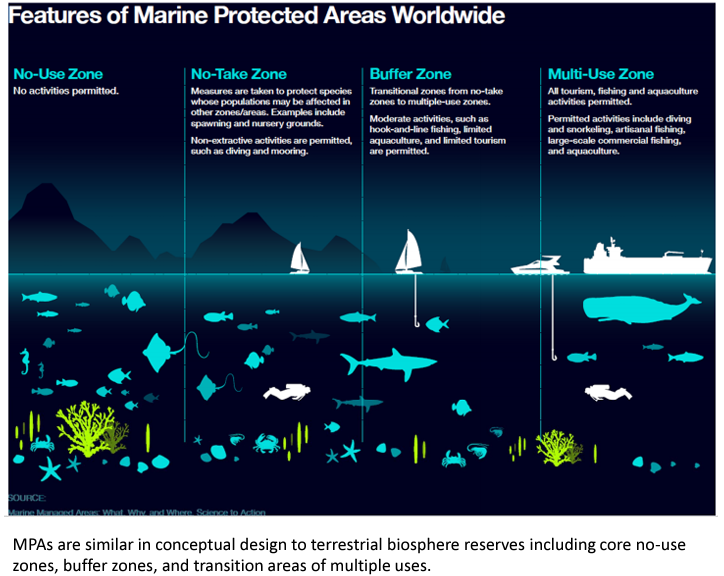
Benefits and Challenges of Marine Protected Areas
Overall effect of 12 MPAs around the world evaluated
Overall abundance of fish inside marine reserves up to 3.7 times greater
Interest in MPAs continues, efforts focusing on strategically designing MPAs
Challenges of Marine Protected Areas
Limited understanding of population and community dynamics of species targeted by MPA
Greater diversity of trophic levels
Very large scale of connectivity (open systems)
Haphazard design and implementation
Limited to no enforcement
Monitoring/evaluation costly and logistically challenging
Jurisdictional uncertainty/governance challenges
Poorly-defined rights/use limitations
Direct exploitation (Law of the Sea “innocent passage”)
Disproportionate global scope (1.2% of world’s ocean surface)