Biological Molecules
Macromolecules
giant molecules formed of thousands of atoms.
Carbohydrates
The most abundant group of organic compounds in earth.
Sugars, starches, and cellulose are carbohydrates
Cellulose= main structural component of the walls that surround the plant cells
Monosaccharides
Simple sugars
Contain from 3 to 7 carbon atoms
Aldehyde: carbonyl group at the end of the chain
Ketone: carbonyl group at any other position.
Glucose : The most abundant monosaccharides.
B-glucose is when the hydroxyl is one the same side as the CH2OH
A-glucose is when the -OH is on the opposite plane/site.
Disachardies
Sugars the have 2 monosaccharides.
Can be hydrolyzed
Polysaccharides
Macromolecule consisting of repeating units of simple sugars.
The most abundant carbohydrates
•Includes:
1.Starches
2.Glycogen
3.Cellulose
Polysaccharides: Starch
Used for energy storage in plants.
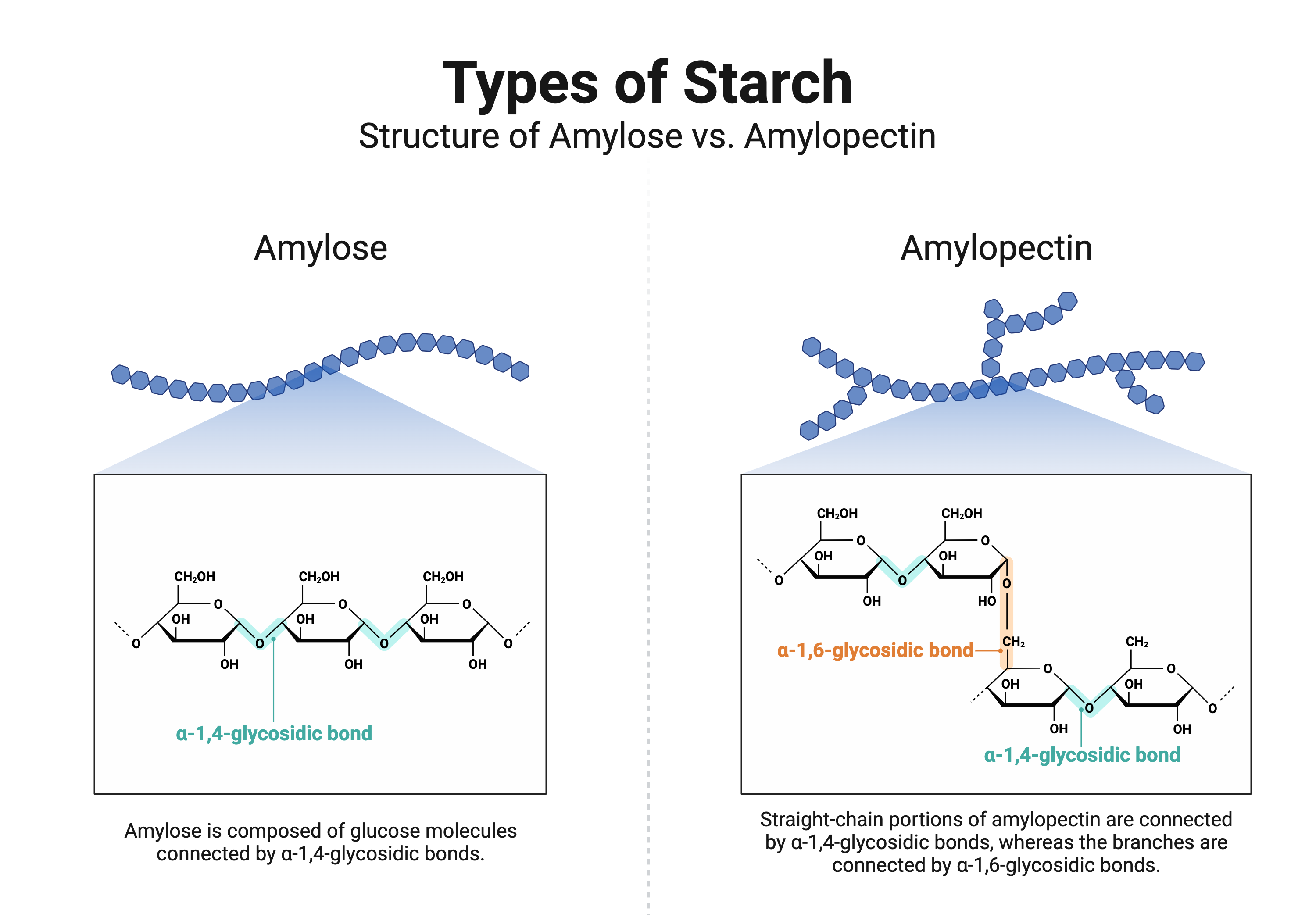
Polymer consisting of alpha-glucose subunits
Occurs in two forms:
1.Amylose: simpler form. Unbranched , where plants cells store starch as granules.
2.Amylopectin: common form. 1000 glucose units in branched chain.
Polysaccharides: Glycogen
Referred to as animal starch
•The form in which glucose subunits are stored as an energy source in animal tissues.
•Similar in structure to plant starch, but more water-soluble.
•Glycogen is stored mainly in
1.Liver
2.Muscle cells
Polysaccharides: Cellulose
The most abundant carbohydrate.
•Account for 50% or more of all the carbon in plants.
•Structural carbohydrate- Un-branched.
•Insoluble polysaccharide
Polysaccharides: Cellulose
•Wood: 50% cellulose
•Cotton: 90% cellulose
•Plant cell walls: consist mainly of cellulose
Glycoproteins
combination of carbohydrates and proteins