Stimulating Beverages
Introduction
- Caffeine (AKA 1,3,7-trimethylxantheine) is an alkaloid
- Alkaloid: a Nitrogen-containing compound of plant origin
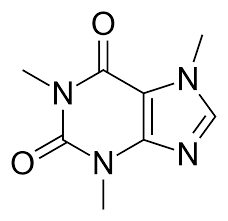
- 100-200 mg of caffeine can increase alertness, decrease drowsiness, and improve thinking
- 250-700 mg of caffeine can cause anxiety, increase blood pressure, cause insomnia, and nervousness
- In plants caffeine functions as an insecticide
History of Caffeine
- Humans have consumed caffeine since the Stone Age
- Chewing seeds, bark, or leaves of certain plants eased fatigue
- Effects were increased by soaking such plants in hot water
- In 1819, a German Chemist isolated relatively pure caffeine for the 1st time
- The chemical structure was determined in the late 19th century
Coffee (Coffea Arabica)
- Coffea (or coffee) is a large genus with more than 90 species.
- A member of the family Rubiaceae
- It grows as a shrub with dark green leaves, clusters of small white, fragrant flowers, and small, rounded berries that turn yellow, red, or purple when they ripen.
- Native to Ethiopia
- Large-scale cultivation occurs in countries such as the Ivory Coast, Kenya, Brazil, Columbia, Mexico, and Indonesia
- Most berries contain 2 seeds
- Peaberries are the exception and have 1 seed
- Grown in tropical and subtropical climates
- 60-100 inches of rainfall per year
- Cannot tolerate frost
- Begin to bear fruit at 3-5 years
- Berries are picked by hand, or machines shaking the trees
- After picking the berries need to be “depulped”
- Wet Method (South America): the fruit is floated in large tanks to remove debris and then are mechanically depulped.
- Dry Method (Africa): the fruit is allowed to dry in the open for several days while the pulp ferments.
- The seeds (AKA beans) are dried and roasted
- the flavor of the coffee depends on the temperature and timing roast
- Under a general rule, the darker the roast the less sweet and more strong the coffee
Global Industry
- Glocal harvest of coffee is approximately $10 million tons per year
- The top five countries for coffee production: Brazil, Vietnam, Columbia, Indonesia, and Ethiopia
Let’s Talk Money
- The coffee industry brings in $10 billion a year
- 25 million farmers grow coffee
- Farmers usually get 25-50 cents per pound
- Fair-Trade Farmers get at least $1.26 per pound
Tea (Camellia Sinensis)
- Leaves are dried to make a beverage
- Native to adjoining areas of China, India, Tibet, and Burma
- China and India are by far the largest producers of tea in the world
- Grown as a tree that can get up to 30 feet tall but is pruned to be a shrub about 3 feet tall
- Only the 2 leaves and a tip are picked at a time
- Picking promotes regrowth, so the plant can be harvested every week
History
- Used in the Far East for thousands of years
- Brought to Eastern Europe in the 1400s and Western Europe in the 1650s
- Arrived in the New World in the 1650s and became a popular drink for colonists
- Boston Tea Party in 1773
How do you take your tea?
- There are no calories in tea unless you add sugar
- The British are still big on tea
- 165 Million cups of tea are drunk in Britain each day
- Usually hot black tea, with a little milk
- Americans usually drink iced tea
- Herbal teas are also more popular in the U.S.
- These are NOT C.sinensis
Processing
- After harvesting, the way the leaves are dried determines the color and taste of the tee
Black Tea
- Black tea: the leaves are dried on racks with hot air, the leaves wither and are rolled, these are left to ferment for a few hours, and then dried
Green Tea
- Green tea: the leaves are not withered but are steamed and then dried directly to stay green
White Tea
- White Tea: the leaves harvested are of a particular variety that has tiny white hairs (trichomes), not steamed or withered.
Alkaloid Content
- Tea contains caffeine, but not as much as coffee contains
- Tea also contains another alkaloid known as theophylline
- Theophylline: relaxes muscles and has been used to treat asthma
- Other components may have health benefits
- Anti-oxidants in green teas may help protect against certain types of cancer
Chocolate (Theobroma cacao)
- Native to Tropical Central and South America
- It is the seed that is used to make chocolate
- The seed is called the cocoa bean
History
- Theobroma: the “food of the gods”
- Used for centuries in Central America, mixed with chili (like the Mexican mole)
- Taken to Spain in 1528, they added sugar instead of chili to make the drink more palatable
The Plant
- A small tree that grows in the understory of a tropical rainforest
- Requires a wet and warm climate
- Grown extensively in Central America, Venezuela, Columbia, Brazil, and West Africa
- The Ivory Coast in West Africa provides 30% of the cocoa of the world
Harvest
- The tree bears football-size pods which take 4-6 weeks to mature
- The pods are cut down by the tree by hand
- Inside each pod, they are 20-40 ivory-colored seeds (beans) surrounded by a sticky pulp
- Seeds are removed and allowed to ferment for up to a week
- The beans turn brown and are then dried
Processing
- The beans are roasted for 20-50 mins at around 120 C
- Seeds are then cracked releasing the cocoa nibs
- the nibs are the cotyledons
- Nibs are milled to produce chocolate liquor (brown oil)
- The chocolate liquor is pressed to extract cocoa “butter” which is used to make chocolate
- The remaining “presscake” is used to make chocolate powder
Chocolate Recipe
- chocolate liquor
- sugar
- cocoa butter
- vanilla
- milk
Exploitation
- A lot of child labor is used in cocoa plantations in West Africa
- UNICEF estimates that 200,000 children are removed from their families and used as slaves
Coca-Cola
- Coca-cola was created in 1886
- Made from the extracts of coca leaves and powdered Kola seeds
Coca
- Coca is the tree from which cocaine comes from
- Since 1903 cocaine has been removed from the extract used in Coca-cola
Cola
- Kola tree: (Cola nitida)
- Native to West Africa
- 8 seeds per pod
- Very high caffeine content