Art
Fundamentals - Section 1
Goals: understand original contexts of work
Vocab
aesthetics: philosophical inquiry of nature and expression of beauty
art criticism: explanation of current art events to public via press
baroque: artworks produced late 16th - mid-18th centuries
chiaroscuro: dramatic contrasts of light and dark
draftsman: technical/blue print maker
frescoes: painting done in watercolor on a wall or ceiling
patronage: viewer access to work
static: unchanging, steady
Development of Art History:
fine art —> modern
Analysis
Formal Analysis:
Visual aspects; expectation of intentional choices from artist
Contextual Analysis:
Cultural, economic, social, and religious (broad) contexts
Patronage, location, cost, subject, order (time)…
Sources
Reproductions:
allow for direct examination (touching, close up) w/o fear of damage or loss
Documentation or Archived texts
Oral
interviews between artists and viewers
rose as an academic discipline ~18th century
Commentary over time
Pliny the Elder (23-79 CE, Rome, historian)
Natural History: analyze historical and contemporary art
Giorgio Vasari (1511-74, Renaissance)
The Lives of Artists: collection of biographies of great Italian artists
Changing roles of artists; development of artistic genius
Johann Joachim Winckelmann (1717-68, German)
Enlightenment philosophy; shift from rigor to context
Modern
More inclusive
Western World
emphasized places of art study is often because the certain area has better preserved art (ex. west)
Ancient Civilizations
Old Stone Age (Upper Paleolithic Period)
Chauvet Cave
Composition: primarily black and red outlines of animals; hunting ceremonies/rituals
Southeast France, 30,000 BCE
Venus (Woman) of Willendorf
Composition: famous example small stone female figures
Fertility figures; exaggerated bellies and undefined face and limbs
Middle Stone Age (Mesolithic Period)
Shift from cave-dwelling to rock shelters
cause: warming climate
Composition: introduced inclusion of human figures; animal figures; humans dominating animals
7000 - 4000 BCE
New Stone Age (Neolithic Period)
Composition: rings of rough-hewn stones
Western Europe, 4000 BCE
megalithic: refers to the large size of the stones used
Stonehenge
Salisbury Plain in Wiltshire, England
heel-stone: at the center; marks the point the sun rises on the midsummer solstice
Composition: rings of indigenous blue stones and sandstone
Ancient Mesopotamia
Trouble: lacked natural protection (from invasions) = destruction; used perishable materials
South
Sumerians:
Composition: Religion (temples, sculptures); 4000 BCE; impressive
Ziggurats: stepped pyramids
Akkadian dynasty (2334 BCE):
cities of Sumers replaced —> art that emphasized monarchs
(2150 BCE): Neo-Sumerian rule back
Babylonians:
seperate city-states —> centralization; legacy + rules
Code of Hammurabi: stone stele
Assyrians:
most powerful in Near East (900-600 BCE)
relief drawings: battles, hunts
Neo-Babylonian:
Monuments: hanging gardens; Ishtar Gate, ziggurat of the temple of Bel
600-500 BCE
Persian Empire
540-330 BCE
Monuments: Persepolis (reflects Egyptian influence, made of stone, brick, and wood
Ancient Egypt
3000-330 BCE
Monuments: Sphinx, great pyramids of Giza, life-sized statues of pharaohs, portrait of head of Queen Neferiti
Composition:
Hierarchical Scale: used sizes to depict different statuses
Palette of King Narmer: large king + smaller, defeated enemies
fractional representation: each part of figure is shown as clearly as possible; typical Egyptian art style for people
Preservation: excellent
Mummification, entombment,
tomb of boy king Tut
Nubia Kingdom
Africa, South of Egypt
Greek and Roman
Cycladic, Minoan, and Mycenaean Art
precursors of Greeks
3200-2000 BCE
Cycladic: simplified, geometric figures + decorated pottery; Aegean islands
Minoan: city in Crete (Knossos); legend of Minotaur; naturalist pictures, frescoes and pottery (supplanted Cycladic culture); flexible and organic palaces
Mycenaean culture: elaborate burials/tombs = preserved; high level gold-smithing; relief sculptures; theorized to have ended the Minoans
Ancient Greek
Archaic Period
660-450 BCE
Influence: Egyptian and Mesopotamian stone sculptures
Composition: More dynamic/realistic figures made of marble and limestone; Temples; Vases; red figures on black background
Doric and Ionic decorative styles: temples
Corinthian styles: vases painted with figures
Athenian style: vases with black figures
Classical Period (Athens)
Doric temple columns: strength, simplicity
Contrapposto: posing sculpture
Influenced: western art
Middle Classical: architecture (ex. Pantheon)
Hellenstic: Eastern/Asian influences
Etruscan
Transition: Greek to Roman
Clay, brick, and wood
Rome
Innovations: concrete; curved arch;
Works: the Colosseum; Pantheon
Composition: sculptures of victories; funerals; idealistic depictions
Byzantine and Medieval Art
Composition: Mosaic; Christian; Metalwork (German); Wooden ships (Vikings); barrel vault (tunnel arches for churches’ ceilings); aesthetic based; Gothic (ribbed vaults; flying buttress which added extra ribs to arches)
Conditions: civil strife, illiteracy, poverty
Works: Hagia Sophia (530 CE; one of the greatest architectures); Book of Kells & Coronation Gospels (manuscripts); Saint-Sernin (Romanesque church); Chartres Cathedral (Gothic, France)
Renaissance in Southern Europe
Transition:
Figure: Giotto Di Bondone (1270-1340) known for frescoes and started use of perspective
Changes:
Patronage (wealthy sponsor artists)
Greek and Roman reference
Great artists status ^^
Artists:
Lorenzo Ghiberti (1380-1460)
Designed: door panel with Greek reference
Works: “Gates of Paradise” in cathedral
Filippo Brunelleschi (1380-1450)
Work: dome of cathedral in Florence
Innovations: double-shelled dome design; linear (single) vanishing point perspective
Masaccio (1400-28)
Composition: Linear and Aerial perspective
Donatello (1390-1470)
Significance: founder of modern sculpture
Works: David
Composition: naturalism; expression/dramatics
Botticelli (1440-1510)
Works: The Birth of Venus (painting of female beauty)
//High Renaissance
Leonardo da Vinci (1450-1520)
Innovations: locks for canals; machine models
Works: The Last Supper; Mona Lisa
Composition: sfumato (blended)
Michelangelo (1480-1560)
Works: David (huge sculpture); Moses, the Dying Slave, the Bound Slave (for Pope Julius 2nd tomb; cancelled); Sistine Chapel Ceiling (Pope Julius 2nd)
Raphael Sanzio (1480-1520)
Works: School of Athens (frescoes, homage to philosophers and scientists); Sistine Madonna (painting of Virgin Mary)
Giorgione (1480-1510)
Innovation: landscapes
Works: The Tempest
Titan Vecelli (1490-1580)
Composition: portraits of patrons; Venetian
Innovations: utilized backgrounds in portraits
Tintoretto (1520-90)
Composition: Venetian; Mannerism (distortion of perspective, scale, or color); chiaroscuro (dramatic contrasts of light and dark)
Events
Reformation: Protestant call for purification of Catholic Church
result: lessened religious imagery
Counter-Reformation: Church reaction
result: lavish religious imagery
El Greco: artist influenced by Tintoretto
Renaissance in North
Specializations/Differences:
Realism: oil painting; Italian influence > roman; engravings
Artists:
Matthias Grunewald (1480-1530)
Composition: religious depictions
Works: Isenheim Altarpiece, panels
Albrecht Durer (Reformation Germany)
Composition: naturalistic detail + Italian style, copper engravings and woodcuts
Works: written theories of art; The Four Horsemen of the Apocalypse, engraving
Hans Holbein Younger (1500-1540)
Composition: portraits, known more in England
Works: portrait of King Henry VIII
General Renaissance
Social: war between cities
Composition: simplistic, calm, static
Baroque Art
Composition: movement and energy; appeal to emotion and church (Counter-Reformation); rich colors and ornamental, dramatic; chiaroscuro; arouse emotions
Social: conflicts between empires; Church spread/conversions; ruling class via divine right —> class gap/ monopolization of wealth; patronage for artists
Artists:
Caravaggio (1570-1610)
Composition: caravaggesque: dramatic use of light and dark; provocative naturalism
Works: Virgin Mary and apostles portrayal as poor rather than noble folks (controversial)
Artemisia Gentileschi (1590-1650)
Composition: Caravaggio’s techniques
Works: self-portraits and Old Testament women
Gianlorenzo Bernini (1600-1680)
Significance: child prodigy; Pope acknowledgement
Work: Ecstasy of Saint Teresa, unique stained-glass window, detailed and flow-like sculpture
Peter Paul Rubens (1580-1640)
Works: workshop producing works that were models for artists
Rembrandt van Rijin (1610-70)
Composition: painter, print maker, draftsman; broke traditions (ex. equal emphasis on each person in paintings)
Works: The Night Watch / Sortie of Captain Banning Cocq’s Company of the Civic Guard
Versailles
pg 23
Rococo, Neoclassicism, and Romanticism
Rococo
celebration of happiness, romance, and frivolity. excellence and wit
light-hearted, gold and pastels
Jean-Antoine Watteau (1680-1720)
innovator of fete galante: painting style of elegant nobility leisurely in countryside
Francois Boucher
influenced by Watteau
classical myths w/ galante
fav painter of Madame Pompadour (Louis XV mistress)
Neoclassicism
bringing back democratic ideals, reviving classical Greece and Rome + Enlightenment philosophy
sharp outlines, unemotional, geometric
challenger to Rococo/aristocratic style
Jacques Louis David: earlier revolutionary ideals, then propagandist for Napoleon Bonaparte
Oath of Horatti: illustrated republican values
Romanticism
Eugène Delacroix
imaginative, dreamlike, Baroque
exotic, foreign themes
Realism and Impressionism
Realism
reaction to Neoclassicism and Romanticism
All features
Gustave Courbet, the Stonebreakers
Impressionism
from dissatisfcation with rigid rules
Monet, Picasso, Manet
Post-Impressionism (late 19th century developments)
Post-Impressionism
search for new colors, new application styles
Cubism, different perspectives
Paul Cézanne, Georges Seurat, Van Gogh, Paul Gauguin
innovation: camera, chemically made paints (may paint outside), global exploration
Pre-Raphaelites —> Art Noveau
England group dissatisfied with Indistrual Revolution, bringing back pre-Renaissance art (romantic, moralistic, archaic)
flowy-styles of decoration and architecture
Emergence of Modernism (20th century) . unnatural styles
arbitrary color - unnatural colors chosen more for emotion, symbolism, or aesthetic than realistic representations
fauves: “wild beasts’, revolutionary French art style using indivdualisitc, simplistif, Post-Impressionist styles rejecting Impressionism
Henri Matisse
Cubism
breaking up figures into multiple overlapping aesthetics, shows different perspectives of people/human experience
Picasso, Braque
Die Brucke —> Expressionism
German group, combine intense Fauvist colors with intense Norweigean emotions
+ Der Blaue Reiter, russian group —> total abstraction
De Stijl: dutch artist canvases of flat fields of primary color (modern art staple)
The Armory Show
Bauhaus
Surrealism
Abstraction
WW2 art standstill
Harold Rosenberg and Clement Greenberg: NY critics
Abstract Expressionist: free from pictorial influences
Action Painting: dramatic brush strokes
Color Field Paintings: broad areas of simple, geometric forms
Naturalism
response to abstract expressionism, depiction of ordinary objects
set up for Pop Art
Pop Art, Minimalism, Photo-realism
Pop Art (1960s)
images of mass culture —> broke unspoken art rules
Andy Warhol
icon, used ordinary objects that mocked art world
Roy Lichtenstein
large-scale comic books with dots
Robert Indiana
stencils, like commercials
Minimalism
reduce art to bare essentials
Acrylic paint invented —> precise lines possible
Photorealism
photo-sharp art style
Earthworks, Installations, Performance
Context: art is less traditional, not limited to museums
Earthworks
Christo and Jeanne-Claude
used landscape as a medium (ex. moving big monuments/natural materials, wrapping monuments)
Peformance Art
Geurilla Girls: wore gorilla masks and uesd guerilla-warfare tactics to put up political posters, make speeches, challenging female stereotypes
Postmodernist
reaction to modernist styles
introducing traditional elements + exaggerating modernist styles
questions morals of current society
Philip Johnson (late 20th-21st century)
changed architecture from (function = form) to more artistic
Non-Western Art
Elements of Art
Positive Space: main subject/focus
Negative Space: empty background area
Hue: name of color
Value: darkness/lightness of color
Intensity: brightness/purity of color
Local color: color more naturally found
Optical color: special lighting color
Arbitrary color
Asymmetrical balance: visual balance through unlike objects
Solvent (ex. water or oil for painting)
Glazes: thin/transparent layers applied with slightly altering colors
impasto: process of laying paint thickly
encaustic: Egyptian practice when paintings are mixed with hot wax
gouache: water-based paint but higher quality and easier
reliefs: when 3D scultptures are carved with a flat, 2D background behind it instead of standing free
post-and-lintel construction: long beam placed horizontally between vertical posts
Techniques
Stippling: shading with dots
Relief printmaking: cutting away from surface of plate, ink remaining parts
Intaglio printmaking: opposite of relief (adding engravings)
Etching: wax and varnish then acid to expose lines on plate
Lithography
drawn with waxy pencil/crayon on plate
Fresco: paint on walls or ceilings, ancient practice
Tempera: water-based paint, really skilled
American Modernism - Section 2
Vocab:
Automatism: drawing/writing w/o a plan, popular with surrealists
Focal Depth: distance of pictured objects from lense
Pictorialism: int movement to get photography to be a fine art
Romantic, dreamy style
Surrealism: juxtapositions, uncanny imagery
Overview/Styles
Events: WW1, Stock Market Crash 1929, (jazz age, roaring twenties, machine age)
Academic System
National Academy of Design: powerful, older generation
Aschan School: modernist experimentation; NY
Robert Henri: unofficial leader
“The Eight”: Henri, John Sloan, William Glackens, George Wesley Bellows, and George Benjamin Luks,Everett Shinn, Maurice Prendergast, Ernest Lawson, and Arthur B. Davies
Represented: immigrant and working class
short lived
Armory Show of 1913
Barnes Foundation
first major showing of modern art
Difference from European avant-garde movements: less aggressive and formal; more naturalism
Oragnizers: Arthur B. Davies, Walt Kuhn, and Walter Pach
Work: modern and contemporary European and American art
Cubism, Expressionism, and Futurism
Critics: “lawless art”
Support: John White Alexander (president of National Academy of Design) + inspired independent galleries and artists
Americanism style
New York Dada (how WW1 affected)
Dada: anti-war art movement beginning in Switzerland 1915, spread to NY via immigrants. from dissatisfied intellectuals and disillusionment from war
Duchamp
readymade: taking ordinary objects and making it into art through intention, not completely creating a new thing
conceptual art: idea > technique
nonsense, everyday life, randomness
Surrealism
Freud inspo
portarying inner-workings of mind
Salvador Dalí (1904–89), René Magritte (1898–1967),
and Joan Miró (1893–1983).
Alfred Stieglitz and 291 Gallery
Alfred Stieglitz: high regarded photographer and art critic
Pictorialism: global movement for photography to be a fine art
Impact: one of the first to display non-Western art, unconventional displays (neutral walls and spaces, like how galleries are now)
Bauhuas
school of design (modern)
reconciling industrial mass-manufacturing with aesthetics
Selected Works
I saw the Figure 5 in Gold, Charles Demuth (1928)
Charles Demuth:
Lancaster, PA, PA Academy of Fine Arts
I saw the Figure 5 in Gold:
“Portrait” of his close friend, poet William Carlos Williams, who’s imagism poetry style conveys clear, direct imaging (expressed in the art)
Shopping distract, advertising, sound fading away, rushing, commercial advertising art style
William’s poem The Great Figure (1921)
Geometric Abstraction: builds up using rigid lines and shapes w/o shading
Inspired by: Cubism (Georges Braque and Picasso)
Featured in: Stieglitz circle
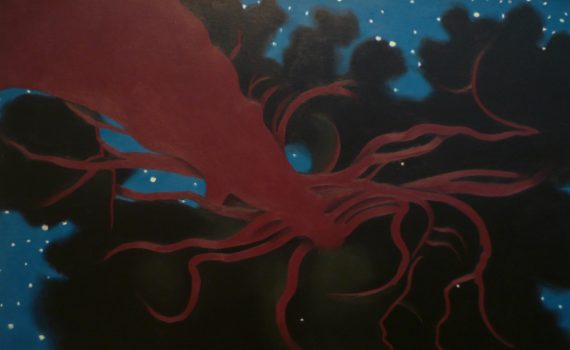
The Lawrence Tree, Georgia O’Keeffe (1929)
Keefe
Wisconsion, School of Art Chicago
Influenced by Composition/east asian art (Arthur Wesley Dow)
Influenced by On Spiritual in Art russian expressionist (Vasily Kandinsky)
known for floral imagery + geometric abstraction
settled in Taos, Pueblo
Influences/Ideas:
Biomorphic Abstraction: use natural world to reference human body
Harmony w/ music and sound
Stieglitz (married)
The Lawrence Tree:
Tree named by: British novelist D. H. Lawrence who loved to write under there
O’Keeffe enjoyed lying under it; never met but liked his writing
Rushing, invisible but constant growth (tree),challenges traditional perspective( appears to be standing on its head)
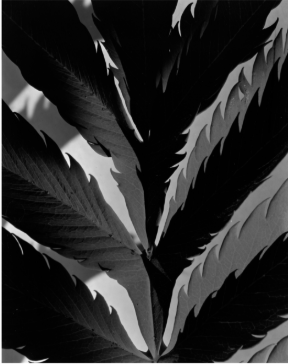
Leaf Pattern, Imogen Cunningham (before 1929)
Cunningham:
Portland, Oregon then Seattle, Washington
University of Washington
Ideas: Scientific dev of photography —> photography needed scientists and technicians; pictorialism —> plants and New Objectivity (objective recording w/o manipulation or dramatic imagery)
shifting away from dreaming photos
New Objectvitiy: Albert Renger-Patzsch and Franz Roh
Group f/64: California-based photographers that used the “f-stop” (increased sharpness and focal depth) + new objectivity style + mechanical/precision focus
Mechanical photos > artsy/painting photography
Photos w/o inclination/narrative
Leaf Pattern
Modernist: high contrast, objectivity
Focus: shapes/forms of leaf, not leaf itself
Manipulations: arranging and selection (necessary middle)
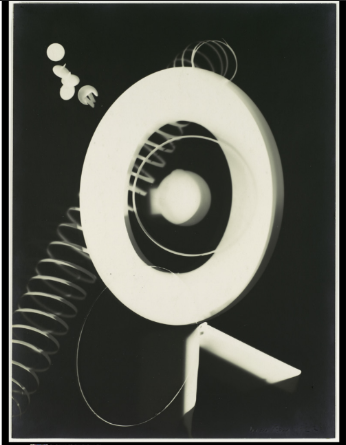
Rayograph, Man Ray (1922)
Ray:
russian jewish, learned drawing from Aschan artists (Henri and Bellows)
Traditional photography (comparative); Surrealism, specifically Automatism, Dada
Surrealism: juxtapositions, uncanny imagery
Dada focus on randomness
Automatism: drawing/writing w/o a plan, popular with surrealists
Rayographs: photos made w/o a camera/film but by exposing light-sensitive paper to bright light
famouse fort his
little detail, white shapes
White background —> Dark background; white shapes
Photogram (one of the oldest types of photography, traditional)
Inspired by: schadographs from German Dada artist Christian Schad
Rayograph
Bold shapes and juxtaposition w/o meaning
Recognizable materials: spring/thumbtacks, door hinge/hardware fitting, dart
Jazz Age City Life - Section 3
Vocab
Art Deco: style with geometric shapes, rich materials, modern sleek
Camp: over the top art/aesthetic + ironic tackiness
Sprezzatura: form of studied grace to seem natural and spontaneous
Zoning: laws that made cities more orderly (ex. buildings) and segregate industrial from residential areas (pollution)
pyramidal towered skyscrapers: modern fashion + Art Deco
Overview/Trends
Population Shift
Rural —> Urban
The Great Migration: African Americans rural South —> cities all over
Immigrants
Infrastructure/City
Progressive Era: govt intervention, specialized education up, zoning laws
Selected Works
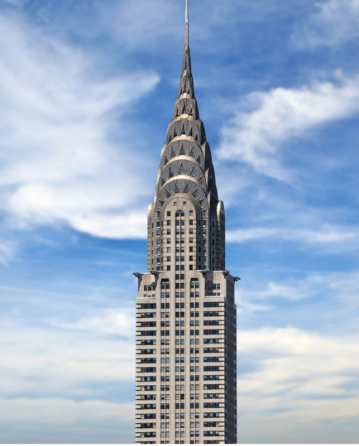
Chrysler Building, William Van Alen, (New York, NY; 1928-30)
Alen
New Yorker
Pratt Institute and Paris School of Fine Arts
greek, roman, and renaissance works
Skyscraper
Tallest building before the Empire State Building
Urbanization, United States staple
Process
late 1920 s -→ crash
historical styles —> modern
Commissioned by automotive tycoon Chrysler
advertisement for the cars; not headquarters
Art Deco, luxury
Seven arch crown feature, gargoyles, luxury materials, lightning bolts, dynamicism, progress
Inspo: luxury mobiles, Statue of Liberty (crown), Egyptians
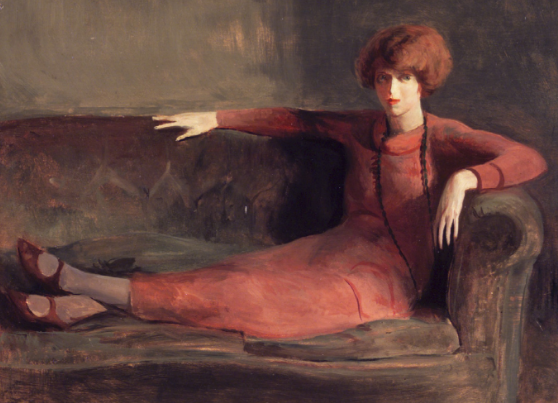
Woman on Sofa, Guy Pene du Bois (1922-27)
du Boise
NY
Influence/Ideas:
“New Women”: advanced education and public roles = independence + feminism (usually white); more free-spirited and into like public transportation and places
Gibson Girl: rich, European american women chic and into sports
Aschan artists: depict more middle class women
Flappers
Notes: confidence, intimacy, and power
Bold pose + direct gaze + flapper figure
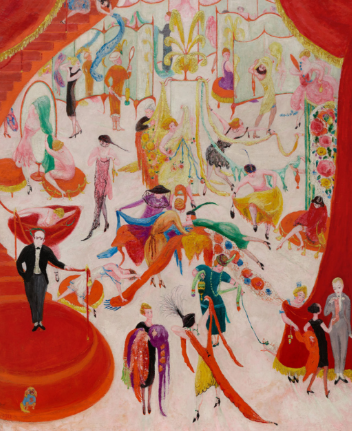
Spring Sale at Bendel’s, Florine Stettheimer (1921)
Stettheimer:
NY, little formal training
Artist style: camp; vulgar subjects (ex. ads, bands, pageants… 1920s fun); no traditional training
Context: consumer culture ^, fashion faster + widespread/inclusive
Spring Sale at Bendel’s
parody of frenzied fashion consumer culture
art history references
Persian miniature painting, flapper, Mughal prince
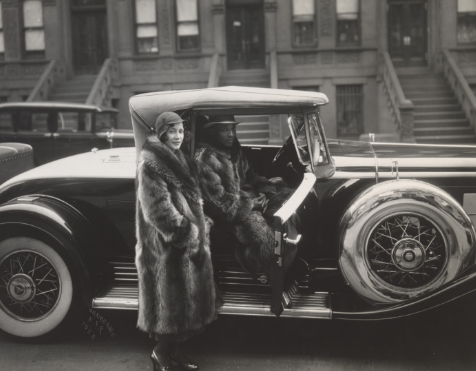
Couple, Harlem, James Van Der Zee (1932)
Zee
middle-class Black family in Massachussets then move to NY
retouched photos
Context: Great Migration, Harlem Renaissance, New Negro Movement
New Negro Movement: the new affluent, educated Black population as opposed to the older population subjected to racism and poverty
represents wealthy, relaxed black urban Americans
Notes: sprezzatura, Cadillac, fashion; retouching + flattering pictures
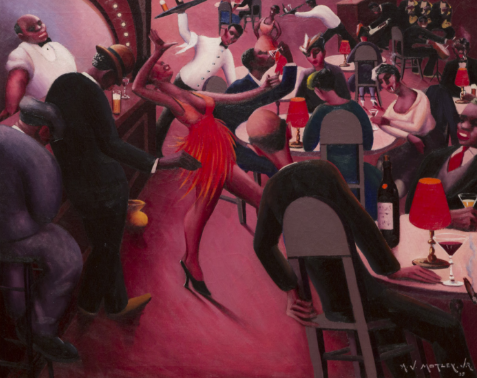
Saturday Night, Archibald Motley Jr (1935)
Motley Jr:
New Orleans —> Chicago, traveled to Paris
Lower middle class, Mom is teacher and Father at railroad
discussed South racism
Art Institute of Chicago; historical reference beginnings
Focus: Black communities of varying skin colors; positive and negative
possible Colorism but he did include many differents
Style: natural —> saturated color palette; dance/jazz aesthetic
Saturday Night
new urban entertainment (blues, jazz); lively
cross culture, different audiences (white, black…)
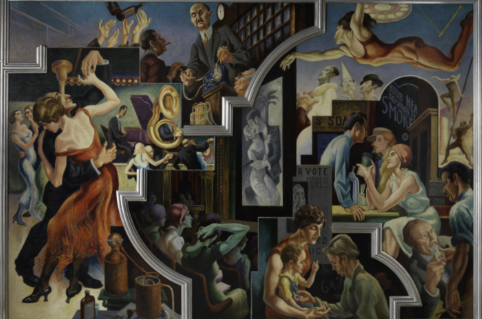
America Today: City Activities with Dance Hall, Thomas Hart Benton (1930-31)
Benton:
Missouri, Chicago Institute to New York
Socialist despite conservative family
style: large murals; american, representing social history of regular people
context: Prohibition —> bootlegging
America Today: City Activities with Dance Hall
dramatic representation of Prohibition Era
social changes: new women, changing art, bootlegging, chaotic
Global Connection - Section 4
Vocab
“Lost Generation”: originally referred to generation w/ uncertainty after WW1; later turned to generation of writers and artists chasing after an artsy society
Folk Art: art of everyday objects by artists w/o formal training; self-taught art from the common man
causes: isolationist & nationalist opposition to European influence + escapism (simplifying modern world)
Primitivism: when urban, affluent artists take inspo from “primitive” artists
simplifying modern world
Slip: a viscous mixture of clay and water that adheres to the molded surface
Overview/Trends
Post WW1 rebuilding of Europe: pushing Modernization and Financial Growth
American
Influences: jazz, blues, ragtime, Hollywood, drinking
Moving to Paris
Pan-African Movement: African art that mixes shared heritage of African diasporic people in the US and Caribbean
Indigenous
Selected Works
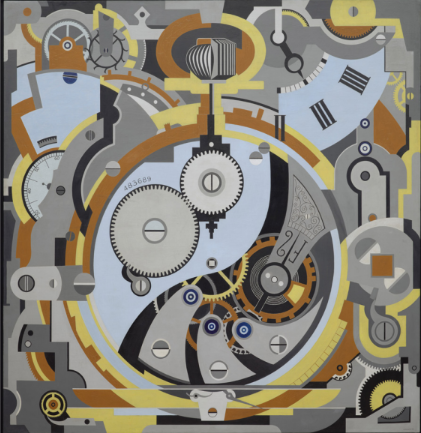
Watch, Gerald Murphy (1925)
Background: Boston-born, Yale, WW1 Signal Corps, “Lost Generation”: from young men uncertain after WW1 to youths in search of society (comfort fun for cheap) famously lavish
Purism: postwar return to basics of art; clean lines without shading; modern subjects (tech) (Leger, artist influencer)
Depicts Clock inside: geometrical, movement, perpetuality
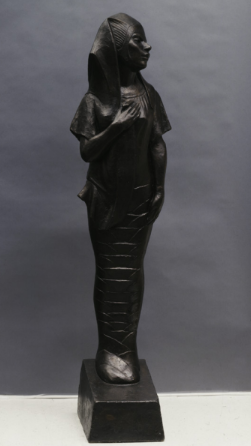
Ethiopa Awakening, Meta Warrick Fuller (1921)
Fuller:
Philly, learned sculpture in Paris
67 inches tall sculpture, Black modernism, Pan-African, African pride; two versions: bronze and plaster (black) to interpret figure’s race
commissioned by NAACP
nemes: typically Egyptian folded linen headdress
Egypt and Ethiopia: example of Egyptian and African mix (addressed the previously diminished black identity of Egyptians), close in history
modern Ethiopia: resilience to slavery
nemes: folded headdress
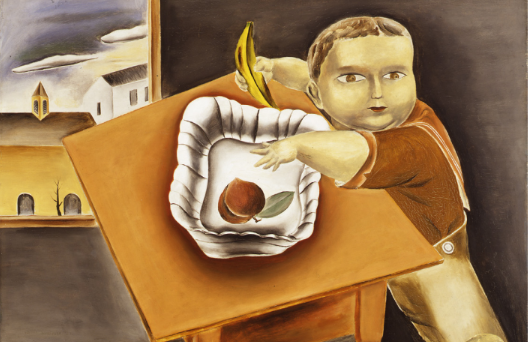
Boy Stealing Fruit, Yasuo Kuniyoshi (1923)
Kuniyoshi:
Born in Japanese, sometimes disadvantaged from foreign-born status. against nativism; lived in NY
ambiguity + Japanese aesthetics + American folk art (nostalgia + nationalism) + primitivism +
folk art: about everyday thingsw/o formal training + escapism from political topics
Museum of Modern Art
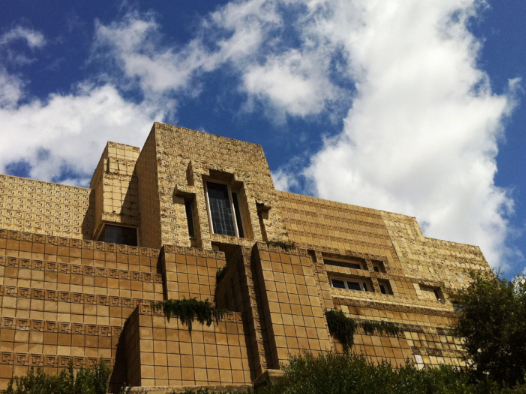
Ennis House, Frank Lloyd Wright (1923-24)
Background: famous American architect; Midwest; didn’t admit to his influences; born in Wisconsin
Pioneered:
Prairie Style: dedication to local materials
textile blocks: geometrically inscribed/designed tiles made from concrete
“Romanza”: romanticized representation of Mesoamerican ruins
Los Angeles, California; referenced ancient pyramids and jungles; interior custom metal work; Mayan, Mesoamerican and Latin American inspo; structural problems
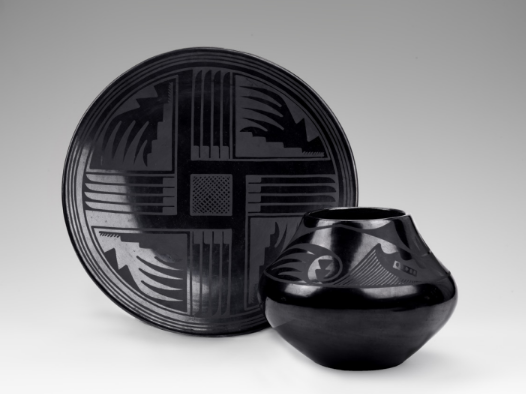
Bowl and Plate, Maria and Julian Martinez (1925-30)
Married couple; Maria: clay; Julian: 2D design; joined arts with crafts; uncommon for Pueblo cultures to sign works (meant to stay in community); easily recognizable; Sante Fe, New Mexico
Innovation: black-on-black ware
“Indian Craze”: popularity of Native American works
Large plates; repeating feathered design: eagle claw motifs, lively organic designs, thunderbolts; like water jars
Social Conflicts - Section 5
Vocab
Spirituals: songs developed by enslaved community about Bible
Overview/Trends
Industrial Labor (Great Depression, Progressive Era, Machine Age)
Political Activism
Ashcan School display
Selected Works
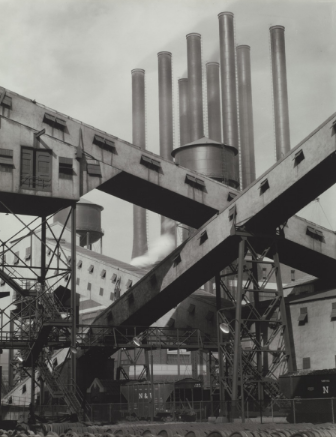
Charles Sheeler, Criss-Crossed Conveyors, River Rouge Plant, Ford Motor Company (1927)
Sheeler:
Philly, Pennsylvania Academy of Fine Arts
Vogue, Vanity Fair
Precisionism: photorealist painting style celebrating modern tech
Represents: Ford automative plant; its complexity from a low angle; Fordism: dominating automobile indsutry; scientific methods
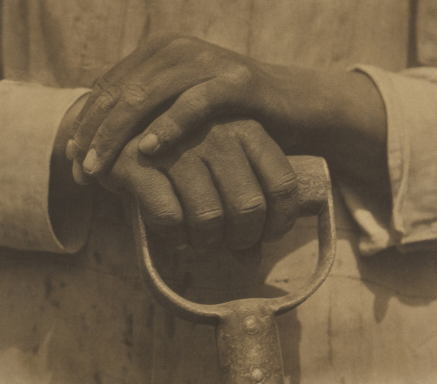
Hands Resting on a Tool, Tina Modotti (1927)
Modotti:
born in Italy, to NY
Dedicated to workers causes; Italian American urban; protests labor conditions and poor treatments of Indigenous workers in Mexico
Represents worker labor, indigenismo (new Mexican interest in Indigenous life and heritage); connection between machine and human
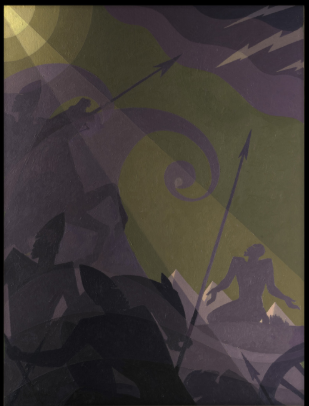
Let My People Go, Aaron Douglas (1935-39)
Douglass:
Kansas, University of Nebraska
civil rights, political early work (NAACP), large murals of Black history, Pan African, Art Deco, Egypt
Aaron Douglass’s ‘The Cruxification’
response to lynching and black violence
spirituals: songs developed by enslaved community with biblical references
depicts: salvation, connection between biblical and black history, Moses, address brutality
focal point: man with outstretched arms
colored painting of black and white illustration
three pyramids, purple and yellow, sunlight and lightning and clouds, large to dramatize violence/salvation, soldiers