Pregnancy
Chapter 31: Pregnancy
Pregnancy Overview
Average Length: 280 days from the first day of the Last Menstrual Period (LMP), equivalent to 40 weeks.
Trimester Division:
1st Trimester: 0 to 12 weeks
2nd Trimester: 13 to 27 weeks
3rd Trimester: 28 weeks to delivery
Terminology:
Primigravida: A woman who is pregnant for the first time.
Primipara: A woman who has given birth for the first time.
Multigravida: A woman who has been pregnant more than once.
Multipara: A woman who has given birth multiple times.
Signs & Symptoms of Pregnancy
Presumptive Signs (subjective symptoms that suggest pregnancy):
Amenorrhea (absence of menstruation)
Breast tenderness or swelling
Fatigue and increased tiredness
Increased urinary frequency (due to hormonal changes and pressure on the bladder)
Probable Signs (detected by a healthcare examiner):
Enlarged uterus confirmed through pelvic examination
Positive Signs (definitive evidence confirming pregnancy):
Fetal Heart Tones (FHTs) detectable through Doppler ultrasound
Cardiac activity observable on ultrasound imaging
First Trimester Symptoms
Key Events:
Serum hCG (human chorionic gonadotropin) becomes positive shortly after implantation, confirming pregnancy.
Cessation of menses occurs as hormonal levels change to sustain pregnancy.
Common Symptoms:
Nausea and vomiting, often referred to as morning sickness, typically result from hormonal adjustments, particularly increasing levels of hCG and estrogen.
Fatigue resulting from physical changes and increased metabolic demands
Decreased blood pressure due to reduced systemic vascular resistance, potentially leading to dizziness.
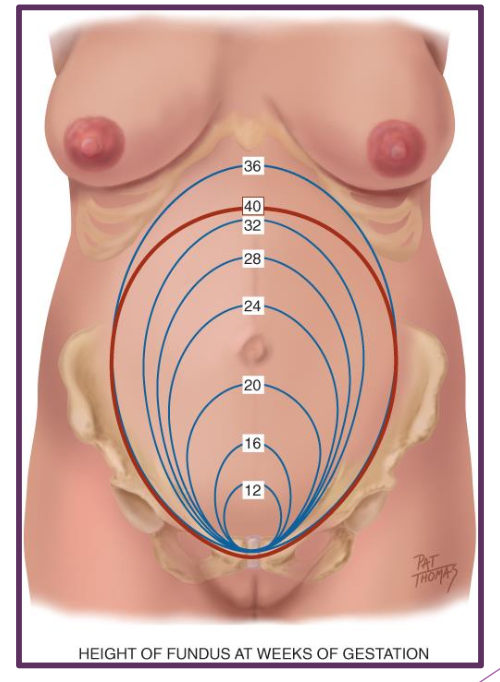
Around 12 weeks, the upper edge of the enlarging uterus may be felt above the pubic bone.
Second Trimester Changes
Symptoms Easing:
Nausea, vomiting, and fatigue generally decrease as the body adjusts to pregnancy.
Hyperpigmentation:
Notable changes include darkening of the areolae, nipples, and the linea nigra (a dark line down the abdomen).
Skin Changes:
Development of stretch marks (striae gravidarum) as the skin expands with the growing uterus.
Digestive Issues:
Heartburn and constipation may arise due to gastrointestinal displacement by the growing uterus, resulting in slower digestive transit.
Fetal Growth:
By around 20 weeks, the fetal outline can often be felt through the abdominal wall during a physical examination.
Third Trimester Changes
Physiological Adaptations:
There is an increase in blood volume of up to 50%, and heart murmurs may become audible due to increased cardiac output and altered hemodynamics.
Physical Changes:
Uterine enlargement can lead to diaphragm displacement, causing shortness of breath (SOB).
Increased risk of varicosities in legs and pelvic area due to excess blood flow and pressure.
Cervical effacement and dilation occur in preparation for labor; the mucous plug that protects the uterus may also be expelled.
Assessments During Pregnancy
Height of Fundus:
Measurement of the fundal height can be used to assess the growth of the fetus and estimate the weeks of gestation.
Calculating Weeks of Gestation:
The Expected Date of Delivery (EDD) can be calculated as 280 days from the LMP.
Using Nägele's Rule: Add 7 days to the first day of LMP, then subtract 3 months to estimate the due date.
Pregnancy wheels and ultrasounds can also estimate EDD accurately based on fetal measurements.
Weight Gain Recommendations
Components of Weight Gain:
Weight gain includes the fetus, amniotic fluid, increased blood volume, and maternal fat deposition to support pregnancy and breastfeeding.
Institute of Medicine (IOM) Recommendations:
Underweight: 28 to 40 pounds
Normal weight: 25 to 35 pounds
Overweight: 15 to 25 pounds
Obese: 11 to 20 pounds
Gynecologic and Obstetric History
Key Questions to Ask:
Inquire about previous cervical surgeries or abnormal Pap tests.
Assess history of STIs and ensure testing for HIV and other sexually transmitted infections.
Document previous pregnancies and delivery outcomes, including any complications.
Understand modes of delivery (e.g., cesarean sections) and gestational ages and weights of previous babies.
Current Pregnancy Assessment
Important Details:
Review contraceptive use and its discontinuation prior to conception.
Inquire about any vaginal bleeding or abdominal pain that may signify complications.
Assess for illnesses or symptoms such as edema, urinary issues, or any new health concerns.
Track fetal movement patterns to monitor well-being.
Discuss feeding plans for the infant post-delivery.
Environment/Hazards Assessment
Key Areas to Consider:
Evaluate potential occupational hazards like exposure to chemicals or radiation that could affect pregnancy.
Analyze the adequacy of housing, including access to clean water and safe living conditions.
Safety measures, like consistent seatbelt use during travel, should be emphasized.
Discuss substance use, including alcohol, tobacco, and illicit drugs, and their potential risks to the pregnancy.
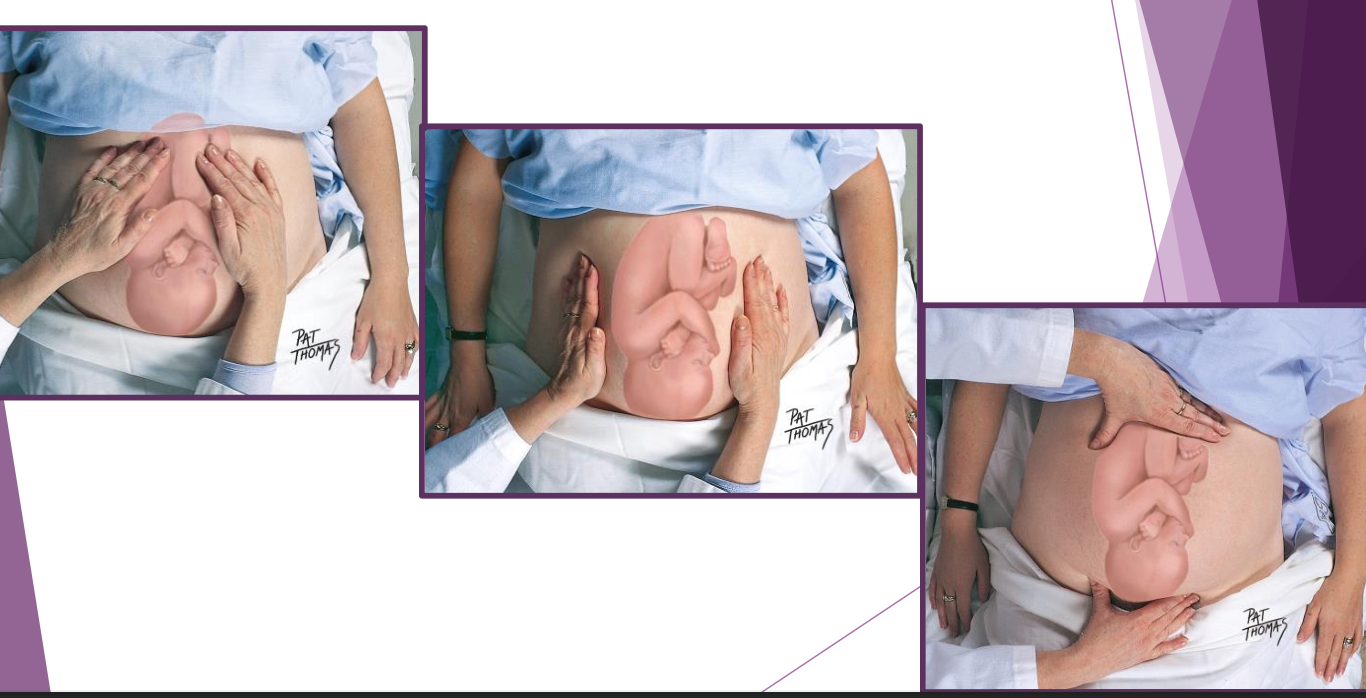
Objective: Leopold's Maneuvers
These are a series of four maneuvers performed in the third trimester to assess fetal presentation and engagement and help determine the position of the fetus prior to labor.
Skin and Breast Assessment
Skin Changes:
Document any scars or notable changes associated with pregnancy.
Inspect for PUPPP (pruritic urticarial papules and plaques of pregnancy), which can cause significant itching and discomfort.
Obvious findings on the skin can also indicate issues such as abuse or drug use.
Breast Changes:
Common changes include breast enlargement, tenderness, and darkening of the areolae.
Colostrum can be present, and variations in nipple presentation may be observed.
Educate patients on the importance of Breast Self-Examination (BSE) to monitor for breast changes during pregnancy.
Heart and Lung Assessment
Heart Findings:
The apical impulse may be palpated left of the midclavicular line due to cardiac changes during pregnancy.
Systolic murmurs are common and generally benign in the later stages of pregnancy.
Lung Findings:
Clear lung sounds are expected; shortness of breath during the third trimester is common.
Monitoring for abnormal findings is crucial to catch potential complications like preeclampsia.
Abnormal Findings: Preeclampsia
Classic Symptoms:
Characterized by hypertension, proteinuria, and edema.
Risk Factors:
Include chronic hypertension, obesity, advancing maternal age (>35), diabetes, and preexisting kidney disease.
Monitoring:
Close observation of women with risk factors for increased BP and accompanying symptoms such as headaches or visual changes is vital for prevention and management.
Nurse Checks
Awareness and recognition of classic preeclampsia symptoms that may arise during routine checks.
Assess for midline linear protrusion in the abdomen; these findings could indicate conditions like diastasis recti, requiring further evaluation.