Carbon Cycling
Carbon Cycling
Aims of the Lecture
The lecture aims to:
Discuss the history of atmospheric carbon dioxide (CO2) on Earth
Explore sources and sinks of CO2
Analyse rising atmospheric CO2 concentrations
Describe the carbon cycle with an emphasis on biological turnover
Examine key systems for carbon sequestration, such as tropical rainforests, the Arctic, and marine systems
Address human activities related to CO2 emissions
Origin of Carbon
From an ancient star carbon atoms were part of the earth’s early formation.
Volcanoes first introduced carbon into the earth’s atmosphere as CO2
CO2 reacted chemically with rock to create limestone which lay at the bottom of the sea for millions of years.
This was then released back into the atmosphere as CO2 but ultimately became rock again
3.5 billion years ago, the cycle of carbon accelerated with new biological contributors (E.g. plants).
Photosynthetic microorganisms started converting CO2 into organic compounds, with respiration processes returning CO2 to the atmosphere, a cycle that continues currently.
Short-term Carbon Cycle
Charles Keeling began monitoring atmospheric CO2 in 1958, providing crucial data on carbon trends.
Data shows a rise in CO2 concentration
Infra red gas analysis
Seasonal variations occur, with lower CO2 concentrations in summer compared to winter.
lower photosynthesis
Mammals are more active = fossil fuels
Factors Influencing CO2 Variability
CO2 levels vary due to several factors:
Geological Inputs: Volcanic activity and mid-ocean ridges contribute to CO2 emissions.
Biological Inputs: Respiration processes naturally release CO2.
Human Inputs: Activities like deforestation and fossil fuel combustion significantly raise CO2 levels.
Disturbing of land to create agriculture
Burning of fossil fuels
Removal of CO2 from the Atmosphere
Geological Removal: CO2 interacts chemically with weathered rocks.
may release or absorb CO2
Biological Removal: Photosynthesis actively removes CO2 and is essential for short-term carbon cycling.
Types of Carbon Storage
Green Carbon: Stored in terrestrial vegetation and soil.
deforesting removes this carbon
Blue Carbon: Found in marine habitats and sediment.
Brown Carbon: Refers to greenhouse gases emitted.
Black Carbon: Emissions from incomplete combustion, such as soot.
Impacts of Human Activity on Carbon Cycling
Isotope analysis indicates significant alterations in carbon cycling correlated with industrialization.
Atmospheric CO2 rise aligns with increased fossil fuel usage during the industrial period.
Global Carbon Cycle
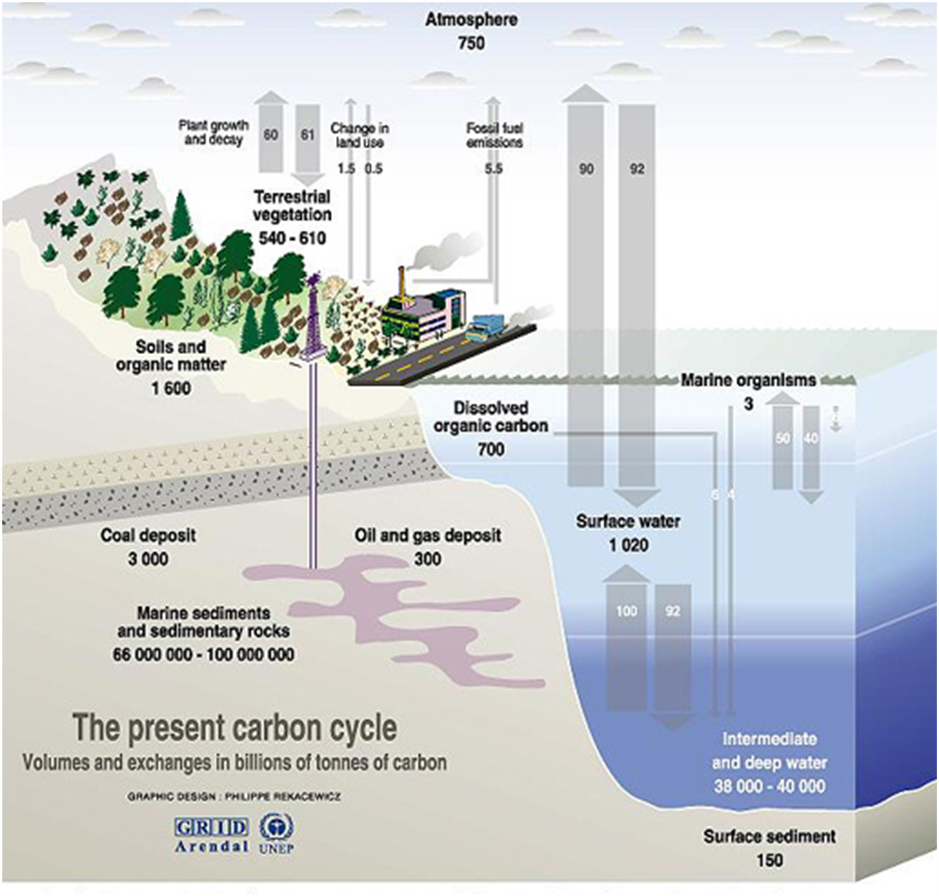
The atmospheric carbon holds roughly 750 billion tonnes.
Various exchanges occur within terrestrial and marine systems, illustrating the dynamic interactions and transfers of carbon.
Geological Processes and Long-term Carbon Cycle
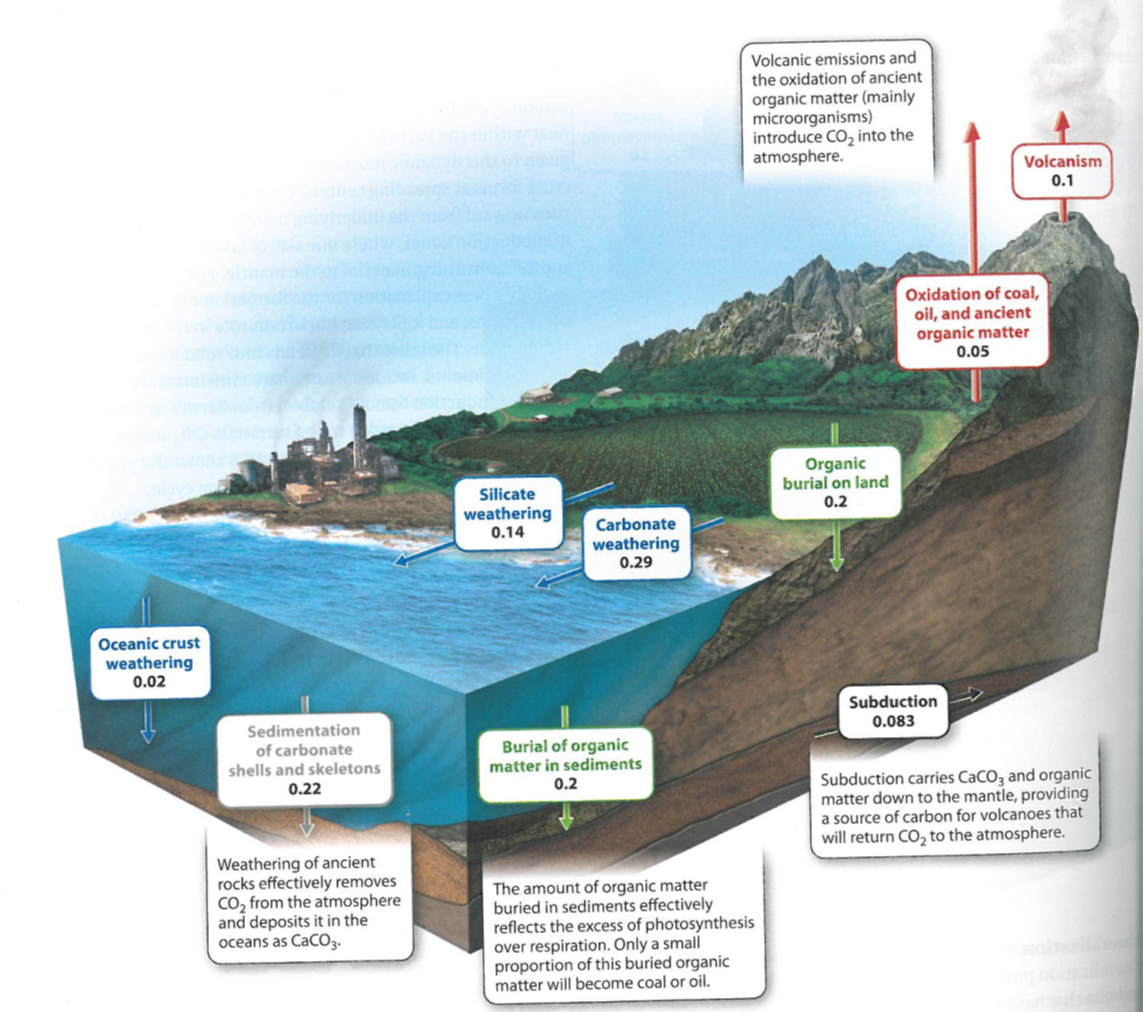
Volcanism and oxidation of ancient organic matter introduce CO2 into the atmosphere.
Weathering processes effectively remove CO2, with a minimal amount transforming into both coal and oil.
Photosynthesis and Decomposition
Photosynthesis is a critical process alongside respiration, promoting carbon cycling.
Decomposition: The breakdown of organic material is fundamental for nutrient recycling.
Food Web Dynamics
Food webs elucidate the flow of carbon through ecosystems, illustrating interactions from primary producers through secondary consumers and decomposers.
Soil Carbon Dynamics
Soil nurtures plant roots and serves as a major carbon storage layer
Arctic soils alone containing a third of the planet's soil carbon.
tundra = deep rooted planets
Atmosphere is cold and dry = less decomposition
Tropical rains forests have shallow soil
Deforestation causes draught due to less water vapour being released into atmosphere
Marine Systems Contribution
Marine autotrophs capture more than 50% of the global CO2, playing a vital role in managing atmospheric carbon levels.
Phytoplankton and Macrophytes
Human Population and Carbon Footprint
With the global human population nearing 8 billion, the implications for carbon cycling and emissions become more complex and urgent.
Conclusion
The lecture outlined:
The history and evolution of atmospheric CO2
Various sources and sinks of carbon
Important systems for carbon sequestration
The significant impact of human activities on carbon concentrations globally.