heredity and evolution
Science 2
1. Heredity and Evolution
Heredity and Hereditary Changes
Heredity is the transfer of biological characters from one generation to another via genes.
Gregor Johann Mendel is considered the pioneer of modern genetics.
Key milestones in the understanding of heredity:
1901: Hugo de Vries introduces the mutational theory explaining sudden changes in heredity.
1902: Walter Sutton observes paired chromosomes in grasshoppers, revealing the nature of genetic material carried by chromosomes.
1944: Oswald Avery, McCarty, and Colin McLeod confirm that all living organisms (except viruses) have DNA as genetic material.
1961: Francois Jacob and Jack Monod propose a model for protein synthesis involving DNA in bacterial cells which uncovers genetic codes
Techniques like recombinant DNA technology emerged from understanding these processes, impacting genetic engineering and agricultural practices.
The application of heredity science is crucial for:
Diagnosis and treatment of hereditary disorders.
Production of hybrid varieties in agriculture.
Industrial processes involving microbes.
2. Transcription, Translation, and Translocation
Central Dogma of Molecular Biology: The process through which DNA directs the synthesis of proteins via RNA.
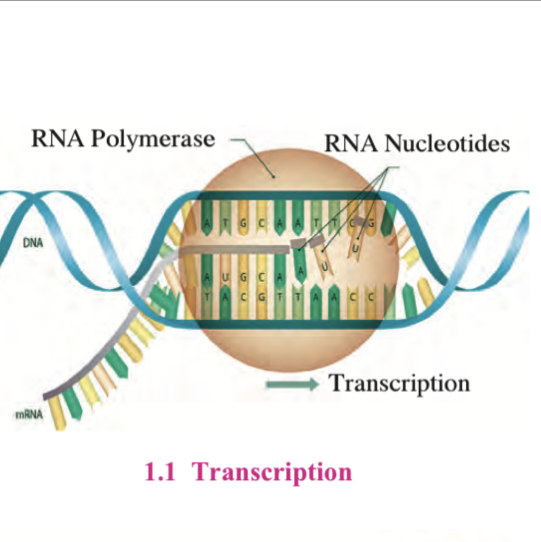
Transcription: The process where mRNA is synthesized from the DNA template.
Involves the use of RNA Polymerase:
DNA is transcribed to produce complementary mRNA.
mRNA contains uracil (U) instead of thymine (T).
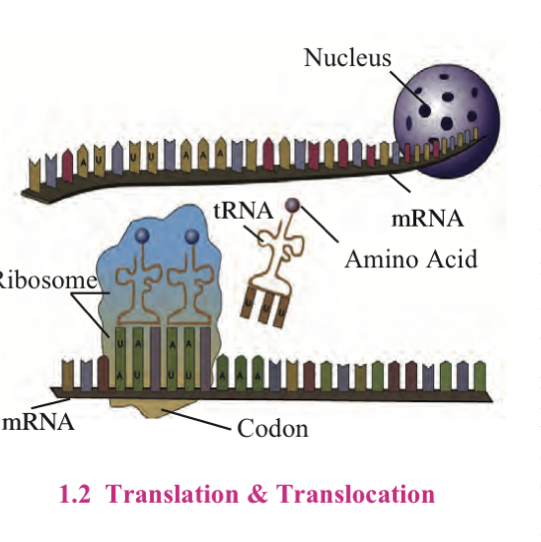
Translation: Process in which the mRNA codons are translated into amino acids through tRNA.
Each codon (triplet of nucleotides) corresponds to an amino acid.
tRNA provides the anticodon that pairs with the mRNA codon.
Translocation: The ribosome moves along the mRNA molecule as the amino acids are added one by one to the growing polypeptide chain, facilitating protein formation.
3. Evolution
Definition: Evolution refers to the gradual change occurring in living organisms over long periods, leading to the development of new species based on natural selection.
Historical Overview:
Life on Earth began approximately 3.5 billion years ago with simple unicellular organisms emerging from basic elements and compounds.
Over time, larger and more complex organisms developed through gradual evolutionary changes.
The biodiversity of plants and animals ranges from unicellular organisms to complex mammals, reflecting the extensive evolutionary processes.
4. Evidence of Evolution
Types of Evidence:
Morphological Evidence: Similarities in structure and form among organisms indicating common ancestry.
Anatomical Evidence: Comparable bone structures in different organisms implying shared ancestry despite functional differences.
Vestigial Organs: Underdeveloped structures that have lost their original function over time, e.g., human appendix, wisdom teeth.
Paleontological Evidence: Fossils provide a record of organisms that existed in the past, helping in understanding evolutionary changes over time.
Carbon Dating: Developed by Willard Libby, this technique measures the ratio of carbon isotopes to determine the age of fossils and ancient remains.
Connecting Links: Organisms that exhibit traits of two different groups indicating evolutionary transitions, such as the Duck-billed Platypus or Peripatus.
Embryological Evidence: Comparative studies of embryonic development stages in various vertebrates showing significant similarities that suggest common ancestry.
5. Darwin's Theory of Natural Selection
Charles Darwin: His observations resulted in the theory of natural selection as a mechanism for evolution, described in his book 'Origin of Species.'
Core Principles:
Organisms produce more offspring than can survive, and compete for limited resources.
Only the fittest individuals with suitable modifications survive and reproduce, passing those traits to the next generation.
Objections to Darwin's Theory:
Natural selection is not the single factor driving evolution.
Lack of explanation for the nature of modifications (useful vs. useless).
Absence of clarity on mechanisms of both gradual and abrupt changes.
6. Lamarckism
Jean-Baptiste Lamarck: Proposed that organisms evolve through the inheritance of acquired characteristics, where modifications acquired during an organism's lifetime can be passed to the next generation.
Examples include giraffe neck length through stretching and the development of body structures due to usage.
His theory was largely discredited as it could not explain the inheritance of traits effectively.
7. Human Evolution
The evolutionary lineage of humans began with primate ancestors and followed through various stages of development:
Ramapithecus (~20 million years ago)
Australopithecus (~4 million years ago)
Homo habilis: Emerged about 2 million years ago exhibiting advanced tool-use capabilities.
Neanderthal and Cro-Magnon: Development of significant cerebral evolution leading to complex human societies and culture around 10,000 years ago.
Evolutionary pathways demonstrate adaptations to diverse environments and the use of tools, communication, and social structures.