TV (1)
History of Television
A Brief History of Television
John Baird - Creator of Television and Early Contributions
John Logie Baird, a Scottish engineer and inventor, is widely recognized for inventing the first operational television system in the early 20th century. His innovations during the 1920s were pivotal in the evolution of television technology, encompassing the development of mechanical systems that utilized spinning disks, ultimately relying on the Nipkow disk for scanning images. These foundational experiments set the stage for subsequent advancements in the field.
First Transmission in America (1928)
In a landmark moment for television history, Charles Francis Jenkins successfully transmitted moving silhouette images over a distance of 48 miles in 1928. This event marked not only a technological achievement but also a significant milestone that showcased the potential for television as a medium for communication and entertainment.
BBC Transmission
In 1936, the British Broadcasting Corporation (BBC) conducted its first official television broadcasts, utilizing Baird's mechanical television system to deliver early black-and-white broadcasts to the public. This marked the beginning of regular BBC television broadcasts, laying the groundwork for public broadcasting standards.
Baird's Experiments
Baird's contributions included innovations with his scanning disk technology and mechanical television systems, which were unique for their time and integral to the evolution of visual media. His persistent experimentation paved the way for future advancements in television technology.
War and Television Development
World War II and Halt of Television Production
The onset of World War II had a profound impact on the television industry, as resources and materials were redirected toward the war effort. This diversion temporarily halted advancements in television technology and production, with many engineers and inventors mobilizing for military purposes.
Cathode Ray and Mechanical Scanning
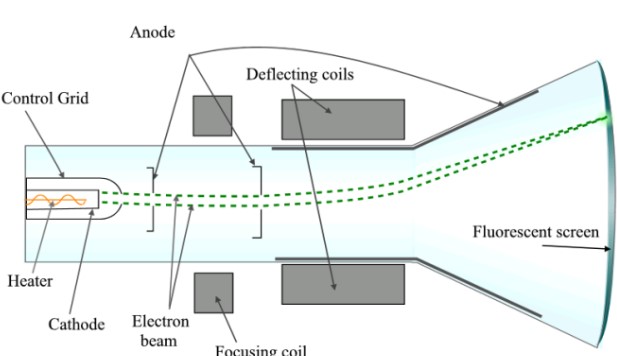
Early televisions relied predominantly on two technologies: Cathode Ray Tubes (CRTs) and mechanical scanning systems. CRTs gained widespread acceptance due to their superior image quality and reliability, ultimately becoming the standard for television displays beyond the mechanical era.
First Television Station
The BBC Television Service, located in Alexandra Palace, London, initiated regular broadcasts in 1936, solidifying its role as one of the first television stations in the world and significantly contributing to the establishment of television as a viable and important medium for information and entertainment.
Impact of Early Television
The early establishment of television stations and the contributions of inventors like Baird and Jenkins heralded a new era of communication. Transitioning from silent films and radio, television transformed the landscape of information dissemination and cultural influence, ultimately becoming a fundamental aspect of modern life. These efforts were a collaborative achievement marked by contributions from numerous inventors and engineers worldwide.
Early Color Television Development
First Color Television and Initial Impact
Herbert E. Ives from Bell Labs conducted the first demonstration of color television in the 1920s, marking the inception of color technology in mass media. However, practical applications were limited during this era, delaying widespread adoption of color television.
Baird's Improvements
Continuing his pioneering spirit, Baird made significant strides in color television development, exploring scanning disk technology to enhance the color broadcast experience. Despite the lack of immediate acceptance, Baird's advancements played an influential role in understanding color television principles.
Peter Goldmark's Electromechanical System
In the 1940s, Peter Goldmark from CBS engineered the first practical color television system, employing a rotating color wheel. This invention was a breakthrough in color technology, showcasing the potential for vibrant and immersive viewing experiences.
Impact of Early Color Television
First Color Programs
The initial color programs in the U.S. debuted in the 1950s, with the notable broadcast of "Premiere" on June 25, 1951. Early content thrived on creative forms such as musicals and variety shows, leveraging color technology to enhance viewer engagement and attract advertising revenue.
Early Program Types and Their Impact
Programming in the early days of color television consisted largely of musicals, variety shows, and sports events, which significantly enhanced the visual appeal and overall viewer experience. The improved visual quality encouraged a wider adoption of color televisions among consumers, thereby altering the future of broadcasting content.
Compact Television
Compact Television
The mid-20th century saw the rise of portable televisions, which revolutionized viewer accessibility by allowing audiences to consume content on-the-go. This transformation not only changed consumer habits but also adapted the spaces in which television content was enjoyed.
Transition to Digital
Switch from Analog to Digital
As technology evolved, the television industry underwent a pivotal transition from analog to digital broadcasting. This changeover unfolded over several years, aimed at improving efficiency, enhancing picture and sound quality, and expanding channel offerings. Though the initial reception by consumers was varied, the long-term impact of digital broadcasting would be profound, leading to a complete redefinition of television consumption.
Impact
The shift to digital broadcasting brought significant benefits, including superior video and audio quality, high-definition television capabilities, and the introduction of interactive technologies, fundamentally reshaping viewers' television experience.
HDTV Improvements
HDTV (High-Definition Television)
High-definition television (HDTV) provides a resolution far exceeding standard-definition television (SDTV), offering formats such as 720p, 1080i, and 1080p. These advancements revolutionized viewer experiences, delivering remarkably sharp images, accurate colours, and enhanced sound quality.
Impact
The adoption of HDTV led to the widespread popularity of flat-screen models, altering consumer expectations regarding visual and audio quality in television viewing. This technological leap marked a significant milestone in enhancing the overall entertainment experience.
NTSC and PAL
NTSC (National Television System Committee)
NTSC is primarily used in North America and is characterized by a resolution of approximately 525 lines, a frame rate of about 29.97 frames per second (fps), and a 4:3 aspect ratio.
PAL (Phase Alternating Line)
In comparison, PAL is commonly used across Europe, Australia, Asia, and Africa, featuring a resolution of approximately 625 lines and a frame rate of 25 fps, also retaining the 4:3 aspect ratio.
Comparison of TV Technologies
Feat | HDTV | NTSC | PAL |
Resolution | 720p, 1080i, 1080p | Approximately 480 lines | Approximately 576 lines |
Frame Rate (fps) | 24, 30, 60 | 29.97 fps | 25 fps |
Aspect Ratio | 16:9 (widescreen) | 4:3 | 4:3 |
Color Encoding | Digital | YUV color space | YUV color space |
Geography | Worldwide | North America | Europe, Australia, Asia |
Broadcast Format | Digital | Analog (primarily) | Analog (primarily) |
Characteristics of Television
Audiovisual Medium
Television uniquely combines sound and moving images, creating an engaging medium that resonates with viewers across diverse demographics, making it a powerful storytelling vehicle.
Live Medium
Television’s capacity for live broadcasting fosters real-time connections between events and viewers, enhancing audience engagement and immediacy in sharing news and entertainment.
Mass Medium
As a medium that touches varied aspects of public life, television has the ability to shape public opinion and culture, reaching vast and diverse audiences simultaneously, allowing for widespread communication.
Domestic Medium
Television primarily serves as a domestic medium, consumed primarily at home, and has become integral to daily life by providing both information and entertainment.
Transitory Medium
Content produced for television is typically transient and often consumed quickly, emphasizing the need for ongoing creative input and innovation in programming.
Expensive Medium
Producing quality programming and maintaining broadcasting operations necessitate significant financial investment, making television an expensive medium to operate effectively.
Television Technology Evolution
Cathode Ray Tube (CRT) Television
For decades, CRT televisions were the standard in homes, utilizing electron beams for image projection but resulting in bulky and heavy designs that limited placement flexibility.
LCD (Liquid Crystal Display) Television
The introduction of LCD televisions marked a significant shift towards thinner, energy-efficient units that became widely popular for flat-panel design over CRTs.
LED (Light Emitting Diode) Television
An evolution of LCD technology, LED televisions offer superior backlight efficiency and picture quality, quickly becoming a prevalent choice in households.
Advanced Television Technologies
OLED (Organic Light Emitting Diode) Television
Utilizing self-emissive pixels, OLED televisions deliver exceptional image quality, with deeper blacks and vibrant colors, appealing to audiophiles and home cinema enthusiasts alike.
Smart Television
Smart TVs are connected devices that allow users to access streaming services, internet content, and interactive applications directly through the television interface, reshaping viewing habits.
Standard-definition television (SDTV)
SDTV represents a digital broadcasting system characterized by lower resolution than HDTV, typically presenting content in formats such as 480i/p, maintaining significance in certain broadcasting environments.
Definitions of High-Definition Television
HDTV (High-Definition Television)
HDTV provides considerably higher resolutions than standard television, supporting formats capable of 720 or 1080 pixels, resulting in vastly improved visual experiences.
UHD (Ultra High Definition)
UHD, with a resolution of 3840x2160p, offers four times the detail of HD. Often referred to as 4K in consumer markets, it stands as a benchmark for both home entertainment and cinema-quality presentations, with an industry standard of 4096x2160 for cinematic releases.
Indian Television History
1959 - Doordarshan Begins
The establishment of Doordarshan marked the inception of the national public broadcaster in India, which began its journey with an initial focus on black-and-white programming and limited reach.
1965 - First Satellite Broadcast
Doordarshan made history in 1965 with its notable broadcast of live war coverage during the Indo-Pak war, showcasing the potential of satellite technology in delivering real-time news.
1982 - Asian Games Broadcast
The Asian Games broadcast represented a pivotal moment in India's broadcasting landscape, facilitating the first live broadcast that reached audiences across the country, significantly improving broadcasting capabilities.
1984 - Color Television
The transition to color broadcasting in 1984 profoundly changed viewer experiences, substantially enhancing the quality of programming across various genres.
Evolution of TV in India
1991 - Liberalization and Cable TV
India's economic liberalization in the early 1990s heralded the rise of cable and satellite networks, diversifying viewer access to an array of content options.
2000s - Satellite TV Boom
The early 2000s experienced a surge in satellite channels, expanding programming diversity to accommodate regional and niche audiences.
2003 - Direct-to-Home (DTH) Services
The introduction of DTH services in 2003 provided consumers with broader access to channels via satellite technology, enhancing consumer choice in programming.
2006 - Digital Television Transition
The transition to digital broadcasting in 2006 facilitated improved quality and efficiency in spectrum usage, marking significant technological advancement in Indian television.
2010 - HD TV
The rollout of high-definition broadcasts in 2010 significantly upgraded resolution and sound quality, thereby transforming viewer expectations and experience.
Recent Developments in Indian Television
2020 - New Regulatory Framework
In 2020, the Telecom Regulatory Authority of India introduced a new regulatory framework designed to bolster consumer choices in service and content delivery.
Present Day - Streaming Services
As of today, the proliferation of streaming platforms has dramatically transformed the media landscape, offering extensive on-demand content and fundamentally changing how audiences engage with television programming.
Types of Television Broadcasting
Terrestrial Broadcasting
Overview: Traditional method of signal transmission employing radio waves.
How it Works: Signals are broadcast from transmission towers to antennas; viewers require specific equipment for reception.
Advantages: Free accessibility, suitable for expansive geographic coverage without subscription.
Limitations: Limited available channels, susceptibility to interference, and varying quality issues.
Cable Television Broadcasting
Overview: Signaling transmission through coaxial or fiber-optic cables to subscribers.
How it Works: Signals are routed through cables to set-top boxes or modern televisions.
Advantages: A broad range of channels with improved quality and regular programming stability.
Limitations: Requires a paid subscription with fluctuating availability and associated costs.
Satellite/DTH (Direct-to-Home) Broadcasting
Overview: Broadcasting signals directly to small dish antennas installed in homes.
How it Works: Signals are sent from ground stations to geostationary satellites and are then beamed back down to consumer dishes.
Advantages: High-quality signals with access to an extensive variety of channels, including remote locations.
Limitations: Installation of a satellite dish is required, and transmission can be impacted by adverse weather conditions.
IPTV (Internet Protocol Television)
Overview: Content delivered through internet protocol networks, combining broadband and TV viewing experiences.
How it Works: Signals are transmitted in data packets to set-top boxes or directly to smart TVs.
Advantages: Offers interactive features, vast libraries of on-demand content, and potential service bundling options.
Limitations: Requires a stable and high-speed internet connection, which can lead to variable signal quality.
Online Broadcasting (Streaming Services)
Overview: Delivery of content via the internet through various platforms.
How it Works: Users access shows through applications or websites on smart devices.
Advantages: Provides on-demand access to extensive content libraries, allowing for flexible viewing options to fit consumer needs.
Limitations: Dependence on internet connectivity and possible subscription fees for premium content.