Volcanoes
A volcano is an opening in the Earth’s crust through which magma, ash and gases escape. The magnitude (strength) of the eruptions are measured used a Volcanic eruptions have both primary effects and secondary effects. One way of reducing the effects of volcanic eruptions is by predicting, planning, and preparing for them.
Volcanoes occur either at the unstable boundaries of tectonic plates or in the middle of plates where the crust is thin or where there is a particularly hot spot in the mantle.
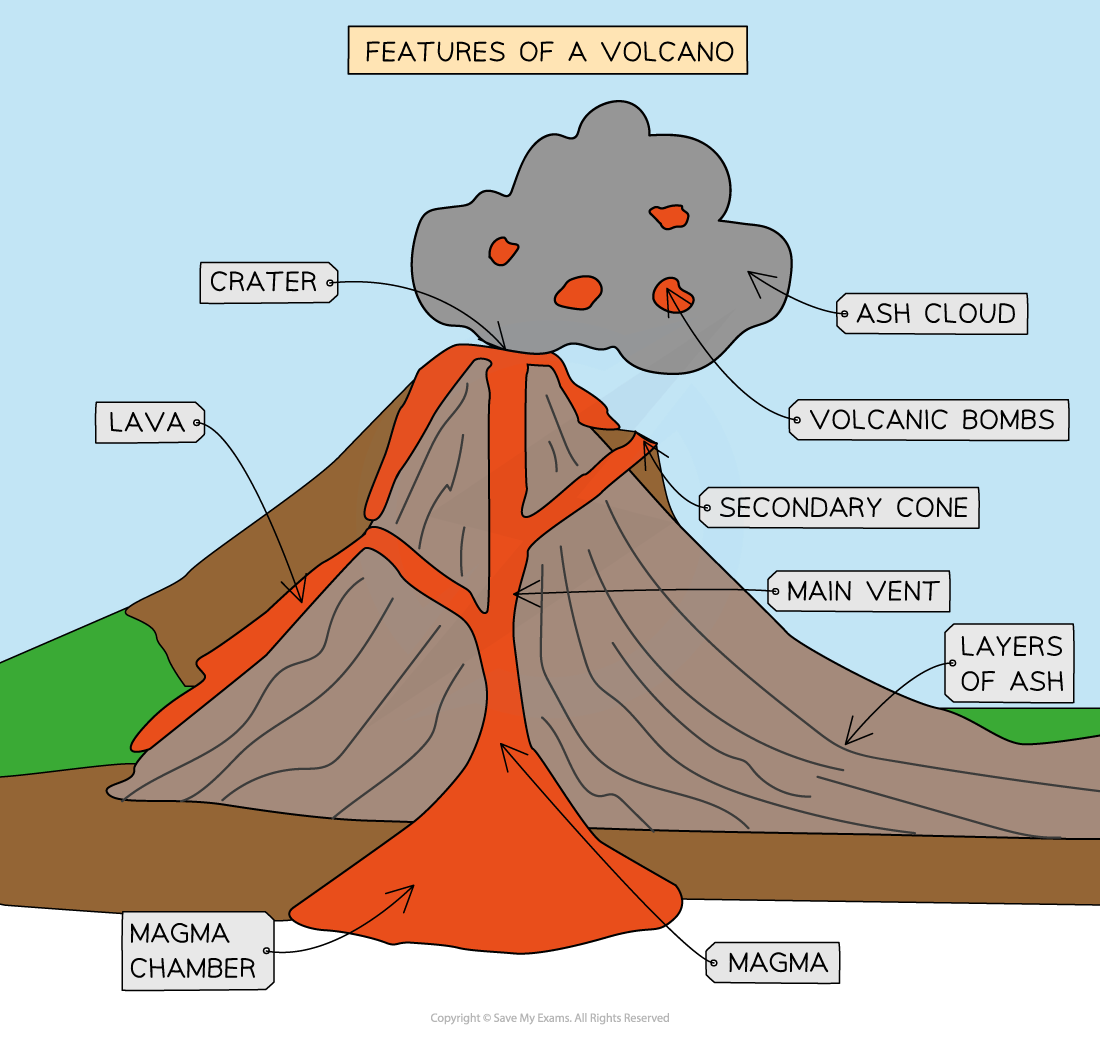
There are two types of volcano:
Stratovolcano | Shield volcano |
Steep-sided | Gently sloping sides |
Sticky (viscous) lava | Runny/thin lava |
More explosive eruptions | Less explosive - gentle eruptions |
Tends to form on destructive plate boundaries | Tends to form on constructive plate boundaries |
People live near volcanoes for a number of reasons:
Many people can visit the area, creating a tourism industry
The soil around volcanoes is rich in minerals, and so is great for agriculture
Geothermal energy can be harnessed, providing cheaper energy for locals
Primary effects of a volcanic eruption:
When the volcano erupts, ash, lava, and pyroclastic flow are spewed out of it, causing damage to habitats and property
Pyroclastic flow is made of super-heated gas and ash, and travels quickly at hundreds of kilometres an hour
Ash fall from volcanoes can land on roofs of buildings, causing them to collapse.
Secondary effects of a volcanic eruption:
Volcanic eruptions can lead to climate change. This is because the carbon dioxide released contributes to global warming
Roads can become blocked by lava flows, making it difficult to travel around
Ash from the volcano can act as a fertiliser for soils.
Some methods used for predicting volcanic eruptions are:
Method/Instrument | Description |
Seismometers | Used to measure earthquakes occurring near an eruption |
Tiltmeters or GPS satellites | Monitor any changes in landscape (volcanoes tend to swell near an eruption) |
Monitoring gas emissions | An increase in sulphur dioxide and carbon dioxide indicates that an eruption will occur soon and that the magma is closer to the surface |