Midterm
Unit 1: Properties and Terminology
Coefficient of thermal expansion:
Definition: change in volume in relation to change in temperature
No dental material expands or contracts exactly like tooth structure
Leads to microleakage and percolation
Microleakage: seeping of fluids into the tooth/restoration interface
Percolation: fluids moving in and out of the interface due to temperature fluctuation

Galvanism
When 2 different metals contact in a wet environment (saliva), an electrical current is generated

Viscosity
Ability to flow
thick → flows POORLY (impression material)
thin → flows easily (etch for sealants)

Polymerization
definition: hardens liquid into solid durable materials
2 types: auto-polymerization (chemical/self-cure) or photo-polymerization

Stress vs. strain
Stress-force within an object when a load is applied
Strain- change in length or shape
CANNOT have one without the other

Elasticity
An object deforms under stress and then returns to its original position
Modulus of elasticity: the stiffness (higher the modulus, the stiffer the material)

Wettability
Affinity of a liquid for a solid, as indicated by the spreading of a drop
Measured by the contact angle
Low contact angle = good wetting
High contact angle = poor wetting
Factors Affecting Wetting:
Surface energy of material→ attracts or repels
Impurities: debris, air bubbles, water, saliva; surface roughness

Difference between inlay, on-lay, and crown
inlay: fills the center of the tooth between cusps
on-lay: extends over one or more cusps
crown: caps entire visible portion of the tooth

Blacks classification of caries
Class I
pits or fissures
occlusal surfaces of premolars and molars
facial and lingual surfaces of molars
lingual surfaces of maxillary incisors
Class II
proximal surfaces of premolars and molars
Class III
proximal surfaces of incisors and canines that DO NOT involve incisal edges
Class IV
proximal surfaces of incisors and canines that do involve incisal edges
Class V
cavities in cervical 1/3 of the facial or lingual surfaces
Class VI
cavities in the incisal edges of anterior teeth and the cusp tips of posterior teeth

Indirect and direct restorations
Indirect: dental restorations made outside of the mouth (crown and bridges)

Direct: dental restorations cured directly in the mouth (amalgam and composite)

Sealants
Purpose of Sealants
physical barrier to decay by sealing surface

Role of etch and chemical makeup
Role: Etching enamel creates micro-pores in enamel that become a retention mechanism (resin tags) → over-manipulation will break down micro-pores
Makeup: composed of 37% phosphoric acid
Difference between self-cure and polymerized sealants
Auto-polymerized or chemical cure or self-cure
2 equal parts (drops) mixed; polymerization will begin (the hardening process)
Setting time: about 2 minutes

Visible light-cured or photo-polymerized
Blue light to polymerize material (halogen)
Curing time: 20 seconds

Common errors in placement of sealants
Improper technique is the major cause of failure or early loss of sealants
Contamination (saliva, water, oil-laden compressor air, etc.)
do NOT over manipulate to prevent air bubbles
Patient Causes:
Teeth with frank caries
Well-coalesced pits and fissures
Uncooperative patient
Appropriate patient selection for sealants (teeth numbers, age, anatomy)
Patient Assessment:
Moderate to high caries risk
Risk assessment form
Incipient caries within the enamel (controversial)
Pits & fissures anatomically susceptible to decay
decay occurs during 1st year AFTER eruption → protect susceptible teeth as soon as possible
Placement Guidelines:
Fully erupted tooth→ no operculum present
Decay history regardless of age
Diet recommendation
Composition of Sealants: BPA
Composition of sealants: bis-GMA (bisphenol A glycidyl dimethacrylate)
similar to composite resin (less viscous)
fluoride- or non-fluoride releasing
clear, tinted, or opaque
filled or unfilled
Concerns stemmed from reports that resin-based materials may be exposed to xenoestrogens (mimic estrogen → affects reproductive tissues)
A recent study supported by ADA reported that BPA released orally may not be absorbed systemically, or the quantity absorbed is below detectable levels
resin material
resin-based, moisture-tolerant sealant
advanced acid-integrating chemistry that is activated by moisture
retention rate is higher than glass ionomer sealants
Preventive resin restoration (PRR)
caries suspected → fissure opened with bur → caries is removed → filled with composite → place sealant
sealant placement
1. Prepare surface → remove debris from tooth with pumice, air polishing, or toothbrushing with hydrogen peroxide
IMPORTANT: Do NOT have oil or fluoride in the agent used, so it’s ideal to place before prophy and fluoride
2. Rinse thoroughly
3. Isolate
4. Dry tooth for 10 seconds or more
5. Apply etch
liquid etch: gently dab with a brush or cotton pellet
Gel: distribute with explorer and DO NOT DISTURB
6. Remove etch and rinse for 30 seconds
7. Re-isolate and dry for 20-30 seconds
8. Check for chalky appearance
9. Apply sealants
DO NOT extend beyond the etch area → results in microleakage and sealant failure
Air bubbles form from poor flow, over-manipulation, or filler amount
10. Cure for 20-40 seconds (polymerize sealants)
11. Evaluate with articulating paper and remove markings afterwards
12. Floss interproximal spaces
13. Rinse and record

Whitening
materials used for vital tooth whitening
oxidizing agents:
hydrogen peroxide
carbamide peroxide
NOTE: 3% hydrogen peroxide is approximately = to 10% carbamide peroxide (STRONGER)
Restorations:
do NOT whiten with treatment
description of custom trays
fabricated from a model
applies gel to tray and insert over teeth
side effects of whitening
taste of whitening gel
gingival irritation
uneven tooth whitening
splotchy appearance during initial stages of whitening treatment
tooth hypersensitivity
Reducing Sensitivity
potassium nitrate (KN03) formulation in tray or toothpastes
have patient place sensitivity toothpaste containing 5% KNO3 1 week before initiating whitening in tray that will be used for 30 min a day
oxidation
Free radicals in oxygen oxidize stains
Rigid and Hydrocolloid Impression Materials
Nonelastic or Rigid Materials
NOTE: rigid material cannot be used where undercuts exist
Aqueous = Hydrocolloids
Hydrocolloids
“Hydro”: water-based
“Colloid”: particles suspended in a medium
2 phases: liquid (sol) and semi-solid (gel)
Sol → Gel state (chemical)
Sol ⇄ Gel state (thermal)
Aqueous Elastomeric: Flexible
alginate: IRREVERSIBLE hydrocolloid
sol (liquid) → gel (semi-solid) via chemical reaction
agar: REVERSIBLE hydrocolloid
sol (liquid) ⇄ gel (semi-solid) via thermal reaction
SETTING REACTION: gelation
alginate mixing procedure
Place water in a flexible bowl FIRST, then add powder
Mix against the side of the bowl (stropping)
Mix for 1 minute
Load tray and seat in mouth (mandibular first)
Remove 2 to 4 minutes after gelation (loss of tackiness)
Regular set: gel in 3-4 minutes
Fast set: gel in 1-2 minutes
Remove with a snap to avoid permanent deformation (distortion)
Disinfect according to manufacturer’s directions
Water Temperature Regarding Alginate
Water temperature controls the rate of the setting reaction
warm water → sets faster
cooler water → sets slower
Alginate Considerations/Disadvantage
Due to imbibition and syneresis, alginate impressions MUST be poured immediately!!!
imbibition: absorption of water (swelling)
syneresis: loss of water (shrink)
If unable to pour immediately, store at 100% humidity for less than 1 hour (humidor)
Alginate Preparation:
Must be disinfected according to the manufacturer’s recommendations before pouring
Blood or debris on impression → rinse under water, then disinfect
alginate indication
Indication:
One of the most widely used materials to study models, impressions for dentures, partial dentures, night guards, whitening trays, fluoride trays
NOT as accurate as agar → rounds off sharp angles (NOT GOOD impressions for crowns, bridges, and in-lays/on-lays)
agar indications and restrictions
Indications: High accuracy; suitable for crowns and bridges
Equipment: Requires 3-chamber water bath, water-cooled trays, and tubing (expensive)
1. boiling bath (212 F for at least 10 minutes) that changes to sol
2. Storage bath (150 F) that keeps material until ready to be used
3. Conditioning bath (110 F) fill tray and place in bath for 15 minutes (gelation)
Cool with water at 13 C for 3 minutes
Preparation: be prepared in advance (boiling, storing, tempering); SUBJECTED to imbibition and syneresis
Restriction: initial expense and poor tear strength
Gypsum Study Models
Difference between casts, dies, and models
Study model: used for observation and treatment planning
3-dimensional record
Study of occlusal relationships
Study of tooth size, position, shape & arch
present conditions
Visual aid for patient education
Legal record for insurance, legal suits, and forensics

2. Cast: replica of more than one tooth (quadrant or arch) used for fabrication of a restoration or appliance
Partial denture
Whitening tray
Space maintainer
Ortho retainer

3. Die: replica of a single tooth used to fabricate an inlay, onlay, crown, or bridge

Types of Gypsum
Gypsum products differ in physical characteristics based on the calcination process used
Calcination: a heating process that drives water off to create gypsum products (Calcium sulfate hemihydrate)
Chemically: all products are alike
Gypsum is a mineral mined from the earth (Calcium sulfate dihydrate)
Difference between plaster, stone, and improved stone
Property | Plaster | Stone | High-Strength Stone / Die Stone |
|---|---|---|---|
Calcination Process | Heated at atmospheric pressure  | Calcinated under pressure  | Calcined with calcium chloride solution 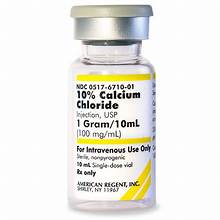 |
Hemihydrate Type | Beta hemihydrate  | Alpha-hemihydrate  | Modified alpha-hemihydrate  |
Particle Characteristics | Rough, random, and porous  | More regular, less porous 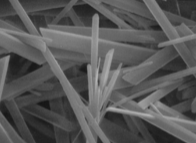 | Very dense, cuboidal with reduced surface area 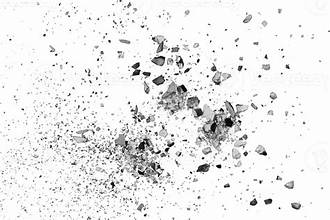 |
Relative Strength & Cost | Weakest and least expensive  | Stronger and more expensive than plaster  | Strongest and most expensive  |
Color | Usually white  | Usually yellow  | Comes in different colors  |
Primary Uses / Applications | Used where strength is not required: study models, whitening trays  | Casts for denture and partial denture construction  | Die construction for inlays, onlays, crowns, and bridges  |
Water / Powder Ratio (IMPORTANT) | 50ml water/100g powder | 30ml water/100g powder | 24ml water/100g powder |
Setting Expansion | Expands the most (0.2% – 0.3%) | 0.08% – 0.10% | Expands the least (0.05% – 0.07%) |
Proper mixing of gypsum
Measure water and powder for optimum properties
Adding too much water or stone will WEAKEN the final product, which DECREASES strength
Sift powder INTO water
Mix by swiping sides of bowl w/spatula; avoid incorporating air
A homogeneous mix is obtained in 1 minute
Setting Time for Gypsum
Two intervals: working or initial setting time
Working time:
Start of mix until material thickens
Indicated by loss of surface gloss
Do not manipulate after initial set or mixture is weakened
Setting time:
Start of mix until hardened and removed from impression
45-60 minutes (risk of fracture if removed early)
Factors for setting time
Increase setting time → sets slower
Higher W/P ratio
Decrease setting time → sets faster
Lower W/P ratio
Pouring the Impression
Use vibrator to flow gypsum material through the disinfected impression
Prevents air bubbles, which create voids
Start in first tooth imprint and flow around to last tooth imprint
Strength
Wet strength: while free water is still present
Dry strength: when excess water is no longer present
Storage
affected by moisture
Stored in air-tight containers
Moisture contamination can cause faster or slower setting reactions

characteristics of polysiloxanes, polyvinyl siloxane, polyethers, and polysulfides
Cements, Bases, and Liners
1. Primary Function & Indications
Dental Cements:
Used for luting (attaching restorations to teeth like a glue), including crowns, inlays, on lays, veneers, and orthodontic brackets
Used as temporary restorations for emergency care, time management, pain relief, diagnosis, or managing rampant caries
Liners: pulp protection that’s used against chemical irritation
used for pulp-capping or near pulp-capping.
Bases: Placed under restorations providing thermal protection before placing an amalgam) and mechanical support (supporting the condensing of an amalgam restoration)
2. Thickness & Mechanical Support
Dental Cements (Luting): Prepared to a thin film thickness controlled by particle size so that restorations seat properly, minimizing open margins and recurrent decay.
Liners: Applied as a very thin layer (< 0.5 mm)
too weak for mechanical support and too thin to provide thermal insulation.
Bases: Thicker and stronger than liners
3. Material Properties & Clinical Considerations
Liners:
Calcium Hydroxide (Dycal): A common liner material with a high pH (about 11) that stimulates secondary dentin formation by "shocking" the tooth.
Note: Liner use is decreasing in dentistry
Bases:
Zinc Oxide-Eugenol (ZOE): Provides an obtundent/palliative (pain-reducing) effect with a neutral pH of 7 (least irritating), is bacteriostatic, and offers low thermal diffusivity. However, eugenol inhibits polymerization and must not be used under composites.
Zinc Phosphate: Very strong with low solubility, but has a low pH during setting that makes it irritating to the pulp; therefore, a liner must be placed first when using zinc phosphate as a base.
Glass Ionomer / Resin-Modified Glass Ionomer: Can function as a luting agent, restoration, base, or liner. It bonds chemically to tooth structure, releases fluoride (anticariogenic), and exhibits high strength and low solubility.
Zinc Polycarboxylate: Used as a base or permanent cement; it bonds chemically to tooth structure and is biocompatible (less acidic to the pulp), but is not as strong and exhibits moderate solubility.
4. Mixing Consistency & Powder/Liquid (P/L) Ratios
Luting / Primary Consistency: Uses a lower P/L ratio to achieve a fluid consistency. When lifted with a spatula, luting mixes of zinc phosphate and ZOE string 1 inch from the slab, while glass ionomer luting mixes string to 1/2 inch.
Secondary Consistency (Bases): Uses a higher P/L ratio to produce greater strength and a thicker consistency. For ZOE and zinc phosphate bases, powder is added until the material reaches a thick, putty-like consistency that can be rolled into a ball.
-properties of glass ionomers
-eugenol
weak acid derived from oil of cloves
obtundent/palliative: reduces irritation
antibacterial
inhibits polymerization (DO NOT used with composite)
-zinc oxide: Eugenol
multi-purpose cement
low strength
Produces:
unreinforced ZOE-temp cement
reinforced ZOE-temp restoration, base, intermediate restoration (IRM)
liners
-calcium hydroxide (dycal)
common liner material with a high pH (about 11) that stimulates secondary dentin formation by "shocking" the tooth.
Note: Liner use is decreasing in dentistry