Introduction to Sociology (copy)
Definition
Study of social behaviour and human groups (e.g. Canadian Society)
Social Group
Two or more people with the following in common:
Interact regularly and influence each other
Have something in common - shared identity
Informal or formal structure with leaders and followers
Agree on values, behaviours, goals, etc
Questions Sociologists Ask
Why do certain social behaviours exist in this group?
How do group dynamics influence individual behaviour?
What are the common factors that bind this group together?
How does this group function?
Examples
Neighbourhood
Classmates
Family Members
Players on a Sports Team
Pilots working in the same airline
You and your best friend
Father of Sociology
Auguste Comte (1798-1857)
French Philosopher
Coined the theme “sociology”
Defined sociology as the study of society, which is always changing (this is good) and humankind struggles to keep up
Most important contribution is the idea of positivism - social scientists need to apply the scientific method to obtain concrete, measurable data
Syrian Refugee Issue According to Different Theories
Theory: Structural Functionalism.
Definition:
A structural functionalist looks at how all structures or institutions in society
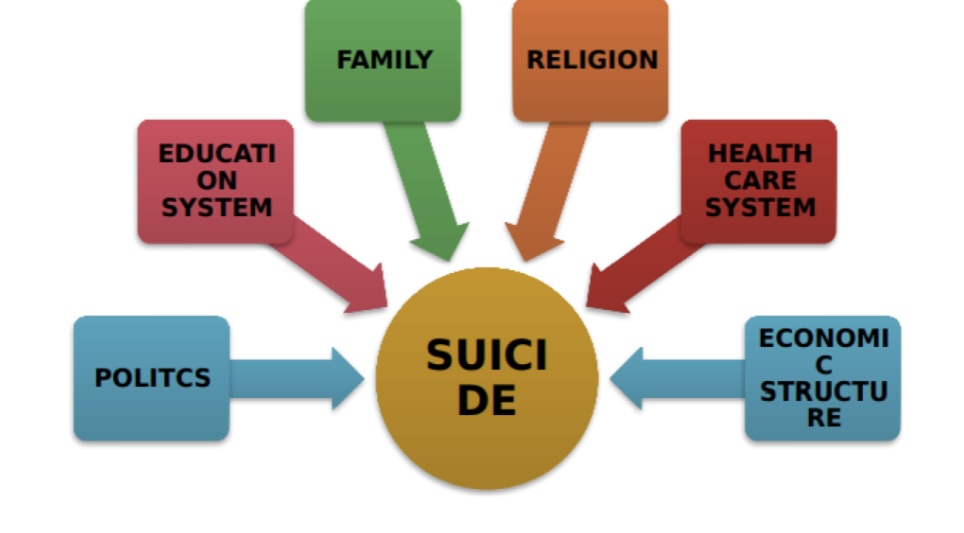
work together to meet the needs of society. Examples of structures/institutions include: education/schools, health care/hospitals, family, law/courts, economics/banks, and religion/churches. Society functions when there is an equilibrium between social institutions and the people in society. People have roles they play that help balance that equilibrium. Institutions and people are interconnected; so when something shifts, either in the institutions or in the people, the other has to change or compensate to restore the equilibrium.
Social institutions (e.g. family, schools, government, etc.) exist to meet the needs of citizens
These institutions work together to meet the needs of individuals
Problem: assumes that these institutions serve a POSITIVE function in society, but… what about poverty, racism, heterosexism?
Emile Durkheim (1858-1917)
French sociologist
Established sociology as an academic discipline and the sociological method
Believed that society functioned to protect the interests of its members; as the needs of the people change, society changes
Human beings define themselves by their social interactions
Eg. A woman is defined by her role as a mother, while a man may be defined by his role as the ‘breadwinner’
Talcott Parsons (1902-1978)
Individuals and groups can be defined through their function in society
Therefore, if something exists in society, it must serve a purpose
Hmmm…., what about poverty? Racism? What purposes do these serve?
Social Darwinism – in a society, the strongest groups will naturally dominate (eg. Jim Crow laws, Eugenics, Holocaust…)
People reflect the values of the group around them, which is what makes a society stable
Alberta Sexual Sterilization Act (1928- 1972)
Sterilization was a way to prevent unfit mothers from “filling the cradle with degenerate babies”
1928-1932 – mentally ‘unfit’ persons were sterilized with their (or their family’s) consent
After 1932 the law changed allowing the Eugenics Board to determine who was sterilized (often without consent or even awareness)
Poverty = children being abandoned to state orphanages = substandard education = low IQ scores = title of ‘mental defective’
Lens/Key Topics:
Canadian society responded to the Syrian refugee crisis by opening its doors to bring in many Syrian newcomer families to live here. A structural functionalist would be interested in:
Legal system and laws for refugees versus newcomers;
Education for children who may have been out of school for years while in refugee camps;
Private versus government sponsorship and resettlement of Syrian newcomers.
Questions They Might Ask:
What happens when we introduce a large group of newcomers into our society?
What institutions in our society need to adjust?
How will they adjust and what kinds of supports do they need to do so?
In what ways will newcomers enrich our institutions to the benefit of all society?
Definition:
A conflict theorist examines two groups in society: those who have power and those who don’t. The ones in a position of power are few in number; but they have the wealth, prestige, and voice to maintain their status. The ones without power are much larger in number; but they are marginalised or without the wealth, prestige, and voice to make change. Society is in constant tension about this imbalance in power.
Social groups are in constant conflict with one another for access to resources, power, etc.
Usually this theory looks at the conflict between rich and poor BUT it can also apply to gender, race, religion, etc.
Karl Marx (1818-1883)
Lived through the Industrial Revolution and witnessed the exploitation of workers
Marx saw that society was based on competition between the ‘haves’ and the ‘have nothings’; the only way to level the playing field would be for the workers (the ‘have nothings’) to take power back from the wealthy
Ideas inspired communist revolution in Russia
Lens/Key Topics:
There are many examples of an imbalance of power when examining refugees. With respect to Canada’s response to Syrian refugees, a conflict theorist might examine:
Distribution of power between hundreds of thousands of refugees trying to get out of Syria and neighbouring countries;
Challenges for newcomers to establish lives in a new country with new language, customs, way of life;
Barriers and conflicts that might emerge as newcomers come into Canada.
Questions They Might Ask:
What imbalance in power prompted the war in Syria?
How will Syrian newcomers be able to establish their lives and be accepted into a new country like Canada?
What barriers exist in places of resettlement that will marginalise Syrian newcomers in a new country?
How can these barriers be overcome to restore a balance in power?
Theory: Feminist Theory.
Definition:
Feminist theorists focus on the experience of gender in society. They examine roles women have in society and how systems within society have created the inequalities that exist between men and women. They also examine the changing forms and meanings of these roles, especially as they relate to gender, family, and sexuality.
Examines gender inequality and attempts to give a voice to women who have been marginalized in male dominated societies
Dorothy Smith (1926-)
Culture is socially constructed to favour men, even in language
Eg. Mankind, history, woman, female, etc.
Women are “alienated from their experience”
Smith began writing in the 1980s advocating for feminist sociology – this was during a time when women were starting to speak out about gender disparities in pay, access to higher paying jobs, sexual abuse in the workplace, etc.
Chandra Talpade Mohanty
Examines race within feminist theory
The western world has constructed the image of the “Third World Woman”
assumes all immigrant women share one identity (that of oppression)
Lens/Key Topics:
There are many gender issues to examine in this topic. One micro study might focus on how Syrian women have established a catering business upon their arrival to Canada:
Skills in cooking turned into marketable and profitable business in Canada, where as in Syria it was not;
Women finding employment in Canada when they were not working in Syria;
Changing roles in the family dynamic once in Canada.
Questions They Might Ask:
How does a new start in a new country impact the way in which Syrian women see themselves?
What barriers might have existed in Syria for women when compared to their Canadian experience?
What barriers might emerge in Canada for Syrian women who are newcomers?
What impact might a role reversal of the principal wage earner in a family have on the family dynamic in newcomer families?
Can Syrian women come to Canada on their own as newcomers? What role does male privilege play in Syria that might have presented barriers for women in Syria?
How do these barriers play out for Syrian women resettling in Canada?
Theory: Symbolic Interaction.
Definition:
Symbolic interactionists concentrate their study on individuals within society and how individuals construct meaning to shape who they are and how they act. They examine the elements within an individual’s environment that help form an individual’s sense of self and sense of how they fit into the world around them.
Studies human interaction at the micro level
How does an individual navigate society? What defines our sense of ‘self’?
Focuses on the way individuals interpret and navigate social situations to find meaning
Max Weber (1864-1920)
RATIONALIZATION: Social interactions are motivated by efficiency and personal benefit, not morality, custom or emotion. This is why we are always in conflict
BUREAUCRACY: People can be liberated through institutionalizing bureaucracies – an administrative system dominated by strict rules and a strict hierarchy – people are all treated the same
Cooley & Mead
Looking-Glass Self: We see ourselves through the eyes of those with whom we interact (our primary groups – family and friends)
An individual can adopt a different image depending on their audience
Are you the same person at home as you are at school?
Lens/Key Topics:
In the Syrian refugee example, symbolic interactionists will identify individuals and examine issues such as:
The life they left behind in Syria and the life they are now trying to establish in a new country;
Leaving family members behind to leave Syria and come to Canada;
Personal experience in refugee camps and how that impacts one’s sense of identity.
Questions They Might Ask:
What was the deciding factor to make Syrian refugees decide to leave their home country?
What was it like for Syrian refugees to leave family members behind?
How does that experience shape their new lives in Canada?
What is their biggest challenge in trying to relate to people here in Canada?
What experience stands out that has had an impact on their self-identity?
Are they beginning to see themselves as Canadian?
What does being Canadian mean to them?