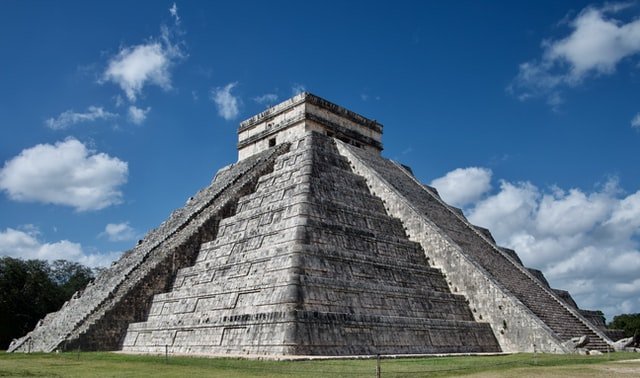
WHAP - Unit 1 The Global Tapestry (8-10%)
Review of History Within Civilizations
What rises out of collapse of classical civilization and interactions developing between new state
Explain the similarities and differences in the processes of state formation from
c. 1200 to c. 1450.
REVIEW: UNIT 1 KEY CONCEPTS
State formation and development
demonstrated continuity, innovation, and
diversity in various regions.
As the Abbasid Caliphate fragmented, new
Islamic political entities emerged, most of
which were dominated by Turkic peoples.
These states demonstrated continuity,
innovation, and diversity.
Empires and states in Afro-Eurasia
and the Americas demonstrated
continuity, innovation, and diversity in
the 13th century. This included the Song
Dynasty of China, which utilized traditional
methods of Confucianism and an imperial
bureaucracy to maintain and justify its rule.
State formation and development
demonstrated continuity, innovation, and
diversity, including the new Hindu and
Buddhist states that emerged in South and
Southeast Asia
In the Americas, as in Afro-Eurasia,
state systems demonstrated continuity,
innovation, and diversity, and expanded in
scope and reach.
In Africa, as in Eurasia and the Americas,
state systems demonstrated continuity,
innovation, and diversity, and expanded in
scope and reach.
Overview of World’s Major Religions in 1200
Most events are connected to religion
Key Points:
Most belief systems still are impacting history
Most major religions have divisions = subgroups and sects (focus more on overall religion)
Understand theological basis of belief systems and impact of belief systems on social, political, cultural, military developments
Origin and spread of belief systems - cultural interactions
Religious Mysticism: adherents within religions focusing on mystical experiences that bring them closer to divine - prayer, meditation
Buddhism
Cultures: India, China, Southeast Asia, Japan
Context:
Founded by Siddhartha Gautama, a young Hindu prince - lived in Nepal from 563-483 BCE, rejected wealth and world possessions and became Buddha (Enlightened One)
No supreme being - 4 Noble Truth: (1) all life is suffering, (2) suffering caused by desire, (3) can be freed of desire, (4) freed of desire following a prescribed path
Death of Buddha (483 BCE) = Buddhism split - Theravada Buddhism and Mahayana Buddhism
Theravada Buddhism: meditation, simplicity, nirvana as renunciation of consciousness and self
Mahayana Buddhism: great ritual, spiritual comfort - more complex but with greater spread
Impact: rejects caste system - appealed to those of lower rank
India: reabsorbed in Hinduism
China, Japan, Southeast Asia: Buddhism continued to thrive
Further: spread via trade routes
Christianity
Cultures: started as group of Jews, quickly expanded through Europe, northeastern Africa, Middle East
Context:
Based around Jesus of Nazareth, a figure who claimed to be Messiah the Jews had awaited - teachings of devotion to God and love for others
Jesus was crucified by Roman and Jewish leaders in 30 CE and his followers believe he rose from dead into heaven
Based on Bible teachings
Believe Jesus is the Son of God - forgiveness of sins, everlasting life is achievable through him
World was created by God, but world has fallen from God
Believers should seek God and care for him and others
Impact: compassion, grace through faith appealed to lower classes and women
Became most influential religion in Mediterranean basin by 3rd century
Became official religion of Roman Empire, then branching north and west
Connection with Roman Empire had profound impact on global culture
Confucianism
Cultures: China (400 BCE+)
Context:
Founded by Confucius, educator and political advisor - thoughts and sayings collected in the Analects
Deals with how to restore political and social order, not with philosophical or religious topics
5 fundamental relations build society and make it orderly - (1) ruler and subject, (2) parent and child, (3) husband and wife, (4) older sibling and younger sibling. (5) friend and friend
Impact:
Compatible with other religions, causing it to flourish
Led to distinctive Chinese culture of tight-knit communities
Stayed within Chinese culture
Hinduism
Cultures: India
Context:
Belief in one supreme force called Brahma who created everything - gods are manifestations of Brahma (Vishnu = preserver, Shiva = destroyer)
Goal of believer is to merge with Brahma - believe it takes multiple lives to accomplish and believers live to determine who they will be in their next life
Following the dharma (rules and obligations of your caste) will move you towards Brahma - moksha is highest stake of being (internal peace and release of soul)
No sacred text - Vedas and Upanishads guide Hindus
Impact:
Religion and social caste system, which has prevented global acceptance of religion
Recently, Hindus are rebelling caste system
Spawned Buddhism
Islam
Cultures: caliphates (Islamic kingdoms), North Africa, central Asia, Europe
Context:
7th century - Muslims are the believers
Allah presented words through prophet Muhammad, whose words were recorded in the Qur’an
Salvation is won through submission to God - 5 Pillars of Islam: (1) confession, (2) prayer 5 times a day, (3) charity, (4) fasting during Ramadan, (5) pilgrimage to Mecca
2 groups, Shia and Sunni, who disagreed who should succeed Muhammad. Shia believe it should be blood-related, Sunni believe it can be anyone who follows
Impact:
Rapidly spread to Middle East
Judaism
Cultures: Hebrews
Context
God selected a group of holy people who should follow his laws and worship them
Unique relationship with God
World is for them to enjoy, free will - destiny of world is paradise
Hebrew Bible - Torah, miracles, laws, historical chronicles, poetry, prophecies
Impact
First of major monotheistic faiths
Developments in the Middle East
Abbasid Dynasty: Golden Age to Remember
Islamic Empire from 750-1258 CE - early mid-9th century golden age
Capital in Baghdad (modern-day Iraq)- fell as trade routes moved north and infrastructure of canals couldn’t be maintained
Centre for arts and sciences - mathematics (Nasir al-Din al Tusi), medicine, writings (House of Wisdom library)
Built around trade - used receipt and bill system
ethnically Arab
Decline of Islamic Caliphates: Internal Rivalries and Mongol Invasions
Challenged by revolt of enslaved Turkish warriors, new Shia dynasty in Iran, the Seljuk Turk Sunni group, Persians, Europeans, Byzantines, and most importantly Mongols
Mongols overtook and destroyed Baghdad in 1258
Ottoman Turks would later reunite Egypt, Syria, and Arabia in new Islamic state until 1918
Mamluks: Egyptian group that defeated Mongols in Nazareth, helping preserve Islam in the Near East, came to the Abbasid as slaves who served high roles
Seljuk Turks- came from Central Asia as conquerors, leader was called a sultan
Abbasid would allow Christians to travel in and out of Jerusalem, but Seljuk Turks started to limit leading to the Crusades.
Islamic studies
scholars would aid in preserving the works of Greek philosophers and scholars
achievements in scientific fields Math, biology, empiricism, medicine
trigonometry, Arabic numerals, Alegbra
Sufi: variation of Islam that would have elements of mysticism and adapt local cultures to Islam
Society:
merchants had higher class due to Muhammad being a merchant
many merchants were Islamic and spread Islam through trade routes
women could study and read but limited
female infanticide forbidden
could property and remarry
Islamic rule in Spain
Ummayad kept power in Spain
Cordoba was capital
Battle of Tours Islam was defeated against Frankish Forced
limited Islamic influence in Europe
toleration of other faiths, monotheistic
Key takeaways:
Ethnic Arabs were losing powers to Turks, both were Islamic
military states had the state power
continued Sharia law (legal system based on the Quran)
Christians Crusaders would organize and army to reopen access to their Holy Land Jerusalem
Developments in Europe
nobles lost powers, monarchs gained more
Middle Ages: fall of Rome before Renaissance - complicated time
Eastern Roman Empire became Byzantine Empire
Western Europe: collapsed entirely - Christianity remained strong
European Feudalism: Land Divided
Feudalism: European hierarchy social system of Middle Ages
King: power over whole kingdom
Nobles: had power over sections of kingdom in exchange for loyalty to king and military service
Vassals: lesser lords with sections of Noble land who could divide it further - estates were called fiefs or manors (self-sufficient)
Founded three-field system: 3 fields for fall, spring, and empty one to replenish nutrients
Conflict between lords was regulated with code of chivalry which condemned betrayal and promoted mutual respect
Male dominated: women could not own land and land was passed down to eldest son (primogeniture), their education was limited to domestic skills
Peasants or Serfs: worked the land
Had few rights or freedoms outside of manor
Skilled in trades, which helped them break out of feudal mode as global trade increased - led to middle class emergence of craftsmen and merchants
Hundred’s year War- England v France
English used long bows and only got Port of Calais
caused distinct English and French identities
Holy Roman Empire
lay investiture- dispute of whether secular leaders could put bishops in office rather than church
Concordat of Worms 11220 Church received autonomy
Great Schism 1054- Orthodox and Roman Catholic
Emergence of Nation-States
At end of Middle Ages, people began moving from feudal kingdom organization to linguistic and cultural organization - emergence of modern countries
Achievement of statehood in 13th century took different paths
Germany: reigning family of emperorship died out, entering a period of interregnum (time between kings) - merchants and tradespeople became more powerful
England: English nobles rebelled against King John and forced him to sign the Magna Carta - reinstated the nobles, laid foundation for Parliament
Later divided into House of Lords (nobles and clergy - legal issues) and House of Commons (knights and wealth burghers - trade and taxation)
France: in 12th century, England began to occupy many parts of France which spurred revolts - Joan of Arc fought back English out of Orleans
Hundred Years’ War (1337-1453): unified France, leading to England’s withdrawal
Spain: Queen Isabella of Castile and Ferdinand of Aragon married to unite Spain in a single monarchy and forced all residents to convert to Christianity - Spanish Inquisition
Russia: taken over by Tartars (group of eastern Mongols) under Genghis Kahn in 1242 until Russian prince Ivan III expanded his power in 1400s and became czar - Ivan the Terrible became a ruthless ruler utilizing secret police in 1500s
Developments in Asia
China and Nearby Regions
Song Dynasty (960-1279)
Confucianism justified subordination of women - foot binding: women’s feet bound after birth to keep them small
Neo-Confucianism: Buddhist ideas about soul, filial piety, maintenance of proper roles, loyalty to superiors
inventions: civil service exam, grand canal, gunpowder, Champa rice> population growth woodblock printing
tributary system give tributes to China; Korean Japan
Scholar gentry educated social class
Ming Dynasty (1368-1644): after brief period of Mongol dominance
Religion: influenced by Nestorianism, Manichaeism, Zoroastrianism, Islam, and especially Buddhism in two of its forms
Mahayana: peaceful and quiet existence apart from worldly values
Chan or Zen: meditation and appreciation of beauty
Japan
Relatively isolated from external influences outside Asia for many years
Feudal Japan (1192):
Emperor
Shogun (chief general)
Daimyo: owners of larger pieces of land, powerful samurai (like knights)
Followed Code of Bushido code of conduct - loyalty, courage, honour
Lesser samurai (like vassals)
Peasants and artisans
Women had little rights and esteem
India
Delhi Sultanate: Islamic invader kingdom in Delhi
Islam took over Northern India - clash between Islam monotheism and Hinduism polytheism
Islam rulership brought in colleges and farming improvements
Rajput Kingdoms: several Hindu principalities that united to resist Muslim forces from 1191 until eventual takeover in 1527
Southeast Asia
Religion spread and established different states
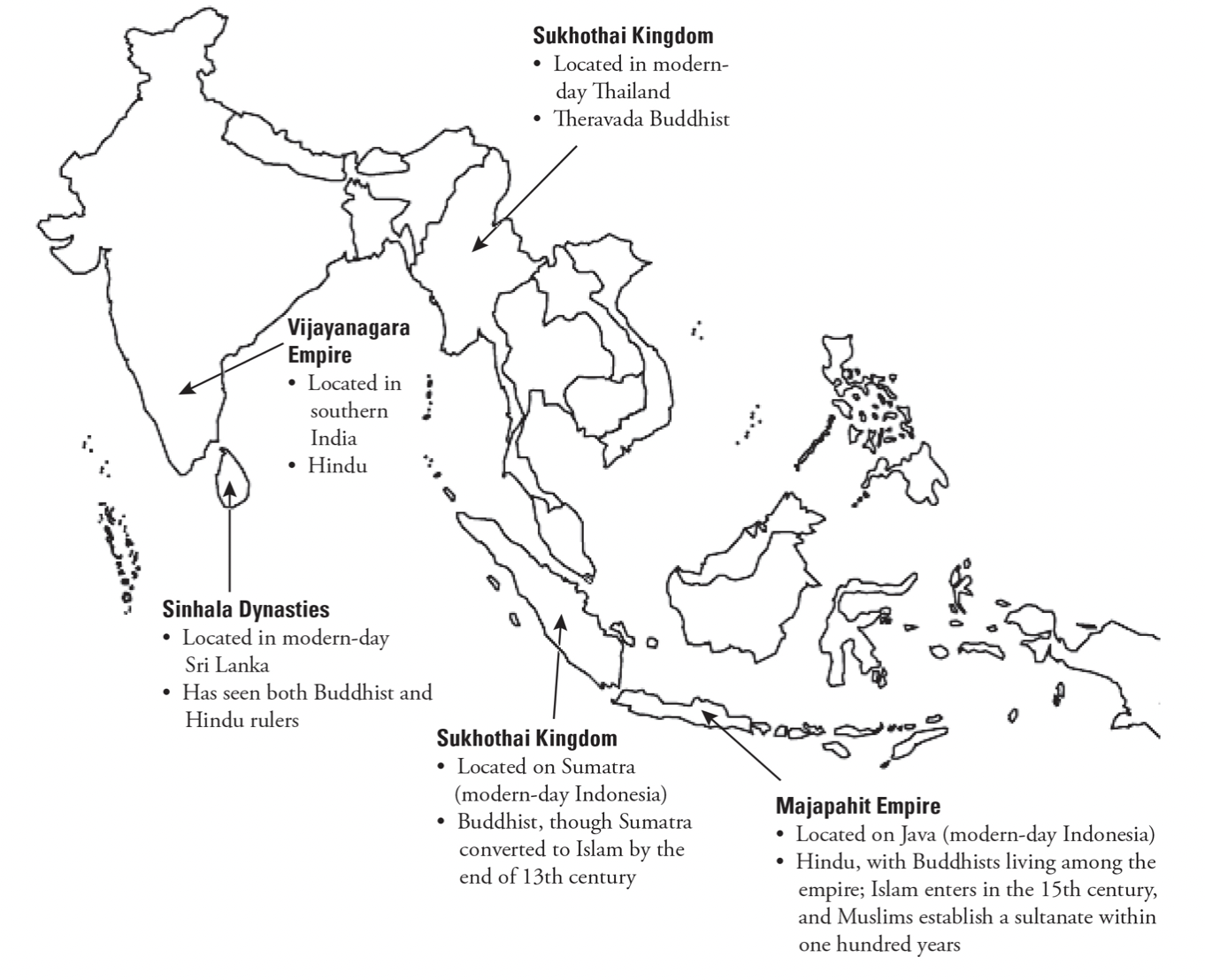
Khmer Empire (9th-15th century): Hindu Empire in modern day Cambodia, Laos, Thailand
Beliefs were carried through Indian Ocean trade network
Crafted the Angor Wat temple- example of syncretism between Buddhism and Hinduism
Developments in Africa
Islamic Empire spread to North Africa in the 7th to 8th centuries - travelled through Sahara Desert and reached the wealthy sub-Saharan
An explosion of trade began-trans Saharan
kin-based networks’ families governed themselves
Hausa Kingdoms: off Niger River, series of state system kingdoms
Islam region, achieved economic stability and religious influence though long trade (salt and leather) - notably city of Kano
Political and economic downturn in 18th century due to internal wars
connected through kinship ties
Ghana
rulers sold ivory and gold to Muslim traders for, salt copper, cloth, and tools
Mali- Islamic
a lot of gold
Mansa Musa- pilgrimage to Mecca where lavishes made impression and gave a lot of gold in Eypt
Sundiata- Faith allowed trade
Zimbabwe
rich gold fields
Indian ocean trade
Bantu and Arabic> Swahili
Great Zimbabwe capital city surrounded by protective wall
Ethiopia
Christian State owns Ethiopian faith
Griots and Griottes
oral literature held encyclopedic knowledge. Used music in story telling and instruments. Would serve as advisors and comfort to both men and women.
Developments in Americas
3 great civilization in Central and South America: Maya, Incas, Aztecs
matrilineal- social standing determined by the women’s side of the family
Aztecs: Trade and Sacrifice
theocracy emperor a divine representative
human sacrifice to many gods
also knows as Mexicas
tribute system
would allow conquered local gov to rule and act as tribute collectors
move their people in conquered land to maintain control
main ideas
Arrived in Mexico in mid 1200s
Tenochtitlan: capital city (modern Mexico City)
Expansionist policy and professional, strict army
Empire of 12 million people with flourishing trade, many of people enslaved
Women were subordinate but could inherit property
Defeated by Spainards in 1519
Inca: My Land is Your Land
Mita system- mandatory public service; construction
worshipped mainly sun god
some animism
Andes Mountains in Peru
Expansionist - army, established bureaucracy, unified language, system of roads and tunnels
Priests held important roles as consultants, and doctors
rulers could not inherit goods
Many people were peasants
Capital of Cuzco had almost 300000 people in late 1400s
Women were more important and could pass property to their daughters
Polytheistic religion with human sacrifice - Sun god was most important
People were mummified after death
Military was very important
Temple of the Sun and Machu Picchu architecture
Fell to Francisco Pizzaro in 1532
The Mayans
city-states that were ruled by Kings and fought for tributes
no central gov, dominant city-state
king claimed to be descendants of gods
people provide labor to gov
taxes were crops
captives used as human sacrifices
concept of zero
complex writing system
astronomy and gods