Passé Composé with Être
Passe composé is a French past tense used to express events that have been completed in the past. It consists of two parts. The auxiliary verb which can be avoir or être and the past participle of the main verb.
Être
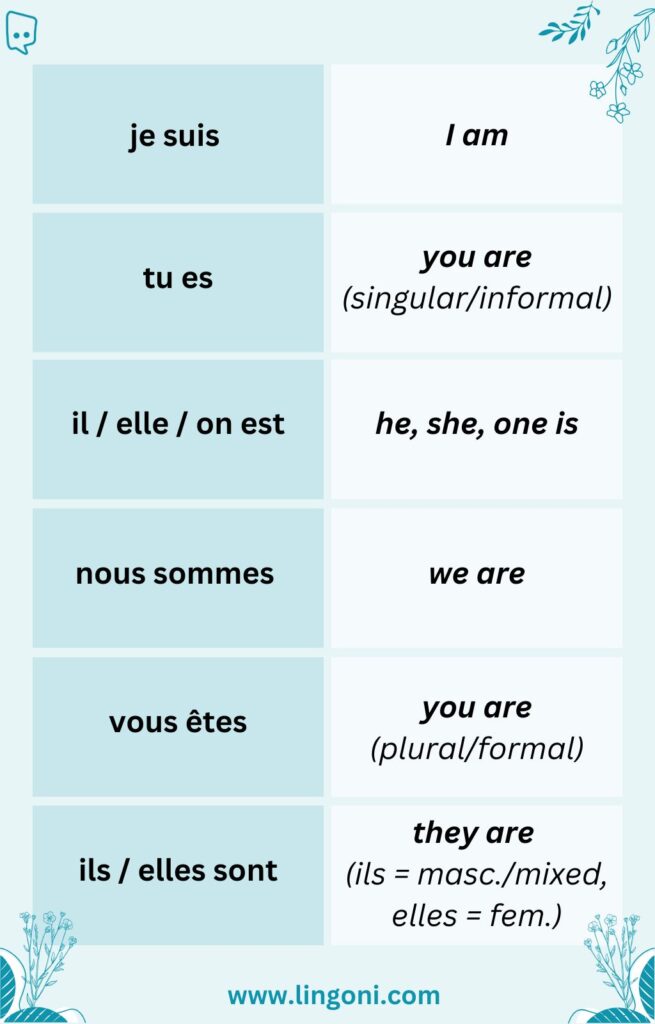
The passé composé with être is similar to avoir but has some minor differences.
The passé composé of 17 verbs is formed by combining the present tense of être and then adding the past participle of the verb showing the action. Most of these verbs express motion or a change of place/state/condition [that is going up, going down, going in, going out or remaining].
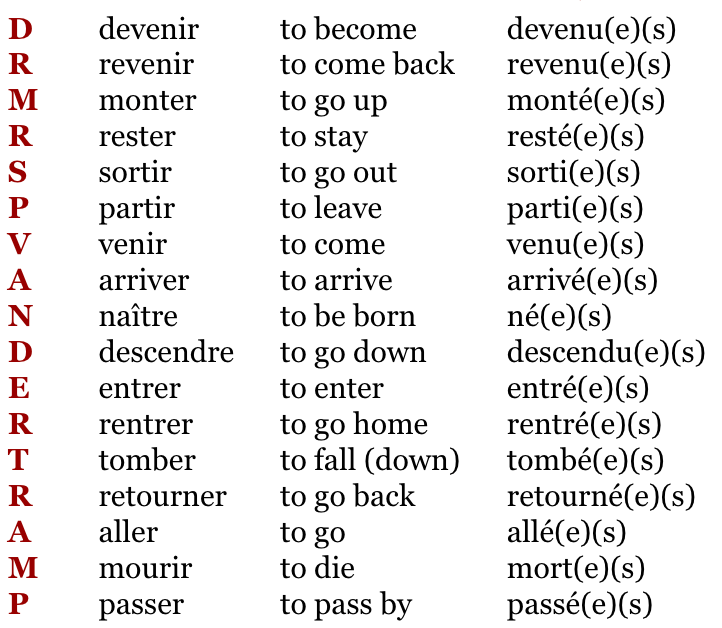
Verbs whose helping verb is être must show agreeement of their past participles in gender [masculine or feminine] and number [singular or plural] with the subject noun or pronoun.
For gender, the masculine is the same as the past participle but with feminine you add an ‘e’.
Example: aller- to go
past participle is allé
masculine is allé
feminine is allée
For number, it also depends on the gender. If it is singular male, it stays the same and singular female has a extra ‘e’. Then, to make it plural, add a ‘s’ at to the verb.
Example 2: aller- to go
masculine singular is allé
feminine singular is allée
masculine plural is allés
feminine plural is allées
*Vous can be a singular or plural subject for both masculine and feminine subjects.
Remember
Focus on the context and completion of the action in determining when to use passe composé.
Practicing with both regular and irregular verbs will help solid
Quick Tip: all the ‘er’ verbs for être have the ‘é’ at the end of the verb.